Explore9 min read
Drysuit vs Wetsuit for Kelp Diving: An Honest Comparison
Drysuit or wetsuit for cold-water kelp diving? A straight comparison of warmth, buoyancy, cost and upkeep — plus the water temperature where each makes sense.
Tom Okafor ·
Sea otters look playful but waste energy if you get too close. Practical distances, what to never do, and how quiet watching supports kelp forest recovery.
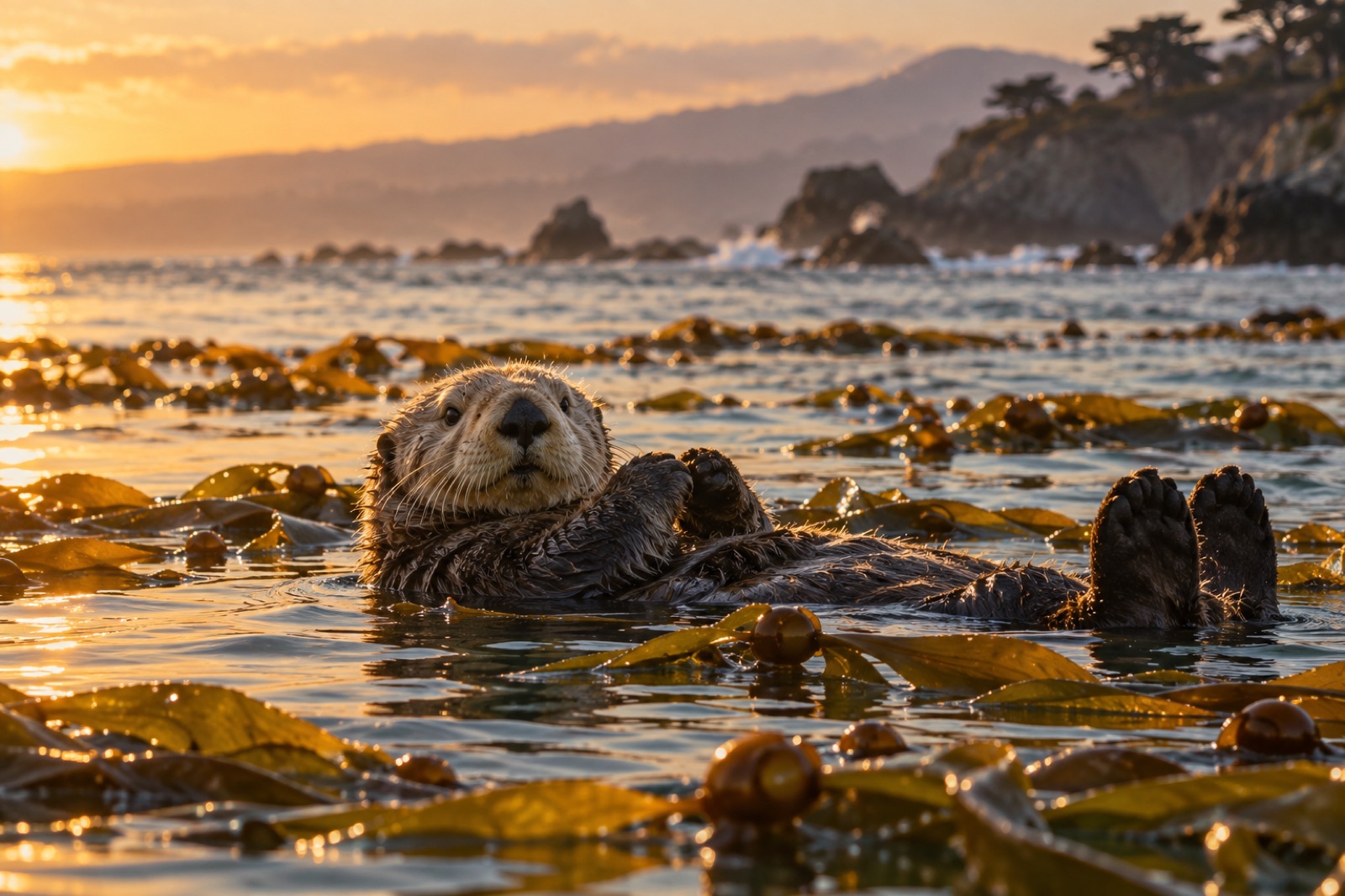
A sea otter bobbing in a kelp raft is one of the most irresistible sights on any temperate coast. They hold paws to sleep, juggle favourite rocks, wrap pups in fronds like parcels. It is entirely natural to want to paddle closer, drift wider, get the shot. And it is exactly that impulse — multiplied by thousands of well-meaning visitors a month — that can quietly wreck an otter's day.
Sea otters run on a brutal metabolic budget. They have no blubber; they stay warm with fur and constant eating, consuming a quarter of their body weight daily. Every unnecessary burst paddling away from a kayak, every interrupted nap, every skipped forage dive is energy spent they can ill afford. Researchers have documented measurable stress responses and displacement in areas with heavy recreational traffic. The good news: responsible watching is easy, and it makes encounters better for you too. Here is how.
Federal guidance in the United States (from NOAA Fisheries and the Marine Mammal Protection Act) recommends at least 50 metres (five boat lengths) from sea otters, and substantially more in sensitive areas. In practice, we tell new wildlife watchers: if the otter's behaviour changes because you appeared, you are too close. Watch for the flip, the dive, the head-up alert, the swimming away. Those are energy costs you're charging to a wild animal that forages in 10-minute shifts.
A good rule of thumb: use binoculars or a long lens, not proximity. A 400 mm lens at 50 metres gives you better images than a phone at 15 metres — and the otter doesn't pay for the photo.
Otters flee from encirclement. Even two kayaks approaching from opposite sides can trigger panic. Always approach (if you approach at all) from a single, predictable angle, stay down-current, and be ready to stop the moment the animal shows awareness of you. If you notice yourself between an otter and open water, back away along your own track.
Sea otters hear well underwater and detect vibration strongly. Keep paddle strokes slow and shallow, avoid splashing, cut engines early, and coast the last stretch at low speed. If you are on a boat, idle in and out rather than powering past; repeated fast passes habituate some otters but stress most. Research on whale-watching vessels found elevated stress hormones in animals exposed to noisy, fast traffic — the mechanism is the same.
This one is law, not etiquette. In the US, sea otters are protected under the Marine Mammal Protection Act, with criminal penalties for harassment, feeding or touching. A habituated otter who expects food from boats becomes dangerous and is often removed from the wild or killed. If an otter approaches you — they are curious — back away slowly. The encounter is on their terms or not at all.
Ditto for their belonging: never take an abandoned tool rock, a kelp-wrapped pup toy, or shell fragments from a raft area. Those shells tell scientists what otters are eating.
A northern sea otter mother invests enormous energy in a single pup, which cannot dive until weeks old. She leaves it floating at the surface while she forages below. If you cause her to abort a forage dive or grab the pup and porpoise away, you cost her the meal and force the pup into cold water exposure. When you see tiny size, thatching-like fur, and a mother repeatedly diving and ascending with prey — retreat immediately, no exceptions.
Watching well means knowing what to watch for. A few behaviors decode the encounter:
Our species profile on sea otters goes deep on the biology — the fur, the metabolism, the tool use — that makes all of this etiquette necessary.
Otters are territorial and coastal; you don't need to go far offshore. The best watching spots sit where kelp canopy meets open water giant kelp and bull kelp beds — Monterey Bay, Elkhorn Slough's channel entrance, parts of the Channel Islands, Clayoquot Sound in British Columbia. Mornings before boat traffic builds are ideal; so is late afternoon light.
The trick is positioning, not pursuit. Find active kelp raft, park yourself 60–100 metres downwind/down-current, and let the otters stay put. Kayaks beat boats for this — silent, low, stable — as long as you keep stroking minimal. Inflate a PFD you actually wear; the water is cold and a spill among kelp is a bad scenario.
If you want to observe from the water, wetsuit or drysuit (our drysuit-vs-wetsuit breakdown covers the cold-water choice), the same distances apply. Never chase an otter underwater. If one approaches you — rare, but it happens with habituated animals — ascend gently and back away at the surface. Otters on the seafloor while you hover overhead face a predator-from-above stress signal. Side-position or deeper observer status reads as much less threatening.
Why so much care for an animal that looks so robust? Because sea otters in many places are still recovering. The species was hunted to near-extinction by the fur trade; the southern sea otter off California, the one you're likely watching around Monterey, remains listed as threatened under the US Endangered Species Act. Their recovery is one of conservation's genuine successes — and it is fragile. High vessel traffic in some sloughs and bays has been linked to increased stress and abandonment of otherwise-suitable habitat.
More importantly for the reef: otters are the keystone predators that control sea urchin numbers. An otter disturbed out of a feeding area stops eating urchins, and urchins mow kelp. Every calm, respected otter is a gardener for the forest you came to see. The monarch of the canopy article explains why that forest matters in turn.
Quiet watching, in other words, is not just polite. It is conservation behaviour on a human scale.
That's it. No special gear, no credentials — just awareness.
No — actively approaching any marine mammal in the water is discouraged and often restricted. If an otter approaches you, stay still, avoid eye contact pressure, and back away at the surface. Water-based watching means observing from a respectful hover distance, not interaction.
Harassment, feeding, touching or pursuing marine mammals violates the Marine Mammal Protection Act, with civil fines and potential criminal penalties. Southern sea otters additionally carry Endangered Species Act protections. In practice, most enforcement is education-led, but the rules exist because fees matter.
Generally yes — kayaks are silent, non-motorised and sit low, so they register as lower threat. The risk is that kayaks can get too close unnoticed. Kayak-watchers need to be stricter about distance because otters tolerate proximity from silent craft more readily and therefore can be displaced without obvious alarm.
Do not approach or touch. Note the location, time, and behaviour, and call the regional marine mammal stranding network or wildlife authority. Movement, barbequing and discarded shells around an otter can also inform reporting without disturbing the animal.
Some individuals habituate, particularly in high-traffic areas like Moss Landing. Habituation does not mean zero stress — studies show physiological responses remain even when overt behaviour looks calm. Treat every otter as non-habituated; close encounters with calm otters are better logged with a citizen-science app than enjoyed silently but too near.
Drysuit or wetsuit for cold-water kelp diving? A straight comparison of warmth, buoyancy, cost and upkeep — plus the water temperature where each makes sense.
Tom Okafor ·
How shoreline citizen science — from iNaturalist to kelp-cast surveys — feeds real kelp forest research. What to record, how to join, and why it matters.
Tom Okafor ·
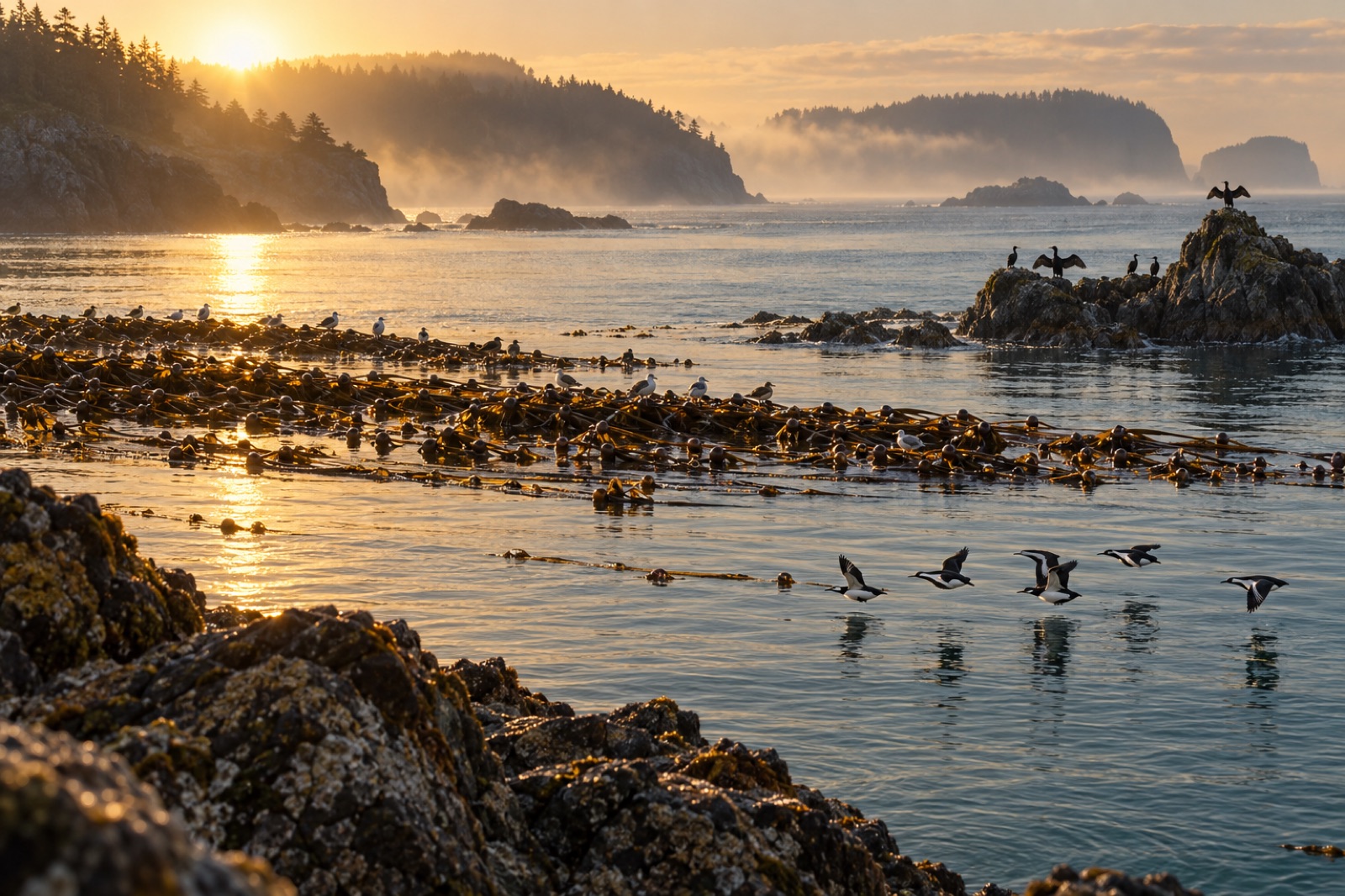
Kelp beds concentrate seabirds like nowhere else on the coast. Where to stand, what to bring, and how to identify the divers, dabblers and pirates of the kelp line.
Tom Okafor ·