Farming10 min read
Kelp Biostimulants: From Fresh Blades to Farm Input
How kelp becomes a crop biostimulant: what extracts actually do in soil, how they're produced and tested, and what farmers and buyers should honestly expect.
Naomi Reyes ·
How seaweed biostimulants are actually made, from cold-press juice to alkaline hydrolysate and fermented extracts — and what each method preserves, destroys and costs.
A seaweed biostimulant is, in the end, a liquid claim: somewhere in that dark, faintly marine-smelling bottle are compounds from a kelp or rockweed that help a crop handle drought, germinate faster or set more fruit. Whether the claim survives contact with a field depends less on which seaweed you started with than on how you took it apart. Extraction is the make-or-break step — the method determines which active compounds survive, which are destroyed, how consistent each batch is, and what the product will cost.
This guide compares the three families of extraction used in commercial seaweed biostimulants — cold mechanical pressing, alkaline hydrolysis, and fermentation or enzymatic bioprocessing — plus the hot-water and solvent routes you will meet at the edges. It assumes you already know what seaweed biostimulants are marketed to do; if not, start with our overview of kelp biostimulants from blade to farm input.
Seaweed tissue carries several classes of compounds with plausible or demonstrated biostimulant activity:
The structural polysaccharides themselves — alginate, laminaran, fucoidan, carrageenan — are not wasted either: alginate is an industrial product in its own right, and partially degraded polysaccharides are among the most-studied elicitors in the biostimulant literature. The extraction problem is that these compounds have very different tolerances. Betaines and many small molecules shrug off heat and alkali. Proteins, enzymes and any genuine hormone activity do not. Some oligosaccharides only appear when harsher chemistry cuts big polysaccharides into pieces. There is no method that preserves everything — which is why method labels on products actually mean something.
Before the chemistry: what you extract from matters as much as how. Freshness comes first. Brown seaweeds begin degrading within hours of harvest as endogenous enzymes and microbes get to work; the cold chain discipline described in our guide to handling raw kelp from boat to buyer applies just as much to processing feedstock. Species comes second — the classic commercial feedstocks are the rockweed Ascophyllum nodosum from the North Atlantic and various kelps — because compound profiles differ substantially between species and even between seasons and shore positions for one species. Third is cleanliness: sand, epiphytes and salt carry straight through into the liquid, so washing and grading discipline at intake is not cosmetic.
The simplest industrial route: mill fresh or rehydrated seaweed, press the slurry hard (screw presses, belt presses), clarify and filter the juice, then stabilise it — usually by concentration, mild heat treatment or permitted preservatives. Some producers add gently managed fermentation after pressing; the pressing itself is mechanical. Lower temperatures throughout, often never exceeding ambient.
Cold pressing keeps the heat-labile fraction intact: amino acids, betaines, vitamins, enzymes, and any hormone-type activity the feedstock genuinely has. It produces what marketers call a "whole plant" or "cold pressed" extract, and it is the method with the least chemistry between ocean and bottle.
Yield per tonne of weed is modest — you are limited to what pressing releases, and much of the cell wall polysaccharide stays behind in the press cake. The extract is dilute, so it must be concentrated or used at higher application rates, which raises freight and packaging cost per hectare treated. Biological variability also passes through largely uncorrected: a cold-pressed product is only as consistent as its feedstock lots, which makes same-species, same-season sourcing and good lot blending important.
The industry workhorse. Milled seaweed is cooked in hot, alkaline conditions — typically potassium hydroxide or carbonate solutions at elevated temperature for hours. The alkali and heat solubilise most of the biomass, including the structural polysaccharides; the result is a dark, thick liquid that is filtered and standardised. Because the base is a potassium salt, the finished extract conveniently registers a meaningful potassium analysis on the fertiliser label, which is not a coincidence.
Alkaline hydrolysis destroys the heat- and pH-labile fraction: no meaningful enzyme or hormone activity survives, and betaines are degraded. Against that, it achieves high solids recovery per tonne of weed, excellent shelf stability, and batch-to-batch consistency that mechanical methods struggle to match. Critically, controlled partial degradation of alginate and laminaran generates oligosaccharides that would not otherwise be present — compounds with a substantial research record as plant elicitors. In other words, alkaline extracts are not simply "degraded" cold extracts; they are a chemically different product with a different active profile, built around soluble polysaccharide fragments, minerals and potassium.
High pH and heat for hours is energy-intensive chemistry, and the process liquid needs careful handling and waste management at the plant. The product's effects tend toward the broad and moderate rather than the specific and strong, and because almost any brown seaweed feeds the same reactor, the market has more than its share of thin commodity extracts hiding behind the same label claims as good ones.
Hot-water extraction — steeping milled weed at 60–100 °C in water with no added chemistry — is the gentle middle road favoured by smaller producers and by extracts positioned for organic certification schemes with strict input rules. Recovery is lower than alkaline hydrolysis and higher than pressing; heat-labile compounds are partially lost. Acid hydrolysis appears occasionally for specific polysaccharide targets but is unkind to most of the active fraction and awkward in the effluent. Solvent fractionation, including newer low-pressure or ultrasound-assisted methods, shows up in research settings and for high-value isolated compounds (fucoidan for nutraceuticals, for example) rather than bulk biostimulants, where its cost cannot yet be recovered at field application rates. Watch the ultrasound- and microwave-assisted space, though: these techniques genuinely do raise yields at lower temperatures in trials, and they are migrating from the laboratory toward industrial pilot scale.
The youngest family treats extraction as biology rather than chemistry. Milled seaweed is fermented with selected microbes, or treated with tailored enzyme cocktails — alginate lyases, laminarinases, cellulases — that cut cell walls open and chop polysaccharides into oligosaccharides at near-ambient temperature and neutral pH. Done well, this combines the best of the two older methods: gentle conditions that spare heat-labile compounds, plus deliberate, tunable oligosaccharide generation.
The obstacles are control and cost. Fermentation must be steered or it produces off-flavours, variable chemistry and occasional spoilage organisms; enzyme production is itself an industry with a price tag. Commercial "fermented seaweed" products also range from rigorously controlled processes to what is essentially compromised weed rebranded. Ask serious suppliers how their fermentation is inoculated, monitored and stopped.
If you are a farmer weighing your own value-added line, or a grower buying by the drum, the honest summary is this: method labels predict the profile of the extract, not its performance in your field. Cold-pressed products carry the labile fraction; alkaline products carry soluble polysaccharide fragments and consistency; fermented and enzymatic products, at their best, carry both. What none of them guarantee is effect size, which still depends on feedstock quality, dose, crop, soil, weather and whether the trial evidence behind the product used anything like your conditions.
Practically: ask for the extraction method in specific terms (temperature, time, chemistry), a certificate of analysis per batch (solids, ash, pH, laminaran- or alginate-equivalent content, microbial counts), and replicated field trial data — not just lab germination assays. Run your own strip trials before committing acreage. And remember that a biostimulant is an add-on to agronomy, not a substitute for it. The growers who see consistent returns from seaweed extracts are the ones treating them as one dial among many on a well-run operation.
That realism is also how we position Tidewright Harvest biostimulant lines internally: species-tracked feedstock from our own restoration-adjacent farms, method disclosure on the label, and field data published rather than implied. The products work hardest when the claims stay honest.
There is no universal best — the methods produce chemically different products. Cold-pressed extracts suit uses leaning on the labile fraction (early stress protection, transplant dips); alkaline extracts suit broad-acre programmes needing consistent, stable, mineral-rich products. Match the profile to the job, then verify with your own strip trials.
It involves the least added chemistry, which matters for certain organic input schemes. But "natural" is not the same as "effective" or "safe": a poorly handled cold extract can spoil, while a well-made hydrolysate is a stable, standardised input. Check what your certification scheme actually permits, and what the trial data actually shows.
You can make a seaweed tea — soak fresh weed in water, ferment for a few weeks, dilute heavily — and generations of coastal farmers have done exactly that. Treat it as a soil amendment and morale booster, not a calibrated biostimulant: home processes are unstandardised, and concentrated or contaminated batches can scorch plants or introduce pathogens.
Mostly because the alkaline extraction used potassium hydroxide or carbonate, leaving potassium salts in the finished liquid. It is a genuine nutrient contribution, but a modest one at typical application rates — do not budget your potassium programme around it.
Reported effects cluster in high-value horticulture — fruit, vegetables, vines, turf — where small percentage gains pay for the treatment, and in stress-prone settings (transplant shock, drought, salinity). Response in broad-acre cereals is more variable. Read trials from crops and climates close to yours before assuming transferability.
How kelp becomes a crop biostimulant: what extracts actually do in soil, how they're produced and tested, and what farmers and buyers should honestly expect.
Naomi Reyes ·
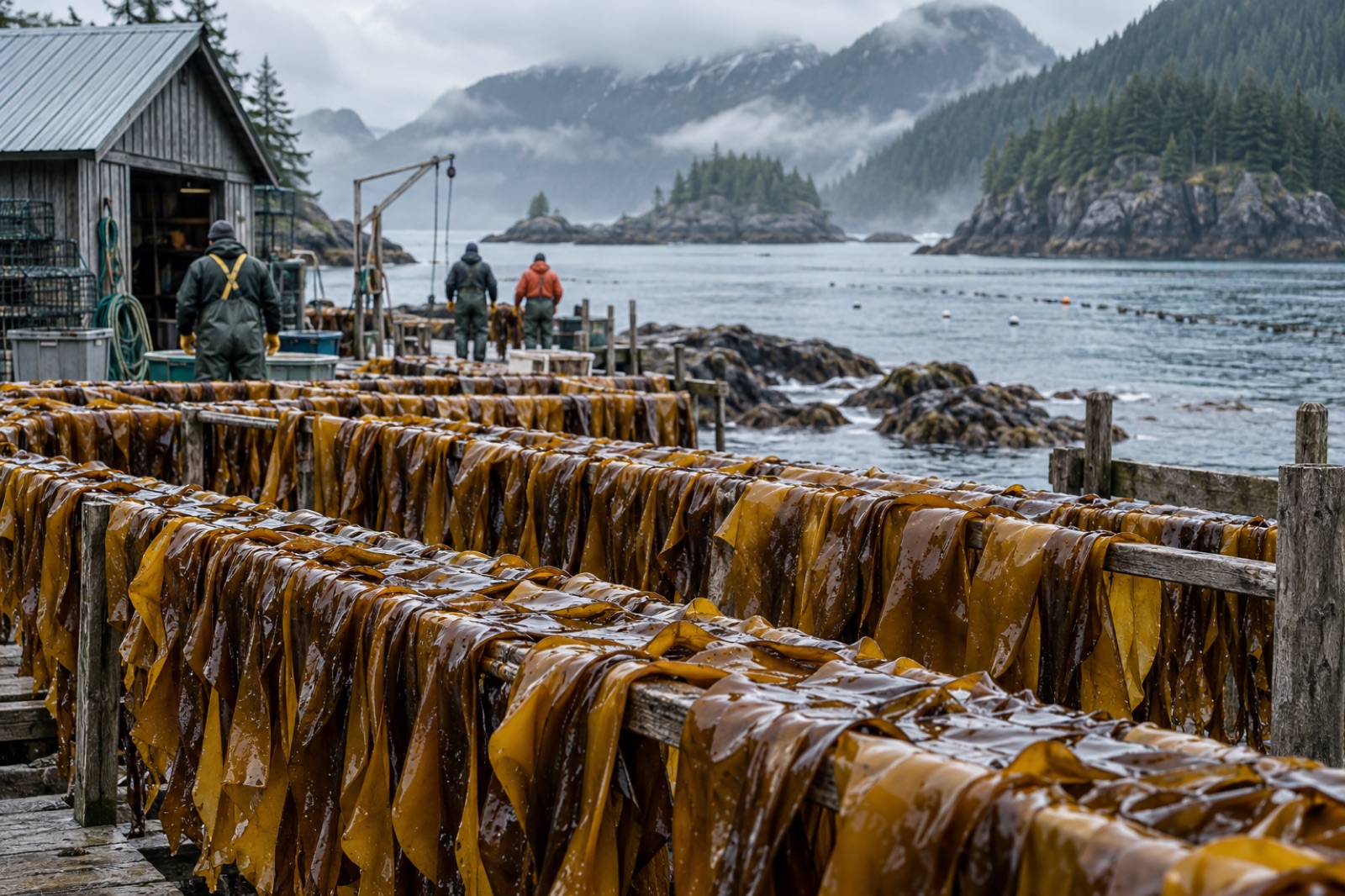
What to do with freshly harvested kelp: a practical comparison of drying, blanching, freezing, fermenting and milling — shelf life, quality, cost and best-fit markets.
Naomi Reyes ·
Seaweed grades are built on a handful of tests — moisture, ash, contaminants, colour and sensory score. Learn what buyers measure and how to grow and handle for top grade.
Naomi Reyes ·