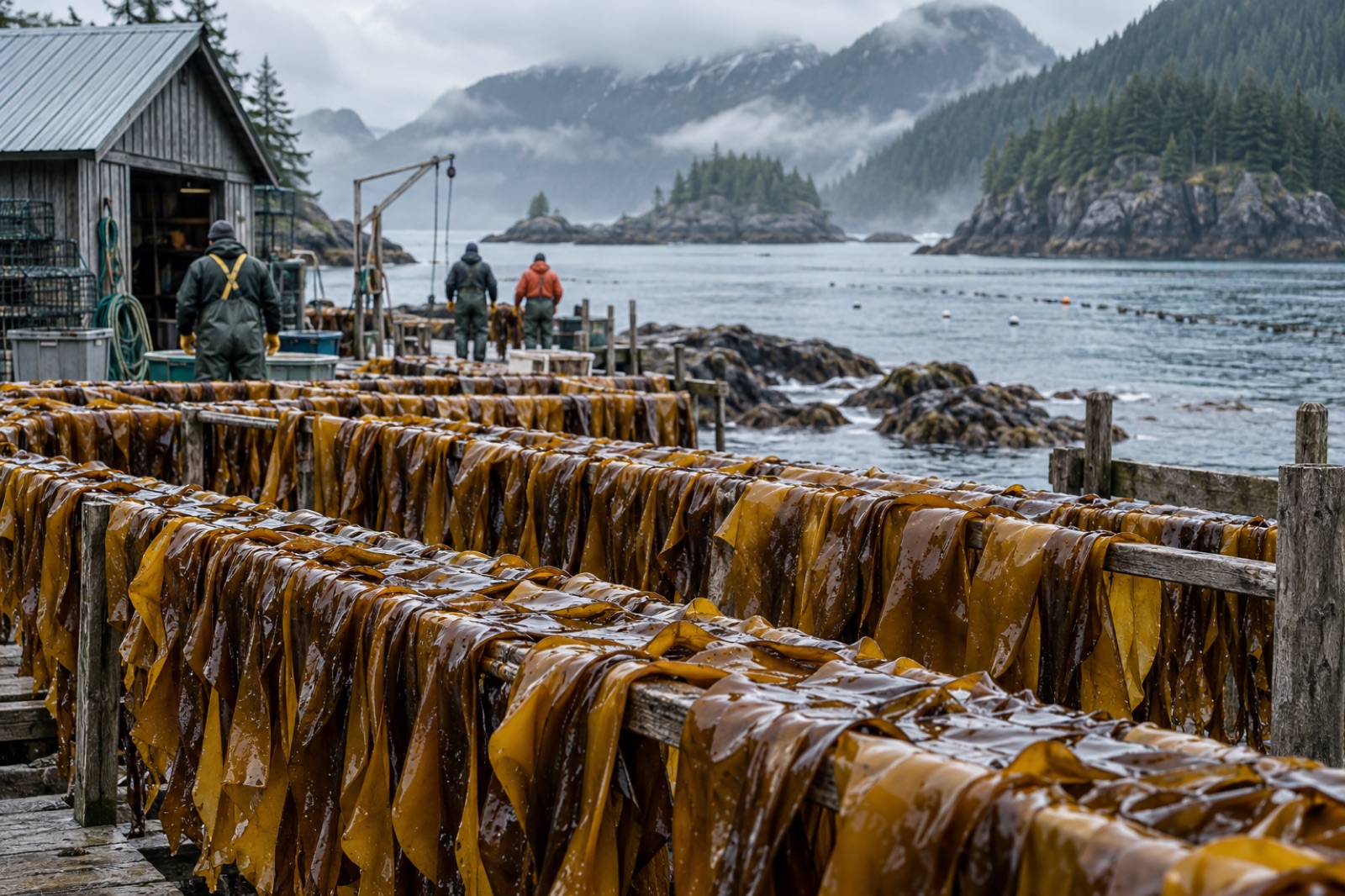
Fresh kelp is roughly 85–90 percent water, and from the moment it leaves the ocean its clock is running. Left warm and piled, a beautiful harvest turns to slime within a day; handled well, the same biomass becomes a shelf-stable ingredient worth several times its wet weight. Post-harvest processing is where small seaweed farms make or lose their margin — yet it's the stage most beginners plan last. This guide compares the four core routes — drying, blanching, freezing, and milling — plus fermentation, with the quality, cost, and market logic of each. If you're still planning the growing side, start with how to start a seaweed farm and come back with a harvest date in mind.
The first 24 hours: rules that apply to every route
Whatever you choose downstream, the front end is identical:
- Cool immediately. Shade bins at sea, ice or chilled seawater if the run to shore is long. Kelp enzymes and surface bacteria accelerate with every degree.
- Rinse in clean seawater (for food grades). Fresh water bursts cells, leaches flavour, and raises water activity — a shelf-life problem. A final light fresh-water rinse is only for salt-sensitive products.
- Drain before you pack. Free surface water drives spoilage faster than anything else.
- Process or stabilise within 24 hours of landing — sooner in warm weather. Farms that harvest faster than they can process either compost the excess or sell it at distressed prices. Match your daily harvest to your daily processing capacity; it's the least glamorous and most profitable discipline on the farm.
Drying: the default for shelf-stable product
Drying removes water to below roughly 15–18 percent moisture, at which point microbes can't operate. It's the route for kombu-style whole blades, flakes, teas, and ingredients destined for later milling.
Solar and air drying. The oldest method and still the standard for premium kombu: blades laid on frames, pebble beaches, or hung lines, turned for even exposure. Cost is near zero; risk is weather. A week of rain during harvest can ruin a season — most serious operations pair outdoor finishing with a covered or mechanically backed drying stage.
Mechanical (dehumidifier or heated-air) drying. Cabinet or container dryers running 30–50 °C give control that weather never will. Low-and-slow temperatures preserve colour, aroma compounds, and heat-labile nutrients; hot-fast drying is cheaper per kilo but bakes flavour and can darken blades. For food-grade product, low-temperature dehumidifier drying is the industry sweet spot for small farms.
Quality notes for drying:
- Dry blades whole, then cut or mill — dried-then-milled material keeps better than wet-milled pastes.
- Target water activity below 0.6 if you have a meter; below that, moulds stall.
- Store in sealed, light-proof containers. Dried kelp reabsorbs moisture eagerly and photo-oxidises in light.
Blanching: the colour-and-safety step
Blanching — a brief dip in hot water (typically 70–85 °C for seconds to a couple of minutes) — is rarely a final process on its own. It's a preparation step that does three things at once: fixes the appealing green colour (heat converts brown pigments toward olive-green), knocks back surface microbes, and inactivates enzymes that would otherwise degrade texture and flavour in storage.
Blanched-then-frozen or blanched-then-chilled kelp is the standard form for salad-grade product, and blanching ahead of drying speeds the drying itself by disrupting cell structure. The trade-offs: blanching leaches some water-soluble compounds (including some of the mannitol that gives sugar kelp its sweetness), adds an energy step, and creates a warmed product that must then be cooled fast — a blancher without a chiller is a bacteria incubator.
Freezing: premium quality, premium logistics
Freezing preserves kelp closest to its fresh state — texture, colour, and nutrition survive better than with any other route. Fresh-frozen kelp puree and blanched-frozen fronds supply restaurant and food-manufacturing customers who want fresh character year-round.
The catch is the cold chain. Freezing doesn't reduce volume or weight, so every kilogram costs energy and freight forever. For small farms selling locally into high-value food markets, frozen can beat drying on economics; for anybody shipping distance or selling bulk ingredients, it rarely does. Fast freezing (plate or blast freezers) produces smaller ice crystals and better texture than slow chest-freezer freezing — if you're buying one machine, buy the fast one.
Milling and secondary processing
Milling converts dried kelp into powders and flakes — the form factor for seasonings, bakery and pasta ingredients, supplements, and much of the seaweed nutrition retail market. Key craft points:
- Mill dried, not wet. Wet milling makes pastes that ferment and oxidise; dry milling from <15 percent moisture is stable and clean.
- Particle size is a spec, not an accident. Coarse flakes for furikake-style toppings, fine powder for doughs and drinks — agree a mesh size with your buyer before you buy the mill.
- Mind the iodine. Fine kelp powders concentrate iodine; labels and dose guidance matter, as covered in our nutrition guide.
Fermentation deserves a mention as a fifth route: lacto-fermented kelp (kombu pickles, kelp "kimchi", fermented kelp pastes) is an energy-light preservation method with deep roots in East Asia and a growing artisan market in the West. It needs food-safety discipline — pH tracking, clean brines — but almost no machinery, making it a strong first value-added product for small farms.
Choosing your route: a decision framework
Ask four questions, in order:
- Who is the buyer and what form do they want? A restaurant wants frozen or fresh; a seasoning company wants milled powder; a dashi shop wants sun-dried whole blades (see kombu dashi for why whole-blade quality matters). Design backwards from the purchase order, not forwards from the harvest.
- What's my energy and capex reality? Solar drying costs sunshine; dehumidifier drying costs electricity; freezing costs electricity forever. Least-energy-routes first is usually the right bias for a first farm.
- What weather will I actually face at harvest? If your harvest window coincides with your wet season, plan mechanical backup from day one.
- What can I do reliably at my scale? A perfect 2-tonne freezing line you run twice a year is worse than a plywood solar dryer you run daily.
A typical small cold-weather farm lands on: blanch → solar/mechanical dry → whole blades plus milled seconds, with a small frozen line for local chefs. It's boring, proven, and it sells.
Food safety and testing
Seaweed sold for food in most jurisdictions needs the same hygiene framework as any seafood: licensed premises, potable wash water, temperature logs, and periodic lab testing for heavy metals, iodine content, and microbial counts. Kelps are efficient accumulators — both of the good (minerals, umami) and the monitored (cadmium, arsenic species, iodine). Budget for accredited lab testing at least once per season per site, and keep the certificates: serious buyers will ask.
Where restoration meets processing
At Tidewright, the same questions apply at a different scale: harvests from our restoration-adjacent farms flow into drying and milling lines that supply food, biostimulant and bioplastic feedstock through Tidewright Harvest, channelling revenue back into reef restoration. The lesson transfers at any scale — processing isn't an afterthought bolted onto farming; it's the half of the business that turns biomass into value.
Key takeaways
- Stabilise within 24 hours: cool, rinse in seawater, drain, and match daily harvest to daily processing capacity.
- Drying is the default shelf-stable route; low-temperature dehumidifier drying suits small food-grade farms best.
- Blanching fixes colour and improves safety but is a preparation step, not a preservation method.
- Freezing preserves quality best and costs most — viable for local premium markets, rarely for bulk.
- Design backwards from the buyer's required form, and budget for lab testing every season.
FAQ
How long does dried kelp keep?
Properly dried (<15 percent moisture), sealed, and stored cool and dark, kelp keeps one to two years with good flavour; it remains safe longer but slowly loses aroma. Light, heat and humidity are the enemies, in that order.
Should I wash kelp in fresh or salt water?
Clean seawater for food grades — it removes grit and surface microbes without leaching flavour compounds or raising water activity. Reserve fresh water for a final light rinse only where a low-salt product spec demands it.
What's the cheapest way to start processing on a small farm?
A shaded solar drying rack, clean tarps, a blanching kettle, and a plan to harvest only what fits the racks that day. Add a dehumidifier dryer when weather risk starts costing you real money.
Is blanched kelp "cooked"?
Only partially. Blanching changes colour and surface microbial load but the product still counts as a raw food for safety purposes — it must be chilled or frozen quickly and handled accordingly.
Do I need lab tests to sell dried kelp?
In most markets, yes — food safety rules require evidence for heavy metals and often microbiological status for dried seaweed products, and iodine declaration is increasingly expected. One accredited test panel per site per season is a sensible minimum, and your first buyers will often specify more.