Tapenade is already an umami concentrate — olives, capers, anchovy, garlic, all the little depth-charges of a Provence pantry. Seaweed turns out to be its missing coastline. Fold rehydrated wakame into a classic black-olive tapenade and you get something richer and rounder, with a marine bass note that makes people ask what the secret ingredient is. Swap in dulse and it goes gentler and fruitier, almost dusky-rose in colour. Either way, this is the seaweed recipe I put in front of sceptics at parties: no fronds visible, no lecture required, just a dark, glossy spread that disappears off crostini faster than anything else on the table.
Why seaweed belongs in tapenade
Count the logic: tapenade's whole argument is brine-umami in spread form. Seaweed is brine-umami in plant form. The olives bring salt and fat; the capers bring acid-salt; the anchovy brings glutamate-inosinate depth — and wakame arrives carrying its own glutamates plus a green, silky body that lightens the paste's heaviness. It's not fusion for novelty's sake; it's two food traditions that both live on salt air, finally introduced.
There's also a textural gift. Tapenade made only from olives can cloy by the third crostino. Seaweed loosens the paste and adds slip, which is why this version survives a whole dinner rather than a first round.
Choosing your seaweed
- Wakame (best all-rounder): mild, silky, green. It disappears into the paste in flavour terms and shows up as lengthening of the finish. Use the leaves, not the stem.
- Dulse (the gentle, fruity route): reddish-brown, softly salty with a faint smoke-and-spice character — see our dulse flakes guide for its range. Dulse makes a milder tapenade that children and seaweed-wary guests take to immediately.
- Sea spaghetti or blanched sugar kelp, chopped fine: firmer, with a pleasant squeak — more of a rustic spread than a smooth one.
- Avoid strong kombu here; its depth is better spent in broths than a cold paste.
Seaweed tapenade recipe
Makes about 350ml — fills a small jar, covers a party.
Ingredients
- 15g dried wakame (or 20g dulse), soaked 10 minutes in cool water, drained and squeezed dry
- 200g pitted black olives (oil-cured or Kalamata; drain any brine)
- 2 tbsp capers, rinsed
- 2 anchovy fillets (optional — see vegan note below)
- 1 small garlic clove
- Zest of ½ lemon and 1 tbsp lemon juice
- 60ml good olive oil, plus more for the jar seal
- Black pepper
Method
- Pulse the base: olives, capers, anchovy, garlic and lemon zest go into a food processor; pulse to a coarse chop. Scrape down.
- Add the seaweed: add the soaked, squeezed wakame (chopped roughly if in large pieces) and pulse again — keep it coarse, a proper tapenade has nubbly texture rather than hummus smoothness.
- Emulsify: with the motor running, add the olive oil in a slow stream until the paste just glosses and holds together. Stop early; it loosens as it sits.
- Season: lemon juice and black pepper, then taste. It will be saltier than you suspect from the olives and capers — almost never needs added salt.
- Jar it: pack into a clean jar and pour a thin cap of olive oil over the surface. Refrigerated, it keeps two weeks.
Vegan version: omit the anchovies and add a teaspoon of white miso or an extra tablespoon of capers. The seaweed carries the savoury load so well that most tasters never notice the substitution.
Knife version: no processor — chop everything fine with a sharp knife on a big board and mash with the knife's flat. Ten minutes, better texture, fewer dishes than you'd think.
Serving: the whole crostini brief
- Crostini classique: toasted baguette rounds, tapenade, a parsley leaf. The test flight.
- Under soft cheese: a smear of tapenade, then fresh goat's cheese or whipped ricotta on top — the tang against the brine is the pairing of the recipe.
- With fish: a spoon beside simply grilled white fish or canned sardines on toast.
- In dressings: whisk a spoon into lemon vinaigrette for a salade niçoise–adjacent situation.
- Pasta saver: loosen two tablespoons with pasta water, add lemon and parsley; dinner in the time the spaghetti takes.
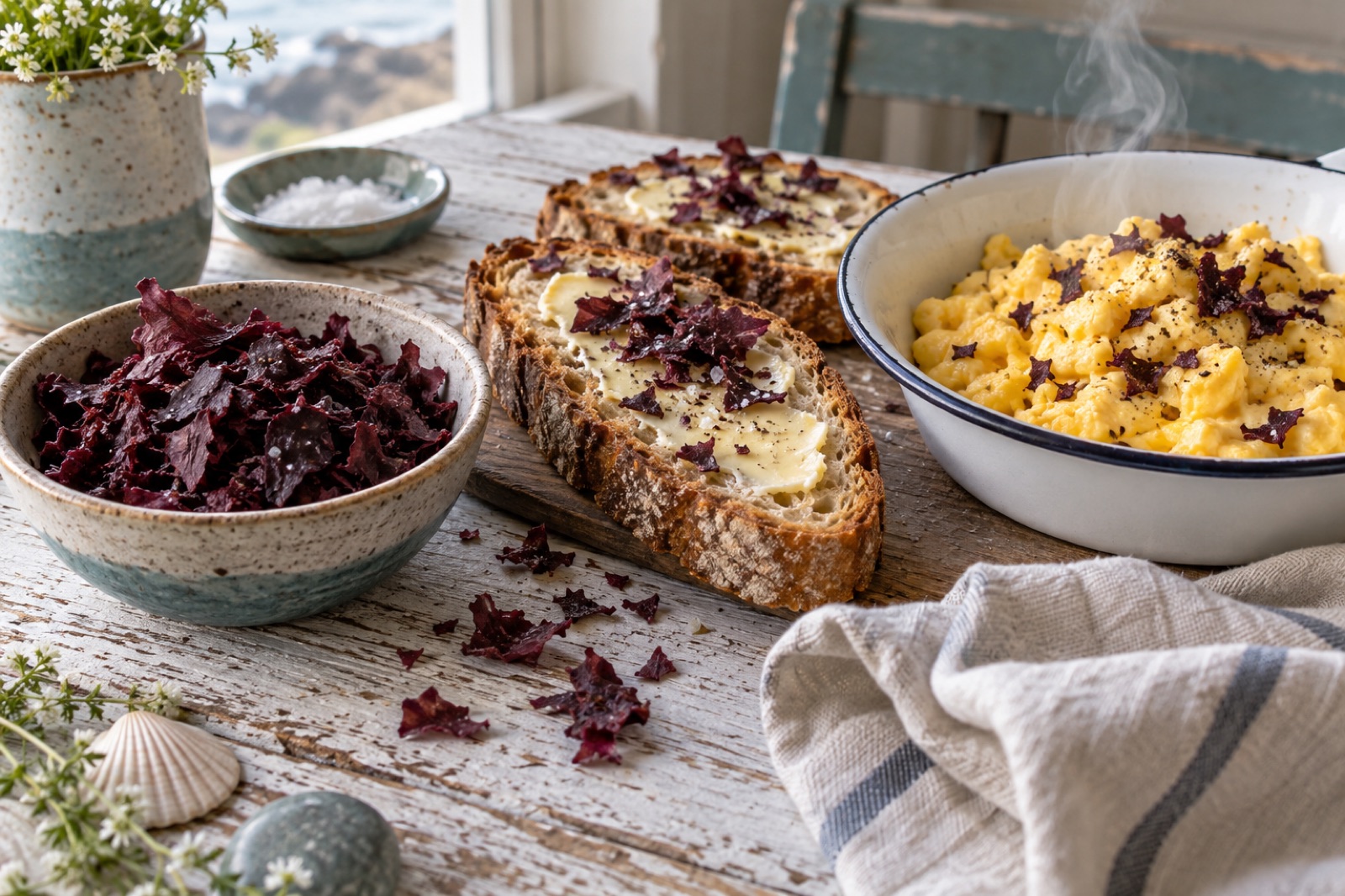
- The egg move: on buttered sourdough under a soft egg. Make this once and it goes in your permanent rotation.
Sourcing and nutrition notes
Buy seaweed labelled for eating with species and origin disclosed — farmed wakame and dulse from cold, clean water are the consistent options; outfits like Tidewright Harvest build their labels exactly for this kind of traceability. Nutrition-wise, tapenade is a condiment built on salt-cured ingredients, so it lands at a spoonful portion by design — which conveniently is also the portion range our seaweed nutrition guide suggests for iodine-rich seaweeds in general. If you want the lightest seaweed load, choose dulse; it's gentler on iodine than the brown kelps. And if tapenade converts you to seaweed-in-small-forms, the five-minute wakame and cucumber sunomono is your next recipe — same species, opposite climate.
Key takeaways
- Seaweed deepens tapenade's existing virtues — brine, umami, gloss — while adding slip that keeps the spread from cloying.
- Wakame is the all-purpose choice; dulse the mild, fruity one; both soak for just 10 minutes.
- Keep the texture coarse; stream in olive oil last; taste before even thinking about salt.
- A vegan version with miso or extra capers loses nothing — the seaweed carries the depth.
- It keeps two weeks refrigerated under an oil cap and upgrades crostini, cheese boards, grilled fish and emergency pasta.
- Buy eating-grade, origin-labelled seaweed; tapenade's spoonful portions fit sensible seaweed eating naturally.
FAQ
Can I use nori or kelp powder instead of wakame?
Nori works in a pinch — toast sheets and crumble them in — but the texture is flecky rather than silky. Kelp powder is potent and easy to overshoot; if that's what you have, start with half a teaspoon and build up across batches rather than guessing.
How long does seaweed tapenade keep?
Two weeks refrigerated under a thin seal of olive oil, in a clean jar, scooped with a clean spoon. The acid, salt and oil make it a naturally stable spread; the oil cap is what keeps the surface from drying and oxidising.
My tapenade is too salty. Can I fix it?
More soaked seaweed is actually the elegant fix — it bulks the paste without adding salt. Failing that, fold in chopped roasted red pepper or a small cooked potato, mashed: both absorb salt gracefully.
Which olives are best?
Oil-cured black olives give the deepest result; Kalamatas are the reliable middle. Avoid canned "ripe" black olives — they're too mild and watery to hold a spread together.
Can I freeze it?
Yes, up to three months; press plastic onto the surface first. Thaw in the fridge overnight and re-emulsify with a splash of olive oil and a stir. The wakame's texture survives freezing well — one of the quiet advantages of seaweed spreads.