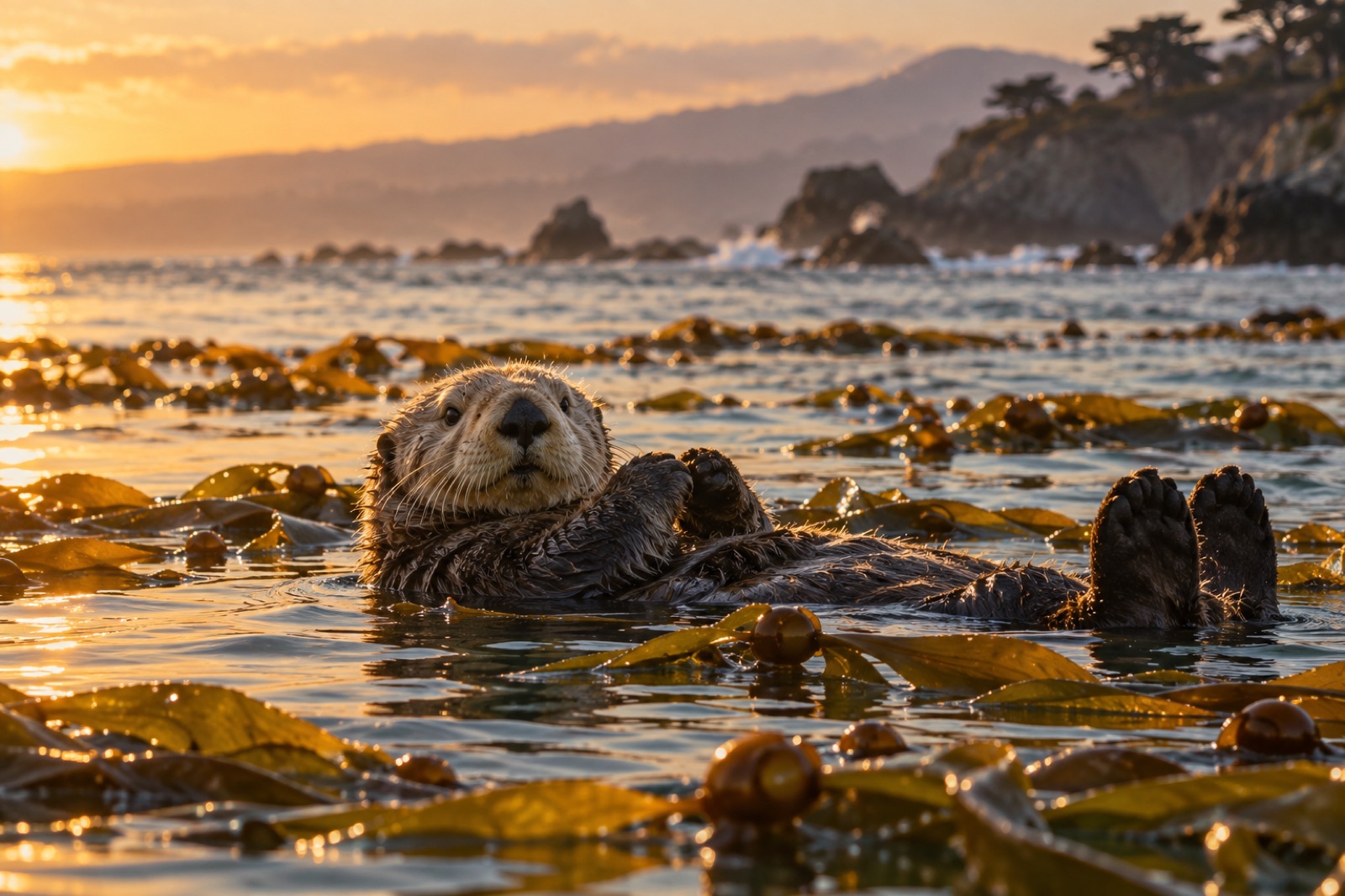
Nine kilometres off the holiday town of Narooma, a granite island squats in the Tasman Sea like a sleeping animal. Montague Island — Barunguba in the language of the Yuin people, the island's Traditional Owners — is 82 hectares of wind-combed grassland and wave-carved rock that punches far above its weight biologically: one of Australia's best places to swim with fur seals, a refuge for the state's northernmost little penguin colony, and the centre of a ring of kelp-fringed reefs that make it the jewel of the New South Wales South Coast dive map. Here's the lay of the island, above and below.
Where we are
Montague sits off the Eurobodalla coast of southern NSW, roughly halfway between Sydney and the Victorian border as the coastline runs. Geologically it's a remnant of an ancient landscape — resistant granite that stayed standing while the sea rose around it — which is why its underwater topography is such a gift: boulder reefs, gutters, walls and bommies in easy depth ranges, wrapped in the golden kelp beds of the temperate south meeting the warmer influence of the East Australian Current from the north.
That overlap of cool and warm water defines everything here. The island sits near the transition between Australia's southern temperate reef world and the subtropical species that ride the current south in summer — which is why a Montague dive can mix resident kelp-forest fish with a visiting tropical butterflyfish in the same fifteen minutes.
The seal colonies
The headline act: both of southeast Australia's fur seals show up here. Australian fur seals hold the larger colony — hundreds of animals, with numbers building through the cooler months into a summer breeding aggregation — alongside smaller numbers of New Zealand fur seals. The animals haul out on the island's northern rocks, and the water around the northern end is where snorkellers meet them: juveniles porpoising through the kelp gutters, hanging upside down to study your fins, and living their best lives as the ocean's most playful neighbours.
This is a wildlife interaction with rules, because the colony is a working nursery. Tours operate inside formal approach distances — no touching, no chasing, calm floating while the seals decide whether you're worth a fly-by. Read the full etiquette in our seal and sea lion encounter guide before you get in; on a Montague trip it will make you a better guest and get you better encounters.
Birds, penguins and a lighthouse
Barunguba is an island of birds. It supports the northernmost breeding colony of little penguins in New South Wales — a population at the edge of its range and lovingly managed, with nest boxes replacing the historical habitat lost to fire and weeds. Crested terns and shearwaters crowd the summer skies, and white-bellied sea eagles and sea-eagles patrol year-round. The island's granite lighthouse, built in the 1880s and now solar-powered, keeps watch over it all; guided walks from the boat landings take in the light, the penguin boxes and sweeping views down the island's grassed spine.
The island's dual name matters, and not just formally: Montague is a Yuin cultural place with thousands of years of story, home to men's teaching sites for the people of the South Coast, and its official gazettal as Barunguba Montague Island Nature Reserve recognises that custodianship. Visit with that frame in mind and the island reads differently.
The underwater estate: kelp and reef
Around the island's sheltered sides, common kelp (Ecklonia radiata) fringes the granite in that dense, chest-deep band that marks all healthy NSW temperate reefs, with urchin-grazed barrens held at bay by a healthy predator community and more kelp in the deeper gutters. The diving is famously easygoing: shallow depths (most of the action between 5 and 18 metres), swim-throughs carved through the boulders, and a resident supporting cast — blue gropers, Port Jackson sharks, wobbegongs under the ledges, and dense schools of reef fish in the summer when warm water pushes south.
Nearby reefs add spice for certified divers: several sites in the surrounding waters are known aggregation areas for grey nurse sharks in the cooler months, making the Narooma–Montague marine precinct one of the most reliably shark-positive corners of the state's dive map.
How to visit
- Getting there. Everything runs from Narooma, a gorgeous inlet town on the Princes Highway (about 5 hours from Sydney, 3 from Canberra). Licensed tour boats make the 20–30-minute crossing to the island.
- Snorkelling with seals. Half-day tours anchor off the colony and put you in the water with the seals — wetsuit, snorkel and game face provided. No scuba experience needed; floating calmly is the entire skill set.
- Island tours. Guided walks cross from the jetty to the lighthouse, penguin habitat and southern platforms; landing is restricted and led by guides, which keeps the fragile ground cover and nesting burrows intact.
- Scuba. Local dive charters run boat dives on the island's sites and surrounding reefs; conditions are generally mild but this is open Tasman Sea water — swell decides the day.
When to go
Seals are year-round residents, with peak energy in the cooler months (autumn through spring), when the water is also at its clearest. Little penguins are most visible ashore in the breeding season across the warmer months. Whale season is the bonus: humpbacks pass close offshore on their migration — northbound into autumn, then southbound past the island with mothers and calves through spring, and whale-watching trips run when the migration peaks. Summer brings the warmest water and the occasional warm-current visitors; winter wetsuits are mandatory kit for anything longer than a quick dip, cold-snorkel layering very much recommended.
A conservation arc worth celebrating
Montague's modern story is restoration done with patience: a century of lighthouse-keeper livestock grazing and kikuyu grass invasion reversed by decades of revegetation and weed control, seabird habitat rebuilt, penguin boxes softening the transition while native cover returns, and the whole island folded into a nature reserve that now protects it end to end. The kelp ringing the base of the island is protected the same way — part of the reef system that shows what South Coast habitats can be when they're let alone. For anyone mapping Australia's coast of hope, Barunguba belongs high on the list.
Key takeaways
- Montague Island (Barunguba) sits 9 km off Narooma, NSW — a granite nature reserve where temperate and subtropical seas meet.
- It's one of Australia's best seal-snorkel destinations: Australian and New Zealand fur seals, with strict encounter etiquette protecting a working colony.
- The island hosts NSW's northernmost little penguin colony plus shearwaters, terns and sea eagles, and carries deep Yuin cultural significance.
- Shallow kelp-fringed reefs, blue gropers, swim-throughs and nearby grey nurse shark sites make it a premier temperate dive precinct.
- Visit from Narooma by licensed tour boat; seals and visibility peak in the cooler months, whales pass in migration season.
FAQ
Can you swim with seals at Montague Island?
Yes — half-day snorkel tours from Narooma anchor near the fur seal colonies and let you float passively while curious seals approach. Strict rules apply (no touching, chasing, or approaching pups), tours use licensed operators, and no dive certification is needed: just comfortable snorkelling.
When is the best time to visit Montague Island?
The seals are resident year-round, most numerous and playful in the cooler months (autumn to spring) when underwater visibility is also best. Little penguins are most evident in the warmer breeding months, and humpback whales pass through autumn and spring migrations. There is no bad season; winter brings the clearest water.
Is Montague Island open to the public?
Yes, but only via guided tours — the island is a nature reserve, and landings, walks and water activities are managed through licensed operators out of Narooma to protect nesting birds, penguin burrows and fragile native vegetation.
What kelp grows at Montague Island?
Common kelp (Ecklonia radiata) dominates the shallow reefs in a dense, surf-loving band typical of NSW temperate coast. You'll also see the kelp-adjacent world typical of the coast: urchin barrens in grazed pockets, sponges and ascidians on deeper rock, and dense fish schools in summer.
Why does the island have two names?
Barunguba is the island's long-standing Yuin name; "Montague Island" was the European name given in 1790. The official dual naming as Barunguba Montague Island Nature Reserve recognises the island's continuing significance to the Yuin people, to whom the island is a place of teaching and story reaching back thousands of years.