Every ocean carbon removal startup pitch deck has the same slide: a graceful arrow from "pilot" to "gigatonne scale." What the deck rarely shows is the two-to-five-year gap between those poles filled with permit applications, environmental review, public comment periods and — if you're doing it right — long meetings in coastal community halls. Permitting is not a bureaucratic tax on ocean CDR; it is the mechanism by which a young field earns its social license. But it is also genuinely hard to navigate, because ocean CDR rarely fits the boxes existing law was built around.
This article maps the consent landscape for ocean CDR field trials — kelp sinking, alkalinity enhancement, biomass sequestration and relatives — with an emphasis on what actually determines timelines. For the techniques themselves, see our overviews of the ocean CDR landscape and who governs ocean carbon removal.
Start with the question: what is the trial, legally?
Law does not regulate "ocean CDR." It regulates activities. The same scientific experiment can fall into four different legal categories depending on how it's characterized, and the characterization often decides the pathway:
- Scientific research. Most jurisdictions exempt small-scale, non-commercial research from full permitting, or route it through a light-touch notification process. This is the on-ramp for genuinely preliminary work — but the exemption evaporates the moment you sell credits or operate at a scale that looks like deployment rather than hypothesis testing.
- Discharge or placement of matter at sea. Adding alkalinity minerals, depositing biomass, or introducing engineered particles almost always triggers the rules written for dumping and discharge — originally drafted against pollution, now applied to interventions. Understanding your national implementation of the London Convention and London Protocol is non-optional here; several parties have adopted interim frameworks treating some ocean CDR activities as requiring assessment under the Protocol's placement rules.
- Marine industry or construction. Deploying structures, moorings, buoys or vessels on a semi-permanent basis engages marine spatial planning, navigation authorities and often aquaculture or energy consents.
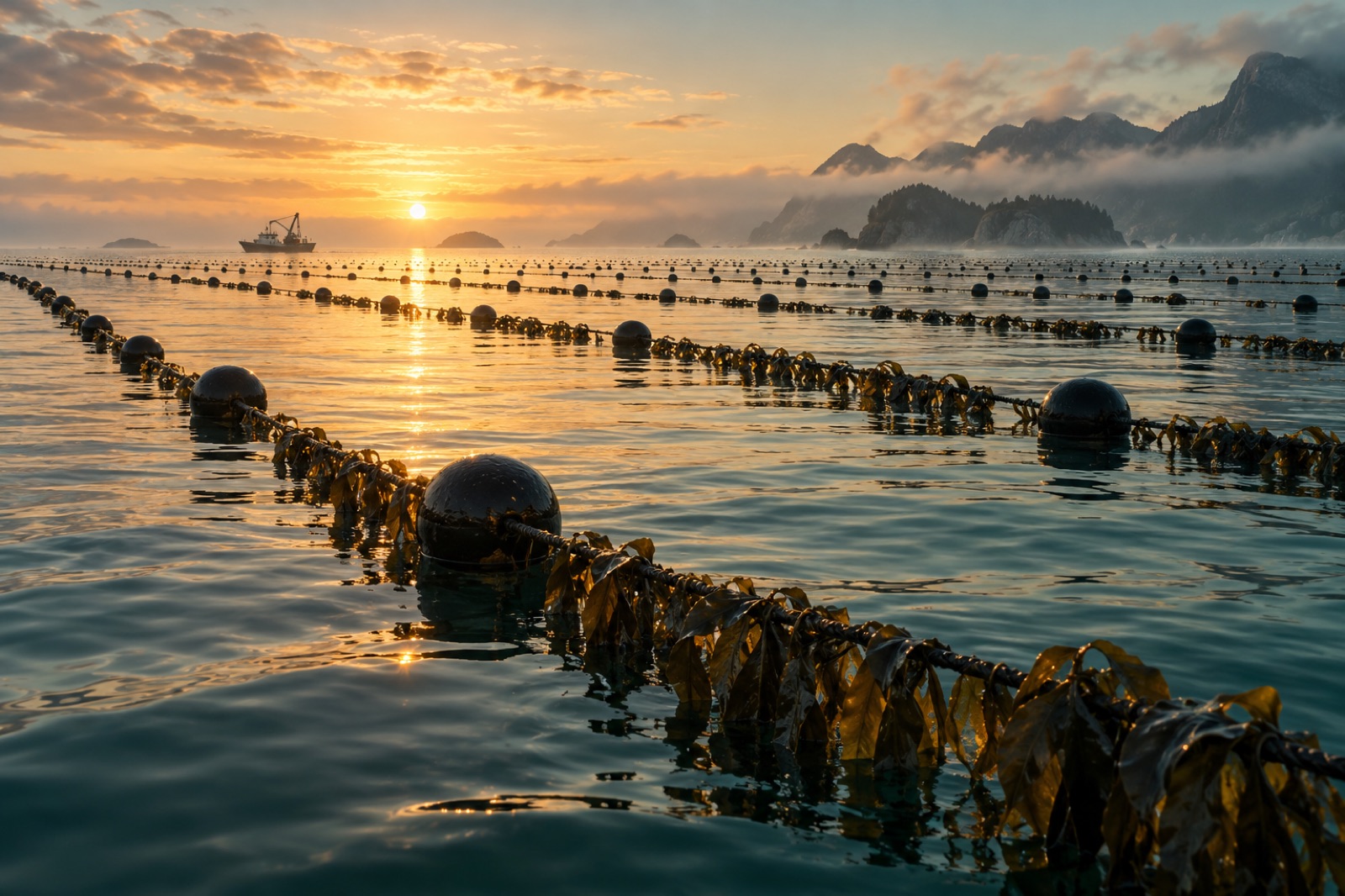
- Aquaculture. Growing kelp biomass at scale before sinking it is, in most jurisdictions, first an aquaculture license — with all the finfish-conflict, navigation and benthic-impact scrutiny that carries.
Honest developers characterize their trial by what it is, not by whichever label gets the fastest permit. Regulators learn quickly, and a trial permitted as "research" that behaves like commercial deployment is how projects lose licenses and fields lose trust.
The layers of consent
Ocean CDR trials commonly touch four to six of the following — often simultaneously, always under different authorities with different clocks.
Environmental impact assessment
The backbone of the process. Key thresholds are scale (area, tonnage, duration), location (sensitive habitats, protected areas, spawning grounds) and reversibility. Early trials often argue for "finding of no significant impact" or equivalent screening-level outcomes; the credibility of that argument rests on baseline data and monitoring commitments, which is why we treat MRV design as a permitting instrument, not just an accounting tool. Offer more monitoring than required — it's cheaper than a legal challenge.
Discharge and placement permits
For alkalinity work, the mineral source, purity, particle size and dosing regime are the permit's physical core, and regulators increasingly ask for the full supply chain — a "marine-safe" alkaline mineral mined with heavy-metal contamination does not exist as a concept, but poorly specified feedstock certainly exists as a risk. For seaweed sinking and biomass placement, expect questions about benthic oxygen demand, smothering, and what happens to the sinking material on the seabed — our article on the seaweed-sinking debate explains why those questions are scientifically legitimate, not obstructionist.
Marine spatial planning and sectoral consents
A trial footprint competes with fishing ground, shipping lanes, cables, wind arrays and marine protected areas. Early engagement with fisheries bodies is usually the fastest way to avoid a late-stage veto; many jurisdictions now require evidence of consultation as a permit annex.
Tenure and seabed rights
Who owns the seabed, and who controls the water column above it? In territorial seas this involves national or subnational authorities, and frequently Indigenous or customary rights holders whose consent may be legally or practically required. Projects touching sea Country or traditional territories should treat free, prior and informed consent as the gating item, not an add-on.
Transboundary and international layers
Beyond 200 nautical miles, the London Protocol framework and the new high-seas biodiversity agreement shape what's permissible; our piece on the BBNJ agreement and ocean carbon maps that frontier. Even within national waters, an intervention visible to neighbors — plumes, pH shifts, drifting biomass — can attract diplomatic attention that slows consent.
Research ethics and data obligations
An emerging norm: publicly funded trials must pre-register designs, publish monitoring data openly and commit to stopping rules. Private trials that adopt the same norms find permitting meaningfully easier, because regulators can point to independent scrutiny.
What actually drives timelines
In practice, three variables decide whether a trial sails in 18 months or stalls for five years.
First-of-kind status. The first trial of a pathway in a jurisdiction pays the full cost of regulatory education. Subsequent applicants benefit from the precedent. If you're first, budget for it; several ocean CDR developers now co-fund baseline science with regulators precisely to build shared understanding before applications land.
Data on the receiving environment. Permit reviewers hate information asymmetry. A trial proposed over a seabed with existing benthic surveys, current models and fisheries data can be assessed fast; one over an uncharacterized habitat triggers years of baseline surveys — paid for, almost always, by the applicant.
Community standing. Objection by local fishers or Indigenous rights holders can convert a screening-level review into a full hearing process. Affirmative support — co-designed trials, benefit-sharing agreements, local employment — moves in the opposite direction. This is not public relations; it's the single strongest predictor of schedule integrity.
A realistic sequencing playbook
For a serious pilot (say, a kelp-sinking trial at a few hundred tonnes of biomass, or an alkalinity release at coastal outfall scale), a workable sequence looks like:
- Scoping characterization (months 1–4): legal opinion on activity classification; informal regulator consultations; desktop environmental screening; oceanographic baseline feasibility; identify rights holders.
- Engagement before application (months 3–9): fisheries bodies, Indigenous and community representatives, marine spatial planners. Document everything.
- Baseline data collection (months 4–14, overlapping): benthic surveys, current and plume modeling, water chemistry baselines sized to the monitoring plan you'll be held to.
- Application package (months 12–18): environmental assessment, monitoring and adaptive-management plan with stopping rules, community consultation record, insurance and decommissioning provisions.
- Review and conditions (months 18–30): expect information requests; respond fast and generously. Negotiate conditions you can actually meet — permit conditions become the enforcement baseline.
- Operate and disclose: the trial's social license ends only with the final monitoring report, published.
Two years, done well, is fast in most jurisdictions. Anyone promising six months is selling something.
Key takeaways
- Law regulates activities, not "ocean CDR" — how a trial is legally characterized often determines its permitting pathway.
- Most trials stack four to six consent layers: environmental review, discharge/placement, spatial planning, tenure, and community or Indigenous rights.
- First-of-kind applicants pay the regulatory-education cost; shared baseline science with regulators is the best investment a pioneer can make.
- Community and fisheries standing is the strongest predictor of schedule integrity — engage before applying, always.
- The London Convention/Protocol framework increasingly governs placement activities at sea; national implementations differ and must be mapped per jurisdiction.
- Permitting is social license machinery; transparency, stopping rules and published monitoring are competitive advantages, not compliance burdens.
FAQ
Can we run a small trial under a research exemption without any permit?
Sometimes — but only for genuinely small, non-commercial, reversible activities, and the classification call should be made with the regulator in writing. Assuming the exemption applies is the classic first-of-kind error; regulators have long memories.
Is seaweed farming for CDR permitted faster than alkalinity enhancement?
Usually yes, because aquaculture licensing is a well-worn path, while alkalinity involves novel discharge questions. But the sinking/harvest steps re-introduce novelty downstream — the permit stack grows with the pathway's ambition.
What if no pathway exists in our jurisdiction yet?
Some regulators now use adaptive or sandbox-style consents: small permitted steps, shared monitoring, staged expansion conditioned on results. Proposing this framework — with your own funding for oversight — is often how the first path gets made.
Do we need permits to sell credits from a trial?
The permits govern the activity; credit sales add a separate layer of market integrity obligations. Selling credits from a trial also typically voids "research-only" characterizations and invites claims scrutiny — see our article on greenwashing and litigation risk.
Who should we hire first?
A marine environmental lawyer with permitting experience in your jurisdiction and sector — before the oceanographers, not after. The legal characterization shapes the science program the regulator will ask you for.