Explore9 min read
The Beginner's Guide to Kelp Forest Diving
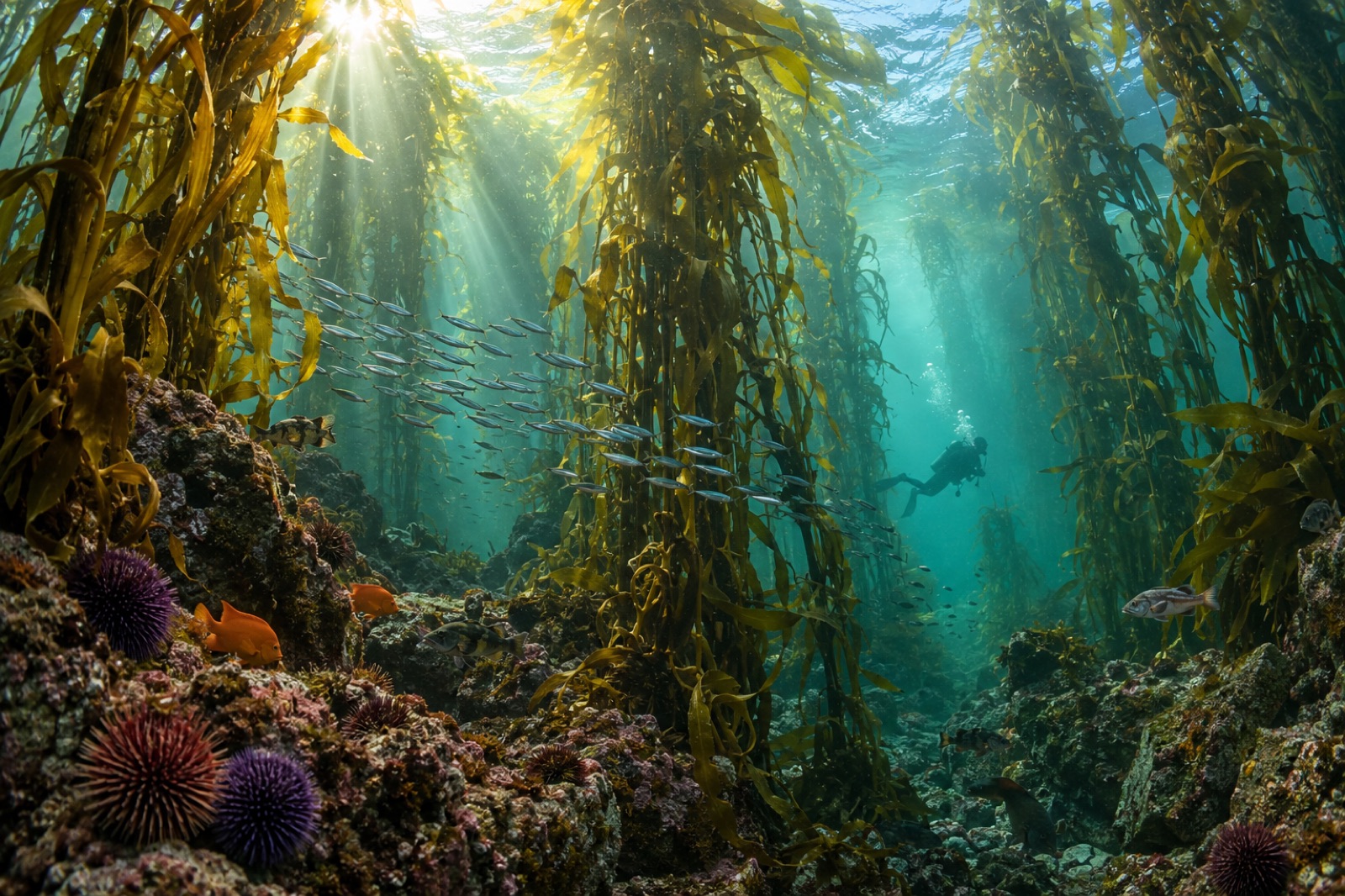
Your first kelp forest dive is easier — and more magical — than you think. Gear, skills, marine life and etiquette for new divers entering the green cathedral.
Tom Okafor ·
The unwritten rules of boat diving kelp forests: anchoring and moorings, canopy navigation, entries and exits, flags, restoration sites and shared-water manners.
Every kelp-coast dive skipper has a story about That Boat: anchored dead centre in the forest on grapnel, prop wrapped in canopy, divers dropping straight onto a harvest site while a fishing charter circles with its hands up. Nobody means to be That Boat. The etiquette of boat diving around kelp forests is just a body of local knowledge written down rarely and enforced often — by skippers, by other water users, and occasionally by the forest itself, which has strong opinions about propellers.
This is that body of knowledge, written down. It's for private boat owners, charter divers and anyone new to running a vessel around kelp country. Much of it is courtesy; some of it is law; all of it makes the diving better.
Know your site's status. Kelp forests sit inside an overlapping patchwork of marine parks, reserves, no-take zones, harvest exclusions and — increasingly — active restoration sites. Check the charts and the local marine park authority's maps, not last year's forum post. On restoration sites in particular, seeded lines pin young kelp to the reef; they look like harmless twine and they take seasons to establish. We keep project locations public at our projects pages, and operators working with us through Reef Partners get site briefings — any skipper can ask for the same information before anchoring.
Brief the crew. Kelp-specific briefing points: prop and kelp, descent routes, surface signals, and the plan if someone comes up off the boat. Five minutes at the dock prevents half the incidents in this article.
Fuel, weather, and the honest decision. Kelp coast weather moves fast. The skipper who cancels at the forecast and buys everyone breakfast is the skipper people dive with for twenty years.
Use the mooring. Popular kelp sites increasingly have public moorings — installed precisely to stop anchor chains scouring the understory. If a mooring exists and it's rated for your vessel, take it. If they exist and it's a first-come situation, arrive early or have a second site planned.
If you must anchor: anchor on sand, outside the forest edge, and swing into deeper water. The canopy you see on the surface sits over rock; an anchor set in the kelp rips plants, chains saw through understory communities that took decades to grow, and a grapnel dragged through a restoration line can undo a season in an afternoon. A forest edge you can see on the sounder as rock meeting sand is your friend.
Never wrap the chain. Set with enough scope that the chain isn't dragging circles across the reef as the boat swings with wind and tide. If you're sitting over a forest watching your chain angle sweep, you're doing habitat damage in slow motion.
The canopy is not a parking spot. Motoring into dense surface kelp fouls props and rudders, shreds fronds, and leaves you stuck in the one place a rescue boat can't reach either. Approach the forest edge up-current, set on sand or pick up the mooring, and let the divers go to the forest rather than driving the boat into it.
Most underwater rules overlap with the shore-diving etiquette in our beginner's kelp diving guide, but a few matter more off boats:
Live-boat pickups are a system, not an improvisation. If you're doing drifting pickups rather than a moored ascent: deploy the SMB well before surfacing, surface next to it, look and listen for traffic, and keep the group tight and visible. The boat doesn't find you; you make yourself findable.
Approach the ladder only when it's clear. A diver hanging under a pitching ladder while the next one climbs is how heads meet hulls. Wait back, clipped if conditions warrant, until signalled.
De-kit facing the sea, keep your mask and reg until aboard. Old advice, still the best. Ladders on kelp coasts pitch with surge you can't feel on the surface.
Log the exit. Before anyone de-kits on a private boat, everyone gets sighted and counted. Canopy hides heads. Count anyway.
A kelp forest is rarely yours alone: fishers work the edges, kayakers thread the fringe, surfers ride the outer breaks, and commercial harvesters hold actual rights in many regions. The hierarchy is simple — human-powered craft and wildlife first, then everything else by manoeuvrability — but the real rule is older: the sea is shared; act like you'll see these people every week, because you will. Don't dive inside an actively fished area without a word with the fisher; don't run channels through marked harvest lines; give kayaks a wide, slow berth — their whole experience is the canopy you're about to motor through, and the paddlers' perspective in kayaking over kelp forests is worth reading for empathy alone if you normally drive a boat.
Rarely illegal in itself, but often restricted: marine parks, no-anchor zones, restoration exclusions and harvest leases can all prohibit it, with fines attached. Even where legal, anchoring in the forest is the single most damaging routine thing a dive boat can do — mooring or sand anchoring outside the edge achieves the same dive without the wreckage.
Each mooring is rated for a maximum vessel length and weather limit, marked on the buoy or listed by the managing authority. Exceeding it risks losing your vessel and the mooring — check the rating, and in strong conditions a mooring is not a promise of safety for any size.
Stay out of dense canopy, approach at low speed with the wind and current in mind, and trim up when manoeuvring at the forest edge. If you do foul: kill the engine immediately (running it winds kelp tighter), and clear by hand from the water or a well-positioned ladder — divers in your group can usually clear a prop in minutes.
Arrive on time, listen to the briefing, be honest about your experience level, keep your gear tidy and your weights secure, surface with gas to spare, and tip the deckhands where that's customary. The unglamorous truth: the best thing a customer does for a kelp forest is make the crew's job easy enough that they have attention left for the site itself.
Ask the local dive shop, check the marine park authority's site notes, and look for project pages like Tidewright's projects listings. Then brief it: thirty seconds of "we'll see seeded lines, hands off, photograph anything unusual" is all it takes.
Your first kelp forest dive is easier — and more magical — than you think. Gear, skills, marine life and etiquette for new divers entering the green cathedral.
Tom Okafor ·
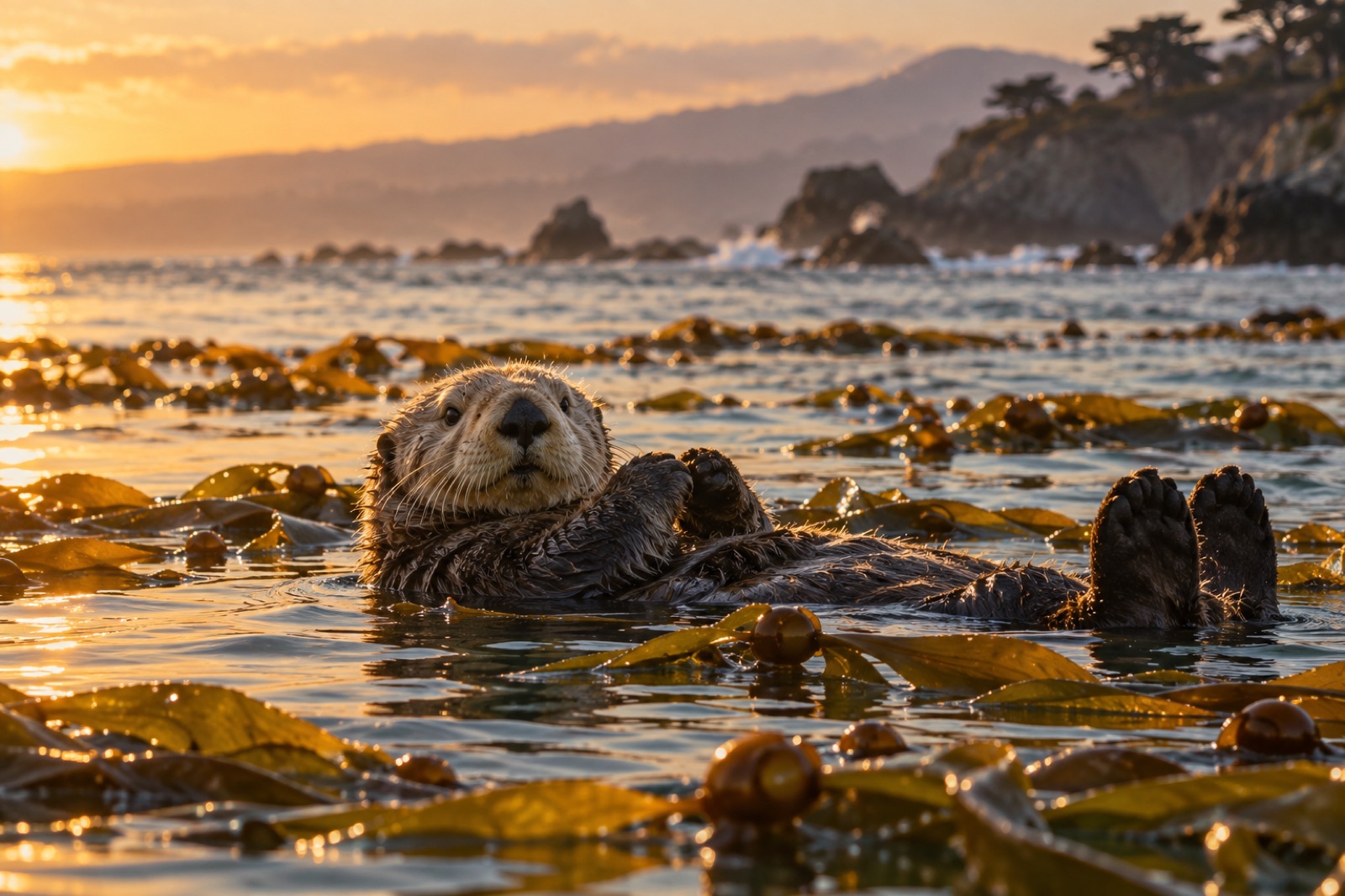
Sea otters look playful but waste energy if you get too close. Practical distances, what to never do, and how quiet watching supports kelp forest recovery.
Tom Okafor ·
First time diving from a boat? Here is the whole day — boarding, briefing, entries, exits and the unwritten rules — so nothing on deck surprises you.
Tom Okafor ·