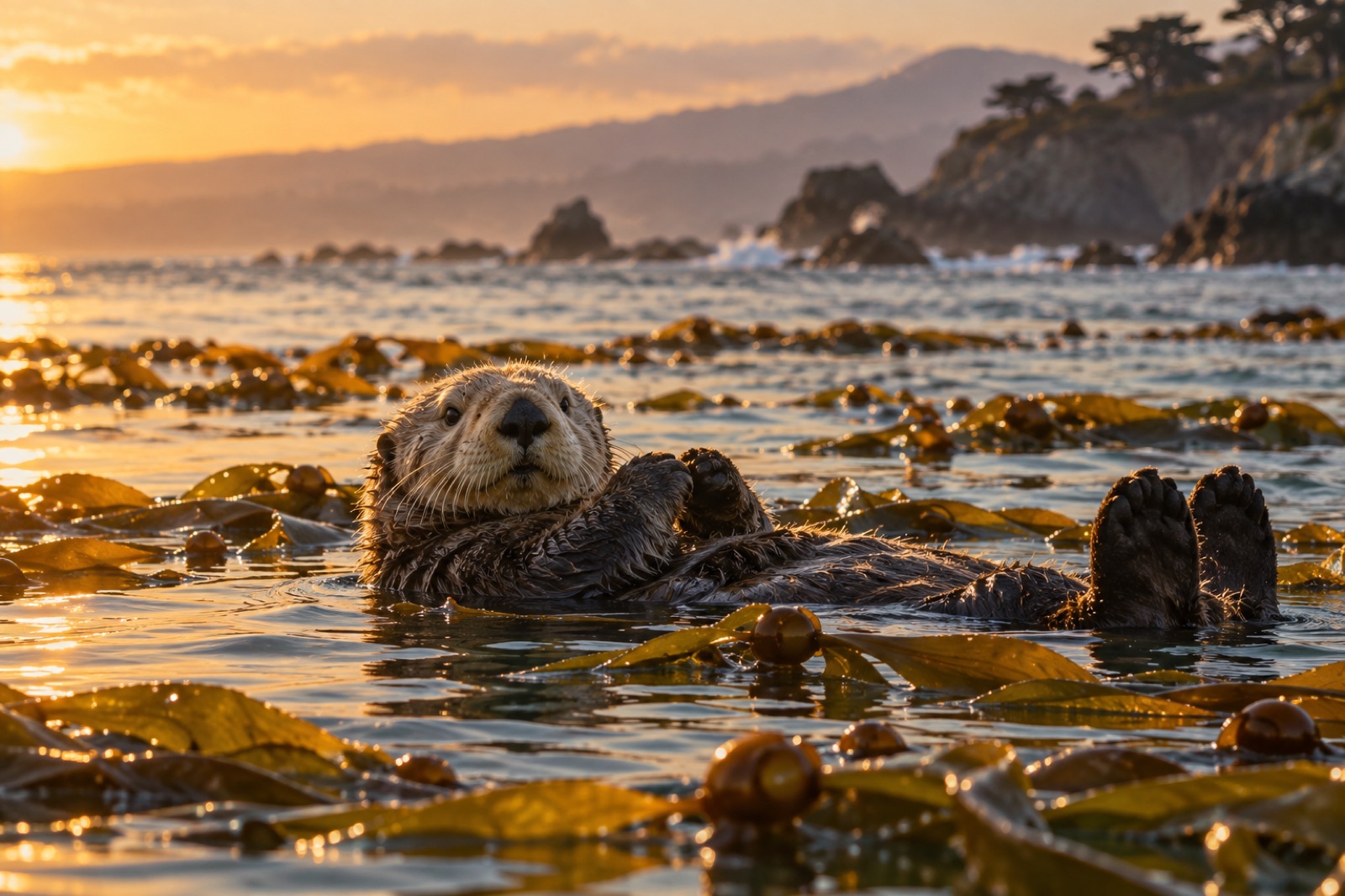
A kayak is the best seat in the kelp forest. You're level with the canopy, quiet enough that wildlife tolerates you, and fast enough to link three habitats in a morning. But kelp coasts are working coasts — wind, fog, swell and boat traffic set the real rules — and the forest itself asks some things of you in return. This guide is about the craft of making a route: how to plan a paddle along a kelp coast, how to move through the canopy without shredding it, and how to be a guest the locals barely notice. For the safety systems underneath all of this — immersion gear, capsize plans, offshore wind — start with our cold-water kayaking safety rules; this piece assumes you've read it.
Planning a kelp-coast route
Wind first, always
Kelp coasts run a daily rhythm: calm or gentle mornings, sea breeze building from late morning, strongest mid-afternoon, easing again toward evening. The classic route trap is a glorious outbound paddle on a light tailwind, followed by a brutal upwind return in whitecaps. Two working rules:
- Plan the hard leg first. If your route is out-and-back, go out into the forecast breeze and home with it. If it's one-way, put the exposed headland section in the morning.
- Know your wind window. Most kelp coasts have a reliable window — often sunrise to late morning in summer — and honest sunset "glass-offs." Check a proper marine forecast, not the beach-weather app; you want wind speed and direction by the hour.
Fog is a route feature, not a mystery
Many great kelp coasts are fog coasts. Summer advection fog rolls in overnight and burns off by midday — or doesn't. Plan for it: carry a compass and a charged phone in a waterproof case, choose routes with unmissable landforms (a major point, a cliff line) rather than open-water crossings, and agree a turnaround rule before launching. Fog that arrives with wind is a genuine hazard — a cold strainer between you and shore; fog on a calm morning is mostly atmosphere, and sometimes the finest paddling there is.
Currents and tide gates
Most kelp beds sit in mild current, but points, narrow passages and big tidal ranges create gates — places where the stream runs hard for part of the tide and is slack at others. Before a route, check three things: the tide times and ranges (read the tables properly), whether any headland on your route accelerates the flow, and the direction of the long-shore drift if you're paddling a beach coast. A "tide gate" route — timing a passage at slack — turns an intimidating coastline into a sequence of easy stages.
Three route archetypes that work almost anywhere
- The sheltered-bay loop. Launch inside a protected bay, paddle the kelp fringe along one shore, cross at the bay's mouth, return along the other. The training ground of kelp paddling: current-free, with bail-out landings the whole way.
- The point-to-point with a shuttle. Two cars, one following the coast road. This unlocks the best water — long forest-lined stretches where the wind and swell run with you. Drop bikes or a second vehicle the night before.
- The outer-reef circuit. In archipelagoes and island chains — think the Channel Islands or Tasmania's eastern bays — a circuit between offshore reefs, with open crossings made early. The most committing archetype; save it for days when the forecast is boring in your favour.
If you're paddling Monterey Bay style water — big beds, resident otters — launch at dawn, ride the kelp fringe east or west with the morning calm, and plan to be off the water as the breeze stands up. That single habit covers most of what goes wrong on kelp coasts.
Moving through the canopy itself
Kelp is tougher than it looks and frailer than it seems. Handle it like this:
- Enter beds on a glide. Drop paddle cadence as you reach the canopy edge; carry momentum in. Digging hard in kelp tangles blades around the paddle and your rudder.
- Use lanes and gaps. Kelp beds are riddled with current lanes and animal trails. Reading them — darker water, blade lines pointing streamwise — is half the pleasure of forest paddling.
- Shallow-stroke through thick mat. Keep the paddle shaft near vertical and use short strokes so the blade clears fronds. If you snag, slide the blade out backwards rather than hauling.
- Don't tow a harvest. Blades and stipes wrapped around skegs, rudders and deck lines pull free eventually — from the plant. A kayaker dragging half a plant behind them is pruning the forest by accident; stop and clear fouls properly.
- Cross wide beds at their narrowest. On big beds, skirt the edges or cross between inner and outer canopy where the forest naturally thins.
Wildlife etiquette: the kayak version
Kayaks are the low-impact craft, which makes their few misuses conspicuous. The rules of the road:
- Give haul-outs a wide berth. Seals on rocks flush at startlingly far ranges if you paddle straight at them; a curved course that keeps you angled past rather than at usually lets you pass at 50–100 metres without a stampede. Flushed seals waste energy and pups get separated.
- Let otters set the range. Otters wrapped in kelp are resting or eating — drift, don't approach. Watching sea otters responsibly has the full etiquette, but the kayak version is simple: binoculars, not bow-ins. A mother with a pup gets double space.
- Don't raft bird colonies. Cormorant and gull colonies on low rocks flush in waves if boats linger beneath; pass at a steady distance and keep moving.
- Speak quietly near the edge. Sound carries astonishingly well across still morning water. Part of the magic of kayak wildlife viewing is that the animal experiences you as scenery; loud voices move you to "threat."
Stay oriented to the rules where you are: many kelp coasts carry legal approach distances for marine mammals and seasonal closures around seal rookeries and bird colonies. Check them when you check the tide — they're both part of the route plan.
Reading the forest from the seat
A few things you can learn from the deck height, once you know to look:
- Canopy texture tells you the bottom. Thickets of surface canopy usually mean rocky reef below in 3–10 metres; sparse fringe means the edge of the bed or deeper water.
- Blade condition tells you the season. Spring canopies are fresh and bright through the growing season; by late summer many species carry epiphyte fur and ragged blades, and storms prune everything back — the seasonal cycle behind the water you'll feel under the hull.
- Surface lanes tell you the current. Kelp stipes lean; canopy gaps align. The forest maps the water's movement in real time — worth watching before you commit to crossing a bed.
- Wrack lines tell you the night before. Fresh kelp on the beach says storms or a big swell is stripping the forest; it also tells you tomorrow's canopy will be thinner and the paddled lanes wider.
When to go
Most temperate kelp coasts peak for paddling in the calm, clear windows of late spring and autumn — decent canopy, lighter winds, crowds elsewhere. Summer offers long evenings but daily sea breezes to schedule around; winter is for experienced cold-water paddlers with the gear and judgment set out in the safety guide. Wherever you paddle, ask the local outfitters first — a five-minute conversation about today's kelp, today's otters and today's wind saves a morning of learning the hard way.
Key takeaways
- Plan kelp-coast paddles around wind first (hard leg into the breeze, off the water before the sea breeze peaks), fog second, tides and current gates third.
- Three archetypes cover most coasts: the sheltered-bay loop, the point-to-point shuttle, and the early-start outer-reef circuit.
- Enter canopy on a glide, use natural lanes, use shallow vertical strokes, and never tow torn kelp behind you.
- Give seal haul-outs wide, curved passes; let resting otters set the range with binoculars rather than bows; respect legal approach distances and seasonal closures.
- Read the forest as you go: canopy texture reveals the bottom, blade condition the season, and surface lanes the current.
FAQ
Can you kayak through thick kelp, or only around it?
You can paddle through most kelp canopy — it's part of the point — by entering on a glide, using shallow, near-vertical strokes and following natural lanes. The etiquette rule is to move through without tearing plants off: clear snagged kelp from your paddle and rudder by reversing, not hauling, and don't let fronds trail from your boat.
What time of day is best for kayaking kelp forests?
Early morning on almost every kelp coast: light winds, flatter water, more active wildlife. Sea breezes typically build from late morning; many locals plan to be off the water by early afternoon. Evening "glass-offs" are a fine second window in settled weather.
Is kayaking near seals and sea lions safe?
Generally yes, with distance. Keep to legal approach limits, avoid getting between animals and their haul-outs, and pass on a curved course rather than pointing at them. The risk is mostly to them — flushed seals waste energy and pups can be separated — so the etiquette distances are also the safety distances.
Do I need a sea kayak, or will a recreational kayak work?
For sheltered-bay loops in warm months, a stable recreational kayak is workable with immersion-appropriate clothing. For anything with exposure — points, crossings, fog, cold water — a decked sea kayak with bulkheads, plus the cold-water safety systems, is the honest minimum. Match the craft to the worst hour of the route, not the best.
What should I check before launching on an unfamiliar kelp coast?
An hourly marine forecast for wind, the tide times and ranges, any headlands that accelerate current, legal approach distances and seasonal wildlife closures, and — most valuable of all — fifteen minutes with a local paddler or outfitter about today's specific conditions.