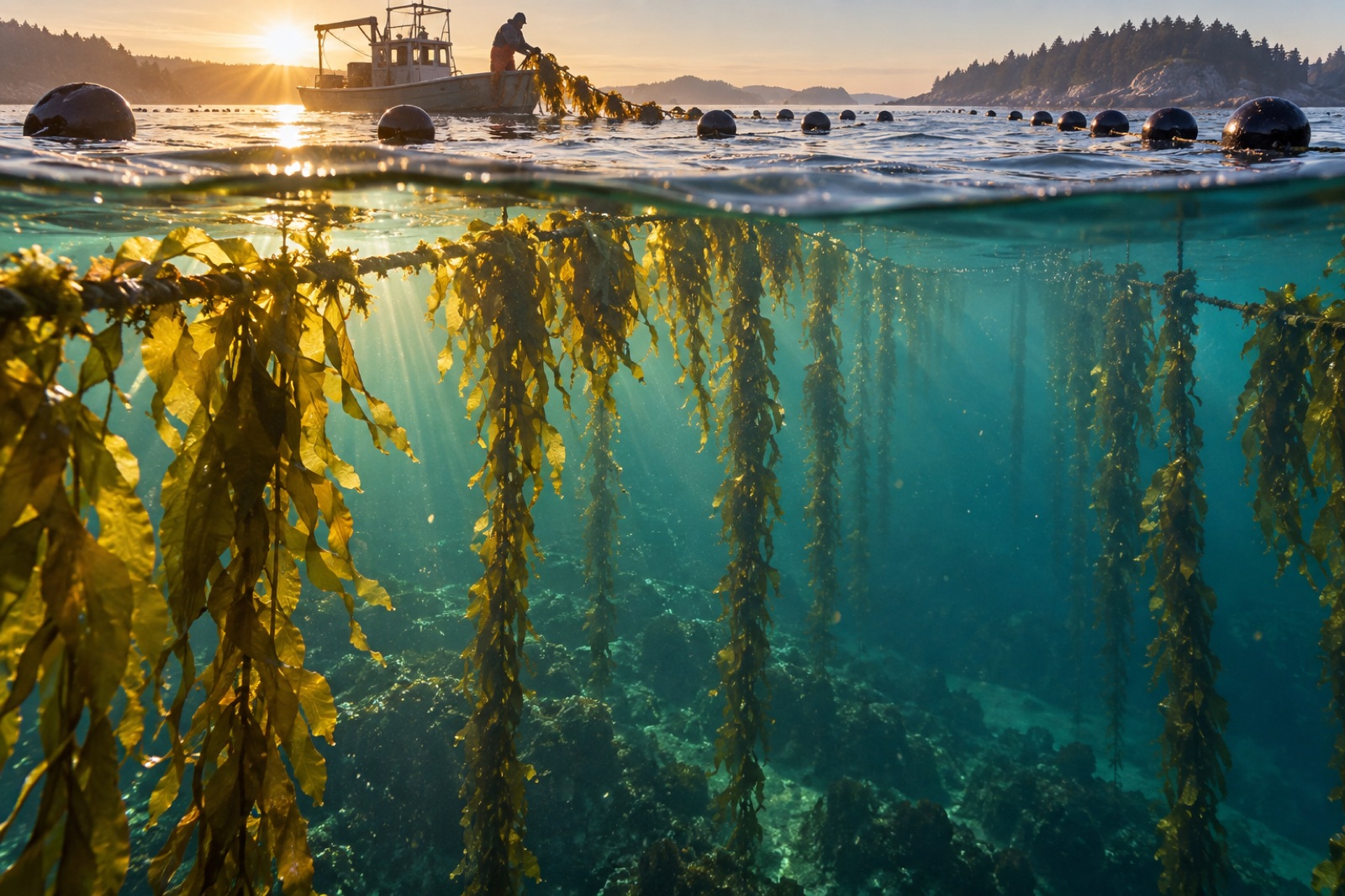
Every season I meet someone who has read about seaweed's growth curve, walked a coastline, and decided to farm it — and whose plan stalls at the same question: who pays for the first three years? Seaweed farming is a working-capital business with a long runway: permits take one to three years, the first meaningful harvest is often eighteen months out, and revenue is seasonal. The good news is that the financing toolkit is broader than most beginners assume. The less-good news is that every funding source asks the same hard questions, and the farms that answer them early are the ones that get money. This guide lays out the realistic capital stack for a small farm, what each funder actually wants to see, and the mistakes that quietly sink applications.
Before any money: the assets that unlock funding
No lender or investor funds an idea; they fund de-risked evidence. Before you ask for a cent, assemble what seasoned applicants bring to the table:
- A permit pathway. Not necessarily the lease in hand — but a written understanding of your jurisdiction's process, timeline, and where you sit in it. Read our guide to seaweed farm permits and be able to walk a lender through it. A farm without a credible permit path is a hobby with a business plan.
- A site with evidence. Depth charts, exposure assessment, a season of temperature and nutrient readings if you can get them. Site quality is collateral in everything but name.
- An offtake signal. A letter of intent from a buyer, a restaurant group, a processor — anything showing a market exists at a price. Even better: a draft contract.
- A credible operator. Your time on the water, your trainings, your named mentors and advisors. In aquaculture finance, the operator is the asset underwriters price first.
- A financial model that matches reality. Build it bottom-up from gear counts and unit costs — our seaweed farm economics article has the honest starting numbers — and stress-test it for a lost season.
The capital stack, layer by layer
Layer 1: Your own runway
Almost every funder expects founder equity — savings, a working spouse's income, a phased build where you keep a day job through permitting. This isn't gatekeeping; it's alignment. Plan for it: the smaller your first farm, the less external money you need to prove the model. A half-hectare pilot has financed many a ten-hectare second phase.
Layer 2: Grants — the industry's first fuel
Public grants have built more seaweed farms than any other single source. Fisheries and aquaculture development funds, coastal community programs, regional development agencies, climate and innovation grants, and research-partner funding all regularly support seaweed projects. The honest profile of grants:
- They reward legibility: clear community benefit, environmental co-benefits, workforce development, innovation. Shape your application to the program's goals, not yours.
- They rarely cover 100% and often pay in arrears — you spend first, claim later. That creates a cash-flow gap you must bridge.
- They are competitive and slow. Budget six to twelve months from application to money.
Stack grants where programs allow it — a site-monitoring grant plus an equipment grant plus a workforce grant can underwrite most of a pilot farm. But never let grant scopes design your farm; design the farm, then find grants that fit its parts.
Layer 3: Friends, family and community
The oldest layer. If you take community money, take it properly: written terms, honest risk disclosure, and clear expectations. Community-supported aquaculture models — members prepay for a share of harvest — have funded small farms and double as marketing, but they create delivery obligations in your worst year as well as your best.
Layer 4: Bank and credit-union loans
Traditional lenders can work once you have collateral and a season or two of operating history. Equipment loans against vessels and machinery are the easiest entry; operating lines of credit against receivables come later. Expect lenders to want to see the permit (or a near-final one), insurance in place — see insuring a seaweed farm for what underwriters require — and personal guarantees. Many coastal credit unions and development banks have aquaculture desks; find them and talk early, before you need the money.
Layer 5: Equity investors
Equity — angel investors, aquaculture venture funds, strategic investors such as feed companies and food brands — belongs at a specific scale of ambition. If your model is a profitable family farm selling regionally, equity is the wrong tool: investors need a return event, and a beautiful small farm may never give them one. If your model is a seedstock hatchery serving a region, a processing brand, or a multi-site operation, equity fits. Investors will dissect your unit economics, your team's capacity to execute and your route to a market big enough to return their fund. Know which conversation you are in before you walk into it.
Layer 6: Pre-sales and offtake financing
The most underused layer. Processors and brands with supply anxiety will sometimes pay deposits, sign advance-purchase agreements, or co-fund equipment against future delivery. An offtake contract with prepayment terms can be worth more than a grant: it's revenue, it's validation, and it's bankable. The caution: don't sell forward more than half of a conservative harvest estimate until you have two seasons under your belt.
What lenders and investors actually ask
Across hundreds of these conversations, the questions converge:
- Show me the permits. Status, timeline, precedent for approvals in your waters.
- Show me the site. Why this water, and what happens to it in a bad year.
- Show me the buyer. Who pays, how much, for what grade, and what happens if they walk.
- Show me the operator. Your hours on the water, and who covers you.
- Show me the downside. A lost crop, a price 30% under plan, a key-person injury — and the farm still stands.
- Show me the cash flow by month. Not annual revenue. Seaweed income is lumpy; the months between planting and harvest are where undercapitalized farms die.
Notice what is missing: nobody serious asks about total addressable market for a five-hectare farm. They fund specific water, specific gear — start with an honest equipment budget — and specific people.
The mistakes that sink applications
- Raising for gear before permits. Owned anchors on leased-nowhere seabed are not assets; they're evidence of sequence error.
- Pricing optimism. Modeling on top-quartile prices and yields. Fund at median prices, celebrate upside quietly.
- No working-capital buffer. Equipment consumed every dollar, fuel and wages didn't get the memo. The rule of thumb that survives contact with reality: whatever your capex, hold a third again as operating reserve.
- Ignoring insurance. No storm coverage, no loan — and increasingly, no lease.
- Confusing biomass with revenue. Wet tonnes in the water are not money; graded, dried, delivered product against a contract is.
- One-shot fundraising. Raising everything at once for a master plan, instead of tranches keyed to milestones: permit, pilot, first harvest, expansion.
If you're earlier in the journey than this article assumes, work through the beginner's guide to starting a seaweed farm first — the sequencing there is the sequencing funders want to see.
Key takeaways
- Seaweed farm finance is layered: founder runway, stacked grants, community money, bank debt once you have history, equity only for scale models, and offtake prepayment as the most underused tool.
- Permits, site evidence, buyer signals and operator credibility are the assets that unlock every layer — assemble them before you ask.
- Grants fund legibility and rarely cash upfront; plan for arrears and never let grant scopes design your farm.
- Lenders ask about downside, monthly cash flow and insurance; investors ask about unit economics and exit; answer the conversation you're actually in.
- The fatal errors are gear-before-permits, top-quartile price modeling, and zero working-capital buffer.
FAQ
How much money do I need to start a small seaweed farm?
It varies enormously by jurisdiction, site and whether you own a boat, but a lean half-hectare pilot on longlines is commonly achievable for the price of a modest vehicle plus a season's operating costs, while a serious multi-hectare operation with processing is a far larger commitment. Build the number bottom-up from your actual gear list, permit fees, seed, labor and a working-capital buffer rather than trusting rule-of-thumb figures.
Are there grants specifically for seaweed farming?
Yes. Fisheries and aquaculture development funds, coastal-economic programs, climate and innovation grants, and research partnerships all fund seaweed projects routinely. They are competitive, pay slowly and usually in arrears — stack them where rules allow and treat them as accelerants, not the whole plan.
Will a bank lend to a first-time seaweed farmer?
Rarely on the farm alone. Banks lend against collateral, operating history and permits. A first-timer's realistic path is founder equity plus grants for the pilot, then equipment finance and operating credit once the farm has a season of records and a lease in hand.
Should I take venture investment for my seaweed farm?
Only if your model has a scale outcome an investor can sell into — a regional hatchery, a processing brand, a multi-site platform. A profitable family-scale farm is a wonderful business and a poor venture investment; mixing the two expectations makes everyone miserable.
Can I pre-sell my harvest before I grow it?
Yes, and you should try — restaurant CSAs, processor deposits and advance-purchase agreements all exist. But cap forward sales at half of a conservative yield estimate until you have two seasons of your own data; an unmet commitment in a bad year costs more than the cash was ever worth.