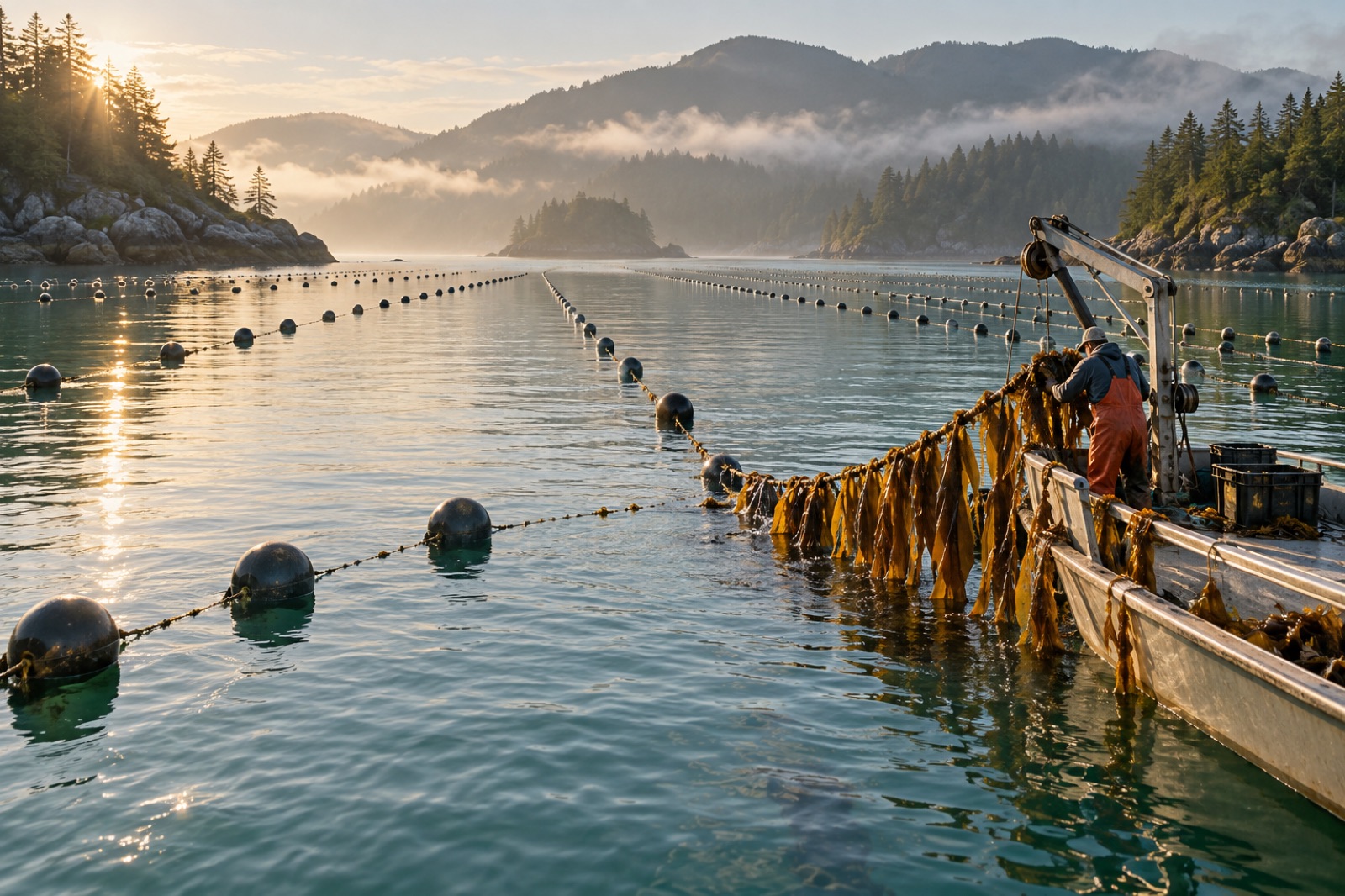
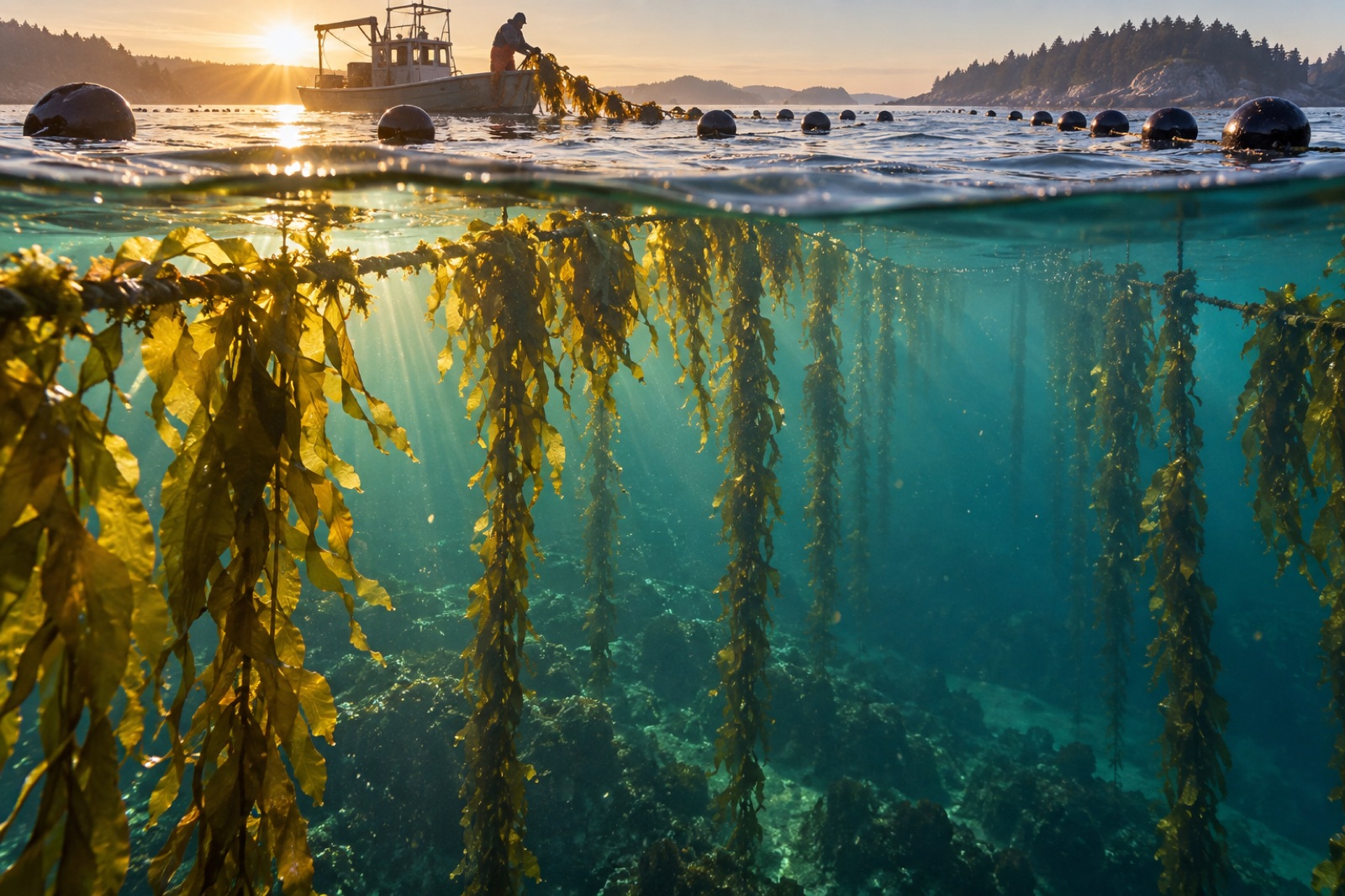
Nothing in seaweed farming is technically harder than anything in shellfish or finfish aquaculture — except, in many places, the paperwork. Coastal water is public, crowded and contested, and a farm is a private structure sitting in a shared space. Getting permission to put it there touches marine tenure, environmental law, navigation, fisheries, and often Indigenous rights and title. The process is navigable — thousands of farms on every continent prove it — but it rewards preparation and punishes optimism.
This is a map of the permitting landscape: what approvals a farm typically needs, in what order, how long they take, what they cost, and what gets applications approved or refused. It is a guide, not legal advice — every jurisdiction's regime differs, and for a real site you will ultimately need local counsel or a consultant. For the business plan this paperwork enables, see our guide to starting a small seaweed farm.
The six approvals most farms need
Exact names vary by country and state, but the underlying permissions cluster into six buckets. Expect to need most of them.
1. Site tenure: the lease or occupation right
Before you can grow anything, you need the right to occupy the water column and moor to the seabed. This might be a formal aquaculture lease from a state or provincial government, a seabed licence from a Crown or public land agency, or a concession in territorial waters — everywhere a variant of the same idea: exclusive use of a defined polygon for a defined term, with annual rent. Tenure documents specify what species and structures are allowed, so the permitted species list matters as much as the boundaries.
2. Environmental assessment and consent
Some level of environmental review is nearly universal. For small, low-impact seaweed farms it may be a screening-level assessment — a statement of site conditions and a biosecurity plan. For larger or more sensitive sites, expect seabed surveys (your moorings land on something, and it needs to not be a protected habitat), visual-impact assessment for nearshore sites, and benthic monitoring conditions attached to any approval. Seaweed farms usually fare well in this process — they add nutrient removal and habitat rather than feed and chemicals — but "usually" depends on proving the site isn't overlaying seagrass, a spawning bed or a migration corridor.
3. Navigation and marine safety
Anything with lines, buoys and lights sits within the purview of the maritime or harbour authority. Expect requirements for marking (buoys, lights, shapes), charting notification, minimum distances from channels and anchorages, and sometimes a navigational risk assessment. This consent is usually procedural if your site selection was sane — and brutal if it wasn't.
4. Fisheries and resource access
Wild fisheries, recreational fishers and licensed harvest areas may overlap your polygon. Consent processes commonly require consultation with, or formal consideration of, existing fishing rights — and in countries with treaty or customary fishing rights, that consultation carries real legal weight. Coming to those conversations with co-existence proposals (access corridors, seasonal schedules, genuine benefit-sharing) is both the right thing and the pragmatic one.
5. Indigenous and community consent
Beyond formal fishing rights, many jurisdictions now require meaningful engagement with Indigenous nations and local communities whose sea country or coastal commons your farm would share. This is not a checkbox. The best outcomes we see — including in our own Reef Partners work with Indigenous sea-country ranger programs — begin with the conversation, not the application: approach first, listen, co-design monitoring or employment where interest exists, and only then file. Communities that meet a project for the first time in a statutory comment period tend to meet it unhappily.
6. Biosecurity and species authorisation
Moving seed stock between hatchery and sea, and cultivating anything novel, crosses biosecurity law: hatchery certification, disease screening, restrictions on non-native or non-local genetics. This is one more argument for locally sourced, site-matched seed — the model behind our Holdfast hatchery program — because "grown from local spores, returned to local water" is the easiest biosecurity story to approve. Our piece on seaweed seed stock explains what that pipeline looks like.
The order of operations
Treat permitting as a project with a critical path, not a stack of forms:
- Screen sites against constraint maps — navigation channels, marine protected areas, designated aquaculture zones, military and dredging exclusion areas, known heritage sites. An hour with the public maps eliminates sites that would die at month eighteen.
- Pre-application meeting. Most consent authorities offer (and prefer) early informal review. Bring a one-page site description, a layout drawing, species, tonnage, and your draft monitoring thinking. You will learn which of the six buckets will be easy and which will eat the timeline.
- Baseline surveys. Anything the environmental process will ask of you — seabed habitat, water quality, existing users — is cheaper and faster if you commission it before being asked, in the right season.
- Consult while you file. Run the community and Indigenous engagement in parallel with the formal application, and document it thoroughly.
- Build review time into the business plan. Farm calendars have a hard annual deadline — miss the autumn seeding window and you've missed the year (our harvest timing guide shows how tight the season gets at the far end). Work backward from the seeding date, not forward from today.
Timelines and costs: honest ranges
Jurisdictions vary enormously, but operators' experience clusters into a recognizable pattern:
- Small farms in countries with established seaweed aquaculture regimes (much of East Asia, parts of Europe and North America): commonly 6 to 18 months from first contact to consented site, and professional fees in the low tens of thousands of dollars or equivalent.
- Novel species, sensitive sites, or newer regimes: two to four years is not unusual, with environmental studies and legal support pushing total pre-consent costs into six figures for larger proposals.
- Ongoing costs are real too: lease rent, annual reporting, environmental monitoring conditions, and re-approval cycles. Build them into the farm's operating budget alongside equipment and gear costs.
The single cheapest accelerant is site selection: a well-screened site in a designated aquaculture zone with baseline data already assembled routinely beats a beautiful site nobody has cleared.
Why applications get refused — and how not to
The refusal reasons repeat across jurisdictions:
- Habitat conflict — the site overlays seagrass, maerl, a known spawning bed or other protected habitat. Fix: screening maps and a baseline survey before you fall in love with the polygon.
- Navigation conflict — insufficient clearance from a channel or anchorage. Fix: a maritime conversation at step two, not step eight.
- Cumulative-impact concerns — one farm too many in a bay already carrying nutrient or visual load. Fix: lead with your nutrient-removal numbers; seaweed is usually the farm regulators wish were applying, so make that case with data.
- Inadequate consultation — the community met the project in the comment period. Fix: engage first, document everything, and let genuine design changes show you were listening.
- Unviable proposals — operations with no demonstrated markets, gear plans or seed supply. Fix: arrive with the whole plan, including offtake and the longline engineering to back it.
A note on working with regulators
Consent authorities see many more weak applications than strong ones, and they remember both. The applicants who glide through treat regulators as project stakeholders: they ask early what evidence is wanted, deliver exactly that, meet every deadline, and volunteer monitoring rather than resisting it. At Tidewright we hold ourselves to the same standard on restoration and farming permits alike — our work with coastal councils and governments starts from the premise that the regulator's caution is legitimate and our job is to make approval easy to justify.
Key takeaways
- Most farms need six categories of approval: site tenure, environmental consent, navigation, fisheries access, Indigenous and community engagement, and biosecurity.
- Screen sites against constraint maps and fisheries before anything else — site selection is the cheapest permitting tool that exists.
- Budget 6–18 months in mature regimes and up to several years for sensitive or novel proposals; work backward from the seeding season.
- Refusals concentrate around habitat or navigation conflicts, cumulative impact, weak consultation, and unviable business plans — all preventable with preparation.
- Engage Indigenous nations and local communities first and substantively; consent earned early is the strongest asset an application can carry.
FAQ
Do I need a permit for a small seaweed farm?
Almost certainly yes. Even small operations typically need site tenure, navigation marking approval and some level of environmental and biosecurity authorisation. A few jurisdictions offer simplified consents for small, temporary or research-scale operations — check whether your region has such a pathway, as it can cut both time and cost dramatically.
How long does seaweed farm permitting take?
In countries and states with established seaweed aquaculture frameworks, expect 6 to 18 months from first contact to consented site for a straightforward farm. Sensitive sites, new regimes or novel species can take two to four years. Always plan the application backward from your seeding season, since missing the autumn window costs a full year.
How much do permits and leases cost?
In mature regimes, application fees, surveys and professional help for a small farm typically run into the low tens of thousands of dollars or equivalent, plus annual lease rent and monitoring costs. Large or contested sites can see pre-consent costs in six figures. The expensive line is usually environmental survey work done right, not the government fees themselves.
Can I farm a non-native kelp species?
Usually only with explicit authorisation, and often not at all. Biosecurity rules increasingly require that cultivated seaweed be grown from local spores or certified seed, to avoid genetic mixing with wild populations and disease transfer. Plan on sourcing locally produced, site-matched seed stock — it is both the compliant and the agronomically better option.
What's the biggest mistake in a farm application?
Treating consultation as a formality. Applications die most often in the space between the paperwork and the people — fishing interests, Indigenous nations, local councils, nearby residents — who meet the project late, feel unheard, and oppose it. Genuine early engagement, with visible design changes, prevents more refusals than any survey.