Farming10 min read
Kelp Farm Equipment: What You Need and What It Costs
The complete equipment list for a kelp farm — boat, moorings, seeded lines, harvest and handling gear — with realistic cost ranges and buying strategy.
Naomi Reyes ·
From 5-metre skiffs to crane barges: how to choose, equip and use a workboat for a kelp farm — propulsion, deck layout, lifting gear and the mistakes that cost seasons.
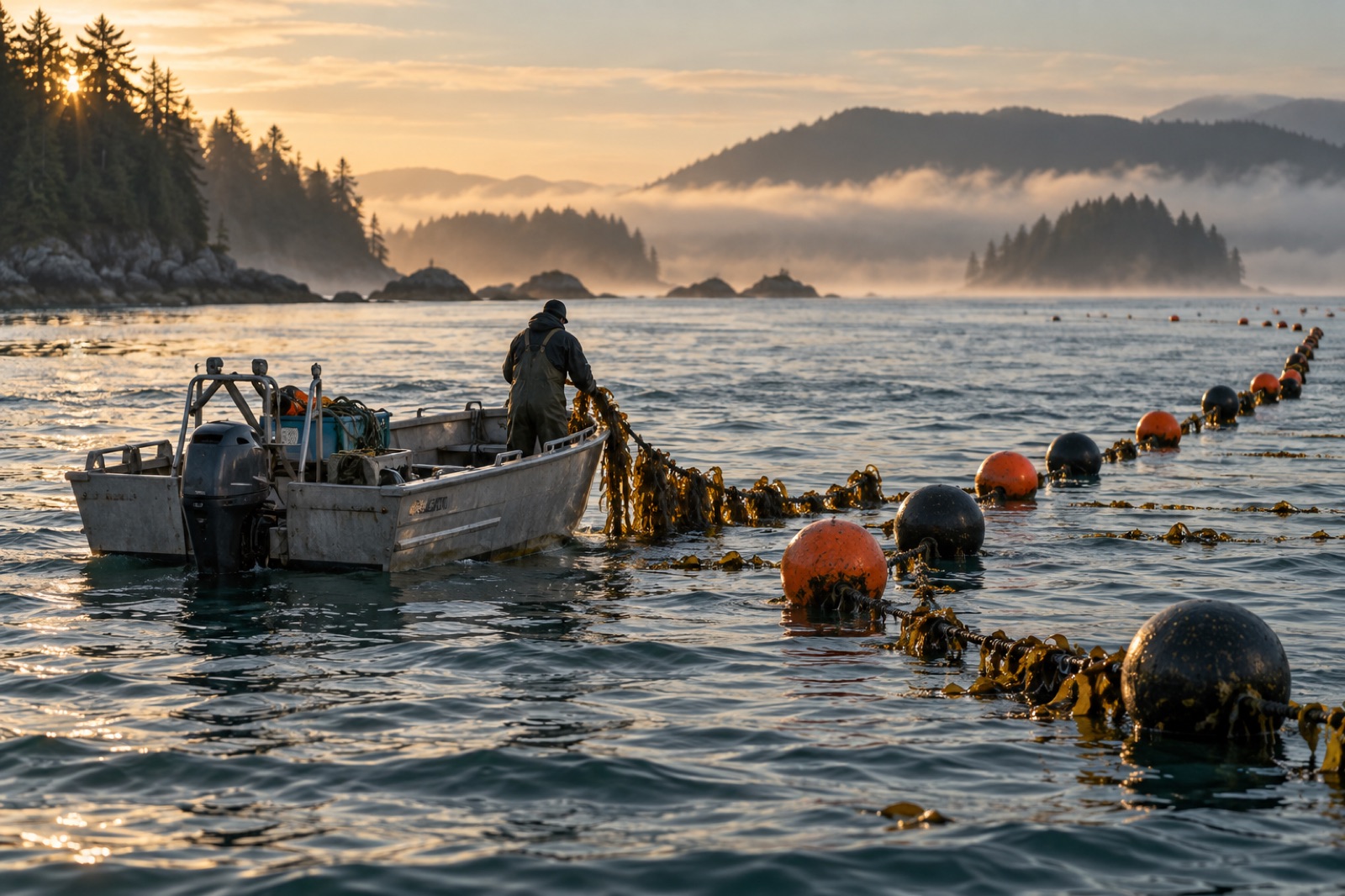
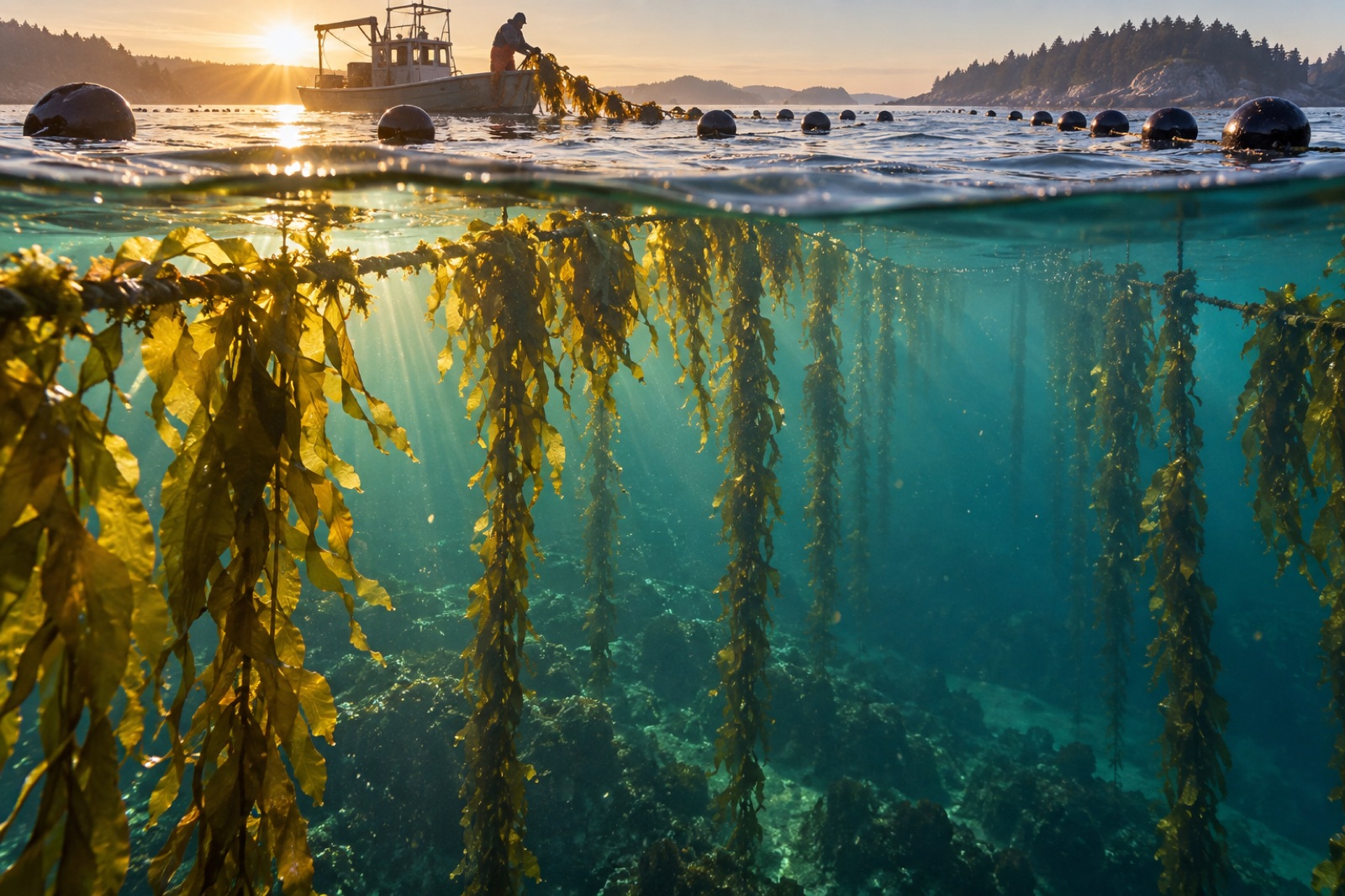
Every seaweed farm has a second farm nobody puts in the business plan: the boat. Kelp grows submerged, out of sight, and everything that matters about it — deploying seeded line, tensioning headers, checking storm damage, hauling four wet tonnes against a falling tide — happens from a deck. Choose and rig that deck well and the farm feels effortless; choose it badly and every visit becomes a small emergency. This article is a working guide to the vessels and gear real kelp crews use, what actually matters when choosing, and the mistakes that quietly cost whole seasons.
If you are costing a first farm, our equipment and budget rundown covers the shore side; here we stay on the water.
Before brands and hull shapes, write down the jobs. A farm workboat must:
Rate any vessel against this list, in this order, and most mistakes never happen.
The backbone of small and medium farms. A centre-console or open work skiff in aluminium or reinforced polyethylene with a 40–90 hp outboard does 90% of the job at a fraction of bigger-boat cost: fast to trailer, cheap to run, easy to shove off a beach.
Rig it for the work, not the showroom. What matters most: a flat, uncluttered working deck aft; a small davit or a line-hauler for grow-line; gunwales low enough to work the water comfortably; and seating that doesn't eat deck space. Non-slip deck coatings and a simple splash rail are worth more than electronics beyond a chartplotter and VHF.
When the farm passes a few hectares — or the site sits far offshore — you step up. Catamaran workboats and bow-landing-craft designs dominate here because both deliver what kelp work actually wants: a wide, stable, flat working platform and serious deck load. Cats hold station beautifully alongside lines; landing craft kneel their bow to a beach or ramp so forklifts and bulker bags roll straight off.
Typical rig at this tier: a small hydraulic crane (0.5–2 tonne lift), a capstan or line-hauler, twin outboards or inboard diesels, and deck space for four to six bulker bags. Many of these vessels earn their keep beyond the farm — subcontracting to other growers, mussel farms or marine contractors — which is how most small operations justify owning one.
Almost nobody should own a crane barge. But almost every farm needs one workboat-with-crane day a season: setting anchors at deployment and lifting moorings at breakdown. The standard industry answer is hiring a local aquaculture contractor or fishing vessel with a crane, by the day. Contracted well, this is vastly cheaper and safer than wrestling 500 kg anchors off a skiff with a davit and hope.
Our half-hectare farm walkthrough describes the rhythm: skiff for everything weekly, contract vessel twice a year.
Whatever the engine, guard the prop. Kelp farms are rope forests, and a line around the shaft is the most common mechanical failure in the industry. A line-cutter on the shaft, a spare shear pin kit, and practised neutral-and-reverse work near gear will save you a season-ending tangle.
The difference between a boat and a workboat is its deck. The layout that works, whatever the size:
Farms kill through drowning, cold and propellers, and the prevention is unglamorous: personal flotation worn (not stowed), an immersion plan for your latitude's water temperature, VHF plus a charged phone in a waterproof case, a knife on your person rigged to cut you free of line in one motion, and a kill cord used every single time the engine runs. Tell someone shore-side your plan and return time, every trip. Kelp is patient; crews are not always.
After years of watching farms fit out their first vessel, the recurring errors are consistent:
A 5–7 m open skiff with a 40–90 hp outboard handles essentially all routine work at that scale, including harvest, provided it has a clean working deck and a small line-hauler. Contract a crane vessel for the two days a season you need to set or lift moorings.
For active farm work, cats win: a wide, stable working platform, minimal roll at rest alongside lines, and huge deck area for kelp bags. Good monohull landing craft are the close alternative, especially where beach launching matters. Fast monohulls are the poor choice — speed that a working farm does not need, stability it cannot offer.
Used, inspected and simple. Kelp farming is brutally hard on boats — salt, load, beaching, knocks against gear — and a working vessel will wear the marks within a season. A sound used hull with a serviced engine, re-rigged for line work, leaves budget for the hauler, crane days and safety kit that actually change outcomes.
On the boat you own, usually no. On the boat you contract for deployment and breakdown, yes. A small 0.5–2 tonne hydraulic crane becomes worth owning only at several hectares or when you subcontract to other farms — many workboat owners cover their vessel costs exactly this way.
Working a rope forest without protecting the propulsion. A grow-line around the shaft is the industry's signature failure: it kills propulsion at the worst moment, threatens to pull gear across the farm, and is miserably hard to clear in swell. Fit a line cutter, practise drifting through gear in neutral, and never reverse hard without knowing what's behind you.
The complete equipment list for a kelp farm — boat, moorings, seeded lines, harvest and handling gear — with realistic cost ranges and buying strategy.
Naomi Reyes ·
A concrete, season-long picture of a half-hectare kelp farm: layout, gear, hours, yields and honest numbers — the smallest size that still teaches you everything.
Naomi Reyes ·
How to design and prepare a seaweed farm for storm survival: load cases, safety factors, storm checklists, and the preparation that decides what breaks.
Naomi Reyes ·