Kitchen7 min read
Cooking with Dulse: The Bacon of the Sea
How to cook dulse — the North Atlantic red seaweed that fries up smoky and crisp. Pan-frying, flakes, the DLT sandwich, and buying and storage tips.
Sofia Andersson ·
Crisped dulse has a deep, smoky savouriness that anchors a sandwich like bacon. The full technique — buying, crisping, assembling — for a proper DLT.
There is a sandwich that makes people skeptical until the first bite, and loyal forever after. It is the dulse BLT — toasted bread, ripe tomato, crisp lettuce, good mayonnaise, and in place of bacon, a rust-coloured layer of pan-crisped dulse. The scepticism is fair: most "vegan bacon" substitutes work by being smoked, sugared and salted into submission. Crisped dulse needs none of that theatre. Fry whole dulse leaves in a hot, barely oiled pan and the seaweed snaps into shattering shards that taste saline, faintly smoky, mineral and — the word you were not expecting — meaty. This is the complete technique: choosing the right dulse, crisping without burning, and building a sandwich that eats like summer at a seaside diner.
Dulse (Palmaria palmata) is a red alga of the North Atlantic, hand-harvested for centuries around Ireland, Atlantic Canada and Maine — the full story is in the dulse species profile. In the kitchen it has three properties no other seaweed quite matches. First, its leaves are thin and flat, so they crisp entire, rather than curling or staying leathery. Second, they carry natural glutamates plus a distinct array of minerals that read as smoky once toasted. Third — and this is the practical miracle — they crisp in ninety seconds. Not the thin-slicing and slow-rendering of mushroom "bacon," not the oven-batching of coconut flakes. Just heat, patience and a dry pan.
For a broader repertoire beyond this sandwich — from chowders to salads — the general guide to cooking with dulse covers the territory.
Buy whole-leaf dulse, not flakes. Flakes are brilliant as seasoning — see the dulse flakes guide — but they scorch before they crisp when used as a sandwich layer. What you want is a bag of flat, flexible, rust-red leaves:
A 25-gram bag yields two generous sandwiches' worth of crisped leaves, and a little goes much further than you expect — crisped dulse is punchy.
This whole enterprise hinges on five minutes and a dry pan. Get it right and the leaves shatter like the best bacon; get it wrong and you have scorched seaweed and regret.
Snip out any obvious thick stems with scissors. Sort leaves by size: thick pieces together, thin pieces together. You'll crisp them separately.
Set a large frying pan or cast-iron skillet over medium heat. Add the merest film of neutral oil — less than a teaspoon, barely enough to gloss the surface. When the pan shimmers, lay in a single layer of dulse. Do not crowd; two leaves at a time is correct.
Within thirty seconds, the leaves will begin to shimmer dark, then curl at the edges, then relax into crispness. Flip with tongs. Total time per side is under a minute. The difference between perfectly crisped and bitter-burnt is perhaps ten seconds, so stay at the stove. Lift finished leaves onto a plate lined with kitchen paper.
The leaves continue to crisp as they cool. Give them two full minutes before stacking onto the sandwich.
For a big batch: lay leaves on a rack over a baking tray, and bake at 150 °C (300 °F) for five to eight minutes, watching constantly for the last two. The result is slightly more even, slightly less toasty — a trade worth making if you are feeding six.
For two sandwiches:
Assembly. Spread both faces of toast with mayo. On the bottom slice, layer lettuce, then tomato, then the crisped dulse — a whole layer, tiled generously, shards overlapping. Season with pepper and lemon. Cap the sandwich, press gently so the dulse cracks into the tomato's juices, and serve immediately. Nothing about a DLT improves by waiting.
The fat in mayo is what convinces your palate the dulse is bacon-adjacent. It eases the seaweed's salt, rounds its mineral edge, and lets the smoke of the crisping come forward. A thin swipe is not enough. You want an unapologetic layer.
Crisped dulse is naturally rich in minerals — notably potassium, magnesium and a useful dose of iodine — and adds almost no calories to the sandwich. The seaweed nutrition guide has the fuller picture, including sensible portions. Worth noting: because dulse concentrates what its water carries, buy from trustworthy, traceable harvesters — sustainable, monitored sources like the coastal farms behind Tidewright Harvest exist precisely so you can eat cleanly.
Not identically — nothing outside of bacon does. But it hits enough of the same notes — smoke, salt, meaty mineral depth, crisp texture — that within the sandwich architecture of a BLT your brain accepts the substitution happily. Purists will notice; most diners simply want another sandwich.
It burnt. Dulse crosses from perfectly crisped to acrid in about ten seconds at high heat. Reduce the heat, work in smaller batches, and do not walk away from the pan.
Same day only, in theory — but it will soften within an hour in humid air. If you must prep ahead, re-crisp in a hot oven for ninety seconds before building the sandwich.
Health-food shops, coastal fishmongers and reputable online seaweed suppliers all carry it. Atlantic-harvested (Irish, Maine, Canadian) is classic. Dulse from traceable, tested waters tastes cleaner and is the only kind I'll serve to guests.
Yes — the crisp texture and the familiar BLT context are an easy first seaweed for suspicious eaters. Serve a small shard to taste before committing: the flavour is assertive, and some children will love it while others want the bacon back.
How to cook dulse — the North Atlantic red seaweed that fries up smoky and crisp. Pan-frying, flakes, the DLT sandwich, and buying and storage tips.
Sofia Andersson ·
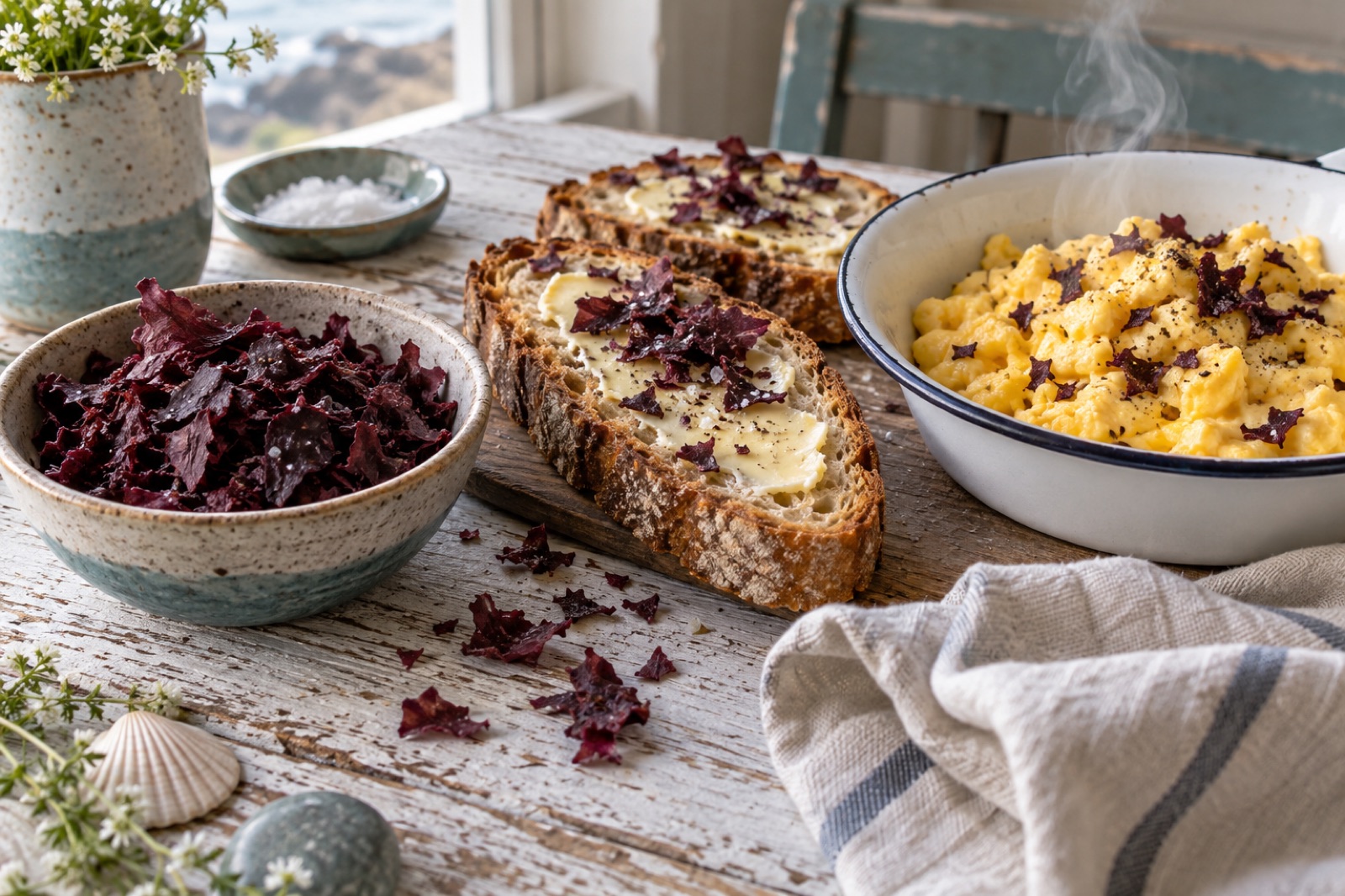
Dulse flakes are seaweed's easiest habit. How to toast them, where to sprinkle them, how they differ from kelp powder, and buying tips for the good stuff.
Sofia Andersson ·
A clear-eyed guide to seaweed nutrition: what's actually in kelp, nori and dulse, how iodine varies wildly by species, and how much is safe to eat.
Sofia Andersson ·