Kitchen7 min read
Cooking with Dulse: The Bacon of the Sea
How to cook dulse — the North Atlantic red seaweed that fries up smoky and crisp. Pan-frying, flakes, the DLT sandwich, and buying and storage tips.
Sofia Andersson ·
How to make seaweed mayonnaise without breaking the emulsion: dulse vs kelp, how much seaweed one egg yolk can carry, and where the jar earns its keep.
Mayonnaise is a miracle of food physics: a lecithin-rich egg yolk persuades oil and water-based ingredients to hold hands, and the result is a sauce that can carry almost any flavour you fold into it. Seaweed is one of the best passengers it takes. A spoonful of dulse mayonnaise on a chip butty or a slick of kelp mayo inside a fish finger sandwich tastes like the coast decided to move into your kitchen — briny, deep, quietly smoky, unmistakably marine without being fishy.
But seaweed tests an emulsion harder than most flavourings. Add too much, add it too wet, or add it to a thin, weak mayo and the sauce splits into an oily puddle of regret. This article is about the craft: which seaweed to use, how much a yolk can carry, and how to rescue the batch when it goes wrong.
Three realistic candidates, each making a different condiment.
Dulse flakes — the easy win. Dried dulse flakes are the beginner's choice and the deepest flavour: smoky, gently bacon-adjacent (as our cooking with dulse article explains), and already dry, so they threaten the emulsion least. Their purple-red flecks turn the mayo a beautiful dusty rose. Our dulse flakes guide covers brands and toasting; a one-minute dry-toast before grinding deepens everything.
Kelp powder or finely ground dried kelp — the umami engine. Kelp leans savoury rather than smoky. Ground kombu makes a mayo that behaves like a Japanese-accented sauce for rice bowls and karaage-style chicken. Use less than you think — kelp powder is concentrated and iodine-dense (see the numbers). The dulse species profile and kombu profile explain why these two seaweeds taste so different in the first place.
Fresh blanched kelp, minced to paste — the showpiece. Sweet-fermented flavour, silky texture, and the one most likely to break your mayo because it carries water. Blanch 90 seconds, squeeze ruthlessly dry in a towel, and mince with a knife until it's close to a paste — the same prep as our kelp salsa verde. The payoff is a mayo with real kelp character rather than seaweed dust.
One large egg yolk comfortably emulsifies about 250 ml of oil plus flavouring. The flavouring, though, has a carrying capacity:
You can make this in a blender or food processor in ninety seconds, but the hand version teaches you to feel an emulsion, and it's more forgiving to fix mid-way.
Aioli variation: grate in a small garlic clove at step two. Dulse-and-garlic aioli for chips is the single best gateway seaweed dish I know for feeding skeptics.
You'll know: the sauce turns thin, glossy and oily instead of creamy and matte. Don't throw it out — split mayo raw material is fully salvageable.
Crack a fresh yolk into a clean bowl with a teaspoon of mustard. Whisk it loose, then add the broken mayo drop by drop, exactly as if the broken batch were the oil. It will re-form, thicker than before, because it now holds two yolks' worth of lecithin. Fold in your seaweed after the rescue, taste, and re-season — the doubled yolk mutes the salt and acid.
Prevention beats rescue: room-temperature ingredients, patient first 50 ml, dry seaweed, seaweed folded in last.
Keep it in a clean jar, lid on, and use within 4–5 days — fresh yolks set the clock. Farmed seaweed from clean, managed waters — the kind grown by coastal farms partnered with Tidewright's Harvest programme — is the standard to buy to, especially for a condiment you'll eat across a week.
Yes, honestly — whisking 1–2 tbsp toasted dulse flakes and a squeeze of lemon into 250 ml of good shop mayo gets you 90% of the way in two minutes, and it'll keep as long as the jar would. Homemade tastes better and textures better, but nobody should gatekeep condiments.
No — it tastes marine: briny, savoury, faintly smoky with dulse. Fishiness comes from oxidised fish oils; fresh, good-quality dried seaweed has none. If your mayo smells fishy, the seaweed was old or poorly stored.
Absolutely — swap the yolk for 2 tbsp aquafaba or use a shop vegan mayo as the base. Emulsion capacity drops, so halve the oil added and keep seaweed to 1 tbsp per batch. See our fish flavours without fish article for more vegan umami moves.
You used kelp powder or fresh kelp — green-brown pigments — rather than red dulse. Colour tracks species, not freshness. A half-teaspoon of dulse alongside kelp gives you flavour depth and a rosy tint if the colour matters.
A tablespoon of mayo made with 1 tbsp dulse flakes per batch carries a modest iodine load — fine for most people at condiment doses. Ground kombu is far more iodine-dense; cap it at 1 tsp per batch if you're eating it daily, and read our iodine and seaweed guide if you have thyroid considerations.
Filed under
How to cook dulse — the North Atlantic red seaweed that fries up smoky and crisp. Pan-frying, flakes, the DLT sandwich, and buying and storage tips.
Sofia Andersson ·
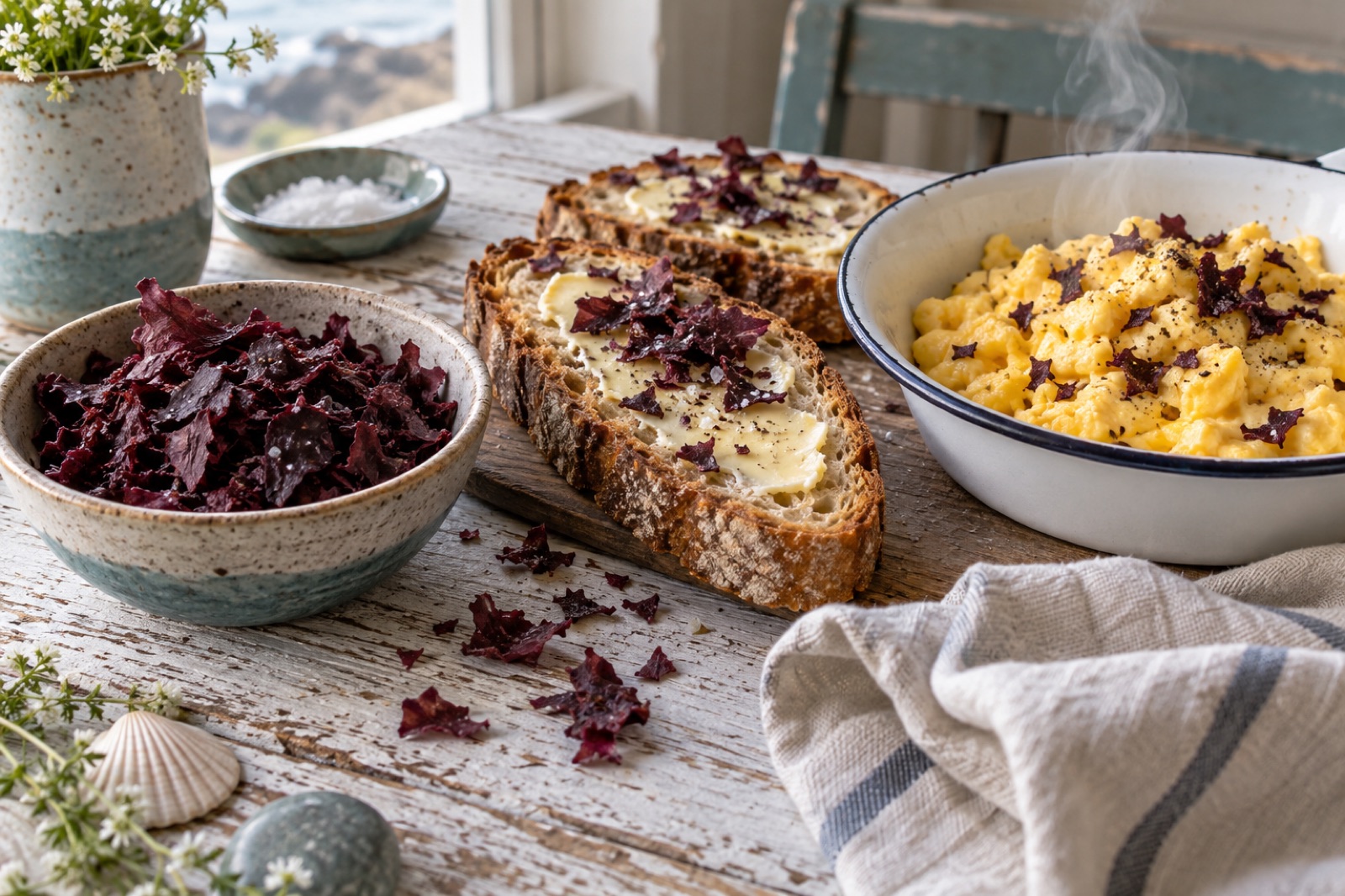
Dulse flakes are seaweed's easiest habit. How to toast them, where to sprinkle them, how they differ from kelp powder, and buying tips for the good stuff.
Sofia Andersson ·
Beyond the basic recipe: which seaweeds to blend into butter, five flavour variations, and a cook's map of where seaweed butter transforms a dish.
Sofia Andersson ·