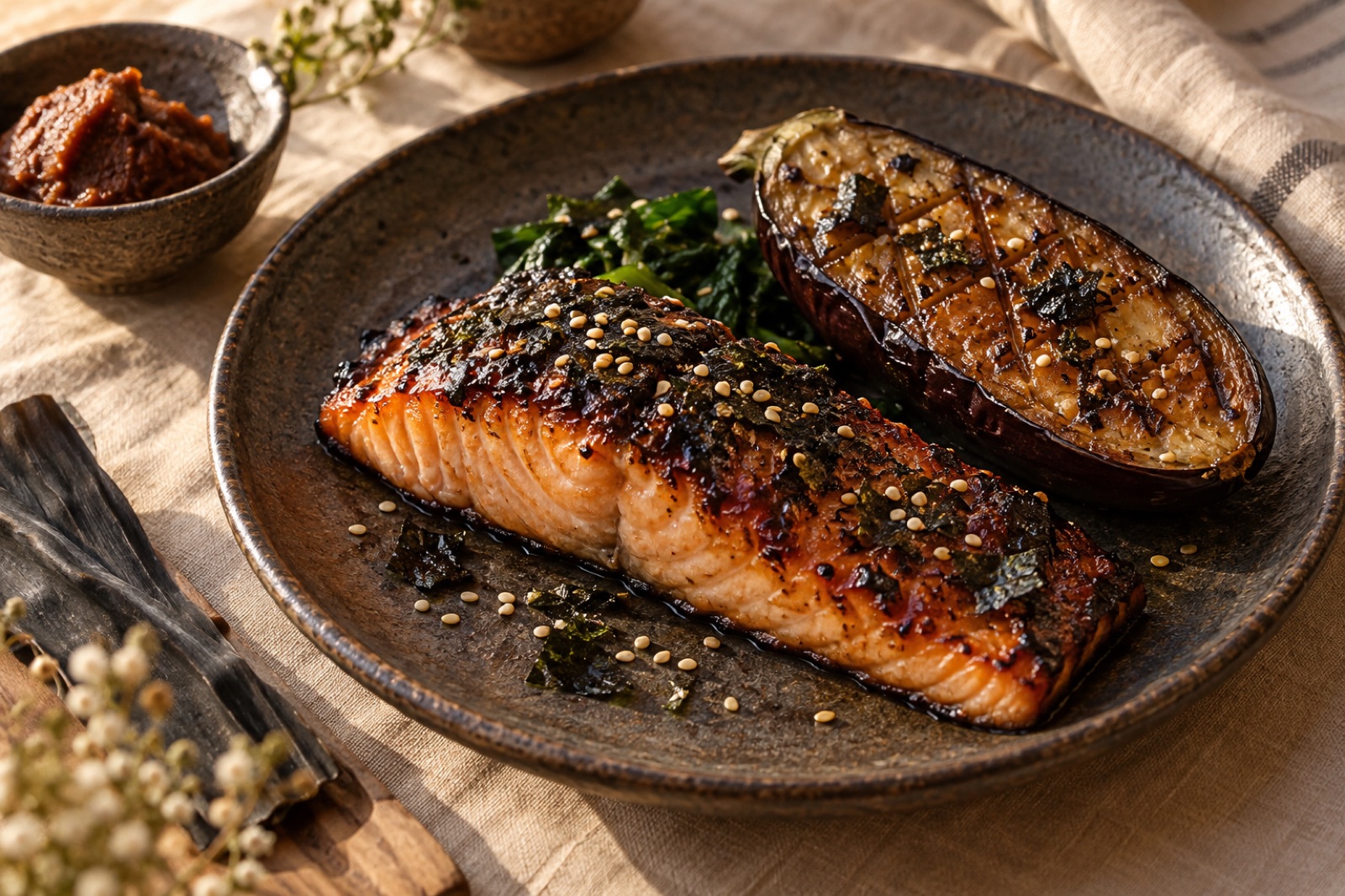
In most of the world, seaweed at breakfast is unremarkable — a bowl of miso soup in Japan, laverbread with cockles in Wales, a strip of roasted gim beside Korean rice. The rest of us are simply late to a very good idea: the savoury depth of seaweed is exactly what eggs, grains and toast have been missing. Here are seven breakfast uses, from ten-second additions to weekend rituals, that will make your mornings more coastal.
1. Nori eggs, three ways
The single easiest entry point. Toast a sheet of nori over a low flame for five seconds per side until crisp, then crumble it hot over scrambled eggs, fold fluttered strips into an omelette with spring onions, or set a fried egg on a torn nori square so the heat wilts it into a glossy wrap. Nori's roasted, almost nutty intensity behaves like a seasoning rather than a vegetable here — start with half a sheet per serving. For nine more uses of that same packet, see Nori Beyond Sushi.
2. Five-minute miso soup
The Japanese breakfast staple, and genuinely achievable on a weekday. Keep a jar of dashi — or, faster, make a weekend batch of kombu dashi and refrigerate it. Warm a cup, whisk in a spoonful of miso off the boil, add a pinch of dried wakame and cubes of silken tofu. The wakame rehydrates in two minutes. It is warming, savoury, and surprisingly sustaining — the antithesis of a sugar-crash breakfast.
3. Seaweed butter on toast (or anything)
Take a good slice of sourdough, apply seaweed butter generously, and finish with flaky salt. That's it — deep umami under morning carbs. The same butter melts over fried eggs, does remarkable things to mushrooms on toast, and turns a boiled egg into something you think about later. Make a log on Sunday and slice off coins all week.
4. Furikake avocado toast
Avocado toast is a blank canvas that has been waiting for savoury minerality. Scatter homemade furikake — toasted nori, sesame, a little sugar and salt — over the avocado with a squeeze of lime and a drizzle of toasted sesame oil. The seaweed adds crunch, salinity and that hard-to-name depth chefs call umami. Add a jammy egg and breakfast is a restaurant dish.
5. Savoury oatmeal, or congee if you're committed
Oats simmered in a light dashi instead of plain water, finished with a knob of seaweed butter, spring onions and toasted sesame: this is the crossover episode nobody expected. If you want the full slow version, cook rice into congee and top with wakame, white pepper and a soft egg. Dashi does the heavy lifting in both — another reason to keep kombu dashi in your weekly rotation.
6. Dulse granola (trust us)
Granola doesn't have to be sweet. Toss oats, seeds and nuts with olive oil, a little maple, and a generous tablespoon of dulse flakes, then bake until crisp. The dulse toasts into something savoury-smoky, and the result is outstanding over thick yoghurt — or honestly, eaten as a snack. Cooking with dulse broadly rewards experimentation; our dulse guide explains why it behaves like the sea's answer to bacon.
7. The weekend rice bowl
Breakfast rice bowls — rice, egg, pickles, something green — exist across coastal Asia for a reason. Ours: warm rice, a soft-set fried egg, a handful of blanched kelp ribbons or rehydrated wakame, quick-pickled cucumber, furikake, and a thread of sesame oil. Twenty minutes, deeply satisfying, and nutritionally serious — seaweed brings iodine and a broad mineral spread to the table, covered in our seaweed nutrition guide.
Stocking the coastal breakfast pantry
None of this works if the cupboard is empty, so here is the short shopping list that powers all seven breakfasts. One packet of nori sheets (toasted or raw — you can toast them yourself over a flame). A bag of dried wakame; a spoonful rehydrates into a bowl's worth. A jar of kombu for dashi, which keeps for a year or more. A pouch of dulse flakes, the shaker format that behaves like a savoury seasoning. And a jar of furikake, homemade or bought. That is five shelf-stable items, all of which sit happily in a cupboard for months, and together they cover seasoning, broth, and texture for every idea in this article. Add a log of seaweed butter to the freezer, slice off coins as needed, and a coastal breakfast is always within reach — even on the mornings when you have four minutes and one clean pan.
A note on portions and iodine
A gram or two of dried seaweed per breakfast is plenty — nori, wakame and dulse are moderate in iodine, while kombu is potent enough that you should season with it, not stack it. The details, including sensible weekly amounts, are in our iodine safety explainer. Coastal breakfast cultures figured out the portioning long ago: flavour the morning; don't turn it into a supplement regime.
Key takeaways
- Nori, seaweed butter and furikake are the three fastest seaweed breakfasts — none takes more than a minute.
- Miso soup from real dashi is a genuine five-minute weekday breakfast once dashi is in the fridge.
- Dashi is the quiet hero: cook oats or rice in it and savoury depth follows automatically.
- Seaweed breakfasts are an old tradition in Japan, Korea and Wales — we are borrowing, not inventing.
- Keep dried portions to a gram or two; kombu especially is concentrated in iodine.
FAQ
Which seaweed is best for beginners at breakfast?
Nori — toasted sheets are mild, crisp and familiar-tasting, and they behave like a seasoning so it's hard to overdo. Crumble it over eggs or avocado toast and you've started.
Can I use kelp in these breakfasts?
Yes — blanched fresh kelp ribbons work beautifully in rice bowls and alongside eggs. Use moderate-iodine kelps for eating and save kombu for dashi-making rather than eating whole.
Is seaweed at breakfast good for you?
In sensible portions, it adds iodine, minerals and savoury satisfaction without sugar — one reason coastal cultures have done it for centuries. As with everything seaweed, variety and moderation are the watchwords; our nutrition guide has the numbers.
How long do these take on a weekday?
Nori eggs, seaweed butter toast and furikake anything: a minute or two. Miso soup: five minutes with pre-made dashi. The rice bowl and granola are weekend or batch-prep projects.