Kitchen11 min read
Kombu Dashi Masterclass: The Broth That Built a Cuisine
A deep, technique-first guide to kombu dashi: glutamate science, exact temperatures, ichiban and niban infusions, and how to fix every common mistake.
Sofia Andersson ·
Dried seaweed is the best flavour-per-gram ingredient in a rucksack. How to pack it, rehydrate it in the field and turn it into real trail meals.
Backpackers optimise ruthlessly for flavour per gram, and then mostly give up: freeze-dried bricks, instant mash, a ramen brick if lucky. Meanwhile, sitting in the same grocery aisle as that ramen is the single best flavour-per-gram ingredient ever dried — and almost nobody packs it.
Ten grams of dried wakame rehydrates into a hundred grams of tender green vegetable. Five grams of kombu turns a litre of plain boiled water into a savoury broth that makes rehydrated anything taste intentional. Nori weighs almost nothing, crushes into a seasoning, and needs no cooking at all. Seaweed is compact, shelf-stable for months, forgiving of heat and cold, and — unlike most trail food — actually improves whatever it touches. This guide covers what to pack, how to pack it, how to rehydrate it with trail constraints, and four meal frameworks tested against the realities of a single pot, a cold evening and limited fuel. For pantry background, our guide to rehydrating seaweed and a well-chosen seaweed pantry fills in the details.
Count what a trail ingredient must do: survive being crushed in a pack, survive temperature swings, add no meaningful water weight, cook fast or not at all, and deliver enough flavour to justify its grams. Dried seaweed hits every mark, and adds one more no other trail staple has: it is an ingredient multiplier. It does not just feed you; it makes the rice, lentils, couscous or instant noodles you already carry taste like a meal someone cared about.
There is a nutritional argument too. Days of walking burn through electrolytes; dried seaweeds bring potassium, magnesium and a spectrum of trace minerals that a salty snack does not. Iodine deserves a note rather than a headline: kombu is iodine-dense, so use it for broth (and pull the frond out) rather than eating it by the handful. Our iodine safety guide gives sensible amounts. Variety across species, at trail-sized portions, is a feature, not a risk.
You do not need a dozen bags. Four seaweeds cover broth, body, seasoning and crunch, and the whole kit fits in a sandwich bag at under 80 grams for a long weekend.
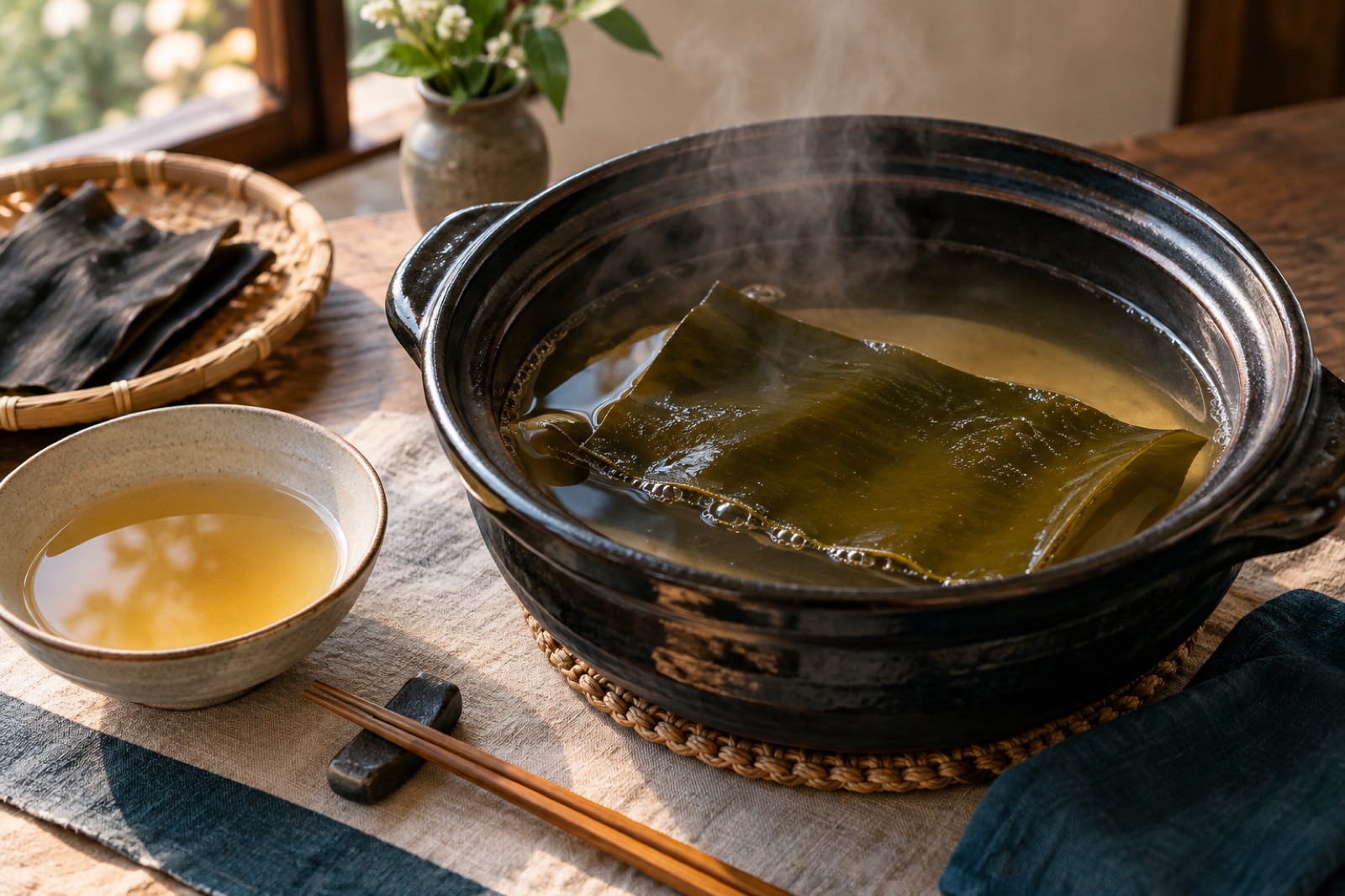
Kombu is your hot-drinks-and-soups engine. One or two five-centimetre pieces per person per day is plenty. Cold-steep a piece in your water bottle during the last hour of walking and your evening pot is already half-built; or simmer it gently while your grains cook. The spent frond is edible — slice it fine and stir it back in for chew. Our five-minute kombu dashi recipe translates directly to a camp stove: the "five minutes at a bare simmer" rule is even easier to hit when the alternative is watching water boil.
Wakame is the trail's miracle ratio: roughly ten-fold expansion from dry to ready, in five to ten minutes of cool or warm water. A small handful becomes an actual serving of greens. Pack it in the smallest pinch-sealed bag you can — it is the one seaweed where a few grams goes further than you expect, and overpacking it is the classic first-timer mistake.
Nori sheets are the zero-cook layer. Crumbled into a pot at the end, they add toast and aroma; torn into strips, they wrap rice balls and make a fistful of reconstituted rice feel like lunch at a station konbini. Nori's enemies are moisture and crushing, so it goes in a rigid spot — inside your mug, say — not at the bottom of the food bag. Nori has a dozen uses beyond sushi; most travel well.
Dulse flakes are seasoning first and vegetable second: briny, faintly smoky, instantly dispersible. A film canister of them replaces half your salt needs and all of your "this freeze-dried meal tastes like the packet" despair. They also crisp in a dry pan in ninety seconds if you are car camping with a skillet — trail bacon, more or less..
The best trail rehydration happens while you walk. Wakame, arame or shredded kombu go into a wide-mouth bottle with cool water an hour before camp. You arrive with vegetables already ready and zero fuel spent. The soak water, pleasantly oceanic, goes into the pot — minerals and flavour you paid fuel to carry, so use it.
Add dried seaweed directly to whatever is simmering: wakame and dulse in the final two minutes, shredded kombu from the start. This works for soups, stews, couscous and rice, and it is the method that needs no extra container. Rule of thumb: everything except kombu goes in late. Wakame boiled for ten minutes turns grey and flabby; two minutes keeps it silky and green.
Nori and dulse flakes need water only in the sense that your mouth has some. Over rice, over instant mash, over a tortilla with cheese — treat them as a finishing move. On cold-soak meals (couscous or noodles softened in cold water for an hour), nori strips added at the end restore the impression of cooking.
Simmer rice with a piece of kombu and a pinch of salt; pull the kombu, slice it fine, stir it back in. Eat scooped into nori strips. This is the trail's best argument that simple beats freeze-dried: three ingredients, one pot, and it eats like a deliberate dish.
Cook noodles (ramen, soba or rice noodles) in kombu water. Off the heat, stir in a spoonful of miso carried in a small tube, add wakame, lid on for two minutes. Finish with crumbled nori. Fifteen minutes of rest while it steeps makes this the best cold-evening meal in the repertoire — and it is essentially miso soup with wakame, scaled into a main.
Red lentils, a kombu piece, and whatever dried vegetables you carry, simmered together until the lentils collapse into a thick stew. Fish out the kombu, chop and return. Season with dulse flakes instead of salt. High protein, warming, and the kombu genuinely helps lentils cook and digest more easily — the old bean-pot trick from our kombu and beans guide works in a titanium pot exactly as it does at home.
Cold mornings want a hot savoury drink more than a second coffee. Steep a kombu piece and a fragment of dried shiitake in hot water for ten minutes while you break camp. Sip it from your mug. This is vegetarian dashi at its most stripped back, and it makes an oatmeal breakfast feel balanced rather than sweet-only.
Dried seaweed is nearly indestructible, but two failure modes exist. Nori goes limp and sad when damp — double-bag it, or store it in your mug. And in sustained wet heat, kombu grows sticky on its cut edges; keep it in a breathable paper or cloth inner bag inside a waterproof outer, the same logic as home storage in our dried seaweed storage guide.
Leave-no-trace: seaweed scraps are food waste like any other. Pack out spent kombu fronds you do not eat and any nori fragments. Do not scatter them "for the animals" — at inland campsites, marine minerals are not part of the local nutrient budget, and food scraps of any kind condition wildlife to campsites.
One more sourcing note: coastal campers sometimes ask about harvesting their own. Unless you know local rules and species well — many shorelines restrict or forbid collection — buy from traceable suppliers instead; traceable labels and certified farms are what good sourcing looks like, and kelp farmed on restoration sites, like Tidewright's, actively funds ocean recovery. The wild forest you are walking past is someone else's restoration project. Admire it; cook the farmed kind.
For a kit that supports two meals a day: one five-centimetre kombu piece, a loosely packed tablespoon of dried wakame, one nori sheet and a teaspoon of dulse flakes. That is around 12–15 grams total, and most first-timers find they come home with wakame to spare — it expands far more than intuition suggests.
Kombu and wakame leave only a mild savoury trace that a normal rinse removes. If you soak in your only bottle and are sensitive to it, keep a dedicated lightweight soaking bag instead — a zip bag works fine and weighs grams.
At trail portions — a sheet of nori, a handful of rehydrated wakame, kombu used for broth — variety keeps intake well within sensible ranges for most people. The one to watch is kombu eaten in quantity rather than used and removed; our iodine guide has the details, and anyone with a thyroid condition should get personal advice before a long trip.
Yes — cold-brew dashi is a real technique. A kombu piece in a litre of cool water for two to four hours (an afternoon's walking does it) gives a clean, delicate broth. It is milder than hot dashi, which suits summer trips perfectly.
Dried seaweed has a low odour profile compared with cheese, cured meat or peanut butter, but it is still food: store it with your other food, in the same bear bag or canister, following whatever food-storage rules apply where you are camping.
A deep, technique-first guide to kombu dashi: glutamate science, exact temperatures, ichiban and niban infusions, and how to fix every common mistake.
Sofia Andersson ·
Dried seaweed expands five to ten times and each species wants a different soak. Times, water ratios and the mistakes that turn wakame slimy — one guide.
Sofia Andersson ·
How long does dried seaweed last? Shelf-life rules, spoilage signals, rancidity in dulse, and the right way to freeze blanched kelp — a reference guide.
Sofia Andersson ·