Kitchen6 min read
Wakame Salad: Restaurant Technique at Home
Make wakame seaweed salad the proper way: rehydrate, blanch to jade green, dress with sesame and rice vinegar. Recipe, technique and sourcing.
Sofia Andersson ·
A rice bowl is seaweed's natural home. Five tested seaweed rice bowl builds — from 10-minute weeknight to slow Sunday — with prep, sauces and swaps.
Almost everything a rice bowl wants, seaweed has: chew, brine, umami, a glossy dark green that makes a bowl look composed before you've tried. And almost everything seaweed wants, a rice bowl has: hot neutral starch to land on, fat and acid to balance against, a sauce to carry its flavour into every bite. If there's a natural dish format for cooking with sea vegetables at home, this is it.
This is a method guide more than a recipe collection. We'll lay down the architecture of a good seaweed rice bowl — grain, green, protein, sauce, crunch — then walk five builds that cover a week of eating: a ten-minute wakame egg bowl, a kombu-cooked sushi-rice bowl with roasted mushrooms, a proper poke-style build, a warm kelp-noodle crossover, and a slow Sunday bowl with dashi-poached fish. Each uses seaweed differently, which is the point: by the end you'll stop reaching for a recipe and start composing.
Every good rice bowl runs on five stations. Seaweed can occupy two of them.
1. The grain. Short-grain rice is the classic base; it holds sauce and eats glossy. Brown short-grain or a rice–barley blend brings chew and nuttiness that flatters oceanic flavours. Cooking the rice itself with seaweed is the quietest power move in this whole piece — more on that below.
2. The green. Rehydrated wakame, blanched sea lettuce, or a tangle of dressed kelp strands. This is where seaweed lives most visibly, and it needs dressing the moment it's hydrated: a little acid, a little oil, five minutes of patience.
3. The protein. Egg, tofu, fish, leftover roast chicken. Bowls forgive everything.
4. The sauce. Seaweed-adjacent sauces are the easy ones: soy-based, ponzu, sesame-miso, dashi butter. Seaweed's glutamates make simple sauces taste finished. (If that chemistry interests you, we unpack it in the science of seaweed umami.)
5. The crunch. Toasted sesame, crushed rice crackers, fried shallots, a shake of homemade furikake. Non-negotiable — a bowl without crunch eats flat.
Balance the five and you can invent bowls forever.
Before the bowls, one technique. Wipe a 5 cm square of dried kombu with a damp cloth (never wash off the pale surface powder — much of it is mannitol and glutamate, exactly the flavour you want), drop it into the pot with your rice and the usual water, and cook as normal. Remove the kombu before serving, or dice it and toss it back in.
The rice comes out subtly seasoned — not seaweedy, precisely, but finished, the way pasta cooked in well-salted water tastes different from pasta salted after. Save the spent kombu square: dried out and crumbled, it's seasoning; sliced thin and simmered in soy and mirin, it's a condiment called tsukudani. Nothing wasted.
Weeknight, one pan, one bowl. This is the gateway build.
Soak 5 g dried wakame in cold water for five minutes — it swells to a startling amount; drain and squeeze gently. Meanwhile, put yesterday's rice in a bowl and microwave it hot. Dress the wakame with rice vinegar, a few drops of sesame oil and a pinch of sugar — the same logic as our wakame salad, shrunk to garnish size. Fry two eggs so the edges lace and the yolks run. Slide them onto the rice, tumble the wakame alongside, spoon over soy sauce loosened with a little of the wakame soaking vinegar, and finish with sesame. The egg yolk is the sauce. Ten minutes, genuinely.
The vegetarian flagship, and the one I'd serve a seaweed sceptic.
Cook short-grain rice with kombu as above. While it cooks, tear 300 g of mushrooms — oyster, shiitake, whatever's good — and roast them at 220 °C with oil until deeply browned, about 20 minutes. Toss the hot mushrooms with a spoonful of miso loosened with water and a knob of butter; the miso and mushrooms are umami partners to the kombu in the rice, three-deep layering without any single loud note. Add quick-pickled cucumber for acid, and crown with a six-minute egg. This is also a beautiful place to use the pickling habit once you have it — the same cure we use for pickled kelp stems works on cucumber ribbons in twenty minutes.
Proper poke is a Hawaiian tradition with its own rules and its own seaweed — limu, gathered species with deep cultural roots — and the mainland rice-bowl version is a different, looser thing. What we're making here is the second, honestly: a dressed-raw-fish bowl that borrows the format.
Cube 200 g of sashimi-grade fish from a fishmonger you trust. Dress it lightly: soy, sesame oil, spring onion, a little grated ginger. Build the bowl in loose piles rather than a mix — rice, fish, dressed wakame, edamame, avocado, pickled ginger — and dress each pile separately. Non-negotiables: cold fish, warm rice (the temperature contrast is the whole sensual point), and furikake or toasted nori confetti over the top. If raw fish isn't available or isn't for you, cooked prawns or even cooled poached salmon flake carry the same structure.
Half rice, half kelp noodles — the bowl for when you want volume without heaviness. Kelp noodles are crunchy, neutral, near-zero calorie strands made from kelp extract; on their own they can feel ascetic, but cut 50:50 with warm rice they read as texture, like a shredded-vegetable garnish that seasons the whole bowl.
Rinse the noodles well, snip them into fork lengths with scissors, and toss with a squeeze of lime to soften their crunch slightly. Layer with rice, then go bright on top: shredded cabbage, grated carrot, coriander, sliced chilli, and a dressing of lime, fish sauce (or soy), sugar and a little oil. The bowl eats like a salad with a warm heart. Grilled tofu or shredded chicken ride well on top.
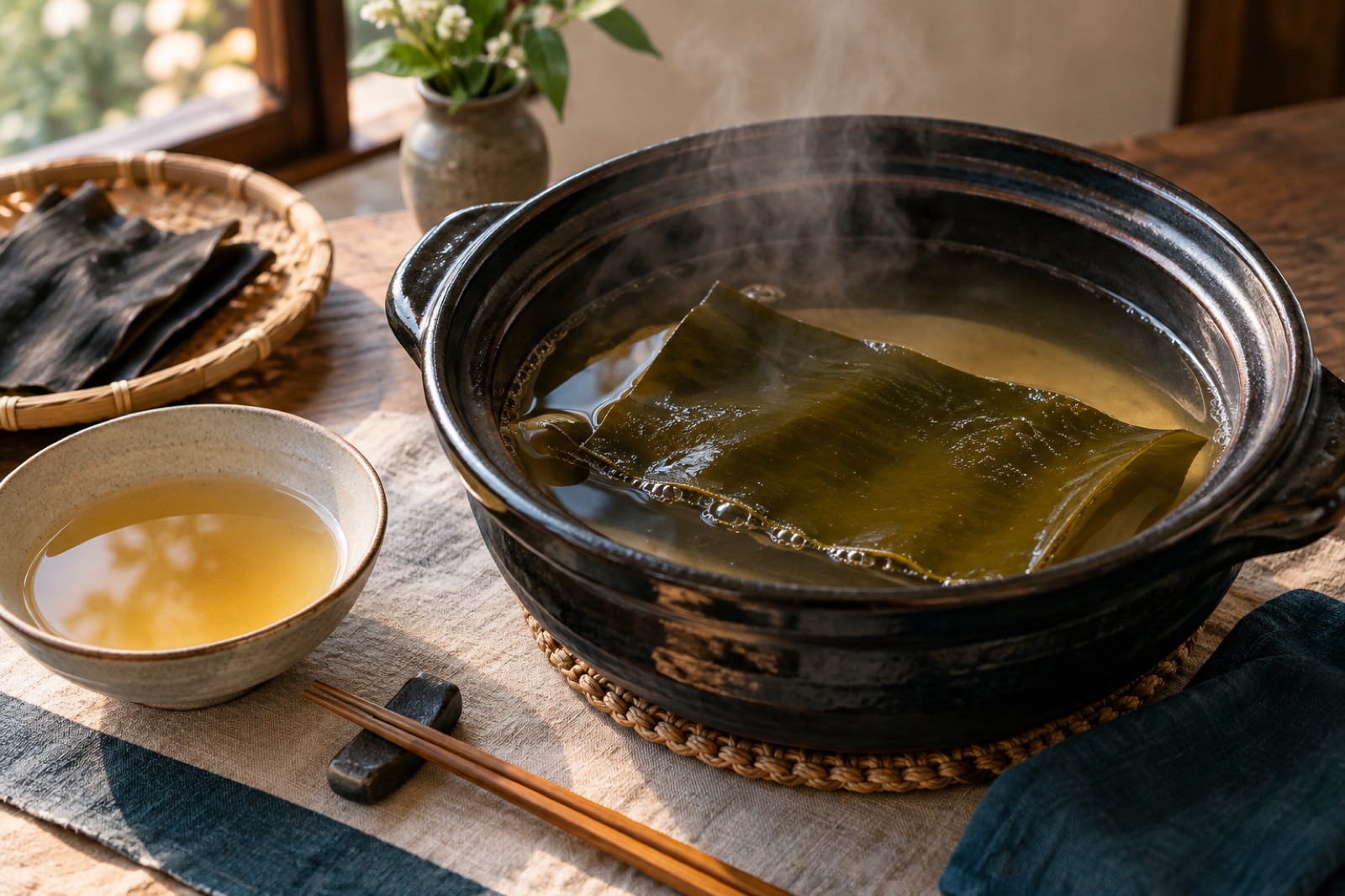
The slow one, worth an unrushed hour. Make a pot of kombu dashi — five minutes of real work — and hold it just under a simmer. Slide in a fillet of firm white fish per person and poach gently, about six to eight minutes depending on thickness, until it flakes at the suggestion of a fork.
Serve over kombu rice with wilted spinach (wilt it in a ladleful of the hot dashi — thirty seconds), the flaked fish laid over the top, and a spoonful of the poaching dashi poured around the bowl like a light soup. Finish with toasted sesame, or a pat of seaweed butter melting into the hot fish. This is the bowl that makes guests go quiet.
Bowl sauces repeat across a week, so it's worth learning four by feel:
Two rules across all of them: season the components lightly so the sauce doesn't have to shout, and always leave one element undressed — usually the avocado or the pickles — so the bowl has somewhere calm.
Yes, with two adjustments. Keep the dressing separate until eating — dressed wakame weeps and softens over hours — and build raw-fish bowls only on days you can keep them properly cold. Cooked builds (bowls 1, 2 and 5's components) hold happily for a day, and the rice even benefits from a rest.
Any mild dried sea vegetable that rehydrates in minutes works: sea lettuce, shredded kombu soaked longer, even nori cut into ribbons and barely moistened with the dressing. Texture changes, spirit survives.
Cooked rice should be cooled quickly and refrigerated within an hour or two, then reheated thoroughly — the concern is Bacillus cereus, which survives cooking. Day-old rice that went into the fridge promptly is fine and actually fries and bowls better than fresh; week-old forgotten rice is not.
Five to ten grams dried — which becomes a small fistful hydrated — is a normal serving. At those amounts, wakame and nori sit comfortably within everyday iodine ranges. Kombu is the exception: potent even in small doses, so the kombu-in-the-rice-pot method, shared across servings, is exactly the right scale. Full numbers in our seaweed nutrition guide.
Bowls 1 and 4 convert instantly (tofu for egg, soy for fish sauce). Bowl 2 is already vegan if you use butter-free miso or a plant butter. Bowl 5 converts beautifully: poach thick-cut king oyster mushroom stems in the dashi instead of fish — dashi made from kombu alone is fully plant-based.
Make wakame seaweed salad the proper way: rehydrate, blanch to jade green, dress with sesame and rice vinegar. Recipe, technique and sourcing.
Sofia Andersson ·
Furikake turns plain rice into a meal in one shake. Make your own seaweed furikake from nori, kombu or wakame — with recipes, ratios and storage tips.
Sofia Andersson ·
A deep, technique-first guide to kombu dashi: glutamate science, exact temperatures, ichiban and niban infusions, and how to fix every common mistake.
Sofia Andersson ·