Skip to content

Seaweed Ramen at Home: Building a Kelp-Deep Bowl

Build a deeply savoury seaweed ramen from scratch — kombu-forward broths, kombu tare, topping strategy, and which seaweeds earn a place in the bowl.
Sofia AnderssonSeaweed Chef & Food Writer7 min read
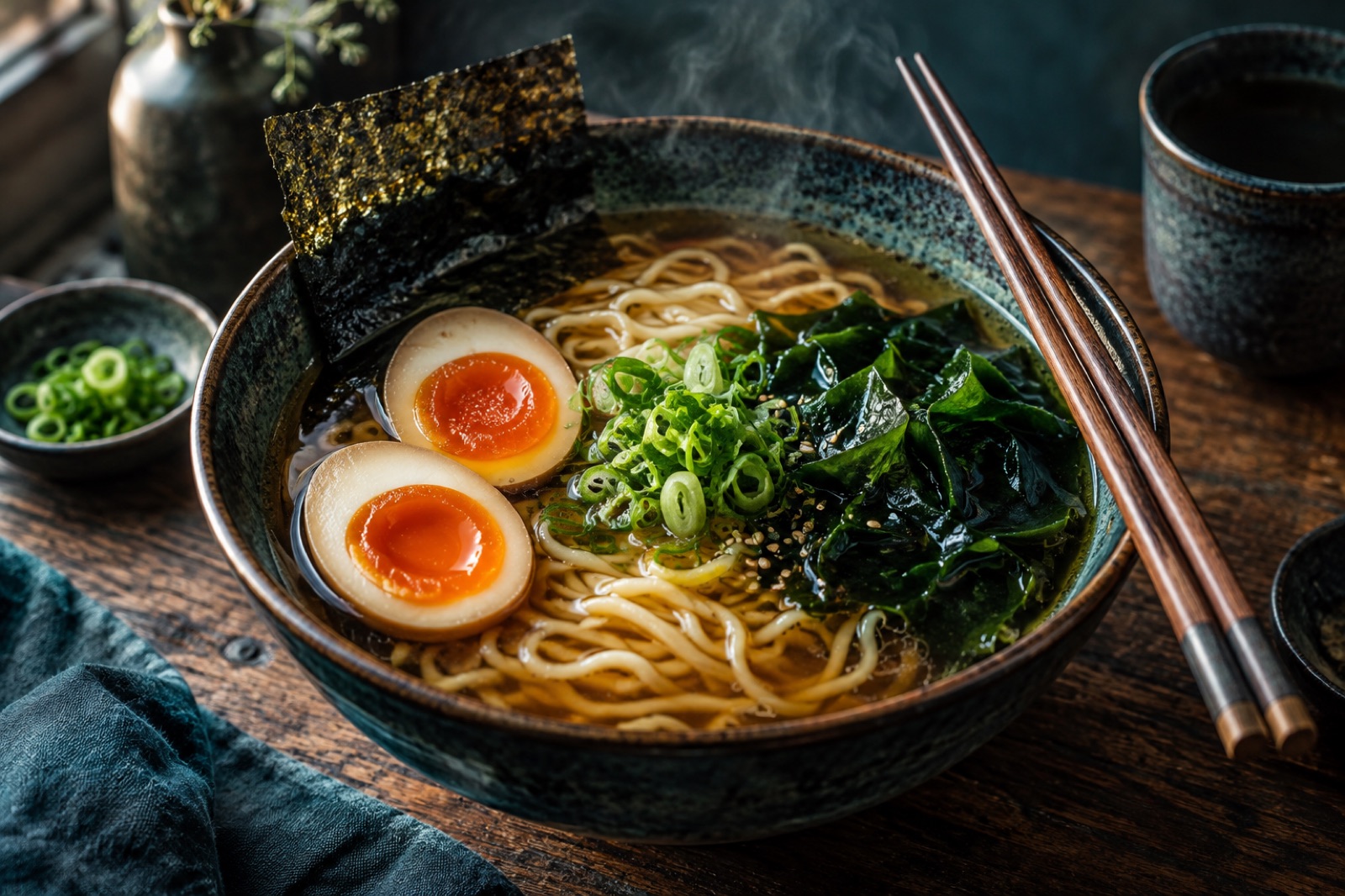
A steaming bowl of seaweed ramen with a jammy egg, toasted nori sheet and wakame, on a wooden table in warm window light
On this page

Ramen is an architecture project: broth, tare, aroma oil, noodles, toppings, all assembled in the last ninety seconds. Seaweed can quietly run three of those five layers — and when it does, the bowl gains a depth that tastes expensive. This guide builds a kombu-forward ramen from the ground up, with a vegetarian path and a richer shoyu path, plus the seaweed choices that earn their garnish slot and the common traps (slimy broth, muddy flavour, nori that dissolves into green film) to sidestep.

If you already have a dashi habit, you'll move fast here. If not, read Kombu Dashi Masterclass first — ramen broth is essentially dashi with ambition.

Layer one: the broth

A great seaweed ramen broth is dashi-based, light in body, heavy in savour. The goal is clarity with depth — you want to taste through the broth, not chew it.

The kelp-deep vegetarian master broth (serves 4)

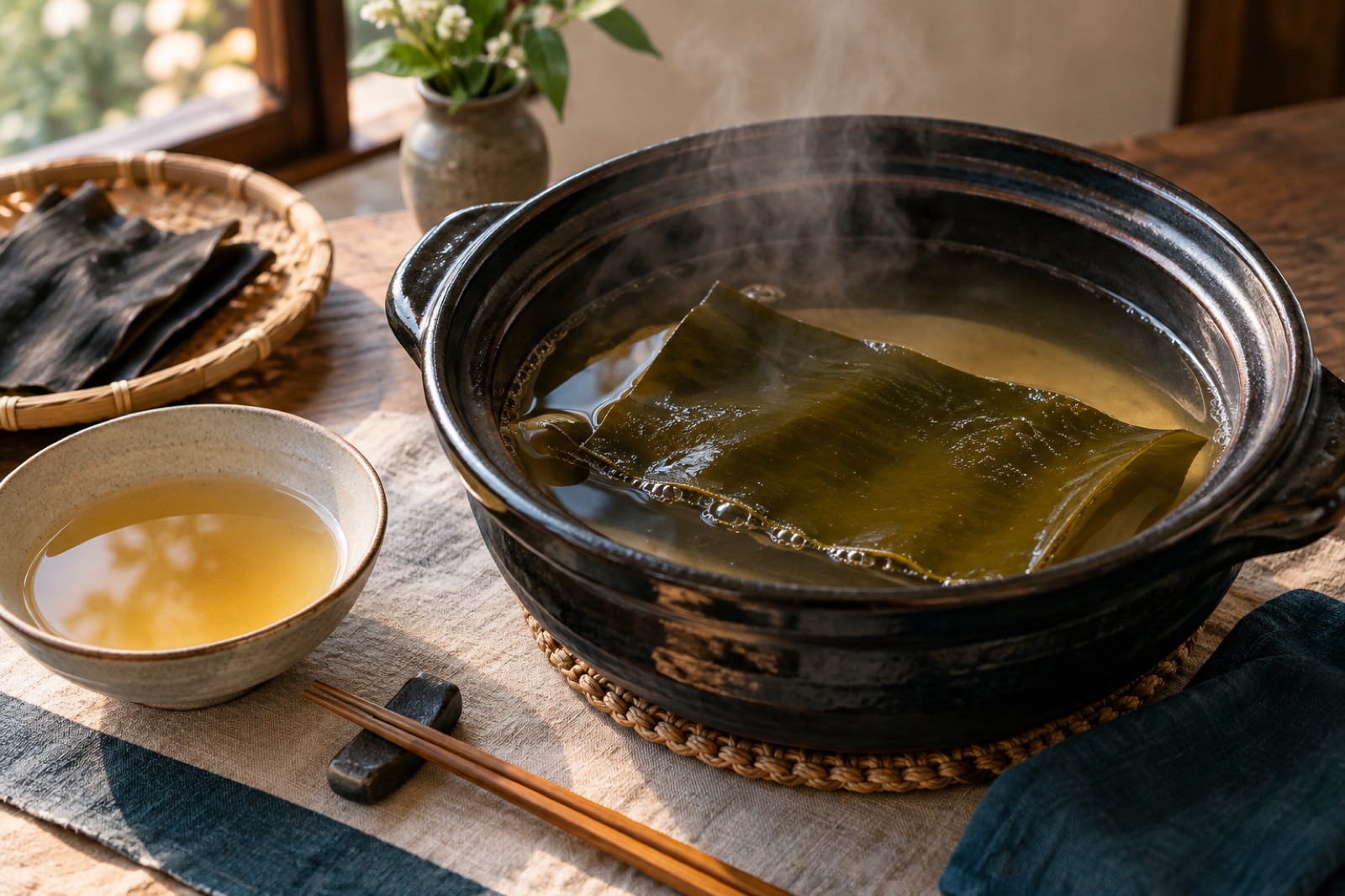
  1. Cold-soak 15 g kombu (about a palm-sized panel) in 1.5 litres of water for at least 4 hours, ideally overnight. Cold extraction pulls glutamates gently and keeps the liquid clear.
  2. Add dried shiitake — 4 good caps — for the final hour of soaking. Their guanylate compounds multiply kombu's glutamate savour; the chemistry is explained in The Science of Seaweed Umami.
  3. Warm the liquid slowly to about 60–65°C — steam rising, tiny bubbles at the pan's edge — and hold it there for 20 minutes. Never boil kombu; boiling extracts mucilage and bitterness, the two fatal flaws of amateur kelp broth.
  4. Remove the kombu and shiitakes. Squeeze the shiitakes gently back into the broth; save both for other uses (the kombu makes superb tsukudani).
  5. If you want a richer, non-vegetarian base, this same broth happily absorbs a handful of katsuobushi (bonito flakes) steeped off-heat for two minutes — dashi's classic second voice.

For a bigger exploration of the all-plant approach — including roasted-vegetable versions — see Vegetarian Dashi: Kombu, Shiitake and the Science of Umami Broth.

What "too far" tastes like

Two tell-tale failures and their fixes:

  • Slimy or ropey broth: the kombu boiled, or steeped too hot too long. Strain through fine cloth and keep future extractions under 65°C.
  • Flat, oceanic bitterness: too much kombu, or simmered vegetables left in the pot forever. Kombu broth needs length, not mass — a longer, cooler steep beats a bigger strip.

Layer two: the tare — kombu's second job

Tare (the seasoning sauce added to the empty bowl before broth) is where most home ramen tastes thin, because it's basically soy sauce. Fifteen minutes of care fixes it:

  • Kombu tare: simmer 250 ml good soy sauce (or tamari) with 60 ml mirin, a 5 cm kombu strip and a small piece of ginger for 10 minutes on the lowest heat. Rest overnight, strain. The kombu rounds the salt's edges and adds a bass note of savour you can't get from soy alone.
  • Portion: roughly 1 to 1½ tablespoons of tare per 350 ml of broth. Season the bowl, not the pot — every diner can adjust.

Layer three: aroma oil

Ramen's perfume. For a seaweed bowl, two directions work beautifully:

  • Scallion–sesame oil: slowly fry sliced spring onion whites in neutral oil until golden; finish with a teaspoon of toasted sesame oil off the heat.
  • Kombu oil: warm a clean 5 cm kombu piece in 150 ml neutral oil at 60°C for 20 minutes, let cool, strain. It adds a quiet marine musk — one teaspoon per bowl.

Layer four: noodles

Use proper alkaline ramen noodles if you can find them — the alkalinity is structural, not just traditional, and the springiness holds up in hot broth. Fresh is best; good dried ramen or even fresh Chinese wheat noodles pass. Cook them a touch firmer than the packet says, drain hard, and go straight into the bowl.

A note on kelp noodles (the crunchy, nearly zero-carb cylinders): they are not a ramen substitute and please nobody when treated as one. If you're kelp-noodle-curious, their real strengths are covered in Kelp Noodles: What They Are, How They Taste, and How to Cook With Them — keep them for cold salads, and use wheat here.

Layer five: the toppings — where seaweed shines

Choose three or four, not twelve. A Seaweed Ramen should taste composed.

  • The seaweeds that belong in the bowl:
    • Wakame, rehydrated (5 minutes in cold water, squeezed): the classic — silky, green, oceanic.
    • Nori, toasted and added at the table: lean half a sheet against the bowl's rim so the eater dips it. Pre-soaking nori in the broth turns it to sludge.
    • Kombu tsukudani (sweet-soy braised kombu from your broth scraps): a small, intense pile — the bowl's savour exclamation mark.
  • The supporting cast: a ramen egg (shoyu-kombu cured eggs are perfect here), blanched greens, spring onion tops, sweetcorn with a knob of butter, sesame, a few drops of chilli oil on the bolder bowls.
  • What to skip: hijiki (see the safety discussion in our arsenic guide) and anything pickled hard enough to fight the broth.

Assembly: the ninety-second finale

  1. Warm the bowls (hot tap water, emptied).
  2. Tare goes in first, then the aroma oil.
  3. Pour in 350 ml of steaming broth per bowl; taste and adjust — this is your last chance.
  4. Noodles in, loosened with chopsticks so they don't mat.
  5. Toppings in deliberate little territories, nori last, standing proud at the rim.
  6. Serve immediately. Ramen waits for no one; eat within ten minutes while the noodles still push back.

Variations worth trying

  • Miso-seaweed ramen: whisk 2 tablespoons of red or mixed miso into each serving of broth just before pouring — never boil miso — and double the wakame.
  • Summer cold ramen (hiyashi): the same broth, chilled until just barely not gelatine-set, over cold-rinsed noodles with cucumber, wakame and sesame.
  • Tide-line ramen: add a spoonful of homemade furikake at the table instead of garnishing the pot — crunch and seasoning in one move.

Key takeaways

  • Kombu broth lives between 60–65°C: colder for clarity, never a boil.
  • The kombu–shiitake synergy (glutamate × guanylate) is what makes a plant-only broth taste profound.
  • Season the bowl, not the pot — kombu tare, 1–1½ tablespoons per serving, transforms home ramen.
  • Nori goes in at the table; wakame rehydrates separately; kombu scraps become tsukudani, not waste.
  • Kombu strips and shiitake caps from the broth have second careers — plan them.

FAQ

Can I make ramen broth with just kombu?

You can, and a long, cool, single-kombu extraction is genuinely good — clean, clear, deeply savoury. It will taste lighter and more marine than a kombu-plus-shiitake or kombu-plus-bonito broth. It's an excellent base when toppings are rich.

Why did my broth turn out slimy?

The kombu boiled or steeped too hot for too long. Above roughly 80°C for sustained periods, kombu releases alginates — the same polysaccharides industry extracts as thickeners. Strain it, note the timing, and hold 60–65°C next time.

Are kelp noodles a good substitute for ramen noodles?

No — they're a different food entirely: crunchy, neutral, alginate-based strands best served cold. In hot broth they turn rubbery and contribute nothing wheat noodles do. Use proper alkaline ramen noodles for this bowl.

Is seaweed ramen high in iodine?

Moderately, and sensibly. Broth steeped from a kombu strip that's then removed carries far less iodine than eating the strip itself, and a few grams of wakame adds only a small amount. Our iodine portion guide walks through the arithmetic.

How far ahead can I make the components?

Broth keeps 3 days refrigerated or a month frozen; tare and kombu oil keep for weeks refrigerated; tsukudani keeps a week. Noodles, eggs and wakame prep are day-of jobs. Ramen rewards a mise en place mindset — make Saturday's pantry, assemble in minutes all week.