Inside the Gametophyte Culture Room: Light, Temperature and Timing
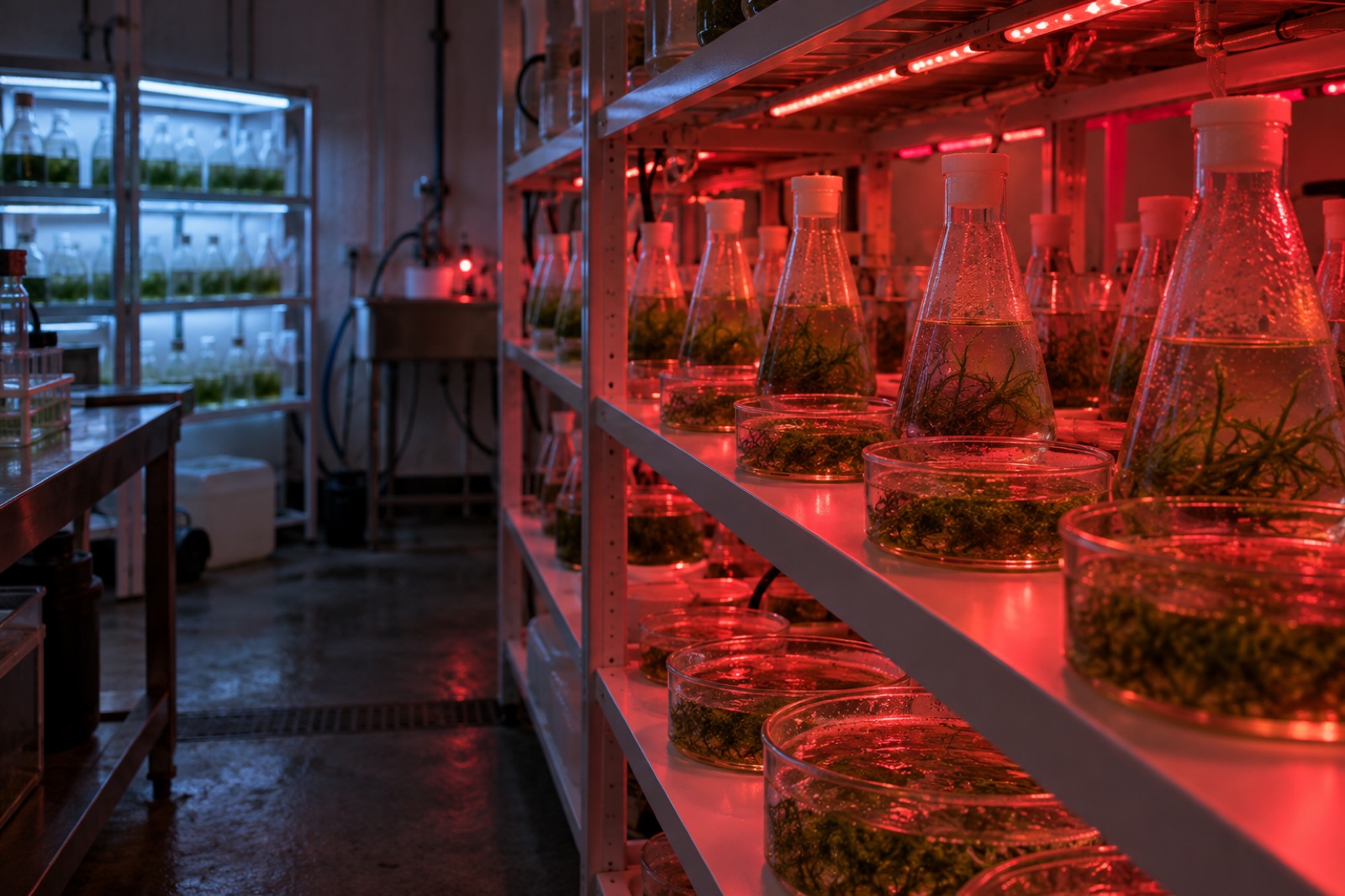
The gametophyte culture room is the quietest, most critical room in a kelp hatchery. How light banks, temperature regimes and sterile timing turn spores into seed.
Naomi Reyes ·
9 articles
The gametophyte culture room is the quietest, most critical room in a kelp hatchery. How light banks, temperature regimes and sterile timing turn spores into seed.
Naomi Reyes ·

Red light to hold, blue light to release: how wavelength and day length steer kelp gametophyte cultures, with a practical hatchery lighting setup guide.
Dr. Theo Nakamura ·
Filtration trains, source water choices, daily monitoring and contamination response — the water-quality management that decides whether a kelp hatchery succeeds.
Naomi Reyes ·
Between kelp generations lives a microscopic stage that can simply wait — pausing reproduction through heat, dark and scarcity. Inside gametophyte dormancy.
Dr. Elias Brandt ·
Before kelp seed string leaves the hatchery, run these viability checks: settlement density, sporophyte stage, contamination, transport stress and a trial outplant.
Dr. Theo Nakamura ·
A Tidewright field note from the Holdfast hatchery: the red-lit night shift, quiet alarms, and what 3 a.m. teaches you about kelp seed quality.
Jack Callum ·
A Tidewright field note from the coldest corner of our hatchery: the gametophyte bank, where microscopic kelp cultures wait in the dark for the reefs that will need them.
Dr. Elias Brandt ·
How and why hatcheries freeze kelp gametophyte cultures in liquid nitrogen — the germplasm-bank logic that underpins seed security and climate resilience.
Dr. Elias Brandt ·
A technical guide to culture media for kelp gametophytes and sporophytes — Provasoli, f/2, what each nutrient does, and how to mix, sterilise and dose it.
Dr. Theo Nakamura ·