Field Notes8 min read
Field Notes: Returning to Lofoten in the Dark Season
In eight weeks the light goes at 68° north. What Lofoten's first seeded lines did through their first summer, and the plan for going back in.
Jack Callum ·
8 articles
In eight weeks the light goes at 68° north. What Lofoten's first seeded lines did through their first summer, and the plan for going back in.
Jack Callum ·
Tidewright field note from Lofoten: how a kelp nursery survives December — storm triage, line tensioning, and what three Atlantic gales teach a young crop.
Jack Callum ·
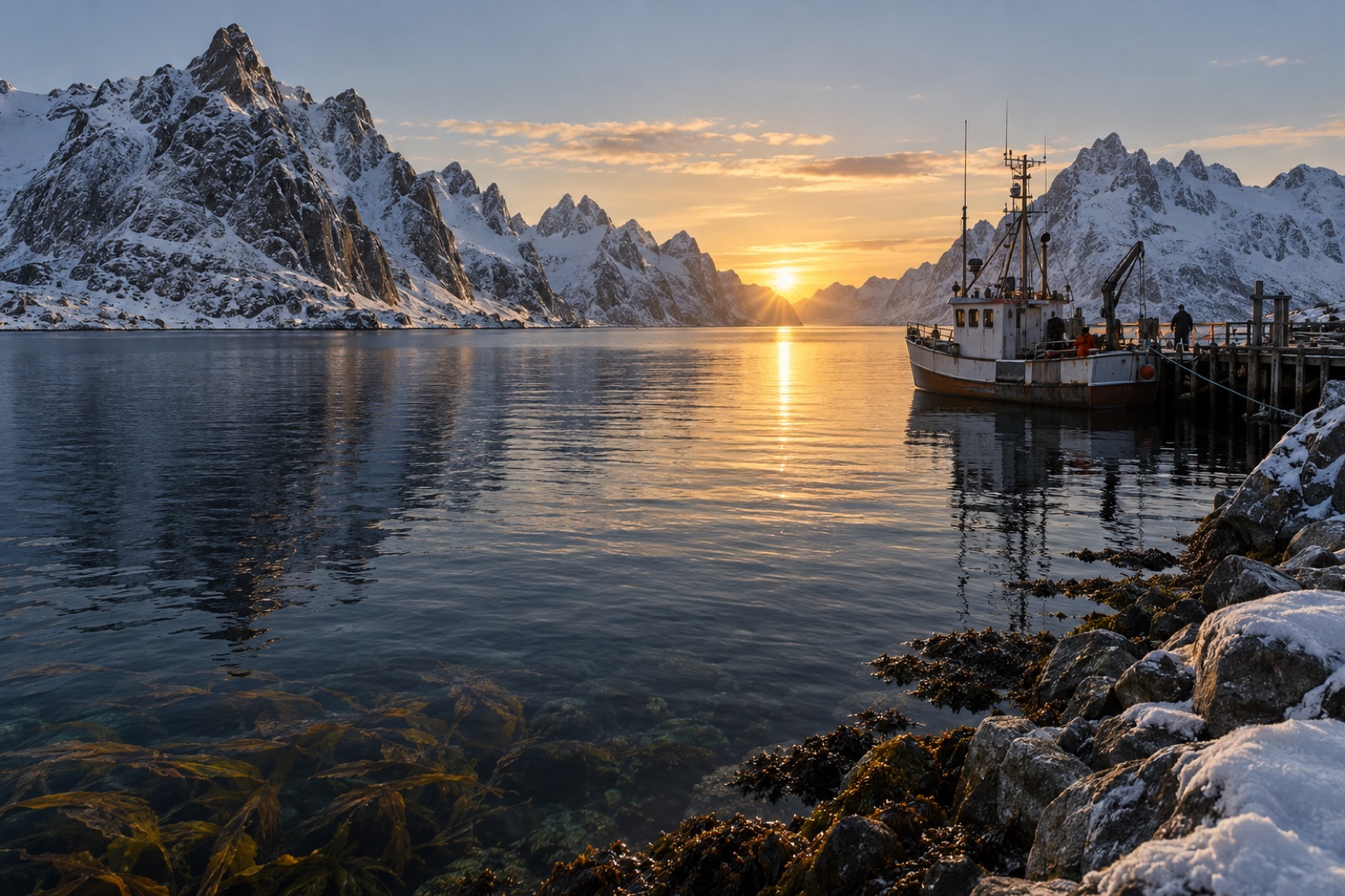
Four Kudjela sea-country rangers fly north to our Lofoten project. A week of sugar kelp, winter light, and two very different coasts trading what they know.
Jack Callum ·
Eighteen months after Lofoten's polar-night seeding, the sugar kelp belt met its first harvest. Field notes from the week the fleet got paid in kelp.
Jack Callum ·
Inside the Arctic Circle, warm Atlantic water meets polar light cycles and grows some of Europe's richest kelp forests. A guide to Lofoten's underwater jungle.
Tom Okafor ·
Wintering over at Tidewright's Lofoten hatchery means seedstock care in the polar night: light discipline, cold rooms, slow work and a culture lab that never sleeps.
Dr. Theo Nakamura ·
Before Tidewright's second Lofoten winter, the crew trained for sea ice, four-hour twilight and frozen shackles. Field notes from the course we built.
Jack Callum ·
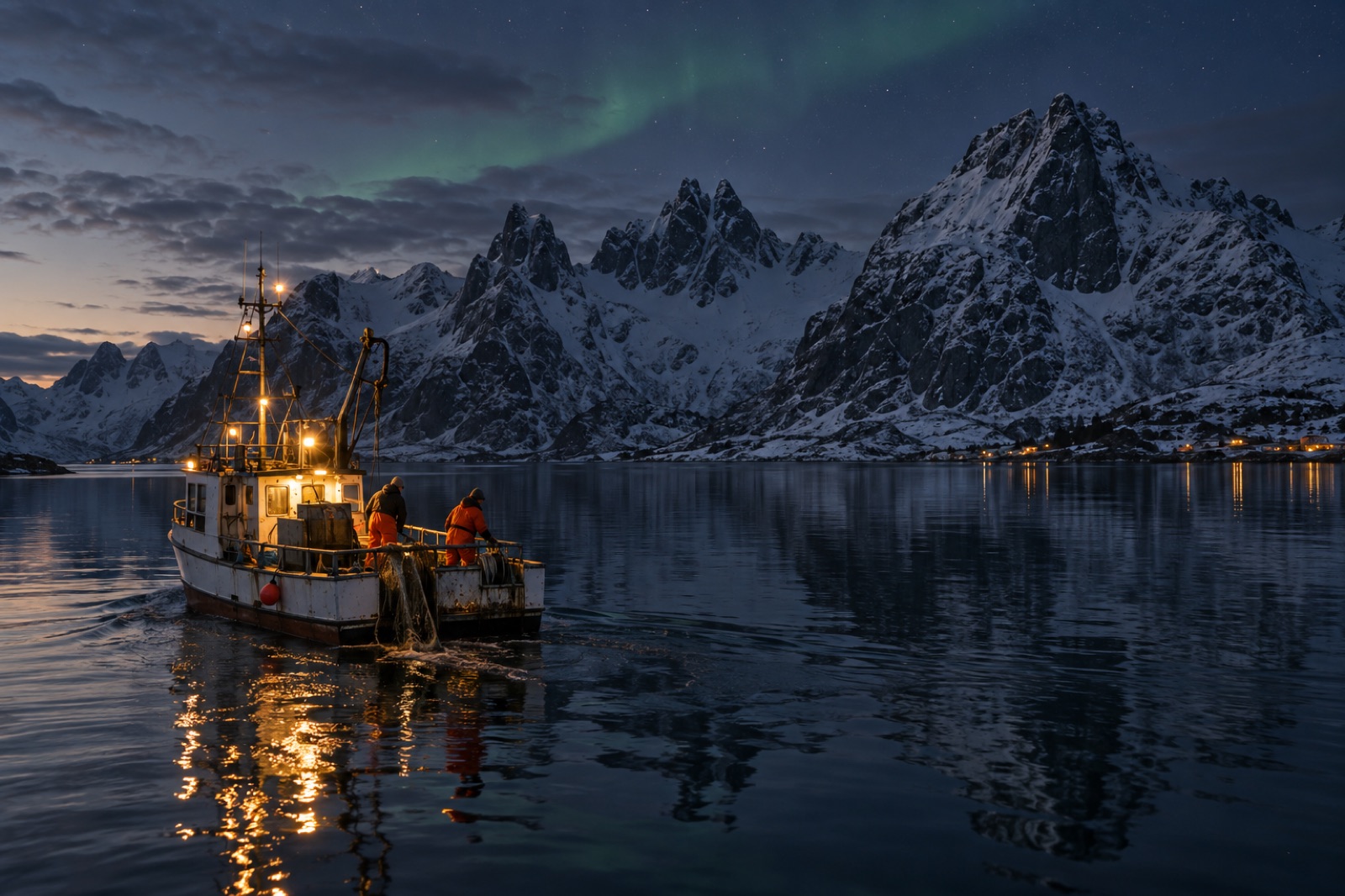
Tidewright's northern-most program seeds sugar kelp through Lofoten's polar night, working from fishing boats at 68 degrees north. A field operations log.
Jack Callum ·