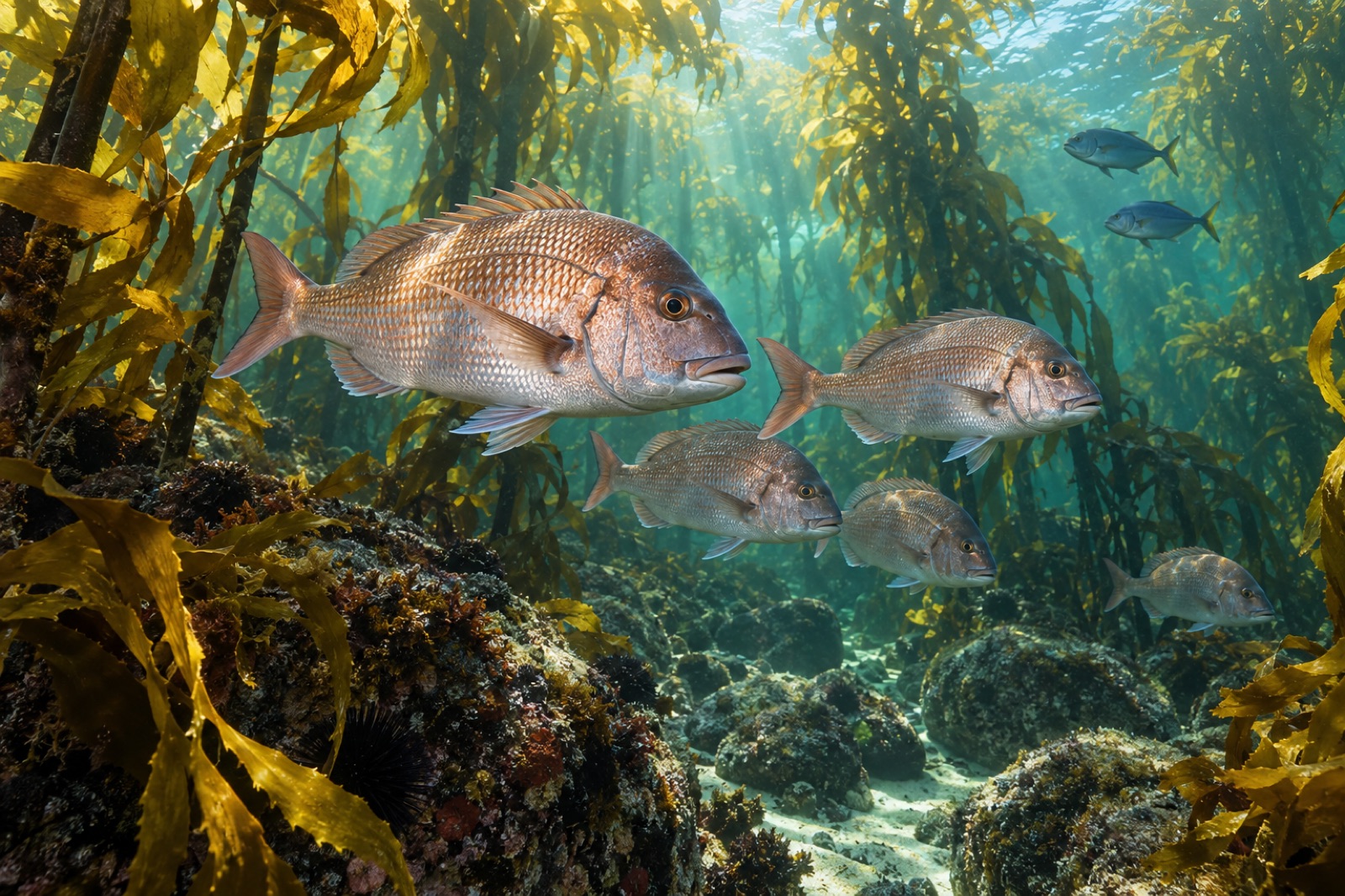
Goat Island is where the world learned what a protected kelp reef could look like. The Cape Rodney–Okakari Point Marine Reserve, a short stretch of boulder coast near the village of Leigh about ninety minutes north of Auckland, became New Zealand's first no-take marine reserve in 1975 — and one of the first anywhere. Five decades later it remains the country's most-visited dive site: a place where enormous snapper hang between golden kelp fronds in water shallow enough for a child to snorkel. If you have time for one temperate dive in New Zealand, this is the default answer, and this guide covers how to do it well.
Why Goat Island matters
The reserve covers roughly five square kilometres of reef extending about 800 metres offshore between Cape Rodney and Okakari Point. Inside it, nothing may be taken — no fishing, no collecting, not even a shell. That simple rule, held for half a century, produced one of the most cited experiments in marine science.
Before protection, this coast showed the classic North Island pattern: heavy fishing had stripped out snapper and rock lobster, and without their predators the sea-egg urchin kina (Evechinus chloroticus) multiplied until it grazed whole kelp beds down to bare rock — so-called kina barrens. Within years of closure, researchers working from the university marine laboratory next door documented the reversal: predator numbers climbed, kina retreated into crevices, and golden kelp (Ecklonia radiata) re-clothed the reef. That sequence became a textbook demonstration of a trophic cascade and of what marine reserves can do — New Zealand's most famous piece of underwater evidence for marine protected areas anywhere in the world.
For a visiting diver the practical translation is simple: the reef is full, the fish are tame and big, and the whole thing is reachable from a sandy beach.
The dive itself
The beach to the channel
Entry is from the sand at Goat Island beach. You wade in, fit fins in waist-deep water, and snorkel out over the shallow rock flat toward the island — a small, cliff-backed slab of bush and guano a couple of hundred metres offshore. The flat itself is worth the crossing: kelp in three to five metres, clouds of demoiselles and sweep, and snapper that have spent fifty years learning that humans are harmless. They will come to you.
The channel between the shore and the island deepens gradually to around nine metres, with boulder reef, kelp and sand channels on both flanks. Most guided and unguided dives work this area: out along the north side in one direction, back along the other, ninety minutes if you breathe slowly. The reserve boundary extends well beyond the island, so boat dives access deeper reef to nearly twenty metres.
What you will see
- Snapper — the stars. Big, brassy, unhurried fish school around the island and follow divers like curious dogs. The size difference between fish inside and outside the reserve boundary is the whole argument for the reserve, visible at a glance.
- Crayfish (red rock lobster) — look under ledges and into cracks along the deeper boulder edges; big reds are common, and packhorse crayfish turn up too.
- Blue maomao — dense, wheeling schools of these blue-purple fish mass around the island's points in calm weather.
- Rays — short-tailed stingrays and eagle rays cruise the sand channels, especially in summer; both are large and both are used to divers.
- The kelp itself — golden kelp canopy over an invertebrate-encrusted boulder reef: sponges, anemones, sea tulips on the shaded faces, triplefins on the flat blades.
- Luck-dependent — kingfish work the reserve in summer; bronze whaler sharks pass the outer edges; orca transit the coast year-round, including, rarely, the reserve.
Night and snorkel options
The reserve is one of New Zealand's great snorkel sites — most of what makes it famous sits shallower than five metres. An evening snorkel, when the beach empties and the snapper go bold, is the connoisseur's play. Night dives turn up octopus, sleeping parore and the crayfish out walking. A glass-bottom boat run caters to those who prefer to stay dry.
Conditions and seasons
Water temperature runs from about 14°C in late winter to 22°C in a warm late summer — the warmest mainland scuba in the country, but you will still want a 5–7 mm wetsuit, and gloves in winter. Visibility is the variable that decides your day: 10–15 metres on a good clear winter or early-summer day, dropping to a few metres after rain or northeast swell. The coast faces northeast, so it is exposed to the Coromandel and Pacific swells it chooses to receive: any significant northeasterly or easterly swell shuts the beach. Before driving out, read the forecast properly — our guide to reading marine forecasts covers what "1 m at 9 s from the NE" actually feels like at the entry.
Best windows: late spring through autumn for warmth and fish activity; winter for the clearest water and empty car park. The channel has a gentle tidal run at most; the site is diveable on all tides, with high tide the friendliest for the surface swim out.
Rules and etiquette
The reserve's rules are absolute and enforced: no fishing or gathering of anything, alive or dead. Feeding fish — once notorious here — is not permitted and genuinely bad for the fish, which learned to beg and suffered for it. Take only photographs; the kelp is doing fifty years of work and deserves your neutral buoyancy. The general etiquette that keeps kelp reefs intact applies here distilled: our beginner's guide to kelp diving covers fin discipline and depth control in weedy terrain.
Practicalities
Getting there. From Auckland, take State Highway 1 north to Warkworth, then the Leigh road through Matakana — about ninety minutes to the coast. The reserve car park sits above the beach past the Leigh marine laboratory. Weekends and summer holidays fill it by mid-morning; arrive early or go midweek.
Facilities. Toilets and changing space at the reserve; the nearest dive fill, hire gear, food and coffee are in Leigh and Matakana. Guided dives and snorkel gear hire run locally in season — worth it for a first visit, purely for the fish-spotting local knowledge.
Skill level. As easy as ocean diving gets: beach entry, shallow depths, minimal current. It is a perfect first sea dive, first kelp dive, or checkout dive before heading further — the wilder, deeper reefs of the Poor Knights Islands three hours north are the natural sequel.
Key takeaways
- Goat Island (Cape Rodney–Okakari Point) was New Zealand's first marine reserve, established 1975, and is now its most-visited dive site.
- Its snapper–kina–kelp recovery is one of the most famous demonstrated trophic cascades in marine science.
- The dive is a sandy beach entry over a shallow kelp-covered boulder flat to a channel of about nine metres — suitable for snorkellers and brand-new divers.
- Expect tame, big snapper, crayfish under ledges, blue maomao schools and cruising rays; visibility 5–15 metres, warmest water in late summer.
- Rules are total: no take, no feeding. Arrive early on summer weekends and avoid the beach after northeast swell or rain.
FAQ
Can beginners and snorkellers dive Goat Island?
Yes — that is its whole magic. The best of the reserve sits in three to six metres of water a short swim off a sandy beach, so a confident snorkeller sees the famous snapper and kelp without a tank, and new divers get a forgiving first ocean dive. Guided experiences are available locally in season.
When is the best time of year to visit?
Late spring through autumn (roughly November to May) brings the warmest water — up to about 22°C — and the most active fish life, including kingfish. Winter water drops to around 14°C but often brings the clearest visibility and the quietest car park.
What marine life is Goat Island known for?
Large, protected Australasian snapper are the icons, alongside red rock lobsters (crayfish), schooling blue maomao, demoiselles, red moki and seasonal visits from stingrays, eagle rays and kingfish. Golden kelp covers the shallow boulder reef.
Are there any rules I should know about?
The reserve is fully no-take: absolutely no fishing or collecting of anything. Feeding the fish is not allowed — it harms the very snapper that make the reserve famous. Check the reserve signage at the beach for the exact boundary and current rules.