Atlas8 min read
Kelp Forests of Monterey Bay: A Coastal Atlas Guide
Monterey Bay holds some of North America's most accessible giant kelp forests — a canyon-fed, otter-patrolled ecosystem you can dive, kayak or watch from shore.
Dr. Theo Nakamura ·
San Carlos Beach is California's easiest first kelp dive. A practical planner: when to go, where to gear up, and a step-by-step circuit under the canopy.
If you could design a first kelp forest dive from scratch, you would invent the Monterey Breakwater. A sheltered cove on Cannery Row behind a Coast Guard breakwater, an easy beach entry, forest on both flanks and a sandy middle that forgives nervous finning — this is where a large share of California's divers make their first real ocean dive, and where even very experienced divers keep coming back for the otters, the seals and the sheer ease of it. This guide is the practical planner: when to come, how to gear up, and a turn-by-turn beginner circuit.
The Breakwater is the most forgiving site on the peninsula — diveable on many days when everything else is blown out — but conditions still swing by season:
Timing the day: arrive early for parking (seriously — by 9 a.m. on a summer weekend you will circle). A high or rising tide gives slightly deeper water over the inner shallows and generally clearer water at the entry; big surf means stay out, but the breakwater raises the bar considerably. Check the current conditions board that local shops post, and look at the water before you gear up: if the cove is white and churning, go drink coffee and try another day.
Cannery Row is a classic dive district. Multiple full-service dive shops sit within a few minutes' walk of the beach, offering:
Parking: there is a paid parking structure at the base of Cannery Row plus metered street spots; early arrival solves most problems, and a folding gear cart saves your back on the walk.
What to wear: this is cold Pacific water — 10–15°C depending on season. Two-piece 7mm wetsuit with hood and gloves is the standard rental setup; drysuit divers are comfortable at any time of year. Don't skip the hood: fully half of staying happy at the Breakwater is a warm head.
This is the route we recommend for a first-timer with a guide or competent buddy — the idea is forest first, middle second, and a slow, shallow return. Depths are approximate; stay within your training.
Total time: 35–50 relaxed minutes depending on air consumption. The cove's shallow profile makes it extremely forgiving of surfacing to re-navigate if you lose the plot — a big part of why instructors love it here.
Work top to bottom through the water column and you're guaranteed sightings:
The canopy and stipes — giant kelp itself, with turban snails and tiny crustaceans grazing the fronds; schools of juvenile rockfish and kelp perch in the dapple; occasionally a senorita fish cleaning station.
The reef wall — strawberry and giant plumose anemones, sponges and nudibranchs for the sharp-eyed, kelp crabs, and the odd cabezon sulkily pretending to be a rock.
The sand — bat rays, leopard sharks (late summer to autumn), flatfish, tube-dwelling anemones.
The guests — the site's signatures: harbour seals that buzz divers at ankle height, California sea lions holding acreage near the Coast Guard pier, and the famous southern sea otters rafting in the kelp. Give otters maximum respect and distance; they're protected, they're resting, and our otter-watching etiquette guide applies underwater as much as on the surface. Never hover directly over one.
San Carlos Beach has outdoor rinse showers and a grassy strip for de-gearing; the shops will rinse rental gear for you. Warm up with clam chowder or coffee on Cannery Row, loaf through the tidepool area, and consider your afternoon: the Monterey Bay Aquarium is a five-minute walk and the single best debrief to a first kelp dive — you will recognise half of what you see in the Kelp Forest exhibit.
If you catch the bug, the natural progression on this coast is: more Breakwater dives at different tides, then the deeper boat sites of Carmel Bay — and from there, anywhere kelp grows. Our beginner's guide to kelp forest diving maps the whole journey, and the Monterey Bay kelp forests guide gives you the ecological story of the bay you're now part of.
It's the best first ocean dive site in California — the reason half the state's open-water classes happen here. But you still need certification or a supervised guided dive; combine it with a local guide's escorted dive and you'll have the safest, richest possible first kelp experience.
The cove bottom is mostly 3–10 metres, with the deepest common areas just outside the kelp at around 12–15 metres. Most of the best diving is shallower than 10 metres.
Late summer into autumn (September–November) for warmth and visibility; winter storm gaps can be spectacularly clear; spring is cold and clear; midsummer can be plankton-murky.
A hooded 7mm wetsuit with gloves (the standard rental) is fine most of the year for most people; committed cold-water divers prefer drysuits. See our drysuit vs wetsuit guide to decide.
No — and you must not. Sea otters are protected marine mammals; approaching one underwater can alter its resting behaviour. Enjoy them from a few body lengths away, let them decide proximity, and never separate a raft from the kelp.
Monterey Bay holds some of North America's most accessible giant kelp forests — a canyon-fed, otter-patrolled ecosystem you can dive, kayak or watch from shore.
Dr. Theo Nakamura ·
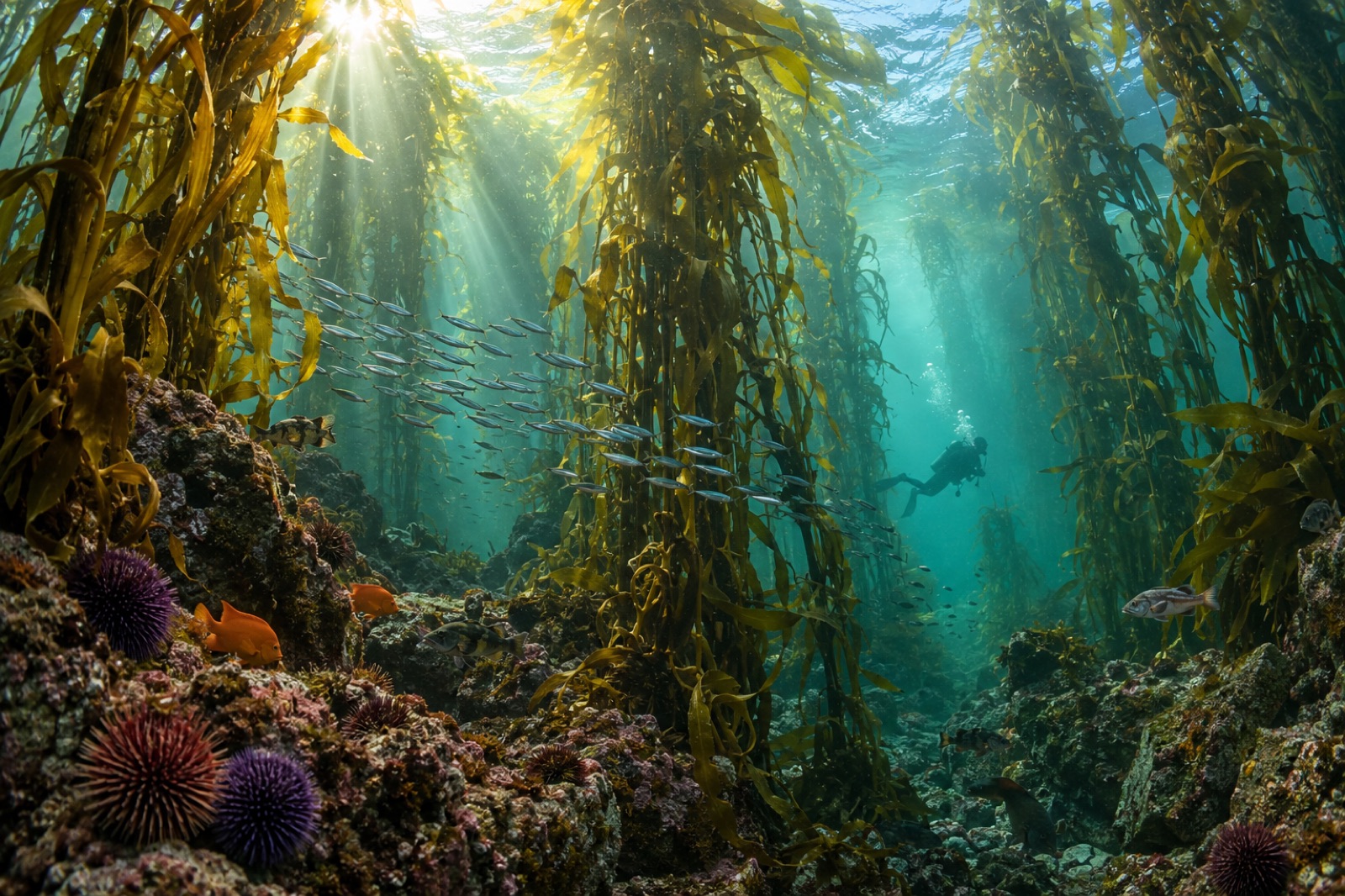
Your first kelp forest dive is easier — and more magical — than you think. Gear, skills, marine life and etiquette for new divers entering the green cathedral.
Tom Okafor ·
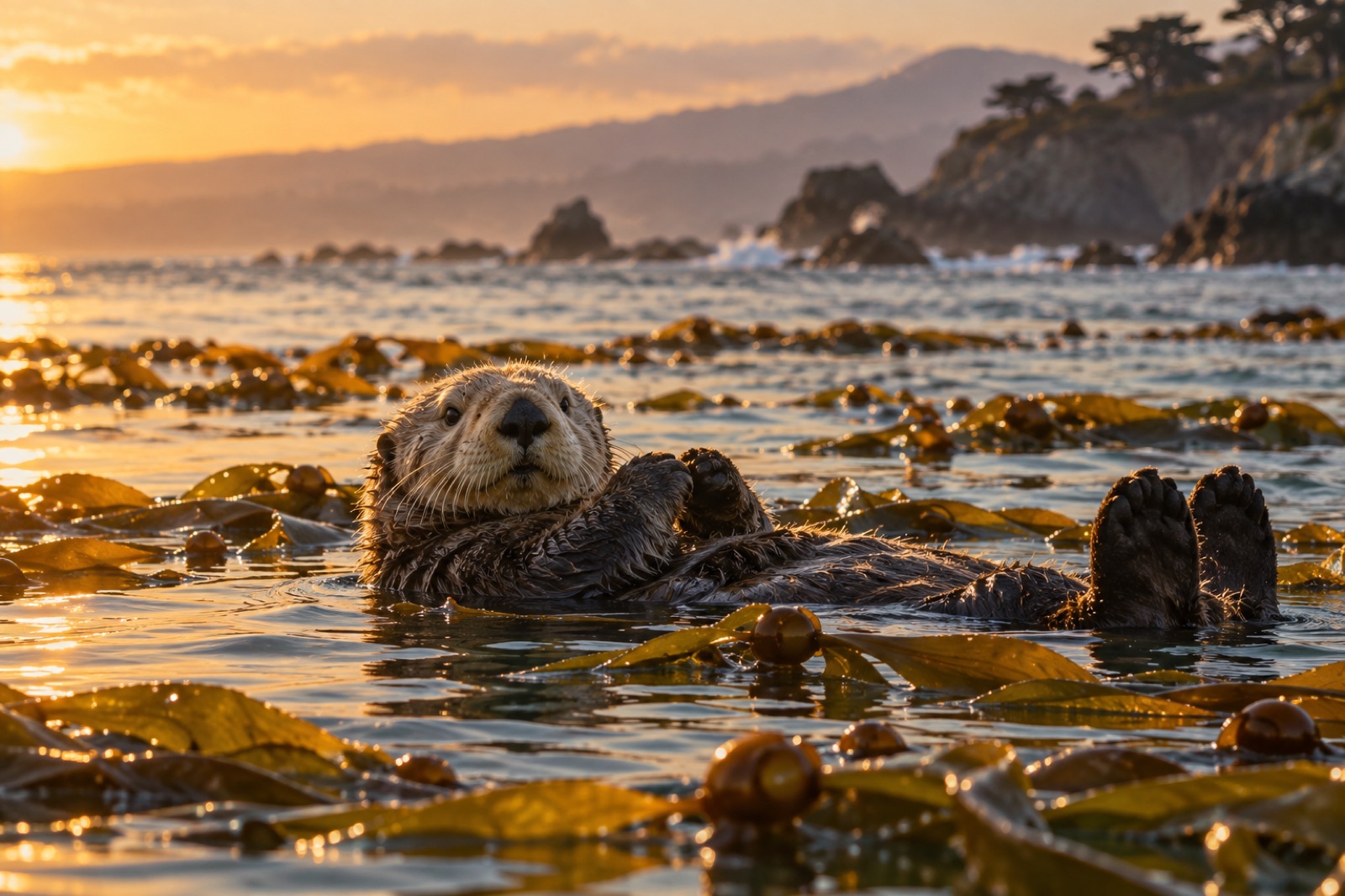
Sea otters look playful but waste energy if you get too close. Practical distances, what to never do, and how quiet watching supports kelp forest recovery.
Tom Okafor ·