Atlas8 min read
Kelp Forests of Monterey Bay: A Coastal Atlas Guide
Monterey Bay holds some of North America's most accessible giant kelp forests — a canyon-fed, otter-patrolled ecosystem you can dive, kayak or watch from shore.
Dr. Theo Nakamura ·
Point Lobos limits divers to a handful of reserved buddy teams a day. How to get a slot, dive Whalers Cove's kelp, and respect California's oldest rules.
There is no dive in California quite like Point Lobos, because there is no place in California quite like it. A tight, protected headland just south of Carmel — "the greatest meeting of land and water in the world," as landscape artists have been saying for a century — Point Lobos guards its kelp with rules older than most marine reserves anywhere: diving is allowed only at Whalers Cove, only by advance reservation, only in buddy pairs, and only by a small number of teams each day.
A slot at Point Lobos is the term of art: a reserved place, for a specific day, as part of one of the park's limited daily dive teams. Scoring one takes a little planning; diving it takes a little humility; and the reward is among the richest temperate reef in North America, in a reserve so old it can fairly be called the elder statesman of kelp protection. This is a guide to the whole process.
Point Lobos sits inside a state marine reserve — in practice, a strict no-take zone — and its dive program is among the most managed in the world:
The strictness is not bureaucracy for its own sake. It is a control on the one variable a protected ecosystem cannot absorb: us. The reserve's marine protected area logic is covered in our science explainer; at Point Lobos you can see that logic working in one small cove, on one small team of divers at a time.
The reservation system rewards early, flexible planning:
The cove is small, the entries are easy, and the scenery is outsized. The dive plan divides naturally in two:
Shallow, kelp-fringed granite in 5–12 metres: harbour seals drifting through the kelp canopy overhead, sea otters working the shallows with disconcerting casualness, and the cove's famously tame fish life going about its business in water that can be gin-clear outside the surge season. It is, simply, the highest-quality shallow dive within an hour of Monterey — the same bay that our Monterey atlas guide covers regionally, but at the level of one perfect pocket.
Past the cove's mouth, on the middle reef and the outer heads, the reserve shows its depth: cathedral-kelp forest above, hydrocoral and sponges on the rock below, wolf-eel and lingcod country, and — for qualified divers on a calm day — deeper structure dropping toward the canyon edge. The giant kelp (Macrocystis pyrifera) here is the kind that appears in wildlife documentaries; our giant kelp profile explains the architecture of what you're swimming through. Currents at the outer heads are real, the swell sets the difficulty, and the cove is always the exit and the fallback.
Point Lobos rewards the slow dive more than any comparable site in California:
Popular weekend slots typically fill when the reservation window opens, weeks to months ahead; weekday and off-season slots are the flexible alternative. Check the park's current reservation system for the opening window — this changes and the system's own notice is definitive.
The reserve treats dive safety and low visual impact as one policy. Buddy teams manage each other, stay in pairs in the cove's small footprint, and — not incidentally — keep the daily dive load at a level the habitat ignores. The reserve's little book of rules is a conservation document as much as a safety one.
Snorkel policies in state marine reserves vary and are stricter than at ordinary beaches; the current park rules define what's allowed where. Assume nothing is casual at Point Lobos without checking the current regulations.
Giant kelp at Point Lobos is perennial, not annual, but the canopy builds and thins with season, storms and the broader Monterey cycle. The forest is at its visual best from spring into summer; the reserve's deeper life — rocks, fish, invertebrates — is season-proof.
The reservation, sadly, does not carry a weather clause. Divers with a cancelled-by-conditions slot often salvage the day topside — the Point Lobos trail system is one of California's best kelp-forest viewpoints without a tank, which is its own not-so-small consolation.
Monterey Bay holds some of North America's most accessible giant kelp forests — a canyon-fed, otter-patrolled ecosystem you can dive, kayak or watch from shore.
Dr. Theo Nakamura ·
MPAs, marine reserves, no-take zones explained — how protection levels differ, what the evidence shows, and what MPAs can and can't do for kelp forests.
Dr. Mara Ellison ·
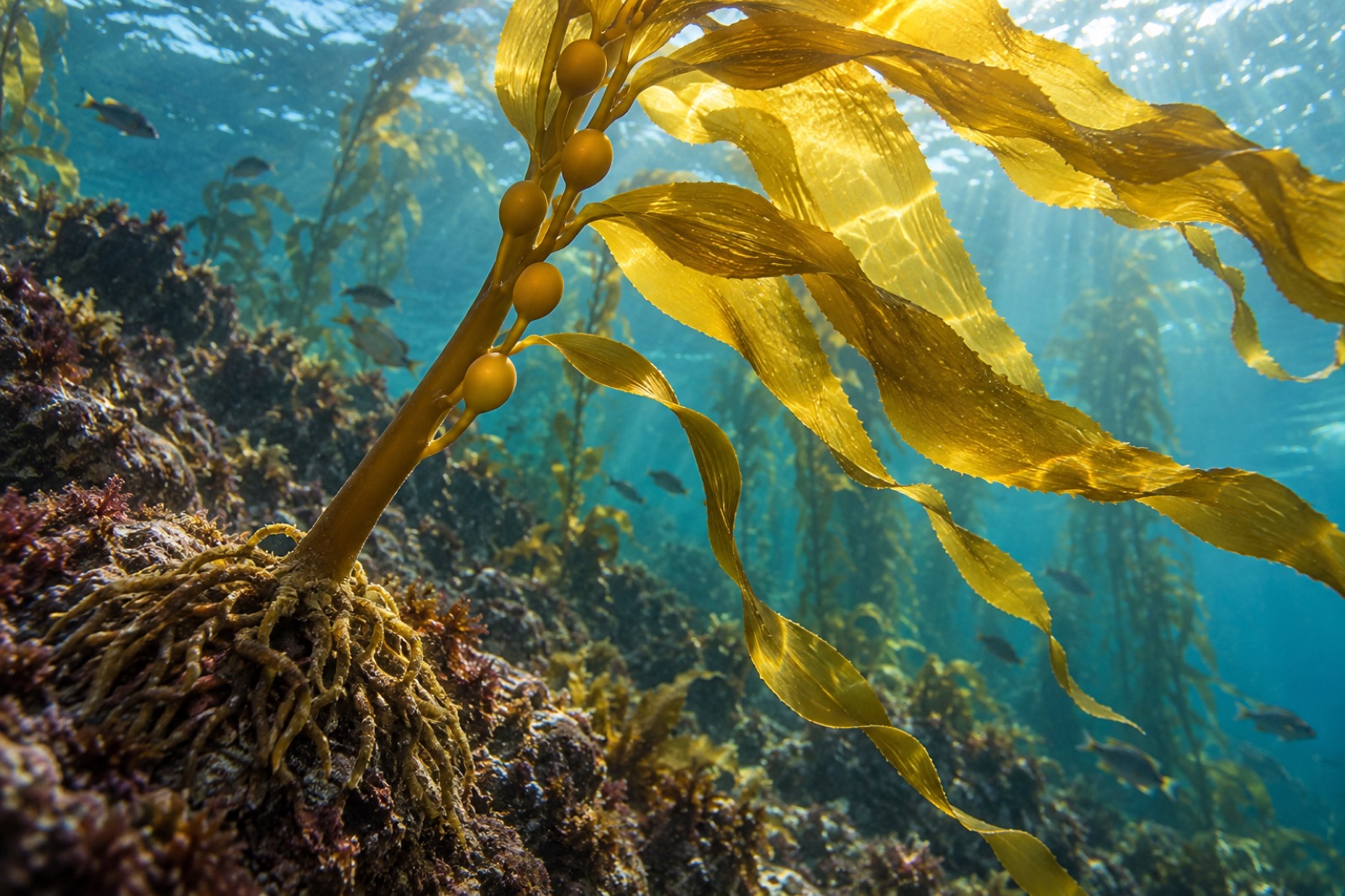
Giant kelp is the fastest-growing organism on Earth and the architect of undersea forests. Learn its biology, life cycle, range and why it matters.
Dr. Theo Nakamura ·