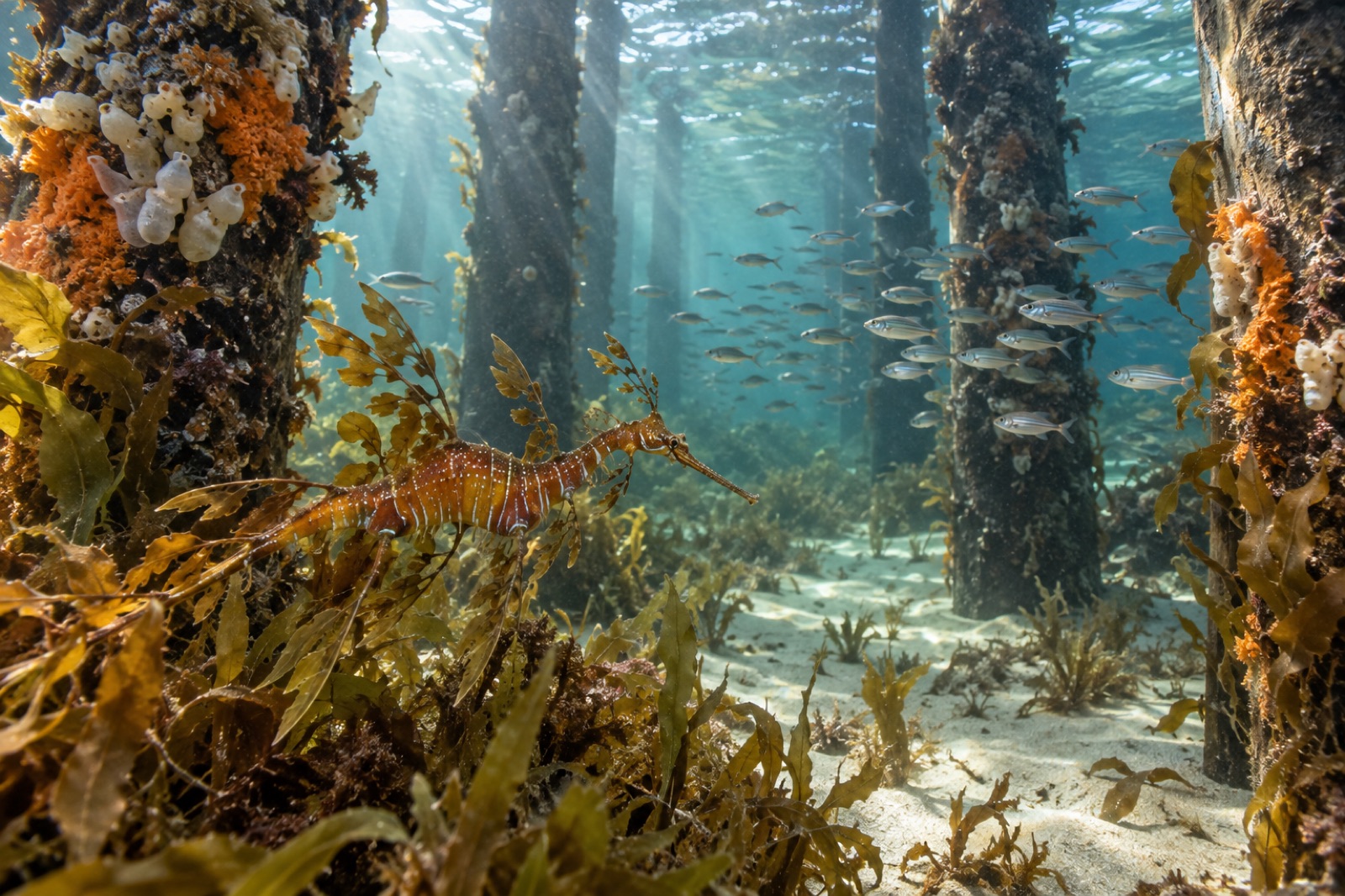
At the far end of the Mornington Peninsula, a few hundred metres of timber piles march into water the colour of bottle glass — and underneath them lives one of the most reliably satisfying shallow dives in southern Australia. Portsea Pier is a working, weathered jetty about a minute's swim from dry land, and its pylons, rubble and weed are home to a cast of temperate-water characters that photographers travel across the world to meet: weedy seadragons, banjo sharks, old wives, cuttlefish, nudibranchs by the dozen. This is the practical guide: when to go, how to get in, what to look at, and how to be a good guest at a very busy address. For the wider region context, start with our Mornington Peninsula coast guide.
Why a pier dive is worth your tank
Piers concentrate marine life for boring, useful reasons. The pylons are habitat columns — hard substrate rising from sand into the light, quickly upholstered in sponges, tunicates, bryozoans and hydroid gardens. That invertebrate turf feeds hundreds of small animals, which feed larger ones, and the sand around the piles shelters rays, goatfish and bottom-dwellers that like an edge to work against. Add water deep enough for free movement but shallow enough for long bottom times — most of Portsea Pier sits in three to seven metres — and you have a site that suits brand-new divers, hardcore macro hunters and snorkellers alike.
Portsea adds two bonuses. First, location: the pier stands near the mouth of Port Phillip, close to the Heads, and the nutrient-rich exchange between bay and Bass Strait keeps its food web well supplied — the same oceanography that shapes everything inside the bay, which we walk through in our Port Phillip Bay guide. Second, reputation with teeth: Portsea is one of the classic Australian sites for the weedy seadragon, and it earns it.
The life under Portsea Pier
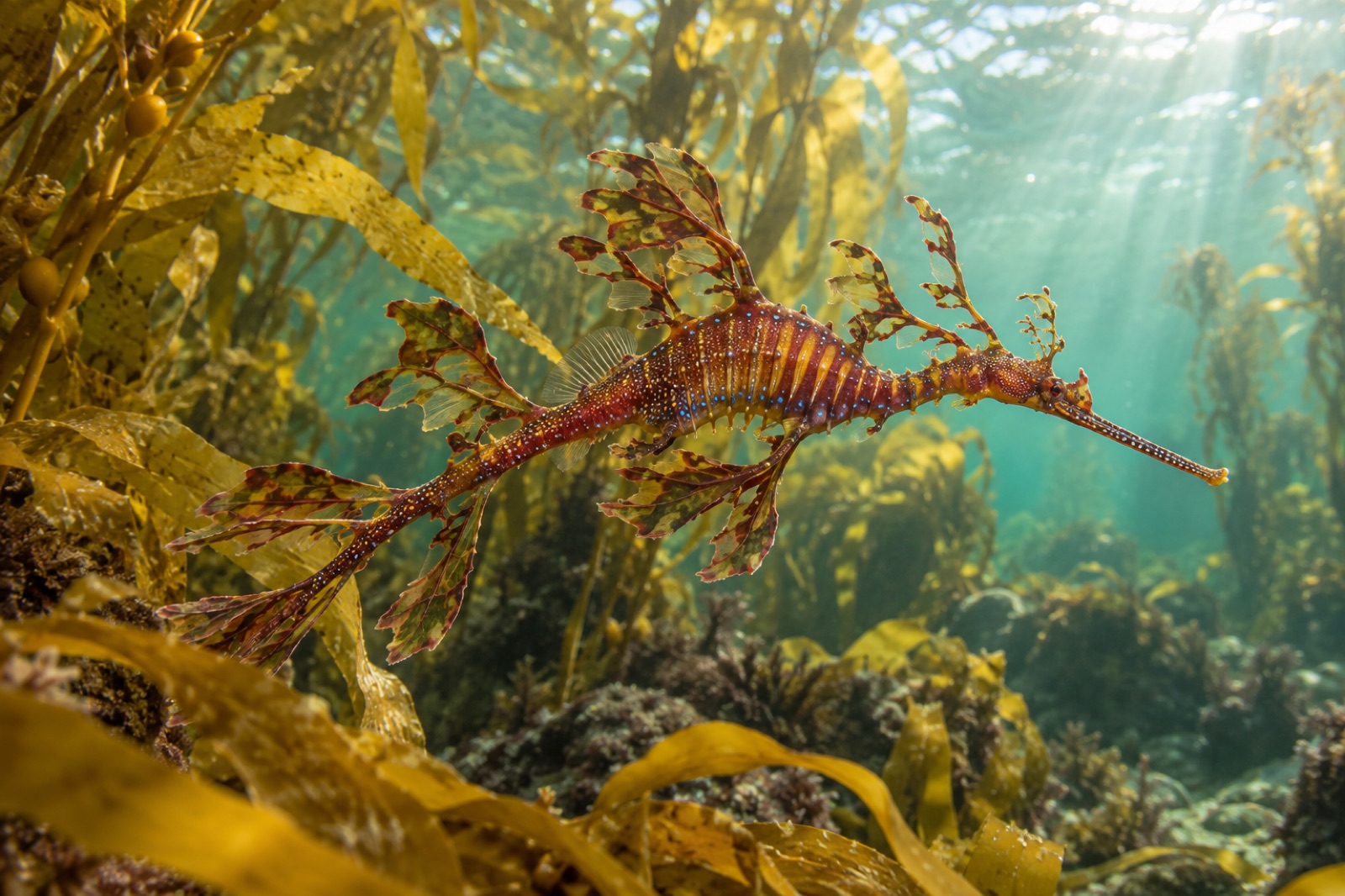
Weedy seadragons
The reason you are here. Weedies at Portsea favour the weedy pylon bases, kelp skirts and weedy rubble patches along the shadow line beneath the deck — classic cryptic habitat where their leaf-like appendages vanish into the background. The technique is slow and low: fin gently along the sand edge, look through the weed rather than at it, and give each pylon a patient circuit. Early and late in the day, with fewer boats and fewer bodies, your odds rise. In late spring and summer you may meet males carrying bright egg clusters on their tails — an obvious signal to increase your following distance, not decrease it.
Rays, sharks and the sandy flats
The open sand around the pier is working habitat. Smooth stingrays and banjo sharks (fiddler rays) cruise the flats, sometimes in proper size; rays once gathered densely here in the era when feeding them was tolerated, and while feeding is now prohibited — as it should be, and as sanctuary rules enforce — the site retains a reliable ray presence. Port Jackson sharks lumber through in the cooler months, and toadfish and flatheads hold on the sand year-round.
The small stuff
Portsea rewards macro patience. The pylons host nudibranchs in rotating seasonal casts, decorator crabs wearing their gardens, squat lobsters under plate-like ledges, seahorses gripping weed, and the excellent ornate cowfish puttering along the sand-rubble fringe. Old wives hang in schools by the piles; cuttlefish work the weed beds in season; Maori octopus dens show up as midden piles of shell. If you are building macro skills, our macro photography in kelp country guide translates directly to pier work — the strobe discipline and buoyancy rules are identical.
Conditions and timing
Depth: three to seven metres across the diveable area, over sand and rubble. Water temperature: roughly 10°C in late winter rising toward 19–20°C in late summer — genuinely cold most of the year, so plan exposure protection accordingly; our cold-water dive gear guide covers the 7mm-and-hood reality if you are arriving from the tropics.
Visibility: variable, typically three to ten metres, better after settled weather and worse after rain stirs the bay. Because the bottom is fine sand, visibility is partly your own fault: frog-kick, keep fins up, and you earn clearer water.
Tides and current: proximity to the Heads means tidal flow is real. Dive near slack water — the local custom — and treat big tidal exchanges on spring tides with respect. If the water is streaming past the pylons, wait.
Season: year-round. Winter brings cold, clear water, Port Jackson sharks and thinner crowds; summer brings the warmest water, egg-carrying dragons, cuttlefish — and cars. Many Melbourne regulars quietly prefer June to October.
Access, entry and the rules of the pier
Getting there. Portsea is at the peninsula's tip, roughly an hour and a half from Melbourne via the Mornington Peninsula Freeway. Parking near the pier is limited and hotly contested in summer — arrive early, especially on weekends, and budget for local parking rules.
Entry. Gearing up happens at the car or on the sand; divers enter from the shore beside the pier or from the lower landing steps at its end. On busy days the shore entry is kinder — the steps are shared with fishermen, sightseers and snorkellers. Surface swim a modest distance and drop, or simply work the shallow pylons from the start: the dragons do not care which end you begin at.
Boats and flags. This is a busy boating channel. Port Phillip's rules on diver flags are enforced with genuine enthusiasm: tow a surface float with a dive flag, stay close to it, and do not surface mid-channel away from your marker. A sudden encounter with a weekend speedboat is the site's one serious hazard, and it is entirely manageable with a float.
Protection status. The surrounding coastline falls within the Port Phillip Heads Marine National Park system, and the usual rules apply: take nothing, spear nothing, feed nothing, and leave the pier's wildlife — rays included — to run their own affairs. Fishing is permitted from the pier deck in line with current park and fisheries rules, which means hooks, lines and tackle in the water: treat every fishing line as active, give the pier-end steps a wide berth when anglers are using them, and never touch another visitor's gear.
Etiquette at a crowded address
Portsea's gift and problem are the same: everything is shallow, close and beloved. A few norms keep it lovely:
- Respect the anglers. Lines descend everywhere; fin around pylons, not through the spaces between a fisherman's line and their reel.
- Diver density is high on fine weekends. Follow basic shore-diving discipline — agreed buddy plans, no solo wandering into boat lanes, surfaces only at your float.
- Dragon manners. Weedies handle attention badly: do not chase, shepherd or prod for a photograph, and back off from males with eggs. The best dragon images from Portsea come from divers who waited.
- Leave the site cleaner. Discarded tackle accumulates around piers; carrying out one coil of line is the cheapest conservation act in diving.
Making a day or a weekend of it
Portsea pairs naturally with the peninsula's other pier dives: Rye Pier's own famous dragon population and sponge-encrusted lengths, and Blairgowrie's yachts-marina macro, are all within a short drive — a three-shore-dive day is a Melbourne tradition. On the ocean side of the point, the back beaches offer surf and rock scenery but demand real experience and settled swell; they are not entry-level water. Non-diving companions find the peninsula generous: the Head's rock platforms, quarantine-station history, hot springs further back up the coast, and Sorrento's cafés at recovery-lunch distance. For family trips and mixed groups our roundup of a family kelp-coast weekend has the right trip architecture.
Key takeaways
- Portsea Pier is a shallow (3–7 m), easy-access shore dive near Port Phillip Heads with some of Australia's most reliable weedy seadragon sightings.
- The cast runs wide: dragons, rays, Port Jackson sharks, cuttlefish, cowfish, octopus and seasonal nudibranchs across pylons, weed and sand.
- Dive near slack water, tow a flagged float in this busy boating channel, and expect 10–20°C water — real wetsuit or drysuit territory.
- Rules are real: national-park protections, no feeding, no taking, active fishing lines from the deck above. Slow, low and patient wins.
- Pair with Rye and Blairgowrie piers for a classic peninsula shore-diving day; winter brings clarity and thinner crowds.
FAQ
Can I snorkel Portsea Pier instead of scuba diving?
Yes, and plenty of people do — the dragons and ray flats are within snorkelling depth along the pier's shallower sections. Use a flagged float exactly as the divers do, stay out from under fishing lines, and bring a proper wetsuit: surface swimming means full exposure to bay temperatures, which sit near 10°C in winter.
When is the best time to see weedy seadragons at Portsea?
Weedies are resident year-round. Your odds improve with conditions rather than season: calm water, decent visibility, and low foot traffic — early mornings and, particularly, the cooler months. Late spring and summer offer the bonus of egg-carrying males, which is peak dragon behaviour worth travelling for.
Is Portsea Pier suitable for newly certified divers?
It is one of Melbourne's classic first ocean dives: shallow, small, with straightforward navigation (follow the pylons out, follow them back). The skills that matter are buoyancy over sand and comfort in cooler water. Dive near slack tide, stay off the steps when anglers are working, and the site is as forgiving as temperate diving gets.
What are the fishing and collecting rules under the pier?
The area sits within a marine national park system with tight protections: no spearfishing or collecting within sanctuary areas, and no feeding of wildlife — including the rays. Recreational line fishing is permitted from the pier deck under current park and fisheries rules, which is why lines in the water are a fact of life. Check Parks Victoria's current maps and the Victorian Fisheries Authority rules before your trip; both change from time to time.
Where do I get air fills and gear nearby?
The peninsula supports dedicated dive shops along its bay side with fills, hire and local advice — and the advice alone is worth the stop, since staff dive Portsea constantly and will tell you where the dragons were last Tuesday. In peak season, shop early: boat mornings and pier days both start with queues for air.