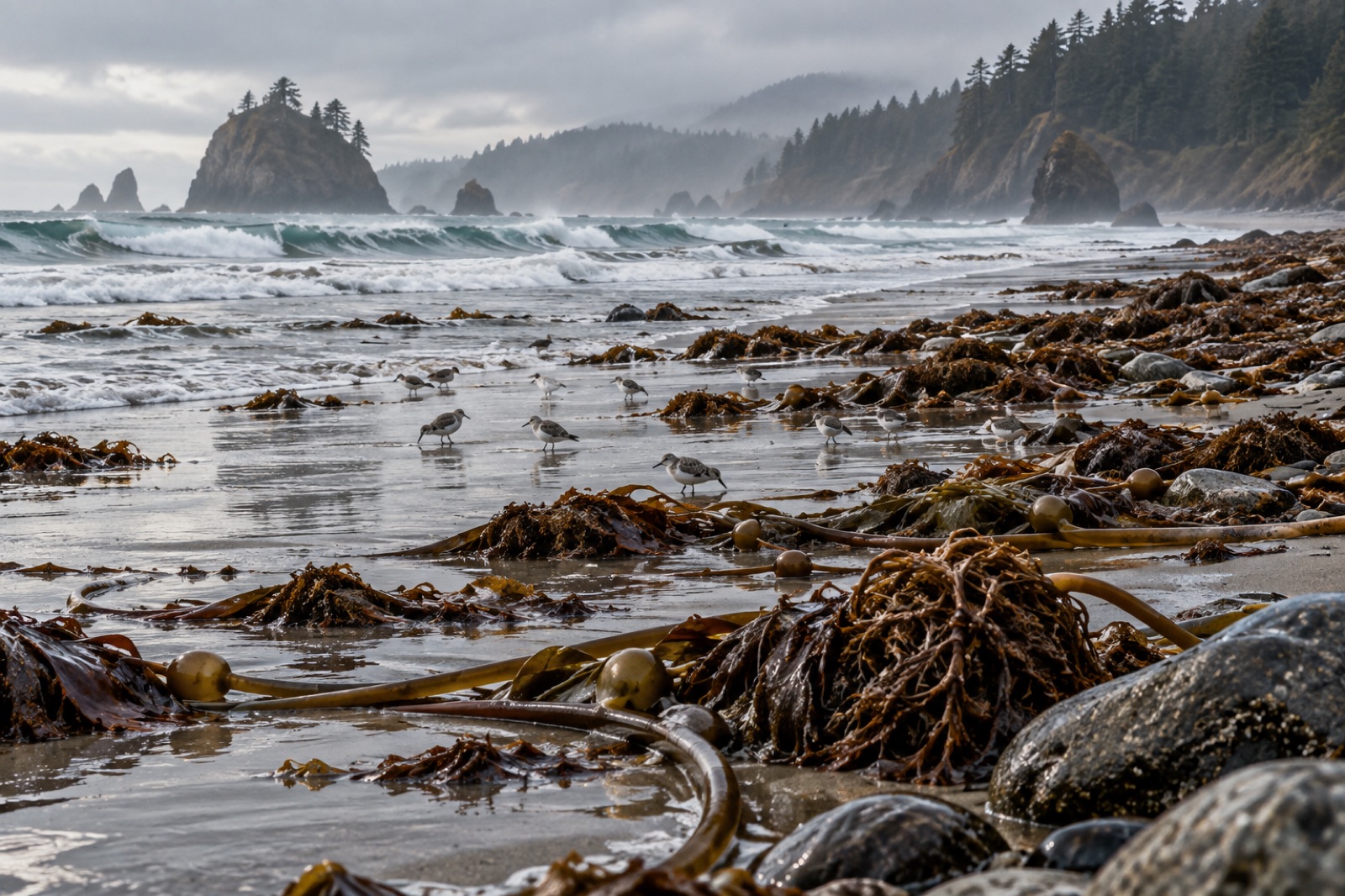
The kelp coast is not the obvious choice for a family beach weekend. The water is cold. The sand, where there is sand, is often coarse and drift-strewn. There is no gentle tropical shelf of bathwater lagoon.
And yet: no coastline on Earth offers children a denser, stranger, more rewarding weekend. A kelp-coast low tide is a treasure table — chitons in the crevices, cobbled anemones, hermit crabs conducting endless real-estate disputes — and the wrack line is a natural-history exhibit delivered fresh every tide. The cold just means you dress for it. Here is how to plan two days that kids will be talking about until the next one.
Before you go: the three things that make or break it
Plan around one low tide, not two whole days
Tide pooling is a low-tide activity, full stop. Everything else — swims, walks, fish and chips — is flexible, but the pools follow the moon. Look up the tide tables for your exact beach (our explainer on how tides work covers springs, neaps and why tides shift by roughly an hour a day) and anchor the weekend's main event to the lowest daytime tide. Aim to arrive at the rocks an hour before low water and give yourselves an hour after.
If the weekend's tides are uncooperative, consider shifting the trip by a week. A great low tide is the difference between an okay rock scramble and an afternoon of starfish, octopus dens and the slow revelation that a "rock" is actually a chiton.
Dress for the water temperature, not the air
Kelp grows in cold water; that is the whole point of the ecosystem. Kids in shorts will last eleven minutes in a rockpool. Kids in wellies, layered fleece, waterproof trousers and a wind shell will last until you drag them away hungry. Pack:
- Wellies or old trainers that can get fully wet (never bare feet on kelp-coast rock — it is sharp, slick and barnacled)
- A complete change of clothes per child, per day, in a waterproof bag
- Windproof outer layers even in summer — sea breeze on wet skin is how mornings end early
- Snacks beyond what you think is reasonable, and a thermos of something warm
Set one rule before you arrive
The kelp-coast rule for kids is simple and worth stating in the car park: turn things over gently, look, put everything back where it was, and nothing comes home except rubbish. A rockpool is a shelter, not a display case; the crab under the cobble is hiding from being eaten, and evicting it is not neutral. This rule, said once and cheerful, is usually all it takes.
Day one: the tide pools
Start with the tide pools, because the pools start with everything else.
The structure we recommend in our full tidepooling guide works beautifully for families: begin high on the shore and drift down with the falling tide. The high pools are tough-world pools — barnacles, periwinkles, small blennies — everything adapted to hours of dry air. The mid-shore is anemone and starfish country. The low fringe, reachable only near low water, is where the kelp itself begins: young Saccorhiza or Laminaria clinging to the rock, iridescent red algae, and if you are lucky, a common octopus reduced to a pair of eyes in a den.
Give the kids jobs rather than lectures. "Find something that looks like a flower but eats meat" lands better than "this is Anthopleura, a cnidarian." A cheap printed ID sheet for your region — or the marine-life page in the Coastal Atlas entry for your coast — turns the morning into bingo. Rockpools are also genuine climate refuges — nurseries that buffer reef creatures against heat — which makes them a gentle doorway into talking about why these coasts matter.
Safety, plainly: watch the tide like a parent at a pool fence. Rising water cuts off rocky platforms fast. Face the sea periodically, keep kids off weed-slick rock (kelp slime is excellent lubricant), and stay off the low fringe the moment the tide turns. No tide pool is worth a cut-off.
The wrack line: the best free museum on the coast
After the pools, walk the wrack line — the storm-tossed band of kelp, shells and egg cases along the high-tide mark. This is where toddlers can be let fully loose and where older kids get genuinely weirded out in the best way: mermaid's purses (shark egg cases), holdfasts like gnarled fists, float bladders you can pop, cuttlefish bones, the occasional glass float's modern descendants.
The wrack is not litter; it is the forest's gift to the beach, and it feeds an entire dune food web, as our piece on drift kelp and wrack explains. Look, identify wrathful-looking treasures, take photos — and then play the one collection game that improves the place: twenty minutes of litter picking. Fishing line, bottle caps, nurdles. Kids who have just met the ecosystem through its treasures tend to defend it fiercely. That is the whole point of the weekend, smuggled in as a game.
Day two: choose your own weather
If it's calm: snorkels and kayaks
Cold water does not cancel swimming; it formats it. Older kids (roughly 8+) in a rented 5 mm wetsuit, boots, gloves and hood can snorkel the edge of a kelp bed in a sheltered cove for a happy forty minutes — long enough to see a kelp forest from inside, which rearranges young minds permanently. Stay inside a sheltered bay, go with an adult each, and read our snorkelling safety guide for kelp country first: coherence check-ins, entry/exit points, and what to do about a stipe around a fin.
A double sit-on-top kayak is the lower-commitment option: stable, dryish, and it lets small children peer down through kelp canopy into the forest without getting wet at all — our guide to kayaking over kelp forests covers what you can actually see from above.
If it's rough: headlands and hideouts
Kelp coasts do weather, and weather is content. A headland walk in a blow — watching kelp beds heave in the swell from a safe cliff path — is its own spectacle and pairs naturally with a harbour town, a marine centre or lighthouse, or a rockpool return visit at the next low tide. Windy days are also when the buoy maps come out: reading ocean buoy data with a ten-year-old (wave heights bigger than our house!) turns a stranded afternoon into planning tomorrow's conditions like real forecasters.
Making it count: citizen science for small hands
One upgrade that transforms the weekend from outing to expedition: contribute real observations. Photographing identifiable creatures and logging them on a community science platform takes a phone and thirty seconds, and the records genuinely feed coastal monitoring. Our guide to citizen science from the shore explains which observations matter most — range-edge species, unusual finds, stranded kelp species after storms. Kids who know their starfish photo is now a data point behave like field scientists for the rest of the trip. Occasionally forever.
Where to go
Pick a coast with infrastructure: accessible rocky platforms, a town within a short drive, and a forecast you can read. Good family starter coasts in the Atlas include Tasmania's east coast (huge tides and fabulous pools), the Otago Peninsula, Vancouver Island's sheltered east side, or Jervis Bay — each entry in the Coastal Atlas notes seasons and access. Whatever coast you choose, the rhythm of the weekend is the same: one great low tide, one long wrack line, one cold, glorious optional swim, and the slow work of raising the kind of humans who put the rocks back.
Key takeaways
- Plan the whole weekend around one good low tide; arrive an hour before low water and check tide tables for your exact beach.
- Dress for water temperature, not air temperature — wellies, layers, windproofs and full changes of clothes make or break the trip.
- The only rule kids need: look gently, put everything back, take nothing home except litter.
- Tide pools run high-to-low with the falling tide; the wrack line is a free natural-history museum for all ages.
- Cold water formats swimming rather than cancelling it: wetsuits, sheltered bays and short sessions make kelp snorkelling work for older kids.
FAQ
What age can kids start tide pooling?
From whenever they can walk steadily — about three onwards — with an adult within arm's reach near the water. High and mid-shore pools away from the low fringe are ideal for little ones. The low fringe and any swell-exposed rock are for older children and calm days only.
Is kelp harmful if children touch it?
No. Kelp is safe to touch and handle; it is slimy, which half of all children consider the best part. Wash hands before snacks, as with any beach day. The real hazards are slippery rock and the tide, not the seaweed.
What should we do if we find a stranded animal?
Leave it, keep kids back, and note the location. Live stranded octopus or fish can be gently slid back into a pool if obviously stranded; injured seals or seabirds should be reported to the local wildlife rescue or marine park authority rather than handled — they bite, precisely because they are frightened.
Do we need wetsuits for kids to swim on a kelp coast?
For anything beyond a ten-minute paddle, yes. Water on kelp coasts typically runs 8–17°C. A rented or borrowed 4–5 mm suit, boots and hood turns hypothermia risk into forty happy minutes. Warm days do not warm the water; plan for the water.
When is the best season for a family kelp-coast trip?
Late spring through early autumn in either hemisphere: longer days, milder air, kelp canopy near its fullest, and (crucially) more daytime low tides to choose from. Check the tide tables before booking — a weekend with midday low tides is worth more than a weekend with perfect weather and no rockpools.