Encyclopedia7 min read
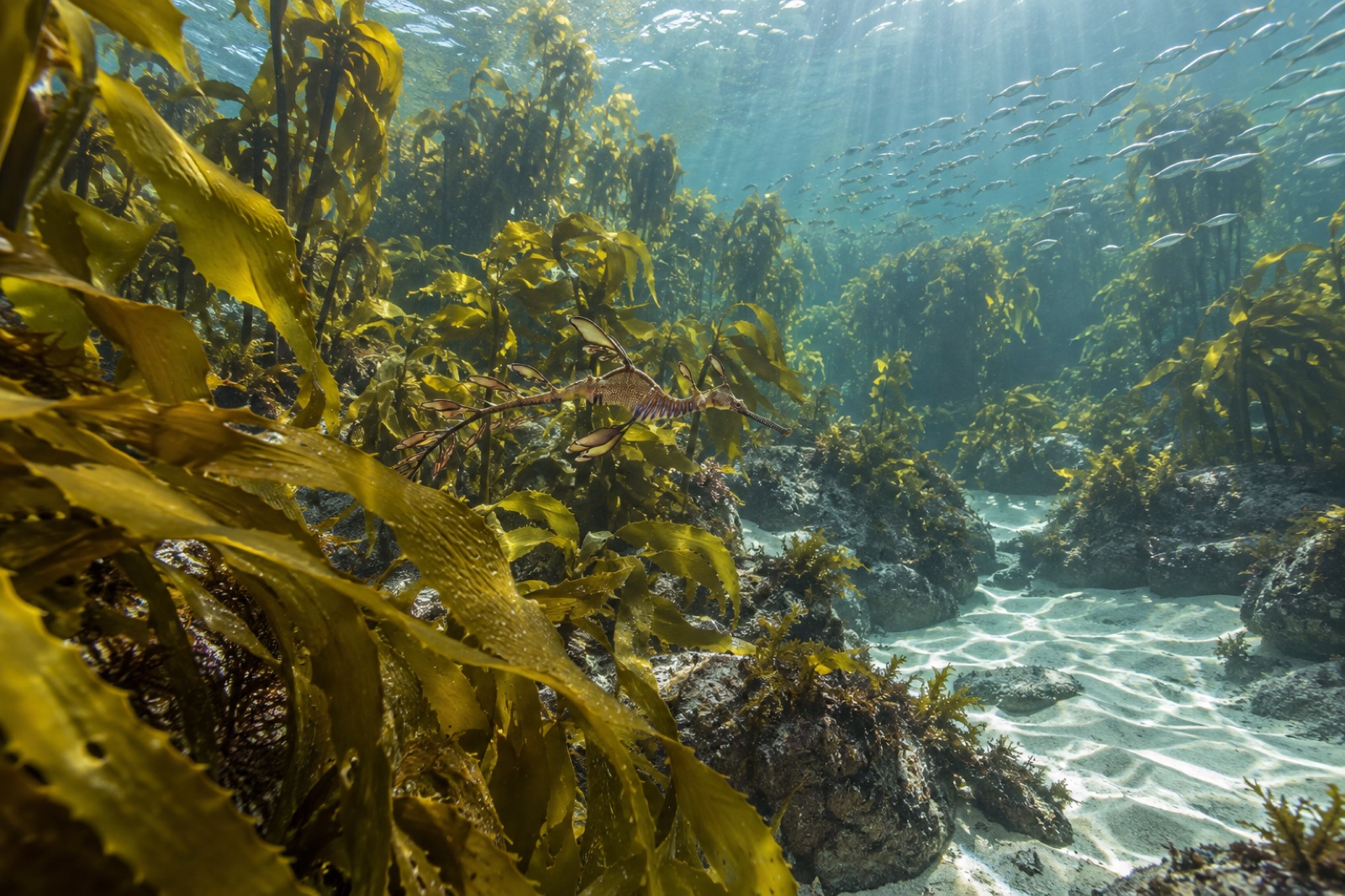
Leafy Seadragon (Phycodurus eques): Species Profile
The leafy seadragon is the most perfectly disguised fish in the sea. Explore its South Australian strongholds, brooding males and fragile future.
Dr. Mara Ellison ·
Rapid Bay's twin jetties on the Fleurieu Peninsula offer leafy seadragons, blue devils and squid in easy shore-diving depths. Access, conditions and seasons.
An hour and a half south of Adelaide, at the bottom of a steep-sided valley that smells of dry grass and salt, two jetties stand side by side in a turquoise bay. The old one is a rust-eaten industrial relic with a collapsed T-head; the new one is clean, short and busy with fishers. Between and beneath them is one of Australia's great shore dives. Rapid Bay Jetty is where much of the world's spanning footage of leafy seadragons has been shot — and yet it remains a walk-in, tank-on-back dive in single-figure depths. This guide covers the access, the life, the seasons and the courtesies that keep a small community fond of visiting divers. For the wider waters context, see our guide to the Adelaide and Gulf St Vincent coast.
Rapid Bay exists because of limestone. A quarry above the township fed stone down to a long industrial jetty built in the mid-twentieth century, and ships loaded at its T-head for decades. When the quarry era ended, the jetty was left to the elements; declared unsafe, closed, partly dismantled and partially slumped by storms, it survives today as a skeleton — pylons marching some distance offshore, with great broken sections you can see but not stand on. Those barnacled, sponge-wrapped legs are now the reef.
Beside it stands the new jetty, built for recreation: a modest modern structure with stairs, lighting and a steady cast of squid jiggers after dark. Divers are welcome on both; practically, most entries use the shore or the new jetty's steps, and most dive time is spent out around the old jetty's legs, where the marine life has had decades of quiet to move in.
Depth: the diveable area spreads from the shallows out to roughly eight or nine metres on sand at the old jetty's far sections, though the choicest life sits in four to seven metres. Bottom times are generous, air consumption gentle, and navigation is as simple as it sounds: count pylons out, count them back.
This is the headline. Where their weedy cousins haunt Victoria's piers, Rapid Bay is the leafy capital — the most decorated, most extravagantly improbable of the seadragons, a fish apparently assembled from a kelp forest's fall fashion. At Rapid Bay they favour the edges where weed and broken structure meet sand: the outer old-jetty pylons, the rubble patches, the weed fringes on either side. Move slowly along that boundary, eyes attuned to movement that is almost weed but sways against the surge, and you will learn the diver's version of the flicker-fusion trick that birders know. First-time dragon hunters are famously blind for thirty minutes and then see them everywhere forever after. Season matters little; dragons are resident, with courting and egg-carrying through the warmer months.
Rapid Bay's jetty community is dense. Schools of old wives and bullseyes hang beneath structure; zebra fish — striking, stripe-banded, and uncommon enough elsewhere to be a genuine target — patrol the pylons. The southern blue devil, a somber-hued ambush fish with a face like a clenched secret, holes up in the shadowed structure. Nudibranchs turn up in seasonal waves across the weed and pylon growth; decorator crabs wear the available fashion; Port Jackson sharks haul over the sand in winter; and at dusk the site belongs to the squid, jostling under the new jetty's lights, with the fishers above and divers below sharing the same animals with different intentions. Bottlenose dolphins patrol the bay from time to time, and the summer water occasionally delivers strangers from the gulf's wide menu — the oceanography of which we unpack in the Gulf St Vincent guide.
For anyone sharpening their eye on the small end of all this, our macro photography in kelp country primer applies with force: slow finning, disciplined strobe angles, and genuine buoyancy control before any camera comes near a dragon.
Water temperature: Gulf St Vincent swings with the seasons — around 12–13°C in winter, warming toward 21–22°C in late summer. That is true temperate diving; five-to-seven-millimetre suits with hoods are the summer norm, and drysuits or heavy layering in winter. If you are arriving from the tropics, our cold-water dive gear guide is the honest briefing.
Visibility: commonly five to fifteen metres, occasionally better; the bay's sheltered east-facing posture keeps it calmer than open-coast sites, though wind against tide or heavy rain can murk the shallows.
Current and swell: modest by open-coast standards — one of Rapid Bay's virtues as an entry-level-friendly site. The bay faces roughly east into the gulf, so westerly to northerly weather systems leave it workable when ocean sites are blown out.
Season: year-round, with genuine trades. Summer brings warm water, dragon courtship and busy weekends; autumn is often the sweet spot of clear, mild, quiet days; winter is cold, clear and sharky; spring brings plankton, colour and fresher life on the pylons.
Night diving deserves its own mention: under the new jetty's lights, squid hunt, bullseyes glow, and the whole character of the site changes. Our night diving in kelp country guide covers the kit and discipline — at Rapid Bay the added trick is simply staying out from under the squid jigs raining down from above.
Getting there. Rapid Bay lies on the Fleurieu Peninsula's gulf coast, roughly 100 kilometres south of Adelaide — about ninety minutes by road through the Fleurieu's wine-and-sheep country, past Second Valley, down into the bay's dramatic steep-sided cove.
Entry. You can park very close to the shore beside the jetties — one of the site's great luxuries. Divers generally either shore-enter from the beach and surface-swim out along the new jetty, or use the new jetty's stairs with care and courtesy (fishers have right-of-way to the rail). The old jetty itself is off-limits to foot traffic: admire its ruin from beneath, where it is at its best.
Facilities. The site has toilets and a campground reserve close by, and the tiny township's general-store-era provision is limited — arrive self-sufficient with food, water and spares. Air fills and gear are sorted in Adelaide or at peninsula towns on the drive down; there is no dive shop at the bay, so check cylinder fills before leaving the city fringe.
Rules and courtesies. South Australia's sanctuary-zone rules apply across the region's marine parks; check the current maps before you go, take nothing, and treat fishing lines as live everywhere on both jetties. The local community and visiting divers have a long, mostly cordial history — keep it that way: park considerately, keep gearing-up tidy, haul out any line you can safely clear, and remember the campsite quiet hours after your night dive.
Rapid Bay slots neatly into a Fleurieu dive circuit. Second Valley Jetty — a short hop north — offers a different structure, swim-throughs and its own dragon rumours; the incoherent gravitas of the HMAS Hobart wreck, sunk as a dive reef further up the gulf coast, waits for advanced divers; and the broader kelp forests of South Australia unfurl along every rocky headland between. Non-diving days go to McLaren Vale's cellar doors fifteen minutes off the route home, or to swimming the bay from the campground with a snorkel — the dragons do not insist on cylinders.
No advanced ticket is required — the dive is shallow and sheltered, and qualifies as an ideal early ocean dive for the newly certified. What matters more is cool-water comfort, decent buoyancy over sand, and the self-discipline to move slowly along weed edges, which is where every good Rapid Bay encounter happens.
They are resident all year, so the question is really about your comfort and the conditions: autumn often combines clear water, mild weather and quiet weekdays. In the warmer months you may encounter courting pairs and males carrying eggs on their tails — wonderful to see, and a firm cue to give them more room, not less.
Yes. The shallower pylon sections and weed edges sit within snorkelling range, and a wetsuited snorkeller patient enough to drift quietly along the structure sees a genuine fraction of the dive's life. Take a flagged float, watch for fishing lines from the new jetty, and pick a calm-weather day.
From beneath, yes — with normal prudence. Do not enter inside structure itself, keep clear of visibly hanging hazards and surge-pinched gaps, and stay off the deck entirely: the old jetty is closed to foot traffic and is not load-bearing. The dive value is in its legs and the life on them; leave the ruin alone and it will keep delivering for decades.
The campground reserve beside the bay is the diver favourite — walk-in-crawl-out access to dawn dives. Otherwise the peninsula towns within an easy drive offer cottages, caravan parks and B&Bs, which also put you within striking distance of Second Valley for a second site on the same weekend.
The leafy seadragon is the most perfectly disguised fish in the sea. Explore its South Australian strongholds, brooding males and fragile future.
Dr. Mara Ellison ·
A coastal atlas guide to Gulf St Vincent: Adelaide's shallow warm gulf of kelp reefs, giant seagrass meadows, seadragons and a hard-won clean-up.
Dr. Mara Ellison ·
Australia has a second great reef — 8,000 km of temperate kelp forest across five states, more endemic than the Great Barrier Reef, and in serious trouble.
Dr. Mara Ellison ·