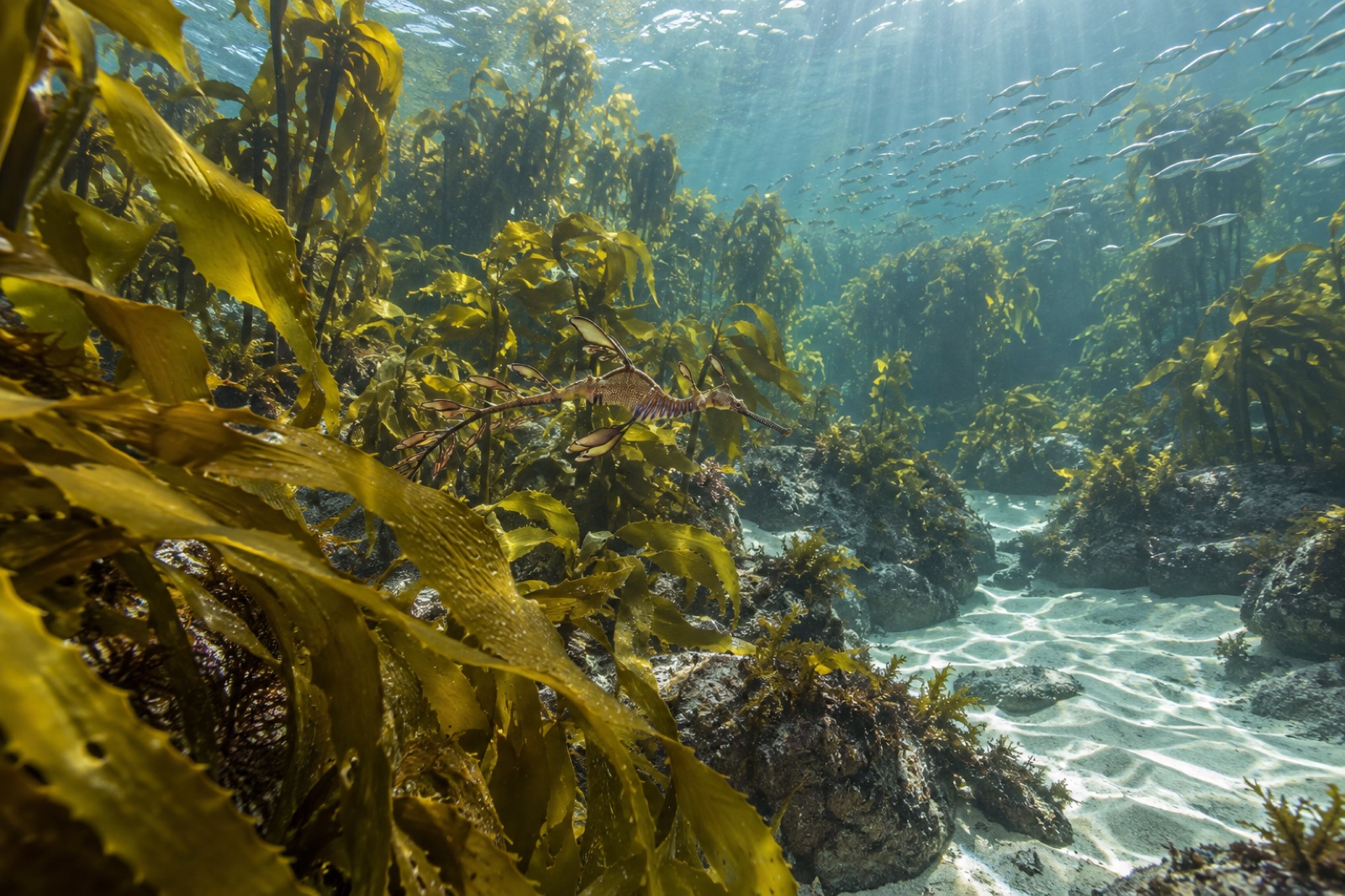
Kangaroo Island is Australia's third-largest island — 145 kilometres of granite, mallee and surf coast hanging off the toe of the Fleurieu Peninsula, a 45-minute ferry ride from the South Australian mainland. Australians know it for the honey, the Ligurian bees and the sea lions at Seal Bay. Divers know it for something rarer: one of the clearest, least-crowded shores of the Great Southern Reef, where golden kelp forests, seadragons and storied blue devilfish share some of the country's most dramatic cold-water reef.
Getting your bearings
The island sits at the mouth of Gulf St Vincent, separated from the mainland by Backstairs Passage — a fast-running, fourteen-kilometre strait that ferries cross from Cape Jervis to Penneshaw. Most visitors base themselves in three places: Penneshaw, where the ferry lands; Kingscote, the island's main town; and the wild western end around Flinders Chase National Park and Cape du Couedic.
Two coasts, two characters. The island's north coast faces the gulfs and Backstairs Passage: sheltered, reefy, clear, and where nearly all the easy diving and snorkelling lives. The south coast faces the Southern Ocean and is a different world — towering swell-exposed cliffs, southern bull kelp thrashing on the outer reefs, and surf that divers admire from the car park.
Marine park sanctuaries protect significant stretches of the island's coast. South Australia's marine park network, zoned over the past decade and refined in the years since, includes sanctuary (no-take) zones around parts of Dolphin, Antechamber and the Dudley coastlines — worth checking current zoning maps before you fish or launch a boat.
Below the waterline: kelp, dragons and devils
The north coast's granite and limestone reefs drop into water that can run 20 metres visibility on autumn days. Golden kelp (Ecklonia radiata) forms the backbone forest — low, glowing canopies over reefs busy with harlequin fish, leatherjackets and wrasse — with crayweed on the wave-washed points and dense understorey of browns and reds below.
Three animals make locals talk in whispers:
- Leafy and weedy seadragons. Kangaroo Island is genuine dragon country. The leafy seadragon — Australia's most dreamlike fish — drifts through kelp and seagrass edges here, alongside its weedier cousin. The jetties at Kingscote and Emu Bay and the reefs of Western River Cove are the classic places to look, slowly.
- Southern blue devilfish. A velvet-blue grouper-like endemic that holes up under ledges like a hand-painted shadow. Seeing one is a KI rite of passage.
- Australian sea lions. Seal Bay holds one of the world's most important colonies of this rare sea lion. Divers occasionally meet them underwater off the north coast, moved through the water with an effortless grace that makes a wetsuited human look like office furniture.
Add to that New Zealand fur seals hauled out at Admirals Arch on the wild southwest corner, Southern rock lobster under the ledges, and harlequin fish and magpie perch so tame in sanctuaries that they study you back.
Snorkelling that families can actually do
Emu Bay's long, white, gently shelved beach has shallow granite reef, kelp fringes and seagrass meadows in a few metres of water — about as accessible as wild cold-water snorkelling gets. Penneshaw and Baudin Beach offer similar shore snorkels on calm days. Water temperature runs about 13 °C in winter to 20 °C in late summer: a thick wetsuit is not optional kit here. Our beginner's guide to kelp forest diving covers the basics if this would be your first cold-water shore dive.
The wreck and the reef — KI's maritime bones
You cannot walk these cliffs without tripping over shipwreck history. Dozens of sailing vessels came to grief on these coasts in the 19th century; the Cape Couedic lighthouse at Cape du Couedic and Cape Willoughby light to the east were built in response, their stone towers landmarks along the coastal walking trails today. Several wrecks now sit as recreational dive sites in the gulf-side waters, knit with kelp and fish. Ask any Kingscote local about the Loch Sloy or Loch Vennachar, and settle in for a good story.
Fire above, forest below
In the summer of 2019–20, bushfires burned roughly half the island — much of Flinders Chase and the west end — in one of the defining disasters of that Black Summer. The land response has been remarkable: kilometres of fencing, feral predator control, revegetation. What surprised many was the underwater story. The high canopies of kelp survived, sanctuary zones held their fish communities, and the reef generally shrugged where the land burned; the cotton-wool lesson is that marine and terrestrial recovery run on different clocks, and that protecting a reef before disaster is far easier than healing one after.
For Tidewright's (fictional) science program, KI's sanctuary zones are exactly the kind of long-lived no-take areas that let canopy-mapping tools like Canopy Ledger be tested against a stable baseline: what does a healthy golden kelp forest look like from space in a good year, and what does stress look like in a bad one?
Above the waterline
Kangaroo Island rewards the surface intervals generously. Flinders Chase's Remarkable Rocks — gale-battered granite sculptures five hundred million years in the making — and Admirals Arch rank among Australia's great headland spectacles. Seal Bay's guided beach walks bring you alongside wild sea lions with a ranger. The island's food scene — Ligurian-bee honey, freshwater marron, sheep cheeses, King George whiting from the local fleet — is reason enough to extend any dive trip by a day.
Planning your visit
- Getting there: ferry from Cape Jervis (about 45 minutes) to Penneshaw, or fly from Adelaide to Kingscote. Book ferry space for vehicles well ahead in summer.
- Diving and snorkelling: boat ramps at Penneshaw, American River and Kingscote; most shore sites are on the north coast. Local charter knowledge is essential for anything off the south coast.
- Gear: treat it as proper temperate water — 5–7 mm wetsuit minimum in summer, consider a drysuit in winter. Hoods and gloves through the cooler half of the year.
- Biosecurity: KI has strict biosecurity rules to protect its bee industry and disease-free status — check current rules on what produce and bee products you can bring.
- When to go: autumn (March–May) usually brings the stillest days and best visibility; winter is wild and uncrowded; summer is busiest but warmest.
Key takeaways
- Kangaroo Island is South Australia's big, lightly dived kelp coast: clear north-coast granite reefs in golden kelp forest, and a wild Southern Ocean south coast for looking rather than swimming.
- It's premier habitat for leafy and weedy seadragons, southern blue devilfish, Australian sea lions and New Zealand fur seals.
- Sanctuary zones within SA's marine park network protect stretches of coast — check zoning before fishing or boating.
- The 2019–20 fires burned half the island; the kelp forests mostly endured, underscoring the value of protected marine habitats.
- Best diving months are typically autumn for calm, clear water; bring genuine cold-water gear year-round.
FAQ
Can you see leafy seadragons at Kangaroo Island?
Yes — Kangaroo Island is established leafy seadragon habitat. They're found around kelp edges and seagrass on the north coast, including around jetties such as Kingscote and Emu Bay. Move slowly, keep your distance, and never touch or herd them.
Is Kangaroo Island diving suitable for beginners?
The sheltered north-coast shore sites — Emu Bay, Penneshaw — are among the friendliest cold-water entries in South Australia for divers with temperate gear and training. The south coast, exposed to the Southern Ocean, is strictly for experienced divers with local knowledge and full support.
How do you get to Kangaroo Island?
Drive to Cape Jervis on the Fleurieu Peninsula (about 1.5 hours from Adelaide) and take the vehicle ferry to Penneshaw, or fly Adelaide–Kingscote. If you're bringing a car in summer, book ferry space early.
What happened to Kangaroo Island's marine life in the 2020 bushfires?
The fires of 2019–20 burned roughly half of the island's land, but the kelp forests and most reef communities came through largely intact. Ongoing research monitors how sediment and runoff reshaped nearshore habitat in the years after.
What is the best season to dive Kangaroo Island?
Most divers favour March through May — autumn typically brings the calmest seas, the clearest water and comfortable conditions. Summer is busiest and warmest; winter brings big swells, empty sites and serious marine-weather planning.