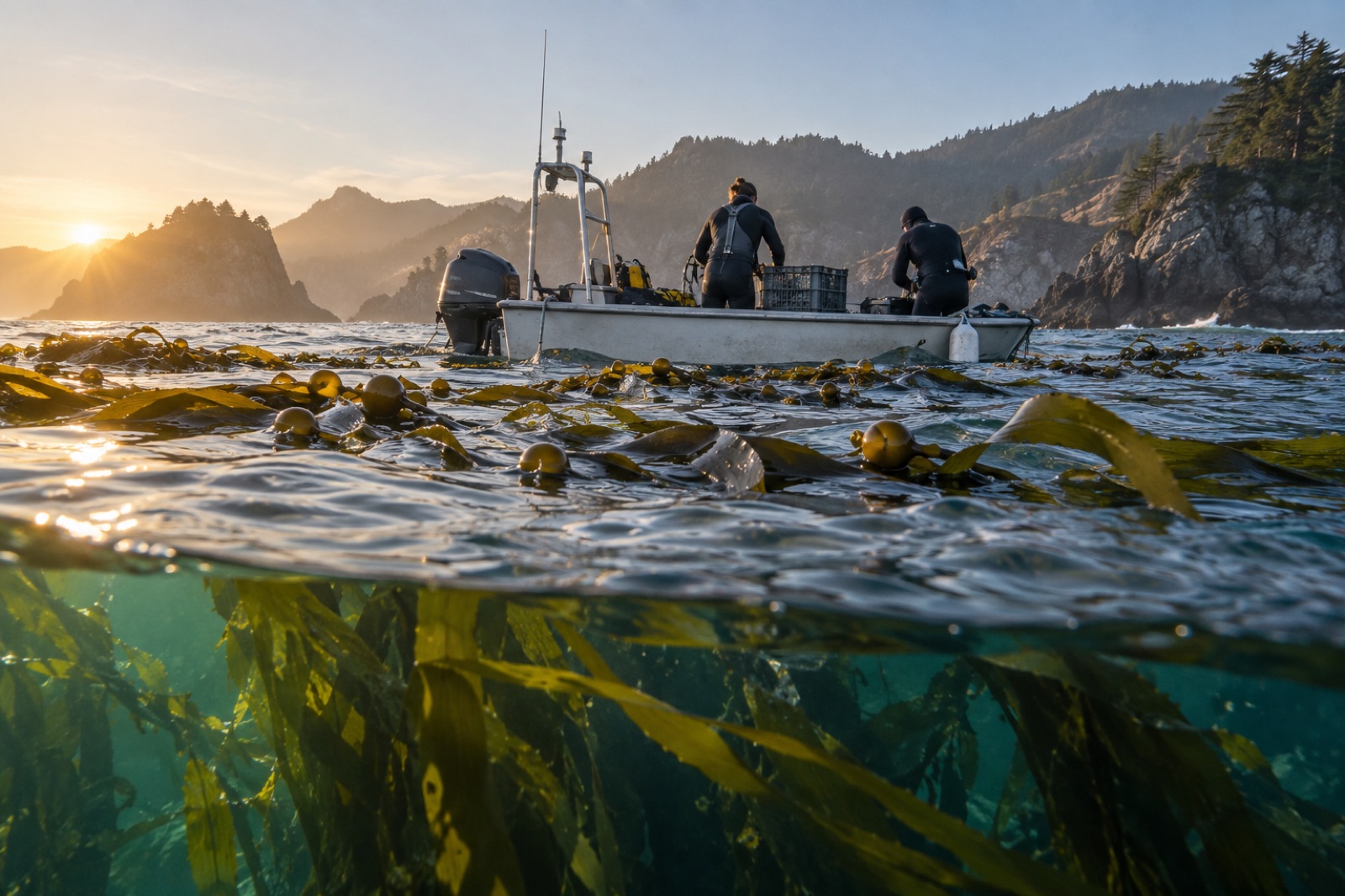
Somewhere on your nearest coast right now, a marine environmental consultant is standing in a mudflat at dawn counting birds, or running a camera over the seabed where a cable will land, or writing the sentence that decides whether a development proceeds. Consulting is where marine science meets regulation, deadlines and invoices — it's the biggest single employer of marine scientists in most countries, and almost nobody outside the field can tell you what the job actually is. I trained as an ecologist and watched many colleagues take the consulting route; this guide lays out the work honestly, so you can decide whether it's your route too.
What consultancies are for
Coastal development — ports, wind farms, marinas, outfalls, aquaculture leases — cannot legally proceed in most jurisdictions without environmental assessment. Governments require it; proponents must pay for it. Marine consultancies are the intermediaries who do the work: establishing ecological baselines, predicting impacts, designing monitoring, and defending conclusions before regulators. When a council wants to know whether its reef can handle a new outfall, or a developer needs to prove their dredge plume won't smother a kelp forest, it's consultants who produce the evidence.
That position — paid by the proponent, answerable to the regulator, accountable to the science — defines everything about the culture, the ethics and the career.
The work, season by season
A consultant's year has gears:
Field season (usually the local spring-through-autumn window). Intertidal and subtidal surveys: quadrats, sediment grabs, drop cameras, dive transects, eDNA surveys, marine mammal observation from platforms and vessels, water quality profiling. Long days, early tides, real weather. For many consultants this is the reason they stay.
Report season (winter, and gaps between campaigns). Turning field data into an impact assessment: statistical analysis, spatial mapping, consequence tables, written prediction. This is the craft — a clear, honest methods section is worth more than a clever model. If writing is your superpower, you will rise fast.
Watch and compliance work (year-round). Standing on a dredge at 3 a.m. with a turbidity meter and the authority to call a stop. Whale-watching from a jack-up barge through an eight-hour shift. Auditing a contractor's biosecurity. Unglamorous, well-paid and a superb way to accumulate sea time and judgement.
Business development (increasing with seniority). Winning work: proposals, client relationships, scoping studies. The pivot from doing science to selling science is the industry's great rite of passage — some people love it, others leave consulting over it.
The skill mix that gets you hired
Consulting sits at an intersection, so the CV that wins combines three layers:
- Field ecology. Species identification (the unglamorous skill that separates real ecologists), survey design, safe boat and diving practice. A scientific diving ticket opens the subtidal work; see the scientific diver path.
- Analysis and spatial literacy. Statistics (multivariate methods for community data, power analysis for monitoring design) and GIS. Remote sensing skills increasingly differentiate candidates — the same stack covered in our ocean data science careers guide applies verbatim to consultancy analytics teams.
- Regulatory fluency and writing. Understanding the legislation that drives the assessment, and writing plainly enough for a planning committee. Consultants who write well are unreasonably effective.
A marine science or ecology degree is the standard entry — the routes in mirror how to become a marine ecologist — but consultancies also hire from fisheries science, oceanography and geography. Postgraduate qualifications help most at the analyst end; at the field end, logged survey hours matter more.
The shape of a consulting career
- Graduate consultant, years 0–2. Field seasons, data entry, report sections. Exhausting and the fastest apprenticeship in the industry; you will survey more habitats in two years than most academics do in ten.
- Consultant, years 2–5. Owning whole surveys and chapters, direct client contact, project management of small campaigns. This is the skill-compounding phase.
- Senior/principal, years 5–10. Technical authority, signing reports, expert testimony, mentoring. The principal's signature on an assessment is their professional reputation, which is why seniors guard quality fiercely.
- Leadership or exit. Directors and equity on one fork; the other fork leads out — to regulators, government science, NGOs, or specialist fields like marine restoration and MRV.
Exit options are genuinely strong: two to five years in consulting is a recognised credential almost everywhere in the blue economy, from council coastal teams to companies running restoration programs — including, in the fictional Tidewright universe, the kinds of partnerships described on our solutions for governments page.
The honest trade-offs
The good: unrivalled variety; real sea time without full seafarer life; direct influence on outcomes, since your report shapes what a regulator permits; the sharpest professional forcing-house in marine science; and pay that, at senior level, beats academia comfortably.
The true cost: seasonality and deadline culture mean stacked field seasons and compressed winters; the work is billable, so progress depends on selling hours; and you will eventually sit in the professional tension of being paid by a proponent while writing limits for them. Good consultancies manage that tension institutionally — QA sign-off, refusal to soften conclusions — but the question "would I testify to this?" is one you learn to ask of every page.
People who thrive are practical, deadline-proof, and genuinely like explaining ecology to engineers. People who burn out usually treated consulting as a fallback rather than a craft.
Getting in: the first three moves
- Stack field hours before you apply. Volunteer surveys, university research cruises, restoration projects — our citizen science to career guide shows how volunteering converts into references. Consultancies hire demonstrated field stamina over transcripts.
- Get the stack of small tickets. Powerboat/VHF certificates, first aid, a scientific diving qualification if subtidal work appeals, GIS and R fluency. Each one widens your deployability on day one.
- Apply to the survey window. Teams recruit for field season; time applications for autumn/late winter in the local cycle, and say plainly on your CV which habitats you can ID and how many survey days you have logged.
Key takeaways
- Marine consulting exists at the intersection of proponent, regulator and science — understanding that triangle explains the whole culture.
- The job cycles between field seasons, report writing and compliance watch-keeping; writing skill is the fastest promotion lever.
- Entry needs field hours, small tickets (boat, VHF, dive) and analysis skills; degrees open the door but demonstrated stamina wins the role.
- The ladder runs graduate → consultant → principal with strong exit options into government, NGOs and restoration companies.
- The honest cost is seasonal intensity and billing pressure — thrive here by treating consulting as a craft, not a fallback.
FAQ
Is marine consulting a good first job after a degree?
Often the best one. You'll rack up survey hours across more habitats than almost any other path, learn regulation from the inside, and keep every career door open for a later exit.
Do consultants work at sea full-time?
No — that's the appeal for many. You get regular, intense field seasons but go home at night most nights (except offshore rotations on energy projects). Full vessel life is a different track; see research vessel careers.
What's the pay progression like?
Graduate salaries start modest, in line with other early-career environmental roles, then climb steeply with signing authority. Principals and directors comfortably out-earn equivalent academic posts in most countries.
Can I specialise — say, in marine mammals or eDNA?
Yes, and doing so early is smart. Specialists (mammal acoustics, eDNA, habitat mapping) command premium day rates and get pulled onto the best projects.
Is there meaningful work for consultants in restoration?
Increasingly yes — impact assessment now includes restoration monitoring, marine protected area evaluation and blue-carbon MRV. It's among the fastest-growing service lines in the sector.