Kitchen9 min read
Seaweed Gomasio: The Sesame Sprinkle That Replaces Salt
How to make seaweed gomasio — toasted sesame ground with kombu and nori — with the classic ratio, toasting technique, variations and everyday uses.
Sofia Andersson ·
Blanched kelp roasted or fried turns into shattering, saline crisps. Drying, oil and temperature rules, seasoning ideas, and why fresh beats store-bought.
The first time I deep-fried a blanched frond of sugar kelp, it went in green and limp and came out as glass — a translucent, shattering chip with the salinity of a wave and the richness of a roast. Crispy kelp is the gateway preparation: the one that makes seaweed sceptics reach for another piece before they've finished the first. The shop-bought roasted seaweed snacks are fine; the fresh version is a different animal — bigger flavour, real texture, and a pan of them costs almost nothing if you can get fresh kelp. Here are both routes to the shatter: oven-roasted for lightness, flash-fried for luxury, plus the drying rules that decide whether you get crisps or leather.
Kelp fronds carry a lot of water bound in a gel-matrix — the alginates that let a kelp blade flex in surge without tearing. Crisping is the controlled removal of that water before the structure burns. Two implications:
The blanch itself (30–60 seconds in boiling water, then an ice bath — the same step detailed in our kelp relish guide) does two jobs here: it greens the colour and it partially breaks down the surface mucilage, which is what lets oil make even contact.
The everyday version — nearly no oil, whole trays at once.
The restaurant version — translucent, dramatic, gone in minutes.
Use kelp from monitored farms or licensed harvesters with labelled species and origin — the same sourcing rules as any eating seaweed. And keep the portion sense in mind that our seaweed nutrition guide lays out: brown kelps are the iodine champions of the vegetable world, which is a feature at snack quantities (a small bowl) and a problem at bag quantities. Crisps are light but concentrated — all the water's gone — so a handful is a serving. Kids love them; portion them like crisps, not like salad.
If you can't get fresh kelp, this recipe works with dried wakame rehydrated, pressed very dry and roasted — a different, feathery crunch covered in more depth via the wakame species profile.
The shop snacks are already crisped and seasoned — they're for crumbling over rice and eating straight. This recipe starts from fresh kelp and gives you bigger pieces and a deeper, roasted-marine flavour; the two aren't interchangeable in texture.
Almost always residual moisture: the fronds weren't pressed dry enough, or the oven was crowded and steamed them. Single layer, space between pieces, and bake until completely rigid — bends means more time.
At sensible portions it's a genuinely good snack: mineral-rich, thyroid-supporting iodine, negligible calories, and no deep processing. The caveat is iodine concentration in dried product — which is why "sensible portions" appears everywhere in kelp cookery.
Fully cooled, in an airtight jar with a little room — at room temperature they keep a week if truly dry and your kitchen isn't humid. If they soften, five minutes back in a low oven revives them. Fried versions don't store; eat them warm.
Yes — 140–150°C, in small uncrowded batches, checking every couple of minutes after the five-minute mark. Air fryers crisp fast once the surface dries, and kelp goes from done to scorched quickly at higher settings.
How to make seaweed gomasio — toasted sesame ground with kombu and nori — with the classic ratio, toasting technique, variations and everyday uses.
Sofia Andersson ·
A clear-eyed guide to seaweed nutrition: what's actually in kelp, nori and dulse, how iodine varies wildly by species, and how much is safe to eat.
Sofia Andersson ·
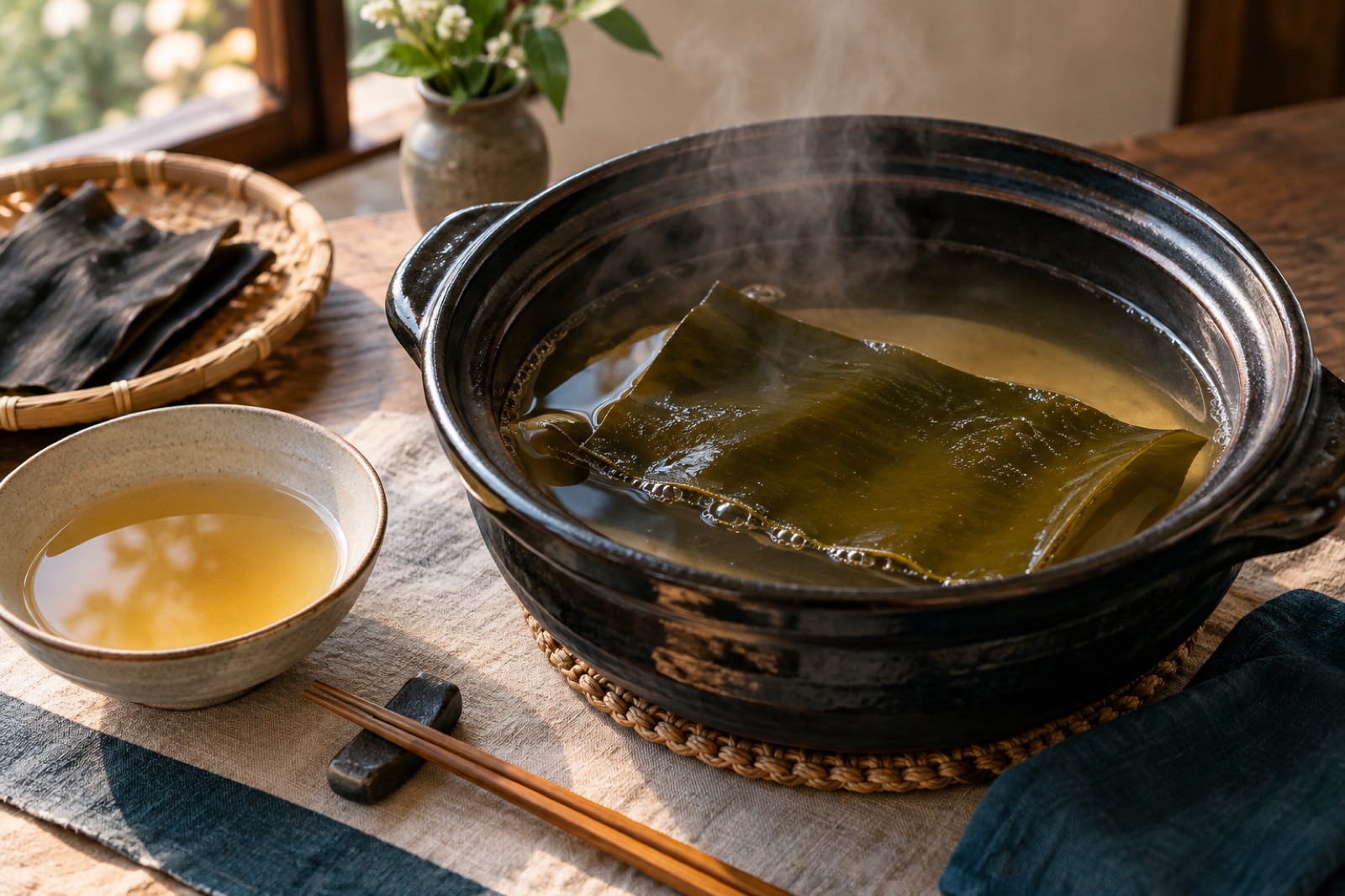
A deep, technique-first guide to kombu dashi: glutamate science, exact temperatures, ichiban and niban infusions, and how to fix every common mistake.
Sofia Andersson ·