Kitchen7 min read
Cooking with Dulse: The Bacon of the Sea
How to cook dulse — the North Atlantic red seaweed that fries up smoky and crisp. Pan-frying, flakes, the DLT sandwich, and buying and storage tips.
Sofia Andersson ·
Five weeknight dulse recipes beyond the famous pan-fry — tomato-dulse pasta, fried rice, potato cakes, white beans and scones, with soaking and dosing notes.
The pan-fried crisp dulse of our cooking with dulse guide — ninety seconds in hot oil, the DLT, the bacon-of-the-sea moment — is the best introduction this seaweed has. But it's an introduction. What keeps dulse in the weekly rotation isn't the party trick; it's that a handful of fronds melts into tomato sauce, disappears into fried rice, and turns a potato cake into something with a story. This is the repertoire article: five complete weeknight recipes where dulse cooks into the dish rather than sitting crisp on top of it, plus the soaking and dosing notes that make the difference between a Tuesday habit and a jar you forget.
For the alga itself — the cold-water red weed that grows on kelp stipes and has fed Atlantic coasts for a thousand years — see the dulse species profile.
Everything below assumes dried whole-leaf dulse or flakes, the two formats worth owning. Three working rules cover the whole article:
Rinse fast or not at all. Dulse for wet dishes — pasta sauce, beans — wants a sixty-second rinse and a squeeze; dulse for anything crisp wants to stay dry. Overwashing is the classic mistake: dulse rehydrates in about ninety seconds and keeps on absorbing, so a long soak leaves it waterlogged and doughy.
It goes in late. Unlike kombu, which seasons broth across a long simmer, dulse's brighter notes are volatile. Stir it into a pan or pot in the final five minutes; give flakes the last sixty seconds.
Season after it. Dulse brings its own salt. Taste before you reach for the shaker, every time.
And the quantity note, once, here rather than five times below: dried dulse is iodine-rich, and all five recipes assume roughly 3–5 g per person — a generous cooking handful. The numbers behind that figure are in the seaweed nutrition guide.
The gateway dish — nobody has yet identified the secret ingredient.
Soak 6 g dulse in cold water for two minutes, squeeze dry, snip small. Melt 50 g butter in a wide pan and let it foam to nut-brown; add a sliced garlic clove and the dulse for thirty seconds, then a tin of good tomatoes, crushed. Simmer ten minutes while you cook 400 g spaghetti or rigatoni. Toss the pasta through the sauce with a ladle of pasta water, finish with black pepper and a squeeze of lemon. The dulse reads as long-cooked, as though the sauce had anchovies and hours it never had. Parmesan is optional; more lemon is not.
Cold rice's best friend. The dulse's job here is the one smoked fish usually does.
Fry two beaten eggs in a hot, oiled wok until just set; remove. In the same wok, fry a cup of frozen peas and three sliced spring onions for a minute, add 600 g day-old cooked rice, and toss until hot through and faintly toasted. Drizzle around 2 tablespoons soy sauce and a teaspoon of sesame oil, return the egg, and — the step the whole recipe exists for — scatter in a small handful of dry-torn dulse and a tablespoon of toasted sesame seeds. Toss for sixty seconds off direct heat: the dulse should stay speckled through the grains, half-crisp, half-wilted. Total time with leftover rice: twelve minutes.
Atlantic logic: potato, seaweed, butter, hot pan. These are next morning's breakfast by design — make extra.
Soak 8 g dulse, squeeze bone-dry, chop fine. Take 400 g cold mashed potato (or grate raw potatoes and squeeze ruthlessly in a tea towel), mix in the dulse, a beaten egg, 2 tablespoons flour, sliced spring onion and black pepper. Shape into eight patties. Fry in butter over medium heat, four to five minutes a side, until each face is deeply crusted. Serve with a fried egg and something acid — pickled red onion or a squeeze of malt vinegar echoes a fish supper without the fish. Leftovers re-crisp perfectly in a dry pan.
A pantry dinner that tastes like it cost you effort.
Warm 60 ml olive oil with three sliced garlic cloves and a strip of lemon peel until the garlic sighs gold. Tip in two tins of drained cannellini beans and 100 ml water or stock; simmer five minutes, crushing a few beans against the pan to thicken. Stir in 5 g of rinsed, chopped dulse and a big handful of chopped parsley; simmer two minutes more — remember, dulse goes in late. Finish with lemon juice and more pepper than seems polite. Eat over charred bread, or beside sausages, or alone in a bowl with a spoonful of the olive oil pooled on top. The dulse gives the beans the depth of a long braise in a quarter of an hour.
Friday-afternoon baking, twelve minutes in the oven, and the reason to keep flakes in the cupboard.
Rub 60 g cold butter into 200 g self-raising flour with 1 teaspoon baking powder and a good pinch of salt. Stir in 60 g grated mature cheddar and 2 generous tablespoons of dulse flakes. Add about 120 ml milk to make a soft dough, pat out to 3 cm, cut into six rounds, milk-wash the tops, and bake at 220 °C for 12–14 minutes until tall and burnished. Split warm, butter recklessly. The dulse bakes to a toasted, faintly smoky note against the sharp cheese — the same pairing that makes dulse soda bread work, in a faster format.
Buy whole leaf for cooking and flakes for shaking, ideally from cold-water Atlantic harvesters who name their shore and publish testing — the guide to buying seaweed sustainably covers what good sourcing looks like. Keep dulse airtight, dark and dry; the storage guide has the longer story, but for a weekly cook the rule is simpler: whole fronds keep a year, flakes want to be finished within three months of opening. If you cook from this article twice a week, you'll never have a stale jar to worry about.
Mostly yes, using about half the weight of flakes — they're more concentrated in the pan and need no soaking. The pasta, rice and beans all take flakes happily. For the potato cakes and any crisp application, whole leaf is worth it for texture.
It went in too early or the pieces were too large. Dulse toughens if it simmers long; add it in the last five minutes and snip it small, and it softens into the dish.
It's the best seaweed for the job — browned dulse delivers real Maillard smoke and savour, which the dulse flakes guide discusses in seasoning form. Think of it as doing bacon's work in a dish rather than impersonating bacon.
Increasingly from land-based and line-farm aquaculture in Maine, Atlantic Canada and northern Europe, and from restoration-adjacent farming programs like Tidewright Harvest's — farmed dulse tends to be cleaner (less grit, fewer snails) and very consistent in the pan.
How to cook dulse — the North Atlantic red seaweed that fries up smoky and crisp. Pan-frying, flakes, the DLT sandwich, and buying and storage tips.
Sofia Andersson ·
Dulse is the red seaweed the North Atlantic has snacked on for a thousand years — protein-rich, bacon-savoury when fried, and stranger in its life cycle than you think.
Sofia Andersson ·
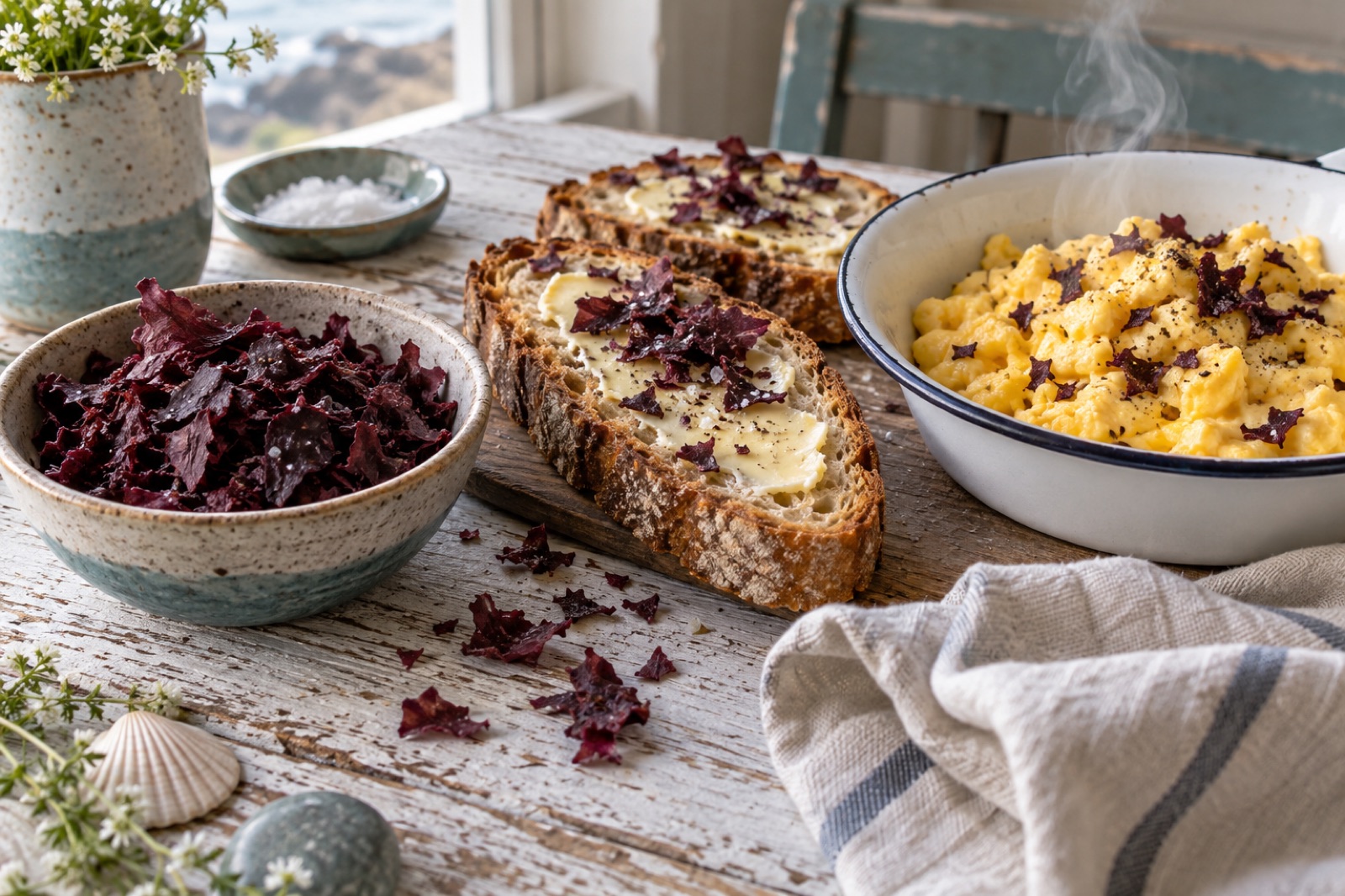
Dulse flakes are seaweed's easiest habit. How to toast them, where to sprinkle them, how they differ from kelp powder, and buying tips for the good stuff.
Sofia Andersson ·