Kitchen6 min read
Hijiki: The Arsenic Conversation, Handled Honestly
Hijiki contains meaningful levels of inorganic arsenic. Here's what food safety agencies actually advise, why, and the alternatives that carry none of the risk.
Sofia Andersson ·
Hijiki no nimono done properly — the classic soy braise, a crumbled tofu version and a modern grain bowl. Includes honest arsenic context and the arame swap.
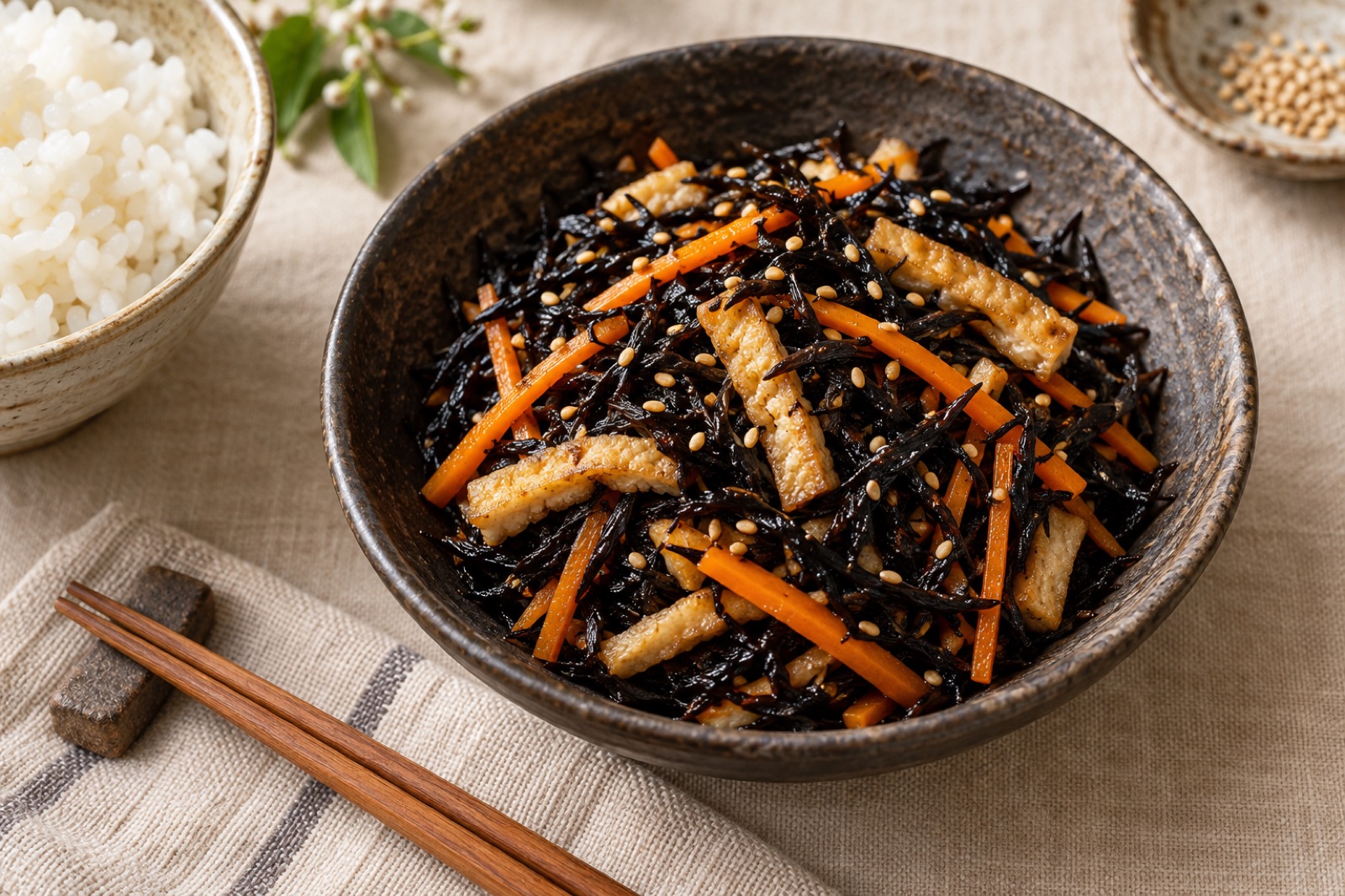
Hijiki no nimono — hijiki simmered in soy, mirin and dashi with carrot, fried tofu and something with chew — is one of those dishes that Japanese home cooking has quietly perfected: a small, dark, glossy side dish that keeps a week in the fridge, sits happily beside rice at any meal, and makes a little bag of dried seaweed feel generous. It's also the dish that makes cooks ask about hijiki's arsenic content, which is a fair question and one I'll answer honestly before we cook (short version: be deliberate, or swap in arame — every recipe here works with both). Below: the essential prep, the classic braise, and the two variations I reach for constantly — a crumbled tofu version that eats like a main, and a grain bowl that carries hijiki outside its native context without apology.
Hijiki accumulates inorganic arsenic at levels meaningfully higher than other culinary seaweeds — the full explanation, with what food safety agencies actually say, is in our hijiki safety guide. If you choose to cook it anyway (as millions do in Japan), three habits reduce the risk meaningfully:
And here is the liberating fact: the braising technique is the dish, not the species. Arame — hijiki's milder, sweeter cousin — carries far lower arsenic concerns and behaves near-identically in the pot; in fact cooked arame is what some food writers recommend outright. For the full head-to-head, see the arame and hijiki pantry guide. Every recipe below assumes either, and I'll call out where they differ.
Dried hijiki (and arame) swells to roughly five times its dried weight. Working from a 20 g dried portion — enough for a standard 3–4 serving side dish:
Don't soak for hours — you want it plumped and tender, not waterlogged and flavourless. Reserve a cup of the last soaking water if you like an even deeper marine note in the braise; strain it through cloth first.
This is the braise you see everywhere in Japan, from bento corners to home refrigerators, and it deserves its ubiquity.
Serves 3–4 as a side. About 35 minutes.
The difference with arame: use only 10–15 minutes of simmering and cut the sugar to 2 teaspoons; arame is sweeter and more delicate and turns to mush with hijiki's timings.
My favourite of the three, and the one that converts tofu skeptics. It's structurally related to unohana — the tofu-lees side dish — but uses crumbled whole tofu, so the result is fluffy, nutty, and substantial enough to be dinner over rice with a fried egg, which is exactly how I eat it.
Serves 2–3 as a light main.
Cook's note: this is the recipe to swap fully to arame if you're cooking for children or pregnant diners — same method, same pleasure, and you've removed the arsenic question from the table entirely without announcing anything.
Hijiki detaches from Japanese technique surprisingly well — its minerality and chew are the things you want between sweet roasted elements and something creamy. This bowl has been my steadfast desk lunch for a decade.
Serves 2.
Whisk the dressing. Compose the bowl: rice, then hijiki, edamame, avocado, pickled cucumber, spring onion, in quadrants. Dress generously, scatter sesame and nori, and eat while the warm rice is making friends with the avocado.
If nimono becomes a habit: kombu tsukudani uses the same sweet-sodden logic on the kelp you strained out of dashi — see kombu tsukudani — and kaiso salad is the road to the mixed-seaweed salads that sit at the other end of the temperature dial. For seaweed's wider nutrition picture — including why iodine and arsenic warrant completely different levels of concern — the seaweed nutrition guide and the heavy-metals explainer are the level-headed companions.
Treat it as an occasional condiment — a couple of times a month in side-dish portions, well washed and braised. If you love the genre enough to eat it weekly, switch to arame or wakame simmered the same way; the technique transfers completely.
If you find fresh, treat it like fresh seaweed generally (see the fresh vs dried comparison): blanch 30 seconds, then proceed. But dried is what the recipes assume, and its concentrated flavour suits braising.
Usually one of three things: the soaking was too long and drained the flavour; you skipped the initial fry, so nothing caramelised; or you reduced the cooking liquid a whisker and let the dish dry out. The glaze should just pool at the bottom of the pot.
Yes, if your dashi is kombu-shiitake rather than bonito-based (see the plant-based dashi guide). Traditional recipes often use katsuo dashi — check if yours does, or make your own.
Four to five days refrigerated in a sealed container; it's one of the best keep-it-cold side dishes in Japanese cooking. It doesn't freeze very well — the texture pays the price.
Hijiki contains meaningful levels of inorganic arsenic. Here's what food safety agencies actually advise, why, and the alternatives that carry none of the risk.
Sofia Andersson ·
A cook's guide to arame and hijiki: what they are, how to prep and simmer them, classic recipes, and an honest look at the hijiki arsenic debate.
Sofia Andersson ·
Tsukudani turns the kombu left in your dashi pot into a glossy, sweet-savoury relish for rice. Recipes, ratios, storage and why nothing leaves the kitchen.
Sofia Andersson ·