Kitchen7 min read
Kobujime: The Japanese Art of Curing Fish in Kombu
How to cure white fish between sheets of kombu: the umami science behind kobujime, fish and kelp choices, timing, serving, and honest food-safety notes.
Sofia Andersson ·
A working guide to kombu-cured fish: cure times by species and thickness, flavour variations, cooked kobujime dishes, troubleshooting and food-safety basics.
Once you've cured one fillet between two sheets of kombu and eaten it, the question changes. It's no longer does this work — it obviously works — it's what else can I put in here, and for how long. This article is the working answer: cure times by fish and by thickness, the flavouring variations tradition and good sense allow, what kobujime does when you take it into the pan or the steamer instead of the sashimi plate, and the honest fixes for the ways it goes wrong.
If kobujime is new to you, read our primer on the technique and its umami science first — it covers the what and why. What follows assumes you've pressed one fish successfully and now want range. And a note that belongs at the top of every kobujime conversation: this is a flavour cure, not a preservation or safety treatment. It transforms texture and taste; it does not make questionable fish safe. More on that below.
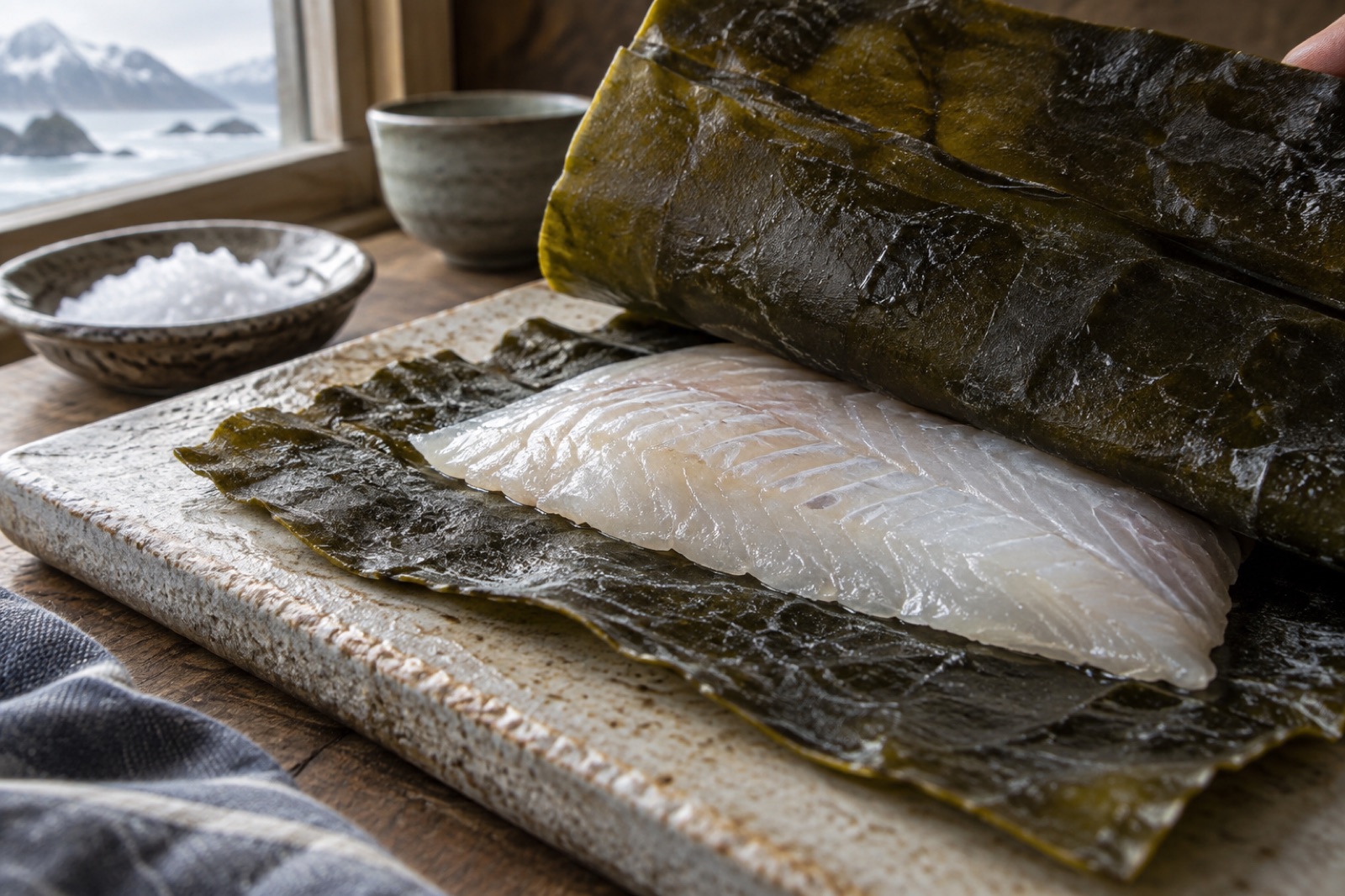
Lightly salt the fillets (about 0.5% of the fish's weight in fine salt, or a confident pinch per side). Sandwich between two sheets of unwashed dried kombu — the white powdery bloom on good sheets is mannitol and glutamate salts, the flavour itself, so never rinse it away. Wrap, refrigerate, weight gently with a small board or a carton of milk, and wait. Unwrap, slice, and use within a day or two. That's the whole machine. Everything below is calibration.
Timing is where most kobujime anxiety lives, and it deserves a chart more than a lecture. Two variables control the result: how thick the fillet is, and how assertive the fish's own flavour is. Kombu works from the outside in; a 1 cm fillet and a 4 cm loin are different projects.
Thin cuts (under 1.5 cm — flounder and sole fillets, thin snapper):
Thick cuts (2–4 cm — sea bream blocks, bass, kingfish, thick cod loin):
Delicate shellfish:
Oily fish — salmon, mackerel, trout:
When in doubt, unwrap at the early end and taste a corner slice. The cure is forgiving; you can always re-wrap for another few hours.
Kobujime's traditional variations are restrained — the kombu is the point — but a few additions have deep precedent:
Sake-damped sheets. Wipe the kombu with sake before sandwiching. Moisture speeds the glutamate exchange and adds a faint sweetness; the cure runs roughly a third faster. Traditional in Toyama and the best variation for thin flounder.
Kombu kombu. Using a sheet of dashi-spent kombu (dried out again overnight) for one side of the sandwich gives a two-speed cure: bright seasoning from the fresh sheet, gentle depth from the spent one. Frugal and genuinely good — and afterwards the sheets can still become kombu tsukudani.
Citrus peel. Two or three strips of yuzu, sudachi or lime peel laid on the fish inside the sandwich. The aromatic oils migrate; the acid mostly doesn't, so texture stays pure. This is the variation I'd serve to sceptics.
A whisper of soy brushed on the fillet before wrapping darkens the finished slices' edges and deepens savouriness — walk this line carefully, as soy plus a long cure can oversalt. Stay at the low end of the time chart when you use it.
Pressed weight. A heavier weight (a foil-wrapped brick over the board) compresses the flesh as well as curing it — the texture approaches the firmness of pressed sushi. Lovely for slicing thin over rice.
Don't confuse kobujime with matsumae-zuke (松前漬け), its maximalist cousin, which shreds kombu and dried squid with carrot into a sweetened soy marinade. Delicious, but a different dish — kobujime is the austere one.
The cure's second life is the one most English-language coverage misses: kombu-cured fish is superb cooked. The firming that makes cured fish slice like sashimi also makes it behave beautifully under heat — it holds shape, sears cleaner, and arrives at the table pre-seasoned to its centre.
Steamed kobujime. Cure a fillet 12–24 hours, then steam it over sake-scented water 6–8 minutes. The texture comes out astonishingly supple — firmer than plain steamed fish, more yielding than poached — and the kelp seasoning survives steaming intact because it's in the flesh, not on it. Serve with the steaming juices and nothing else.
Seared skin-on. Cure sea bream or bass, pat very dry, sear skin-side down in a thin film of oil. The dry-ish surface a cure produces crisps faster and more evenly than raw skin. Waste nothing: the spent kombu sheets, sliced into ribbons and fried in the same pan after the fish comes out, crisp into the best possible garnish.
Kobujime ochazuke. This is the dish the cure seems designed for: slices of kobujime over hot rice, hot green tea or light dashi poured over until the fish just blushes warm, wasabi and a scatter of nori. The broth loosens the cure's seasoning into the rice. It's breakfast, it's a late-night dish, it's the thing you make with the last two slices. Our shoyu-kombu eggs live in the same marinated-and-spooned-over-rice family if this direction of cooking appeals.
Worth repeating clearly because the internet is breezy about it:
Too salty. Over-cured or over-salted at the start. Slice thinner and serve as a garnish over rice or in ochazuke, where salt dilutes into the dish. Next time: reduce salt to a bare pinch and shorten the cure rather than lengthening it; salt penetration and kelp exchange travel together.
Kombu flavour overwhelming, fish lost. The sheets were too thick or heavily bloomed for a mild fish, or the cure ran long. Rebalance by serving the fish with a splash of citrus-dressed daikon; next time use spent dashi kombu for one side of the sandwich, or drop 30% off the time.
Fish still wet and floppy at unwrap. The kombu absorbed what it could but the fish sat in its own moisture — usually because the fillets weren't patted dry before salting. Fix: unwrap, pat dry, re-wrap with fresh dry kombu for another few hours.
Kombu bitter or harsh on the palate. The sheet got damp enough to steep directly against the flesh for a long time (kombu boiled or steeped hard releases the same rough compounds it would in an over-boiled dashi — the phenomenon our kombu-and-umami science piece explains). Keep cure times honest for thin fish, or use sake-damped sheets with shorter cures.
The sheets smell fine after — use them again? Yes, with judgement: kombu that's pressed raw fish for a day should head to cooked uses (tsukudani, fried garnish) rather than another raw-fish cure. The traditional kitchen chain — dashi sheet, to kobujime sheet, to tsukudani — wastes nothing and never serves the same sheet twice raw.
Unwrap, keep it cold and dry, and eat within 24–48 hours for peak texture; the surface continues to dry and firm in the fridge. If you can't finish it, cook it — steamed or seared kobujime keeps another day gracefully.
Not from frozen — cure from fully thawed, thoroughly patted-dry fillets. Fish that was frozen before curing is fine (most sashimi-grade fish was); fish frozen after curing works for cooked dishes but loses the delicate raw texture.
Large, flat, mature sheets with plenty of pale surface bloom — the bloom is where the seasoning lives. Ma-kombu and rishiri kombu are the classics; any thick dried kelp sheet works provided you don't wash it. Thin or broken sheets cure unevenly. Our guide to buying seaweed well covers what good kelp looks like at the counter.
Same family, different seasoning logic. Gravlax buries fish in salt, sugar and dill — a true cure that meaningfully changes keeping quality. Kobujime is gentler: minimal salt, no sugar, flavour by osmotic exchange with the kelp rather than by brine. Kobujime reads on the palate as "the fish, intensified" rather than "the fish, transformed."
Yes, but move them into cooked territory: sliced into tsukudani, fried crisp as a garnish, or simmered into beans and broths. Their flavour after kobujime duty is marvellous — faintly oceanic in both directions at once.
How to cure white fish between sheets of kombu: the umami science behind kobujime, fish and kelp choices, timing, serving, and honest food-safety notes.
Sofia Andersson ·
Wrapping fish in fresh kelp blades steams it gently, seasons it from the outside and makes the most dramatic plate on a coastal table. The full technique.
Sofia Andersson ·
Kombu is the original umami. How glutamate works on the tongue, why temperature decides your dashi's flavour, and how to season with the sea.
Sofia Andersson ·