Kitchen11 min read
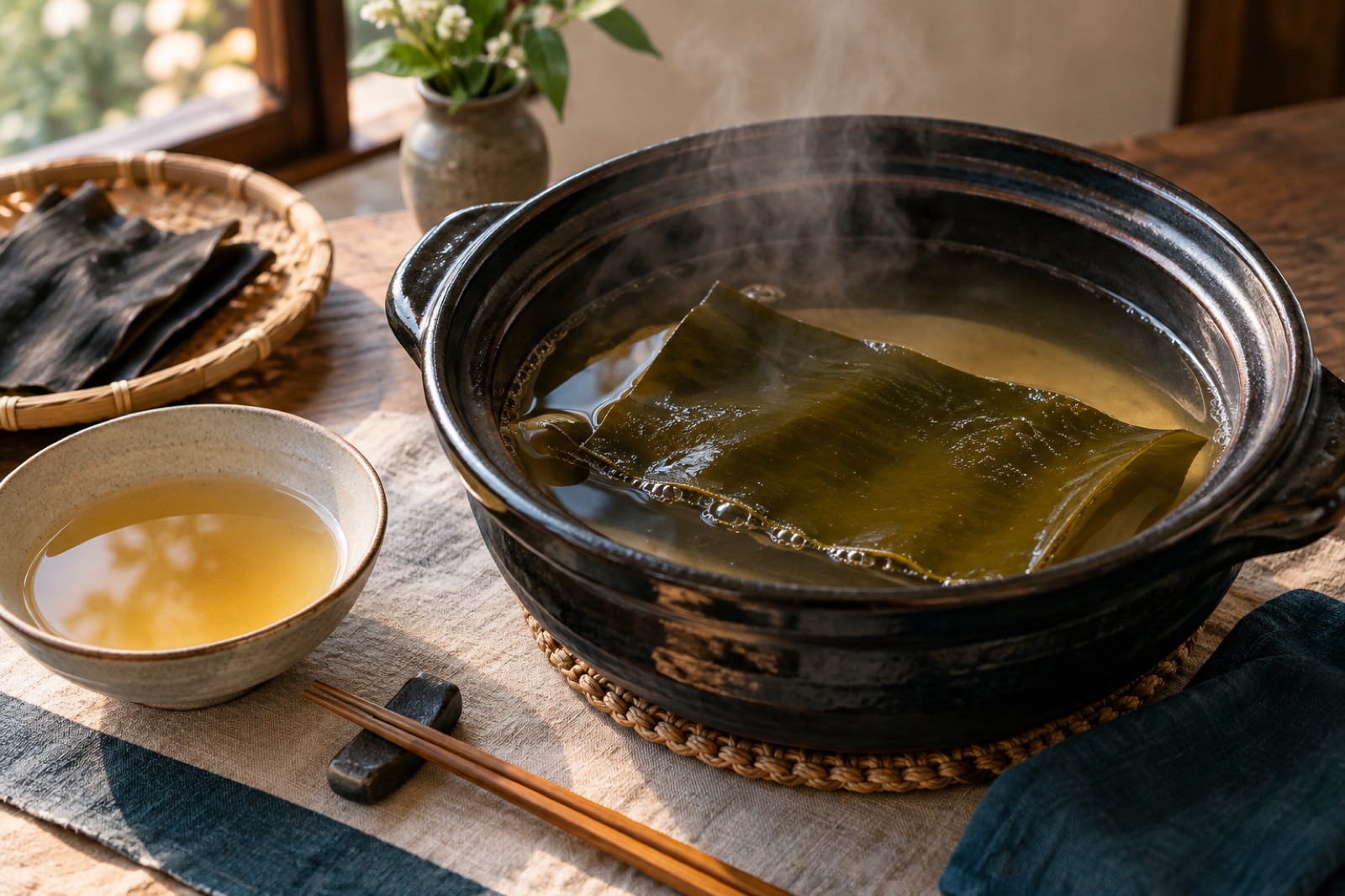
Kombu Dashi Masterclass: The Broth That Built a Cuisine
A deep, technique-first guide to kombu dashi: glutamate science, exact temperatures, ichiban and niban infusions, and how to fix every common mistake.
Sofia Andersson ·
How to cure egg yolks in kombu salt: timing for jammy vs grating-firm, where to use grated yolk, and the safety rules for home curing done right.
Dry-curing an egg yolk is close to kitchen magic: bury a fresh yolk in salt for a few days and it firms into a translucent amber disc you can grate like parmesan — salty, rich, intensely savoury, with a texture somewhere between aged cheese and bottarga. Add kombu to the cure and something better happens. The kelp's glutamates migrate into the yolk over days, and what comes out is the single most concentrated umami seasoning I know how to make at home.
It's a slow recipe measured in days but with about ten minutes of actual work, and it turns six eggs into two months of grated gold over pasta, rice, vegetables and buttered toast. Here's the whole method, the timing curve, and the safety rules that matter.
Salt curing works by drawing water out of the yolk. A fresh yolk is roughly half water; as the surrounding salt pulls moisture out through the membrane, the yolk's proteins concentrate and set into a firm, sliceable, grateable solid. Sugar in the cure moderates the salinity and helps keep the texture short rather than rubbery.
Kombu's contribution is flavour chemistry. Dried kombu is loaded with free glutamate — it's why a square of it in water makes five-minute dashi taste like a broth that simmered for hours, and why kombu is the engine of the science of seaweed umami. Ground into the curing salt, those glutamates gradually infuse the yolk alongside the salt. The result is distinctly more savoury than a plain salt cure: deep, brothy, mineral. It's the closest a chicken egg gets to tasting like the sea.
The salt-to-sugar ratio of 2:1 is my default. You can go 1:1 for a gentler, sweeter cure — good if you'll be eating the yolks in slices rather than grating hard — but don't reduce the salt below the sugar. Salt is what's doing the preservation.
Drying option: many recipes cure the yolks fully in the salt bed, then briefly air-dry. I prefer finishing them in a low oven (below), which is faster, more even, and more predictable in humid kitchens.
1. Mix the cure. Blitz or stir the salt, sugar and ground kombu until evenly combined. Spread half of it, about 2 cm deep, in the dish.
2. Make the nests. With the back of a spoon, press six evenly spaced hollows into the cure, big enough to hold a yolk without it touching the dish's base or its neighbours. Separation matters — yolks that touch will fuse at the contact point.
3. Add the yolks. Crack and separate your eggs, and settle one yolk into each hollow. Work gently; a broken yolk can't be cured in place (the whites, incidentally, freeze well for future meringues).
4. Bury. Sift the remaining cure over the yolks until they're completely covered, at least 1 cm deep on all sides. Cover the dish loosely and refrigerate.
5. Choose your texture — the timing curve. This is the whole craft of the recipe:
6. Dry for a grating cure. After the salt-bed stage, brush the cure off gently (don't rinse — or if you must, a whisper of water and immediate patting dry). Place the yolks on a rack and dry at 65–70 °C in a low oven for 1½–2 hours, until the surface is matte and the yolk feels firm and leathery. Cool completely.
7. Store. Grating-firm yolks keep in an airtight container in the fridge for about two months. Jammy-stage yolks are more perishable — a week, refrigerated.
The salt-sugar-kombu mixture afterwards is damp and has been in contact with raw egg — discard it. But an unused portion of the dry kombu-salt mix, made fresh, keeps indefinitely in a jar and is a superb seasoning salt in its own right: eggs, grilled fish, roast potatoes.
Cured yolks are a raw-egg preparation preserved by salt and drying, so sensible hygiene is the whole game.
Yes. After brushing off the cure, wrap each yolk loosely in cheesecloth and hang or rack-dry in the fridge for 5–7 days, until firm. Fridge-drying is slower but very safe. In a dry, cool climate, covered room-temperature drying for a couple of days is the traditional method, but the fridge version is the one I recommend at home.
Measurable savouriness. Kombu is among the richest natural sources of free glutamate, and over days in contact, the yolk takes on a brothy, mineral depth that plain salt-cured yolks — delicious as they are — don't have. It also scents the surface; grated kombu-cured yolk smells faintly of dashi.
Either the cure time was too short for handling (under 2 days the membrane stays fragile), or the cure layer under the yolk was too thin and the yolk sat against the dish, or the eggs weren't fresh. Next time use very fresh eggs, nest them deep, and if you're aiming for jammy centres, chill the yolks 30 minutes before lifting — cold firms them noticeably.
Freeze them. Egg whites freeze perfectly in an ice-cube tray for months and thaw for meringues, macarons, financiers and cocktails. Six yolks cured means about six cubes of white banked for baking day.
Different branch of the same family. Miso-cured yolks are buried in miso for a day or so and stay soft, spreadable and funky. Salt-cured — with or without kombu — is about dehydration and firmness, and the end point is a grating seasoning. Both are worth knowing; they're not interchangeable in recipes.
Filed under
A deep, technique-first guide to kombu dashi: glutamate science, exact temperatures, ichiban and niban infusions, and how to fix every common mistake.
Sofia Andersson ·
Tsukudani turns the kombu left in your dashi pot into a glossy, sweet-savoury relish for rice. Recipes, ratios, storage and why nothing leaves the kitchen.
Sofia Andersson ·
Kombu led chemists to discover umami in 1908. How glutamate, ribonucleotides and salt work together — and how to use seaweed umami in everyday cooking.
Sofia Andersson ·