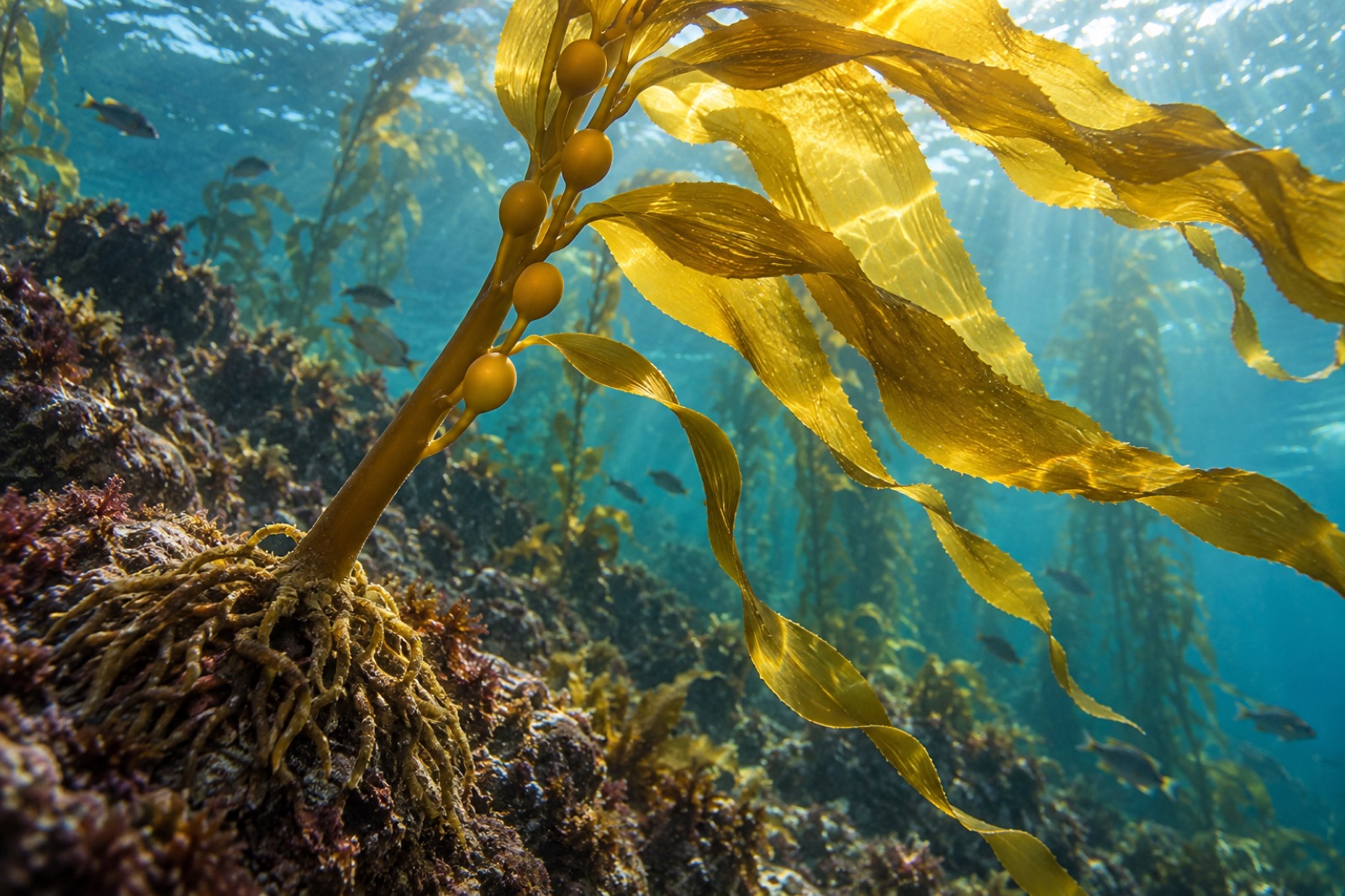
Every kelp forest cast its own characters, and off Southern California and Baja the kelp forest's signature fish is the kelp bass (Paralabrax clathratus) — calico bass to the anglers who have pursued it for a century. Ambush-prone, beautifully blotched in brown-and-cream calico, and so loyal to its home kelp bed that a tagged fish may spend years inside a few hundred metres of reef, the kelp bass is both a classic sportfish and a tidy lesson in why slow-growing, territory-holding fish need habitat more than they need hatcheries. If you protect the kelp, you protect the bass; lose the canopy, and the bass thin with it.
Fast facts
|
|
| Scientific name |
Paralabrax clathratus |
| Group |
Sea basses (Serranidae) |
| Length / weight |
Commonly 30–50 cm; maximum ~72 cm and ~6.6 kg |
| Colour |
Brown to olive above, pale below, covered in brown-and-cream calico blotching; a third or so show rows of light spots along the back |
| Range |
Eastern Pacific: roughly central California (occasionally north to Oregon) through Baja California, Mexico, including the Gulf of California |
| Habitat |
Kelp beds and rocky reef, typically 3–45 m depth, holding tight to structure |
| Diet |
Small fish (anchovies, juvenile rockfish, topsmelt), squid, octopus, crabs and planktonic crustaceans as juveniles |
| Lifespan |
Long-lived for its size — 25 to 30+ years documented |
Anatomy of an ambush predator
Kelp bass are classic sit-and-wait sea basses. Everything about the fish is built for a short, explosive strike from the shadow of a kelp stipe: a large terminal mouth, a stocky perch-like body, eyes tuned to the low, flickery light of the canopy's underside, and a blotched calico pattern that dissolves a motionless fish against sun-dappled fronds. They are not pursuit swimmers in the open — you will not see a calico bass chasing bait across open sand the way a bonito does. Instead they plant themselves near structure, drift barely finning, and hit passing prey from a few body lengths away.
Like other sea basses such as the California sheephead, kelp bass are anchors of kelp-forest food webs — mid-level predators eating the small fish that eat the tiny crustaceans that graze kelp fronds clean. Lose them and every adjacent tier feels it.
Kelp bass sex change, carefully explained
Kelp bass belong to a group famous for protogynous hermaphroditism — fish that mature first as females and may later change sex to male. The kelp bass literature is more nuanced than the simple story: research indicates many kelp bass are female first, with some individuals later becoming males and some fish maturing directly as males. The practical effect for management is the familiar one: the largest, oldest fish in a kelp bed are disproportionately important to reproduction, so fisheries that selectively remove big fish can distort a bed's sex ratio even when total numbers look stable.
That matters because kelp bass are slow. Growth curves suggest the biggest calico bass are decades old. A 60-centimetre fish is not a two-year-old to be replaced next season; it is a veteran that has patrolled the same bed since the 1990s.
Homebodies: what tagging taught us
Few kelp-forest fish have been tracked as lovingly as the kelp bass. Decades of mark-recapture and acoustic telemetry — much of it organised with volunteer anglers through long-running cooperative programs — have shown that:
- Kelp bass have strong site fidelity: home ranges of a few hundred metres to a kilometre along a kelp edge are typical, and some individuals return to the same reef year after year.
- Most movement is seasonal and modest — shifts deeper in winter, occasional spawning aggregations in summer — rather than long migrations.
- Catch-and-release works: released fish usually survive and return to home structure, a factual basis for the voluntary release ethic that many Californian skippers now encourage on big calicos.
The flipside of loyalty is vulnerability: a kelp bed eliminated by storms, warming or urchin grazing takes its resident bass with it, and a decimated local population can only recover from its own few survivors or by the slow wanderings of neighbours. Habitat loss is not a background worry for this fish; it is the worry. Our explainer on urchin barrens tells the flip-side story of what kelp-bed loss looks like from the reef's perspective.
The fishery, and fishing kelp bass fairly
Kelp bass have supported a Southern California party-boat fishery since the early 20th century, and by the 1980s concern about declining catch rates helped drive both regulation (size limits, bag limits) and a cultural shift toward catch-and-release among veteran anglers. The species is still a mainstay of the half-day boat fleet and a favourite kayak target; fishing for them is a distinct skill — light line, live bait or swimbaits worked right along the kelp edge, and the discipline to set hooks fast so a hooked fish does not wrap you around a stipe.
Responsible practice, in brief:
- Release the veterans. Big calicos are prime spawners and survivors of decades; many skippers now ask charter guests to photograph and release fish over a set threshold.
- Mind the edges. Kelp bass live where kelp is; anchoring in the canopy damages the very structure you are fishing.
- Respect closures. Marine protected areas along the California coast — including those profiled in our Channel Islands guide — are kelp bass nurseries by design, and the science shows they export fish.
- Treat the fish cold and quick if keeping: kelp bass is excellent eating, but a fish left on a hot deck loses it.
The policies that grew this fishery into a fairly sustainable one are exactly the sort Tidewright supports with our fisheries solutions work: habitat-first management, spatial protection, and angler science as a data stream rather than an afterthought.
Kelp bass and the health of the canopy
If you want a quick read on a Southern California kelp bed's condition, drop a camera and watch the bass. A bed with multiple year-classes of calico bass hanging in the understory — pockets of juveniles above the reef, big blotched veterans in the shade — is a bed with structure, prey, and enough quiet to keep them. A bed where bass are scarce or only juveniles are present usually has something wrong upstream of it: thinning canopy, urchin pressure, warm-water dieback.
That is why kelp bass feature in the biodiversity side of Tidewright's monitoring, alongside giant kelp canopy cover and invertebrate surveys — fish like kelp bass turn "does the forest exist?" into "is the forest working?"
Key takeaways
- Kelp bass (calico bass) are eastern Pacific sea basses, from central California into the Gulf of California — the signature sportfish of the Southern California kelp forest.
- Ambush predators of the canopy edge: big mouth, calico camouflage, enormous site loyalty to a single kelp bed.
- Slow-growing and long-lived — the biggest fish may be decades old — with protogynous sex change in at least part of the population, making large individuals doubly valuable reproductively.
- Tagging shows small home ranges and effective catch-and-release; the fishery is now shaped by size/bag limits and a strong voluntary release culture.
- Bass abundance reads like a kelp-health gauge: multi-year-class bass mean a working forest.
FAQ
Are kelp bass the same as calico bass?
Yes. "Calico bass" is the anglers' name for Paralabrax clathratus, referring to the blotched pattern. Note that "calico bass" is also used in freshwater fishing for crappie — context and geography keep them apart.
How big do kelp bass get?
Most caught fish run 30–50 cm and a few pounds; true trophies approach 72 cm and ~6.6 kg. Given how slowly they grow, the largest fish are typically also the oldest — often estimated at two decades or more.
Can you keep kelp bass?
Regulations differ by jurisdiction and change over time — California's rules specify minimum sizes and bag limits for kelp bass within the general bass regulations. Check the current sportfishing regulations for where you fish; many anglers voluntarily release large breeders regardless.
Do kelp bass only live in kelp?
No — they also hold on rocky reefs, jetties and artificial structure, sometimes far from kelp. But the densest, healthiest populations track living kelp canopy, which supplies both ambush cover and the prey community the bed supports.
Are kelp bass dangerous to divers?
Not at all — they are among the friendlier sights in the canopy, often holding still a metre from a diver's face while deciding whether the bubbles matter. As with any wild fish, avoid cornering them and never feed them, which teaches bad habits.