Atlas8 min read
Kelp Forests of Catalina Island: A Coastal Atlas Guide
Catalina Island is southern California's kelp capital — Casino Point, Farnsworth Bank, warm-water giants and a century of marine science under the canopy.
Dr. Mara Ellison ·
Everything you need to dive Casino Point Dive Park on Catalina Island — entry steps, kelp forest routes, garibaldi and giant sea bass, conditions, and getting there.
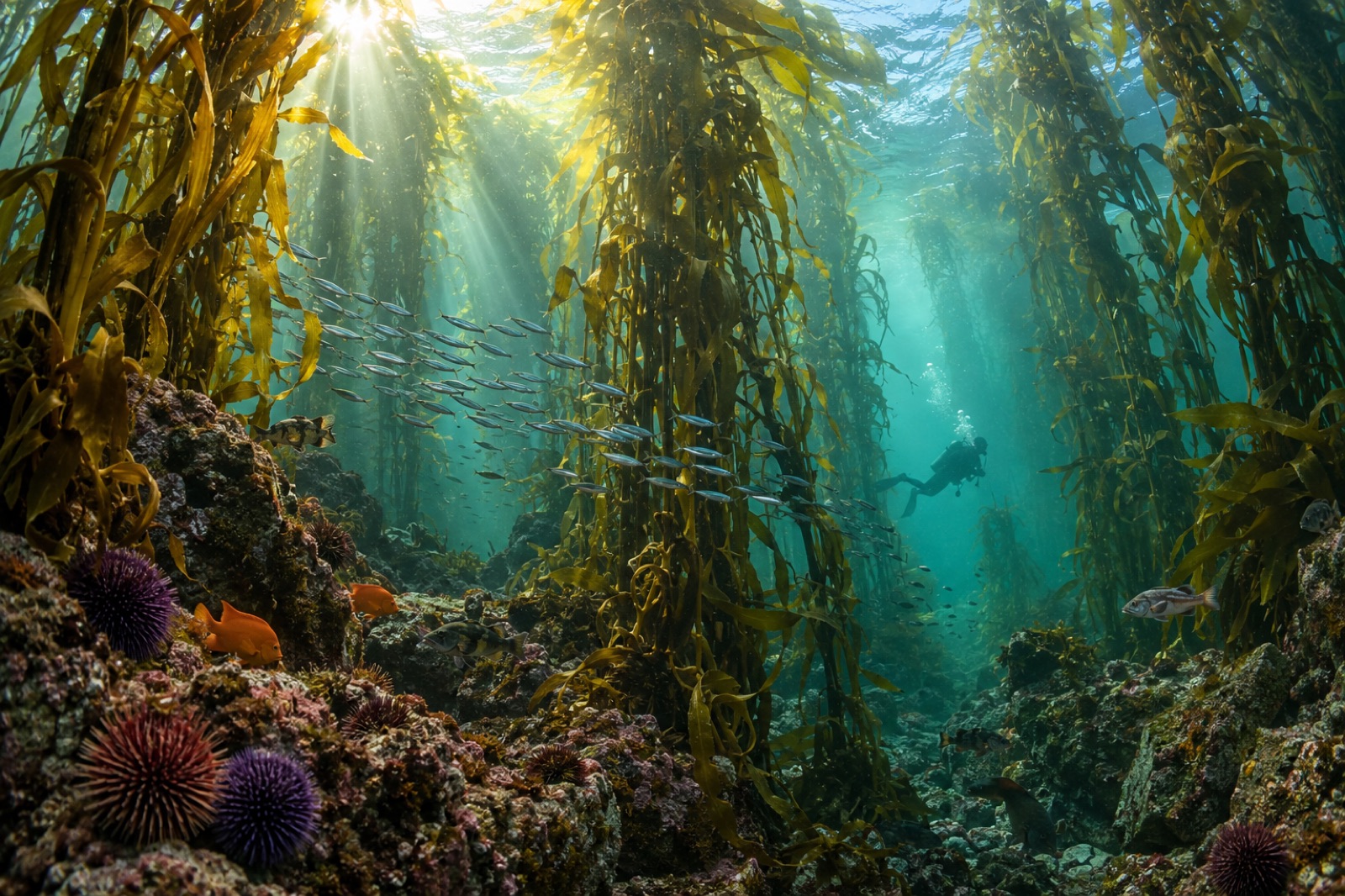
Casino Point Dive Park, on the edge of Avalon on Santa Catalina Island, is the most famous kelp forest dive in North America — and one of the few genuinely purpose-built dive sites in the world. Stairs into the water, gear-up benches, rinse stations, air fills on site, and a marine reserve where kelp grows in a golden cathedral from forty metres of bottom to the sunlit surface. This guide covers how to get there, how to dive it well, and what this protected corner of Catalina teaches the rest of the coast.
The site sits just north of Avalon's harbour, below the circular Casino building (a 1929 ballroom, never a gambling hall, despite the name). In 1965 the area was designated a marine reserve, and in 1995 it reopened as the country's first non-profit underwater dive park. Fishing and collecting have been banned here for six decades, and it shows: the fish are unhurried, the kelp is dense, and everything is a little bigger than it is a mile along the coast.
The park infrastructure is the other half of the story. Terraced concrete benches face the water for gearing up; wide stairs with handrails drop to a submerged platform; an on-site fill station, gear rental, lockers and showers mean you can arrive on the morning ferry with a swimsuit and be underwater by lunch. For context on the island's wider reefs, see our Coastal Atlas guide to Catalina Island.
Giant stride or walk down the stairs to waist depth into a small gravel-bottomed cove; the kelp begins immediately. Surface swim is essentially zero — one of the site's great luxuries. Entry is only possible at reasonable tide heights: at very low tides the stairs end before the water does, and at high tide plus swell the stairs can surge. Check the tide chart and the park's own conditions board before suiting up.
The site is forgiving: shore is uphill, kelp marks the top, and the ridge runs parallel to the entry. Still, kelp navigation is a skill — fix your position by bottom features as you descend, not by the canopy, which swings in surge. Our beginner's guide to kelp forest diving covers the technique properly.
Water temperatures range from about 12°C in winter to 21°C in a warm September — several degrees warmer than the mainland, because Catalina sits on the sunny side of the Southern California Bight. A 7 mm wetsuit suits most of the year; some divers manage a 5 mm in late summer. Visibility runs 10–20 metres on good days, dropping with plankton blooms in spring. Midday entry avoids the worst of any morning south wind.
The garibaldi — California's state marine fish, a neon-orange damselfish — is the site's mascot. Because the park is a reserve, garibaldi here are big, bold and completely unbothered by divers; the males guard their red-algae nesting lawns in summer with theatrical menace.
The genuine headline, though, is the giant sea bass. These gentle giants, once fished nearly to local extinction, recovered under protection and now cruise the kelp at Casino Point in numbers seen almost nowhere else, especially in summer. A black sea bass the size of a dining table emerging from the kelp shadow is the casino's jackpot.
Around them, the full supporting cast: kelp bass on every ledge, opaleye and halfmoon schooling in the shallows, moray eels in the rockwork, horn sharks resting on the sand by day, and sheephead — the big, bucktoothed wrasse that keeps urchins in check. The kelp itself is mostly giant kelp, and in the gaps you'll find feather boa kelp and southern sea palm on the surge-swept points.
At night the park re-shuffles: lobsters walk out of their dens, octopus hunt the sand, and sleeping fish tuck into the kelp. Bring a light and a torch-holding buddy.
Casino Point is a living demonstration of what happens when you simply leave a kelp forest alone: big fish come back, kelp thickens, and the ecosystem becomes a destination that pays its way in dive fees. It's a small, urban-friendly version of the logic behind marine protected areas everywhere — and it's why restoration outfits, including our own dive-operator partners, treat well-managed sites as ambassadors for much bigger protected seascapes.
Yes — the dive park charges a modest entry fee and reserves fill/tank capacity, and summer weekends genuinely sell out. Book your park pass and any rental gear at least a few days ahead.
Very. The stair entry, minimal swim, protected water and shallow kelp make it one of the best beginner ocean dives anywhere, provided the tide is right. Open-water certified divers should still dive with a buddy and mind their depth on the outer ridge.
July through October offers the warmest water, the kelp at full canopy, peak giant sea bass sightings, and the calmest crossing. Winter is quieter and colder but can be glassy and clear between storms.
Yes — the kelp crowns, garibaldi and school fish are all visible from the surface on a calm day, and snorkel entry uses the same stairs. A wetsuit is strongly recommended.
Giant sea bass are present year-round but most commonly seen in summer, when they gather over the kelp ridges — some researchers believe for spawning aggregations. Look along the deeper edge of the kelp.
Catalina Island is southern California's kelp capital — Casino Point, Farnsworth Bank, warm-water giants and a century of marine science under the canopy.
Dr. Mara Ellison ·
Meet the garibaldi, California's blazing orange state marine fish — a fiercely territorial damselfish that gardens algae on the kelp forest floor.
Dr. Theo Nakamura ·
Your first kelp forest dive is easier — and more magical — than you think. Gear, skills, marine life and etiquette for new divers entering the green cathedral.
Tom Okafor ·