Atlas9 min read
The Cape Peninsula: Kelp Forests at the Edge of Africa
Guide to the Cape Peninsula's kelp forests: two oceans, sea bamboo, seals and sharks, freediving culture, and how a warming world is shifting the reefs.
Tom Okafor ·
A guide to South Africa's kelp forests — towering sea bamboo in cold Benguela water, abalone farms, great white sharks, and an Atlantic-Pacific meeting of seas.
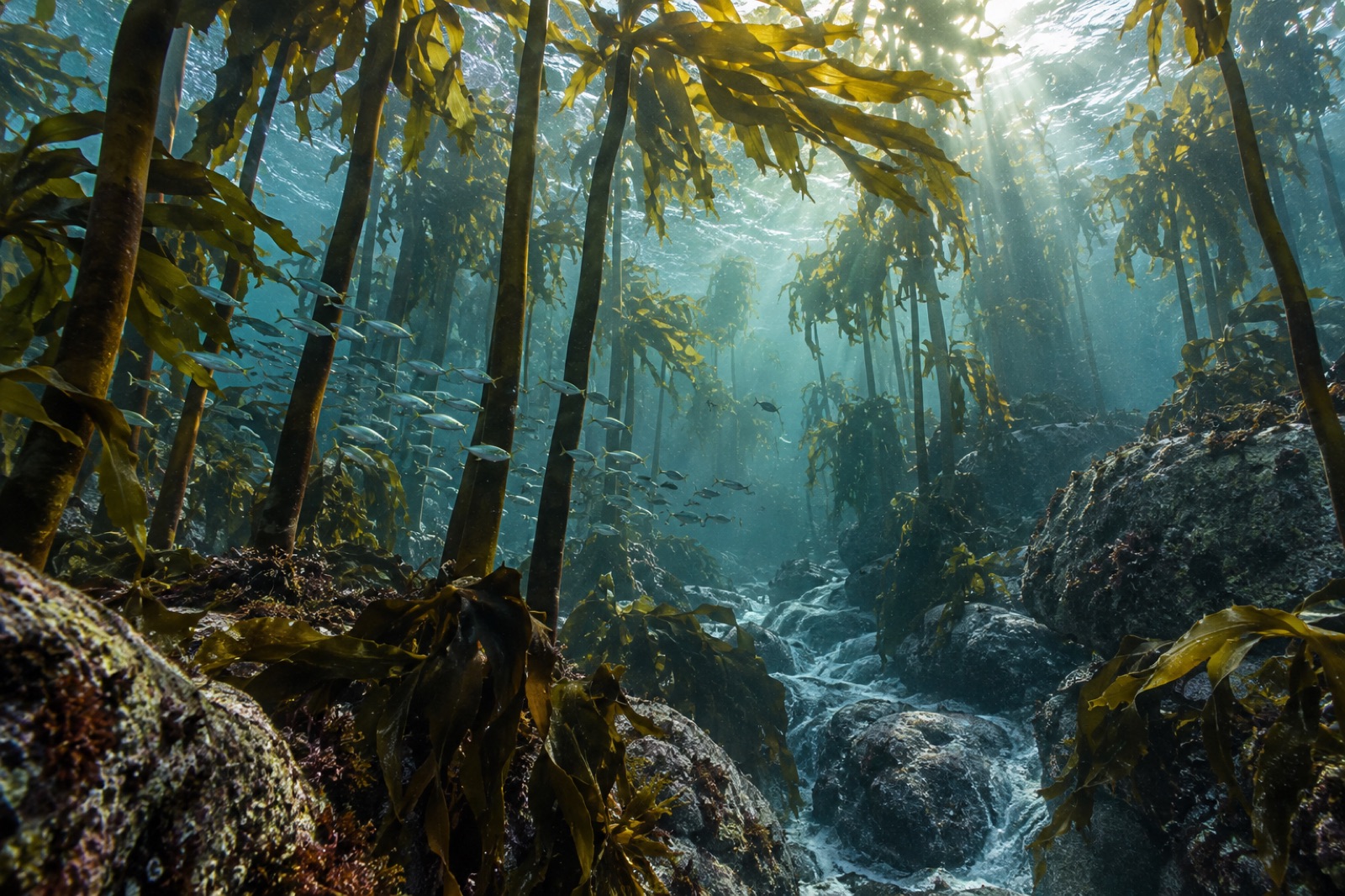
South Africa is the only place on Earth where you can watch, in a single day's drive, kelp forests fed by two different oceans. On the country's west coast, the cold Benguela Current climbs up out of the Southern Ocean and drives some of the most intense coastal upwelling on the planet, filling a shallow shelf with towering sea bamboo. On the south coast, warm Agulhas Current water from the Indian Ocean channels a different, softer kelp world. Together they form one continuous, deeply productive system — and one of the most commercially important kelp economies anywhere.
This guide covers where the forests grow, what lives in them, how they feed towns and abalone farms, and how to see them.
The physical machinery matters here, because it explains the ecology. On the Atlantic side, the Benguela upwelling system pulls deep, cold, nutrient-rich water to the surface along the coast from the Northern Cape down around the Cape Peninsula. That water — typically between eight and fourteen degrees Celsius in summer — is kelp rocket fuel. Our upwelling explainer describes the process in detail; on the water it feels like standing in the world's largest natural refrigerator, in bright African sunshine.
East of Cape Agulhas, where the Atlantic yields to the Indian Ocean, the warm Agulhas Current takes over and water temperatures climb into the high teens and low twenties. Kelp survives here in cooler pockets and deeper sites, and gives way gradually to warm-water algae and seagrass.
The result is an unusually convenient natural experiment: one coastline, two temperature regimes, same ocean species toolkit.
South Africa's dominant kelp is Ecklonia maxima, known locally as sea bamboo. It is not giant kelp, but it behaves like a tree: a long, hollow-stemmed stipe topped by fan-like fronds, reaching the surface in eight to twelve metres of water and forming a true floating canopy. Sea bamboo holds an unglamorous but vital title in the seaweed world — it is what most of the world's farmed abalone eats.
Under and around it:
Offshore of the canopy, the forests share water with the great spectacle of Cape marine life: Cape fur seals working the kelp edges, African penguin colonies on nearshore islands, and — as anyone who has dived False Bay knows — broadnose sevengill and the occasional great white shark passing through the kelp corridors.
South Africa's kelp forests are not just scenery; they are infrastructure for a working marine economy with three distinctive arms:
The lesson for other kelp regions: a forest that pays wages in food, feed and exports is a forest with political defenders. That is also the argument embedded in Tidewright's harvest-linked restoration model.
South Africa's kelp sits inside one of the best-studied regional seas on Earth, and the signal from years of monitoring is nuanced. The Benguela system is naturally variable; some indices suggest west-coast upwelling has stayed strong or even intensified on seasonal scales, buffering kelp against the heat waves hitting other provinces of the kelp world. But the warm-side edges of the system are moving: kelp is extending somewhat eastward into cooling refuges around the Cape Peninsula while retracting at some of its warm margins further up the east coast.
The summary for readers: South Africa's kelp forests have so far been more stable than Tasmania's or the Gulf of Maine's, but the range edges are sensitive, and the urchin–lobster balance — the same trophic-cascade logic that governs kelp everywhere — remains a live variable.
The Cape Peninsula is the obvious base, and we have a dedicated Cape Peninsula atlas entry. Highlights for divers and walkers:
Read our kelp forest diving for beginners guide before any Cape diving: the water is cold, the surge can be athletic, and the kelp itself demands respect.
The South African kelp system is, in effect, a proof that kelp forests can carry an industrial economy and a conservation economy at the same time. The abalone feed market keeps sea bamboo in the national balance sheet. The dive-and-whale economy keeps it in the national imagination. And the science — some of Africa's finest marine research — keeps both honest. When other countries ask what a working kelp coast looks like, the answer increasingly looks like this one.
The local name for Ecklonia maxima, South Africa's dominant kelp. Its long hollow stipe and terminal fronds make it look bamboo-like underwater, and it is the primary feed in South African abalone farms.
Yes — the Cape Peninsula and False Bay host some of the world's most famous kelp diving, including the Cowshark and Pyramid Rock sites. Cold water, drysuit or thick wetsuit, and local knowledge essential.
The cold upwelling core has stayed comparatively robust, but warm-margin kelp communities are shifting and the region is closely watched as one of the world's sentinel temperate-reef systems. See our marine heatwaves explainer.
Principally to farmed abalone feed, with smaller flows to alginate and agar production, beach-cast fertilizer, and an emerging research-and-restoration sector.
Guide to the Cape Peninsula's kelp forests: two oceans, sea bamboo, seals and sharks, freediving culture, and how a warming world is shifting the reefs.
Tom Okafor ·
A deep dive into upwelling physics: Ekman transport, the world's great upwelling systems, how scientists track them from space, and what climate change does.
Dr. Lena Fischer ·
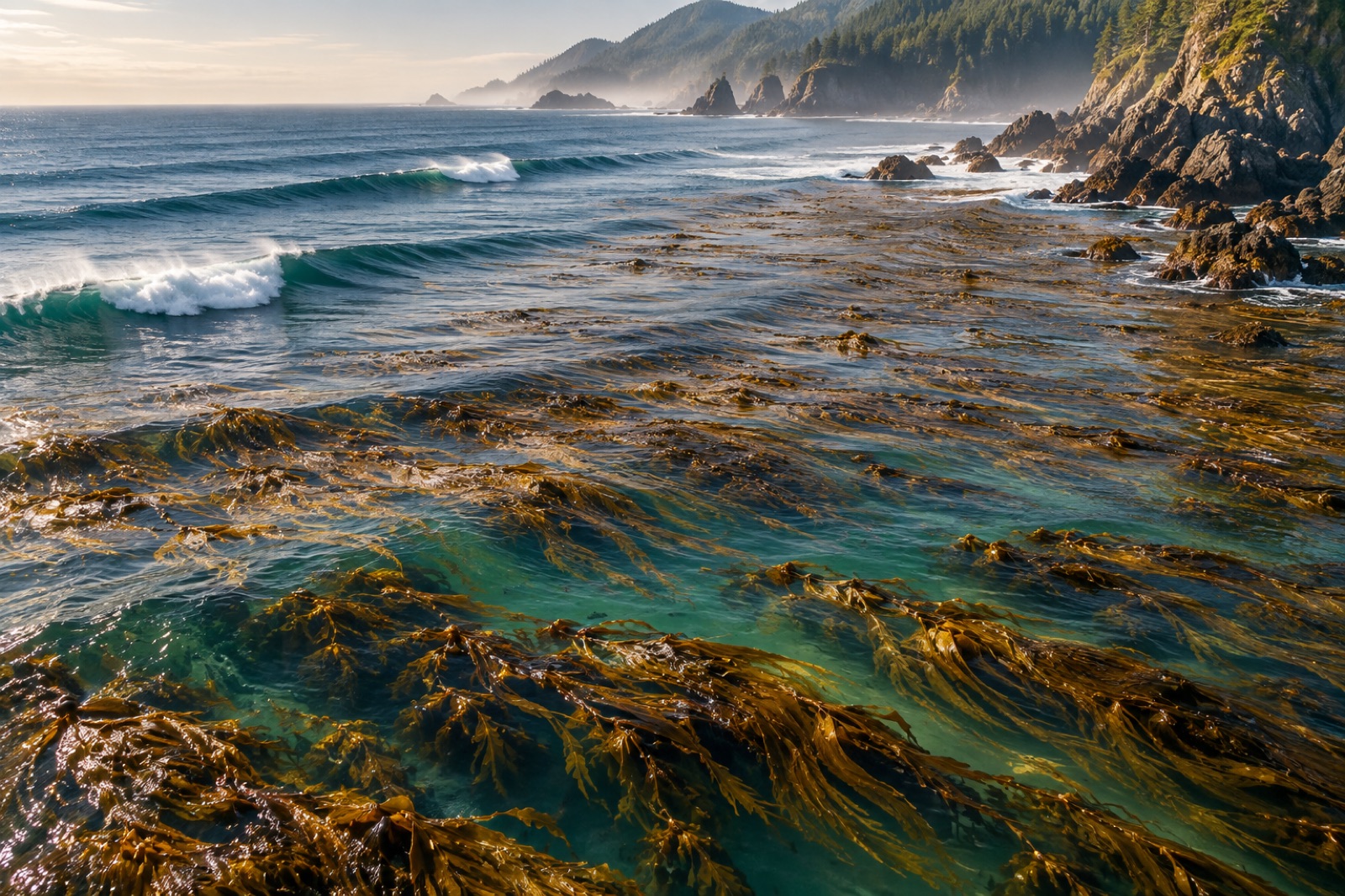
Kelp canopies act like flexible breakwaters, dragging energy out of waves and currents. Here's the physics — and how much coastal protection forests really give.
Dr. Lena Fischer ·