Atlas11 min read
Kelp Forests of Otago: New Zealand's Southern Swell Forests
Dunedin's doorstep grows forests of giant kelp and southern bull kelp, patrolled by sea lions and hoiho penguins. A guide to Otago's cold southern reefs.
Tom Okafor ·
The Otago Peninsula stacks a mainland albatross colony, sea lions and penguins above forests of giant kelp and rimurapa. A guide to New Zealand's wildlife headland.
Twenty kilometres long, six wide, and separated from the city of Dunedin by nothing but a harbour and a hill, the Otago Peninsula is the most concentrated wildlife coast in New Zealand. On its seaward cliffs, northern royal albatross raise chicks on a mainland headland — the only place they do so anywhere on Earth. On its beaches, rāpoka (New Zealand sea lions) doze in the dunes and hoiho, the yellow-eyed penguin, comes ashore at dusk. And beneath all of it, in water that runs 9 to 15°C, grow the two great kelp architectures of the far south: canopy forests of giant kelp on the reefs, and a surf-battered ring of rimurapa, southern bull kelp, on every headland the swell can reach. This is a field guide to the headland itself; for the wider coastline from the Catlins to North Otago, see our Otago kelp forests guide.
The peninsula is the eroded stump of a volcano. A single large shield volcano built itself out of the sea roughly 13 to 10 million years ago, and everything you drive over today — the long summit ridge, the cone of Harbour Cone above Broad Bay, the headland of Taiaroa Head tumbled in columnar basalt — is its flank. Erosion did the rest: the harbour drowned the volcano's sheltered side, while the ocean carved the exposed side into cliffs, boulder beaches and the small sandy bays — Allans Beach, Boulder Beach, Sandfly Bay — where the penguins land.
That geology dictates the biology. The hard volcanic reefs don't retreat or silt over; they stand in the Southern Ocean swell and take it. Kelp colonises every suitable shelf. Sediment stays in the bays. The result is a peninsula with two distinct faces: the harbour side, a long sheltered waterway of tidal flats, cockle beds and moored yachts; and the ocean side, one of the most energetic temperate coastlines in the country, green with kelp wherever the rock holds.
Walk out to the edge of Boulder Beach or along the cliffs west of Taiaroa Head in a swell and you will understand what southern bull kelp is for. Rimurapa (Durvillaea antarctica) grows in the zone other kelps can't survive — the low intertidal and shallow subtidal rock on the most exposed points — and it takes the ocean's full swing on every tide. Its blades are honeycombed with air chambers and astonishingly strong; a mature plant, heavy as a person, lies flat across the rock and lifts and falls with the surge like a restive long rope. Around it grow its southern kin, including Durvillaea willana and D. poha, and beneath the thrashing canopy a specialised little community persists: bull kelp flies, amphipods, and on the offshore reef edge, forests of Lessonia and, in the lee, the golden crescents of Ecklonia.
For southern Māori this was never scenery. Rimurapa is the material of pōhā — the kelp bags in which tītī (muttonbird) were preserved and carried — and the kelp of these shores is named, classified in tikanga and harvested under customary management to this day. The marae at Ōtākou, near the harbour mouth, has watched this coast's ecology for the whole of its human history. Any reading of the peninsula that starts with the albatross and skips the kelp — or starts with the science and skips the people — has it backwards.
In the kelp. The giant kelp beds north of the harbour entrance — Karitane's bed is the famous one, but the peninsula's northern shore carries its own — build real canopy: fronds rising through ten metres of swell-washed water to hold a light-trapping roof at the surface. Beneath them: butterfish, spotty and banded wrasse, conger eels, octopus, pāua in the cracks, carpet sharks in the dusk. The reefs also carry kekeno, New Zealand fur seals, hunting the kelp line and hauling out on the rocks at Taiaroa, Sandymount and Victory Beach.
On the beaches. Rāpoka are the peninsula's great modern recovery story. New Zealand sea lions were wiped from the mainland centuries ago; from the early 1990s they began hauling out again on Otago's beaches, and pups have been born on the peninsula ever since. Give them ten metres and then some — a resting sea lion looks placid and isn't required to stay that way. Hoiho, yellow-eyed and shy, still land on several peninsula beaches; the mainland population is small and stressed, and the rule is simply to be invisible: hides, distance, no chasing.
On the headland. Taiaroa Head holds the world's only mainland royal albatross colony — a conservation project since the first chick fledged in the 1930s, with birds soaring the same wind off the kelp beds that they've soared for a hundred years. Below the lighthouse cliffs, kororā, little blue penguins, raft offshore at dusk at Pukekura before crossing the beach to their burrows in the dark. Stewart Island shags bronze the headland rocks. The peninsula is, by headland, the nearest thing temperate seas have to a seabed-to-sky wildlife reserve.
Summer (December–February). Long light, calm mornings, water up to 14–15°C. Albatross chicks on the headland (the colony is viewable through the reserve's guided facilities), sea lions on the beaches, and the kelp beds at their most luxuriant before autumn storms thin the canopy. Snorkelling and shallow shore diving on the harbour-side reefs is at its warmest and easiest; kayak the harbour edge at dawn when the water goes oil-flat — our kayaking-over-kelp guide covers how much you can see from a boat without getting wet.
Autumn (March–May). The best water clarity of the year and thinning crowds. Penguin viewing is quieter but the beaches empty of people and the swell-train days dramatise exactly why rimurapa grows the way it does.
Winter (June–August). Cold (9–10°C water, honest wind), but the light is low and golden, the albatross are soaring in force, and the beaches belong to the sea lions and those prepared to respect them. For divers, a drysuit turns winter into the best vis of the year.
Spring (September–November). New albatross eggs, hoiho pairing up, swell easing, and the kelp beds beginning their annual sprint. The whole headland smells like growth.
Underwater, treat this coast with southern respect: cold water, real surge on the ocean side, and weather that changes by the hour. Harbour reefs and sheltered bays suit competent snorkellers; the outer headlands are for experienced local-led divers. Our cold-water diving essentials guide covers the kit and mindset this water demands. When you're done, the loop road itself — Highcliff along the ridge, Portobello Road along the harbour — is one of New Zealand's great short drives, and the view down the harbour at dusk, with the kelp beds darkening below Taiaroa, is the peninsula's signature.
The forest here is healthy but not buffered against the century. The great marine heatwaves of the past decade — the Tasman Sea events that hammered Tasmania's giant kelp, chronicled in our marine heatwave explainer — reached New Zealand waters too, and the far south's kelp lives closer to its thermal ceiling than old maps suggested. The peninsula's twin protections are its cold Southland Current and its culture of watching things closely; both matter more every year. Go, look carefully, and take only photographs — the kelp has been doing the real work here for millennia before any of us arrived to admire it.
Easily. Albatross viewing is through the reserve facilities at Taiaroa Head; hoiho and kororā land at dusk on respective beaches, with kororā viewable at Pukekura. A single winter day on the peninsula can give you albatross, sea lions, fur seals, yellow-eyed and little blue penguins — plus the kelp beds rolling below them all.
Yes — sheltered harbour reefs and bays for shore diving and snorkelling, and spectacular but serious outer-coast diving around Taiaroa and the northern kelp beds for experienced cold-water divers with local knowledge. Water is 9–15°C; a drysuit makes it a year-round destination.
There's no wrong season. Summer brings warmth and the fullest wildlife calendar; autumn brings clarity; winter brings the finest albatross soaring and empty beaches; spring brings new growth in the forest and nesting seabirds.
Powerful wild animals that will charge if crowded. Give any sea lion ten metres minimum, never get between one and the water, keep dogs leashed and well away, and treat the beach as theirs. Most encounters are peaceful — that's how to keep them that way.
Otago is a global stronghold of Durvillaea diversity — multiple southern species growing on one coastline, from full-exposure rimurapa to the subtidal forests of its kin — and it is a kelp of deep cultural significance as the material of pōhā. You're looking at one of the best-preserved bull kelp coasts in the Southern Hemisphere.
Dunedin's doorstep grows forests of giant kelp and southern bull kelp, patrolled by sea lions and hoiho penguins. A guide to Otago's cold southern reefs.
Tom Okafor ·
Bladder kelp beds, a storied pāua fishery, tea-coloured inlets and daylight kiwi: a guide to Stewart Island/Rakiura, New Zealand's southern kelp coast.
Dr. Mara Ellison ·
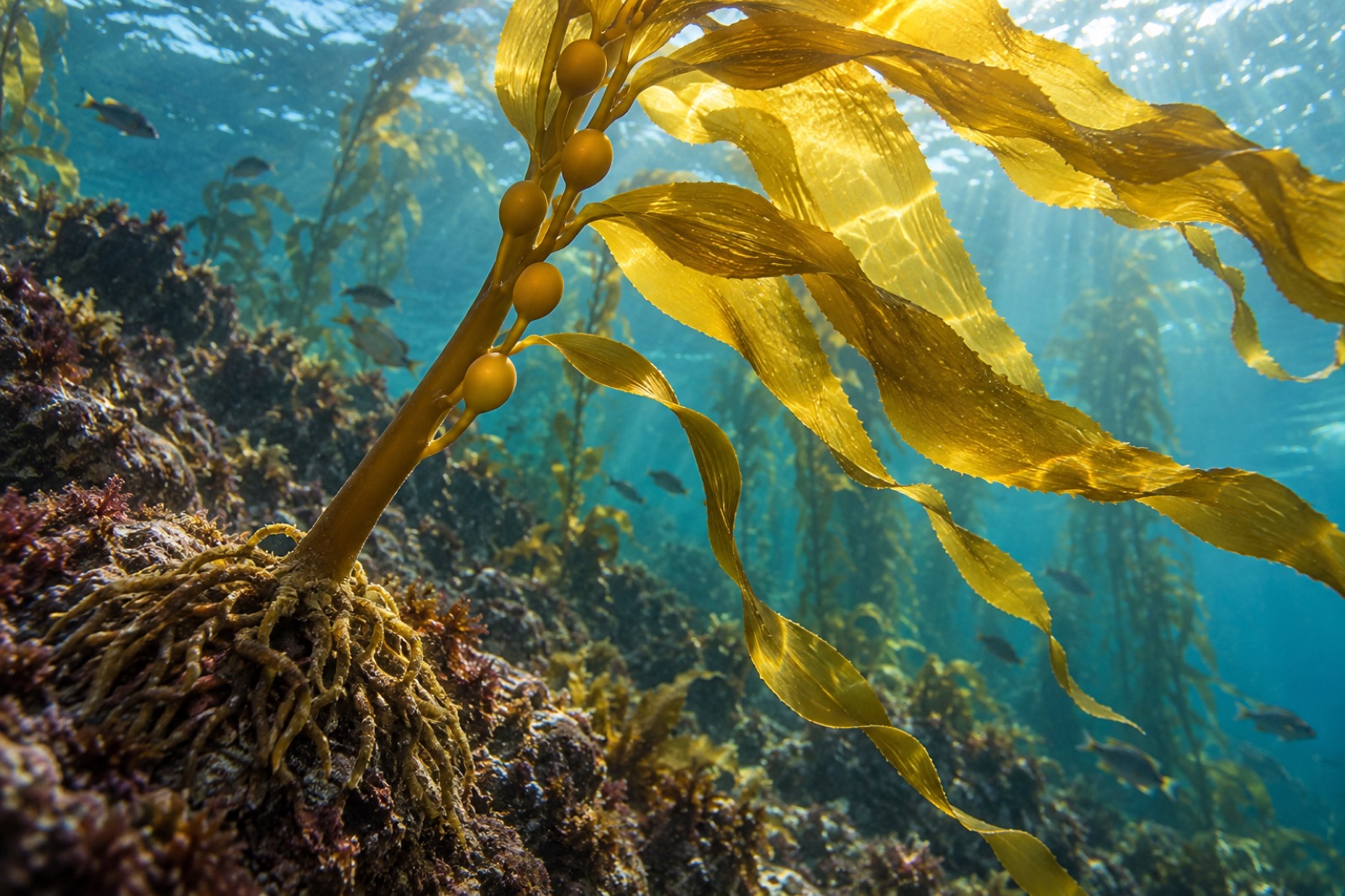
Giant kelp is the fastest-growing organism on Earth and the architect of undersea forests. Learn its biology, life cycle, range and why it matters.
Dr. Theo Nakamura ·