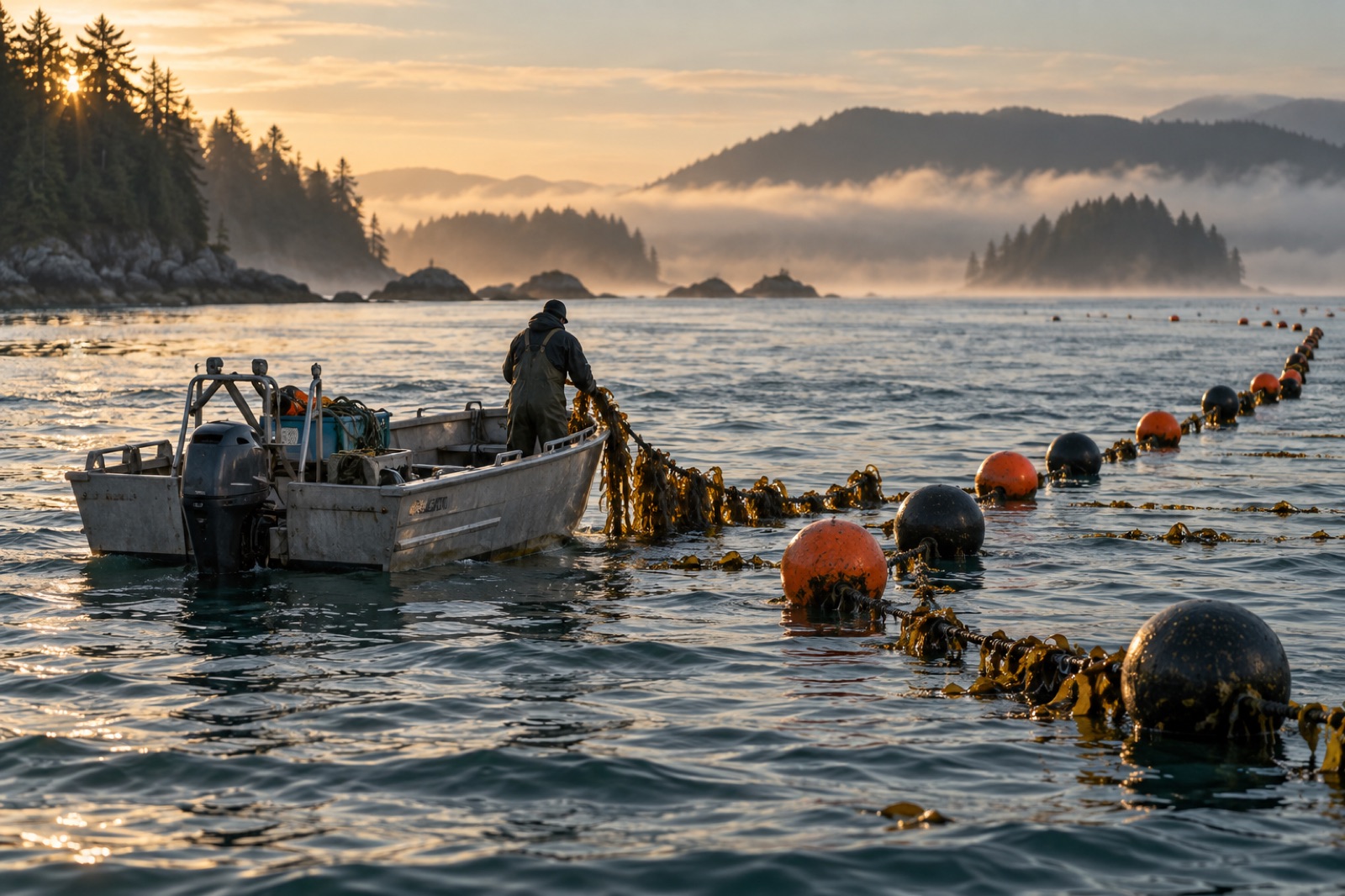
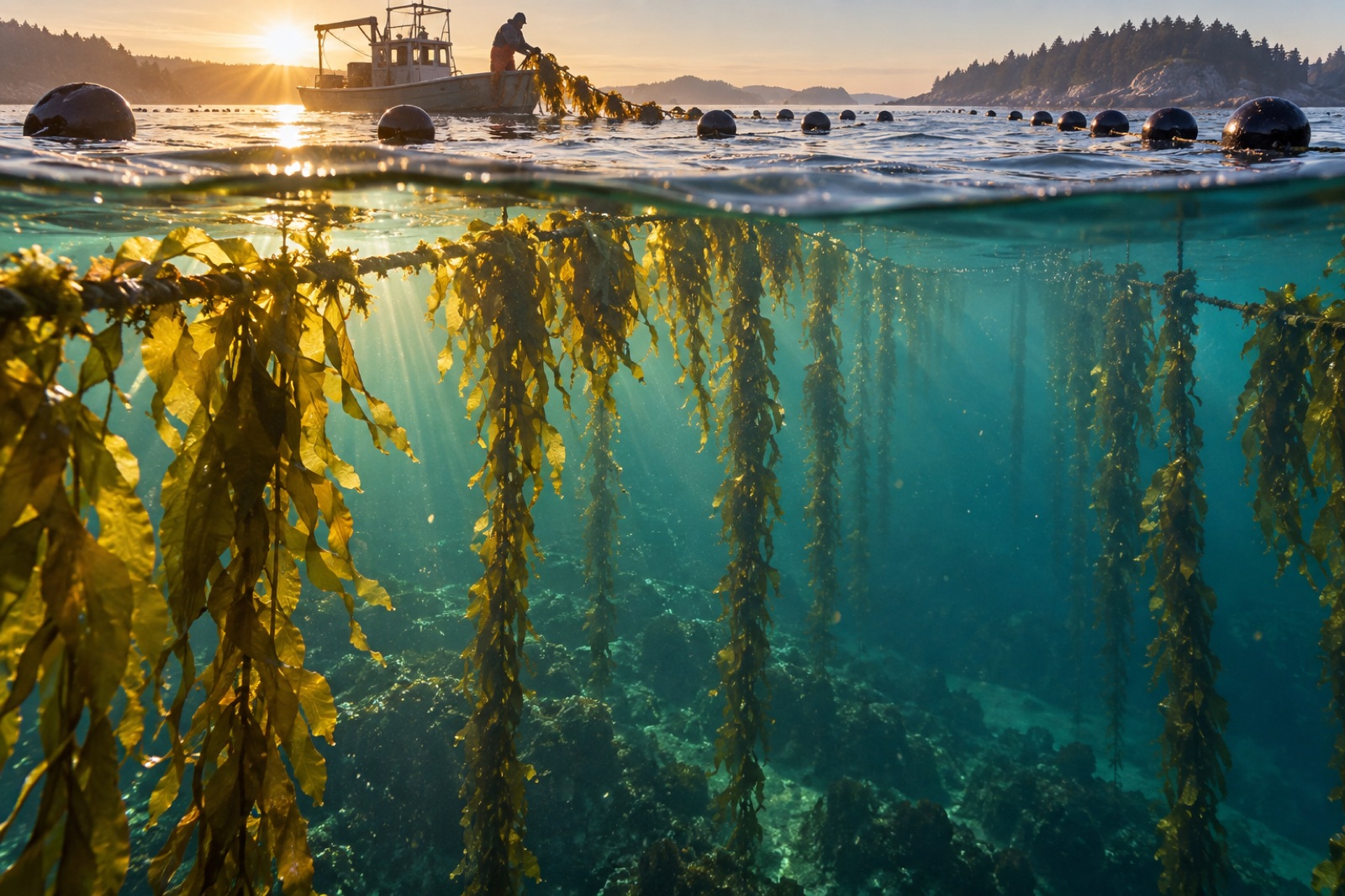
The boat will likely be your farm's second-largest purchase after the mooring grid, and the only one that can sink. Most first-time growers choose it the wrong way around: they fall for a hull, then discover the work. This guide turns the process over. We start from the farm's task list and stage, match a vessel class to it, price the true cost of a season's boating, and only then look at listings. Think of it as the purchase-order version of our operator's-eye tour of workboats and deck tools — that article covers rigging the deck; this one covers deciding what deck to buy.
Step 1: Write the work profile before you look at a single boat
Spend an evening with a spreadsheet, not a boat broker. List every job the vessel must do in its busiest fortnight, with the numbers that size each job:
- Transit distance and water. Two kilometres across a sheltered bay and twenty across open sound are different boats. Note the worst water you will legitimately work in, not the best.
- Pick per visit. Seed-spool trips carry almost nothing; harvest trips carry tonnes. Wet kelp runs heavy for its volume — size payload for the heaviest day, then add margin for the day you underestimated.
- Deck work intensity. A farm that visits lines weekly with a two-person crew needs a stable, walk-around working platform at the rail — not speed.
- Crew count. Solo operation changes everything: helm position, rail height you can work alone, self-recovery after a slip.
- Season and light. High-latitude farms work short winter days. Heated handholds, dry storage and a windshield stop being luxuries.
Be honest here. Growers routinely buy for the farm they hope to have in year four; boats are cheaper to upgrade than businesses are to repair.
Step 2: Match the vessel class to the farm's stage
| Farm stage |
Typical footprint |
Vessel profile that fits |
| Trial or pilot lease |
A few lines, a shared site |
No owned vessel. Charter by the day, or ride-share with the operator whose gear you are trialling beside. |
| First production farm |
Roughly half a hectare to two |
A 5–7 m open skiff or small cabin skiff, trailerable, single outboard, working rail aft. This is the buyer's sweet spot. |
| Established coastal farm |
Two to ten hectares |
7–10 m wheelhouse workboat, cat or landing-craft layout, hydraulic hauler, twin engines or single diesel — chosen for the site's exposure. |
| Offshore or multi-site operator |
Ten hectares plus |
Purpose-outfitted vessel with crane capacity, plus contracted heavy-lift days for mooring work; or a shared asset with neighbouring farms. |
Two patterns hide in that table. First, an owned boat only earns its berth once the farm calls on it weekly; below that, contracting lifts and transits beats ownership on cost and sleep. Second, each step up the table is roughly a doubling of operating budget, not a step — which is why the farm economics and the vessel decision should be signed the same week, not in different years.
Step 3: Own, lease, charter or contract
Four doors, and most farms should walk through two of them across a season rather than picking one.
- Buy outright once weekly use is guaranteed. You control the fit-out, the schedule and the residue value, and you carry the depreciation the day you launch.
- Lease or long-charter when an operator neighbour has a spare vessel in the off-season, or when your capital is better spent on moorings and line than on cast aluminium. Read who insures what, twice.
- Day-charter with skipper for the ten to twenty days a year the job exceeds your boat: anchor-setting, mooring recovery, harvest peaks. Chartering skill is often more valuable than chartering steel.
- Contract the task when the job is truly occasional. A crane barge hired for two days a year is a line item; owned, it is a lifestyle.
The common failure mode is buying for the two hardest days of the year and paying for them the other three hundred and sixty-three.
Step 4: The honest budget — total cost of a season's boat
Purchase price is the cover charge. Build the full annual figure before you commit:
| Cost line |
First-year weighting |
What growers forget |
| Purchase or lease |
Highest |
Fit-out is rarely included: hauler, rail gear, electronics, safety kit can add a meaningful fraction of hull price. |
| Insurance and survey |
Annual |
Most insurers want a marine survey on used hulls; budget it as a buying tool — a survey is the best money you will spend. |
| Berth, mooring or trailer |
Annual |
Trailer boats need trailer maintenance and a compliant tow vehicle, not just a driveway. |
| Fuel and oil |
Per engine hour |
Offshore sites multiply this line; plan from the chart distance of your worst week. |
| Maintenance and antifoul |
Annual |
Salt water bills on a schedule regardless of use. Haul-out weeks are also lost working weeks. |
| Depreciation |
Silent |
Workboats retain value when maintained and shed it fast when not. This line decides whether a cheaper boat was actually cheaper. |
| Training and licensing |
One-off plus renewal |
Small-commercial-vessel tickets, radio certificates, first aid — the flag state's code for your size of vessel applies whether your farm is a business or a dream. |
Run the table for each candidate vessel, not just the favourite. The right boat is the one whose annual number the crop can carry, which is a question your farm budget answers, not the broker.
Step 5: New versus used, without romance
New buys warranty, known history, exact fit-out and financing options — and pays for them. First farms rarely need new.
Used is where nearly every working kelp fleet comes from, and it rewards discipline:
- Hours tell stories. Mid-thousands on a well-serviced diesel can be mid-life; the same figure on a neglected petrol outboard can be the epilogue. Service records outrank the hour meter.
- Corrosion is the quiet killer. galvanic damage around fittings and through-hulls is expensive to unwind. The survey earns its fee here.
- Refit honestly. Your total project price is the hull plus everything on your fit-out list, quoted before you shake hands. The classic trap is the "cheap" hull whose deck rebuild doubles it.
- Walk-away number. Decide it before the sea trial, when you can still think.
Step 6: Sea-trial like you mean it
A test spin around the marina proves the engine starts. It proves nothing else. Trial under work:
- Load it. Ballast to harvest weight — drums of water are honest — and watch freeboard and trim at the rail where the crop comes aboard.
- Work the rail. With gloves on, at the working side, confirm a person can reach the water comfortably and get back aboard unaided. A ladder you cannot climb in oilskins is a design flaw, not an accessory.
- Simulate the tow. Put a loaded line or a drogue astern and feel the helm: does she hold a slow, straight track at working speed without wandering? Kelp work is hours at walking pace; a hull that is nervous at three knots will exhaust a crew.
- Check the boring systems. Bilge pumps, trailer bearings, electrolysis evidence, electronics age. The drama items are rarely the deal-breakers; the plumbing is.
- Sleep on it. If the seller can't wait overnight, that answers the last question on the checklist.
Score candidates against the Step 1 work profile, out of ten per job, weighted by frequency. It feels clerkly until the first season belongs to the boat that scored second.
Step 7: Plan the second boat before you need it
Every growing farm meets the moment when one vessel is the single point of failure for the entire crop — usually in week two of harvest. Plan the redundancy path at purchase time: a trailerable first boat makes a backup skiff cheap to add later; a contracted-lift relationship keeps a spare deck one phone call away; a neighbouring grower with a reciprocal breakdown agreement is worth more than either. Resilience thinking here mirrors redundancy thinking everywhere else on the farm — the same logic behind storm-preparedness and choosing the site itself.
And if your background is artisanal fishing rather than aquaculture, note that the vessel decision often travels with a livelihood transition — the pathways in our fisheries solution are built around exactly this kind of asset staging.
Key takeaways
- Write the farm's work profile first; buy for the busiest fortnight of the farm you actually have.
- Match vessel class to farm stage: charter for pilots, a trailerable skiff for the first hectares, a wheelhouse workboat only when weekly use proves it.
- Mix acquisition modes across the season — own the daily workhorse, charter the ten days that exceed it.
- Budget the boat annually — insurance, berth, fuel, maintenance and depreciation decide affordability, not the sticker price.
- Sea-trial under load with the real crew doing the real motions, and keep the walk-away number decided the night before.
FAQ
What size boat does a first kelp farm actually need?
For a pilot lease, none — charter. For a first production site of up to about two hectares, a trailerable open skiff in the five-to-seven-metre class with a working rail aft covers nearly every task, provided the site is within sensible run of the ramp. The step up to a larger wheelhouse vessel should be justified by weekly working hours, not ambition.
Is it better to buy new or used?
Used, for most first farms, with a professional marine survey as a non-negotiable part of the price. New makes sense once the operation is proven and the fit-out is well understood — the warranty and known history then buy real downtime risk reduction.
What licences do I need to run a farm workboat?
It depends on vessel size, distance from shore, and whether your operation counts as commercial in your jurisdiction — which it usually does. Your flag state's small-commercial-vessel code will specify operator certification, radio qualifications, safety equipment and possibly periodic inspection. Check the authority before you buy; the code can shape the boat as much as the budget does.
Can I just use my recreational fishing boat?
Sometimes, briefly — but check three things first: insurance (recreational policies often exclude commercial use), payload at the working rail under harvest load, and deck layout (grow-line and seed-spool work fouls on furniture fast). Many growers start this way and discover within a season why workboats are shaped like sheds.
What is the single biggest buying mistake?
Buying for the two hardest days of the year. The crane-scale jobs — setting anchors, recovering moorings — come twice a season, and chartering them is nearly always cheaper than owning the capacity. Buy for the weekly work; rent the exception.