Farming9 min read
Seaweed Farm Permits: Navigating Leases, Licences and Consent
How seaweed farm permitting works: site leases, environmental assessment, navigation and fisheries consultation, timelines, costs and tips for approval.
Naomi Reyes ·
A seaweed farm permit is paper; social licence is people. How to consult fishing communities, councils and neighbours before — and long after — your lines go in.
Here is the asymmetry at the heart of every nearshore farm proposal: a seaweed farmer needs perhaps two unremarkable hectares of ocean out of thousands, but they need it from a community that has watched a century of promises arrive by boat and leave by bankruptcy. A permit says the regulators trust you; social licence says the harbour does. The difference matters, because communities that feel seen will telegraph your plots to their crews, adjust their trawl paths, and call you when a line parts in a gale. Communities that don't, won't — and the farm's security, yield and even planning survival live in that gap. This guide is the working method: who to talk to, in what order, with what materials, and how to keep consent alive after the lines are in.
Social licence is the informal, revocable approval of the people your operation touches: fishers who share the water, harvesters with customary rights, waterfront businesses, harbour authorities, councils, Indigenous or first-nation rights-holders where they exist, recreational users, and the neighbours who will look at your buoys every day. It is not a public-relations win, and it is not the statutory consent process — our permits guide covers that parallel track. Social licence is earned through predictability, visible listening and reciprocity, and it decays through surprise. Every incident the community hears about from someone else costs you licence; every incident they hear about from you buys it back.
The concept matters beyond feelings. Councils consult their communities; planning inspectors read the letters; financing increasingly prices the risk of a disputed site. And at the practical level, a farm embedded in local goodwill gets its stray gear returned and its storm damage reported within the hour.
The classic mistake is arriving with a finished design and asking for support. Listening comes first — weeks of it, before any boundary coordinate is drafted:
A farm that shifts a boundary 200 metres to clear a winter fishery has not lost ground; it has bought a decade of peace for the price of a mooring plan redraw.
When you do propose, make scrutiny easy. Useful materials for any first public meeting:
Most consent is a set of small mechanics, honoured forever:
Where customary or treaty rights exist over the water, "consultation" is not the right word — consent processes and partnership are. Done well, this becomes the strongest architecture a farm can have: ranger programs monitoring the water, shared hatchery work, food from the farm going first to the community that hosts it. Tidewright's week with the Kudjela sea country rangers is what that looks like for us on the ground. Done poorly, it is both an ethical failure and, increasingly, a legal one. Start early, cede timetable, and expect the process to change your plan — usually for the better.
Everything above is one-tenth of the work. The rest is conduct over years:
Before. Six to twelve months of unhurried listening before any formal application transforms both the design and the reception. Filing first and consulting later is the single commonest cause of contested applications.
Opposition that survives real listening usually carries a specific grievance — a lost anchor spot, an amenity impact — that can be engineered or compensated. Universal goodwill is not the standard: demonstrable fairness, honoured conditions and continued willingness to hear are.
Usually not statutorily, though increasingly a de facto one in planning. Treat it as an operating cost, priced into the farm economics from the first spreadsheet.
Hire local advice, ask the rights-holder body directly how they wish to be engaged, allocate budget and time for the process they specify, and never present the farm as a foregone conclusion. The quality of the relationship is the point; the permit follows.
How seaweed farm permitting works: site leases, environmental assessment, navigation and fisheries consultation, timelines, costs and tips for approval.
Naomi Reyes ·
You don't need a hectare and a vessel to farm kelp. Co-ops, allotments and shared-farm models let coastal communities grow seaweed together — here's how they work.
Naomi Reyes ·
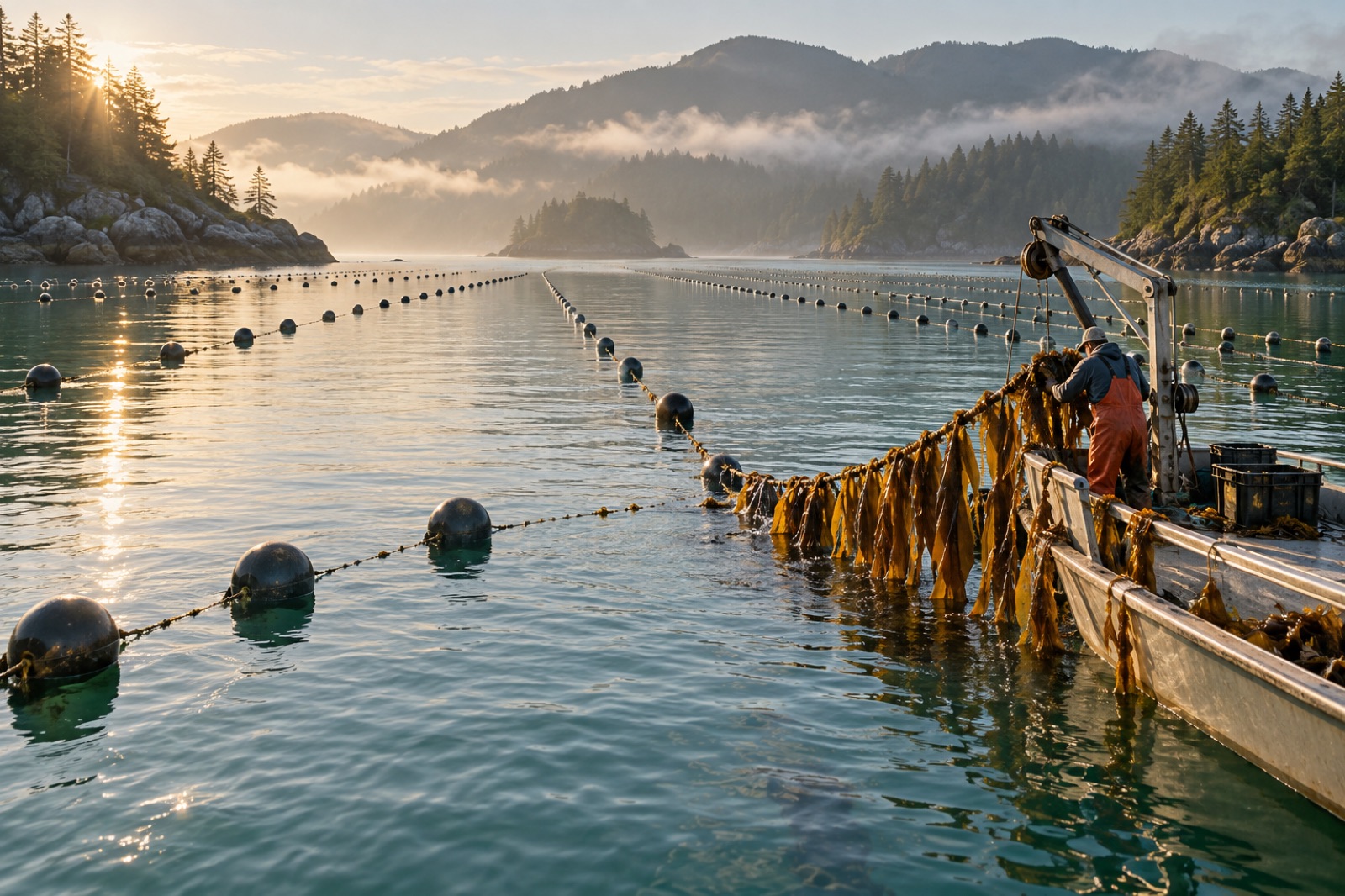
Starting a small seaweed farm is achievable in one to two years for a committed team. Permits, site selection, gear, costs, and the mistakes that sink first farms.
Naomi Reyes ·