Kitchen8 min read
Make Your Own Seaweed Salt: Ratios, Roasting and Blends
Turn dried kelp, dulse or nori into jars of seaweed salt. Oven-drying temperatures, milling tips, tested ratios, three blends and storage rules.
Sofia Andersson ·
Make kelp salt at home from dried sugar kelp or kombu — drying, milling, the right ratio, and where this quietly powerful seasoning transforms everyday cooking.
Kelp salt is the most useful two-ingredient seasoning a coastal cook can keep on the counter. It reads as salt, it seasons like salt, and then — quietly, because of the glutamates sodium in sweet concert with the ocean minerals kelp carries — it makes the food taste more like the food, plus a deep round umami finish. If our broader seaweed salt guide is the general route — multiple seaweeds, multiple blends, one process — this is the single, everyday version: a jar of kelp salt made from one dried kelp, milled fine, balanced at a ratio you can actually use.
A multi-seaweed salt is a blend — Nori lifts, dulse deepens, wakame softens. Kelp salt on its own is a seasoning: the kelp brings glutamic acid (the molecule dashi relies on), a clean iodine note, a round mineral finish. Sugar kelp (Saccharina latissima) is the everyday choice — mild, sweet, thin-bladed, quick to mill — but kombu and royal kombu make superb salts too, deeper and punchier. The species profile of sugar kelp tells the forest side of the story; the jar tells the kitchen side. One species keeps the flavour signature distinct; you can always blend afterward — five grams of garnet-purple dulse in a jar of kelp salt makes a quite different product.
Buy dried whole-leaf kelp if you can, broken flakes if you can't. It should be from a labelled, reputable source — either farmed (sugar kelp from regenerative farms is our default) or harvested under a licensed wild harvest. The salt will be no cleaner than the kelp it's made from, so provenance matters here. Our sustainable seaweed buying guide explains what to look for on the label, and, as a general rule for cooks, dried is the right form for this purpose: kelp salt is a dried-kelp preserve.
Avoid kelp that smells shelf-warfish or musty: good dried kelp smells oceanic and slightly sweet. Skip anything with visible sand; you'll be grinding this and won't be rinsing it afterward.
The entire method is: dry the kelp past pliable to cracker-dry; mill it fine; blend; store. It's 30 minutes of mostly-unattended oven time plus five at the mill.
Even shop-dried kelp benefits from a re-dry just before milling — surface shelf-humidity resists a fine grind. Fan the kelp on a baking tray and dry at 90–100°C (195–210°F) for 8–12 minutes, until the blades are brittle-snap dry but not scorched. Ovens vary; watch the first batch. Cool completely — warm kelp steam-mills instead of powdering.
A clean spice mill or high-powered blender turns dry kelp into powder in 30–60 seconds. Sieve if you want a uniform salt texture; re-mill the coarse fraction. A fine powder integrates into food almost imperceptibly; a fraction of slightly larger flakes looks beautiful when sprinkled. For a first batch, mill to a fine powder and enjoy the even salting. Kelp powder has many other uses — see our kelp powder guide for what to do with a surplus.
The tested starting ratio: 1 part kelp powder to 4 parts fine sea salt, by weight. This yields a seasoning that performs as about four-fifths-salt in use — a normal shake on a fried egg, a light dusting on roast potatoes. Use a good fine sea salt: damp or moist salts clump; chunky flake salts create uneven seasoning per shake. Blend by whisking in a bowl or by a few pulses in the mill, being careful not to powder the salt itself.
For a more kelp-forward table seasoning, 1:3 works; below 1:2 the blend begins coating food visibly green and muddying the salter intuitions of anyone else cooking from your pantry. Label the jar with its ratio.
The rule of thumb: anywhere you'd reach for plain finishing or cooking salt and want a low, savoury echo of the ocean, reach for kelp salt. It is particularly good:
Where it's less good: heavily acidic dishes (vinegar suppresses the mineral roundness) and anywhere you specifically want the taste of a different seaweed — kombu-forward dishes want the dashi; dulse-forward dishes want actual dulse.
Kelp concentrates iodine among foods — which is good news at ordinary culinary doses and the reason kelp salt is properly a seasoning rather than a salt substitute. A normal shake of 1:4 kelp salt on one meal contributes a modest fraction of the recommended daily iodine; that's what it's for. But a teaspoon a day every day starts to exceed sensible upper limits for some kelp species. The principle: kelp salt is a finishing accent, not a table solute. If you have thyroid conditions or take iodine-related medication, consult your clinician before adding it regularly to your diet. Our iodine and seaweed guide runs the numbers with more detail.
An airtight jar, out of sunlight, keeps kelp salt fresh for three to six months. Kelp powder absorbs ambient humidity and begins clumping where plain salt wouldn't, so if you live somewhere humid, store the jar in the fridge or make small batches. A scent test tells you everything: stale kelp salt smells flatter and develops a faint fishiness; fresh kelp salt still smells like the sea lifting off rocks.
No — fresh kelp is mostly water and won't blend or keep as a dry seasoning. Kelp salt is a dried-kelp product by definition; fresh kelp belongs in other preparations entirely.
Fine sea salt is the better partner: cleaner flavour, similar grain size to ground kelp. If you use table salt, choose one without non-caking additives and measure by weight — the ratio matters more than the salt brand.
It varies wildly by species and batch. As a practical rule: a normal light shake on one meal is a modest culinary amount; using kelp salt as your everyday table salt is overconsumption for many species. If you need precision, check your kelp's origin and batch analysis, or consult a healthcare professional.
Either stale kelp (musty, fishier smell) or a too-hungry ratio (more kelp than the salt can carry). Dial back to 1:5 or 1:6, start with fresh-shop-dried kelp, and try sugar kelp if you were using kombu.
Yes — and lightly toasting before drying creates a rounder, nuttier salt, especially with kombu. Keep heat low (toasted-burned is a narrow margin) and dry the toasted blade briefly once more before milling.
Turn dried kelp, dulse or nori into jars of seaweed salt. Oven-drying temperatures, milling tips, tested ratios, three blends and storage rules.
Sofia Andersson ·
How to cook with kelp powder — the everyday seasoning doses, the iodine maths that matters, blends, dressings, doughs, and what to look for when buying.
Sofia Andersson ·
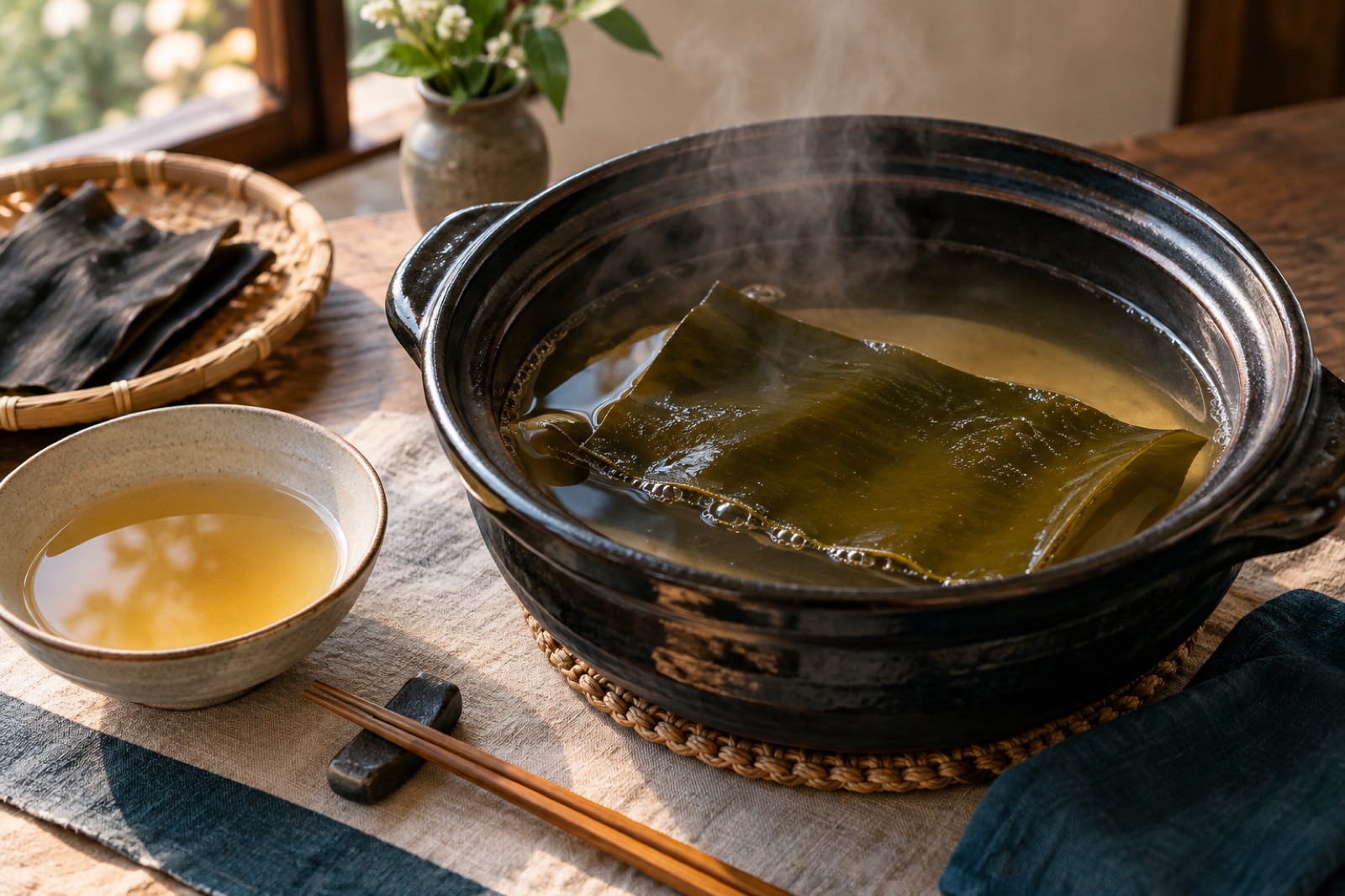
A deep, technique-first guide to kombu dashi: glutamate science, exact temperatures, ichiban and niban infusions, and how to fix every common mistake.
Sofia Andersson ·