Kitchen11 min read
Kombu Dashi Masterclass: The Broth That Built a Cuisine
A deep, technique-first guide to kombu dashi: glutamate science, exact temperatures, ichiban and niban infusions, and how to fix every common mistake.
Sofia Andersson ·
Build shabu-shabu on a proper kombu dashi and the broth does half the cooking. Ingredients, timing, dipping sauces — plus what to do with the spent kombu.
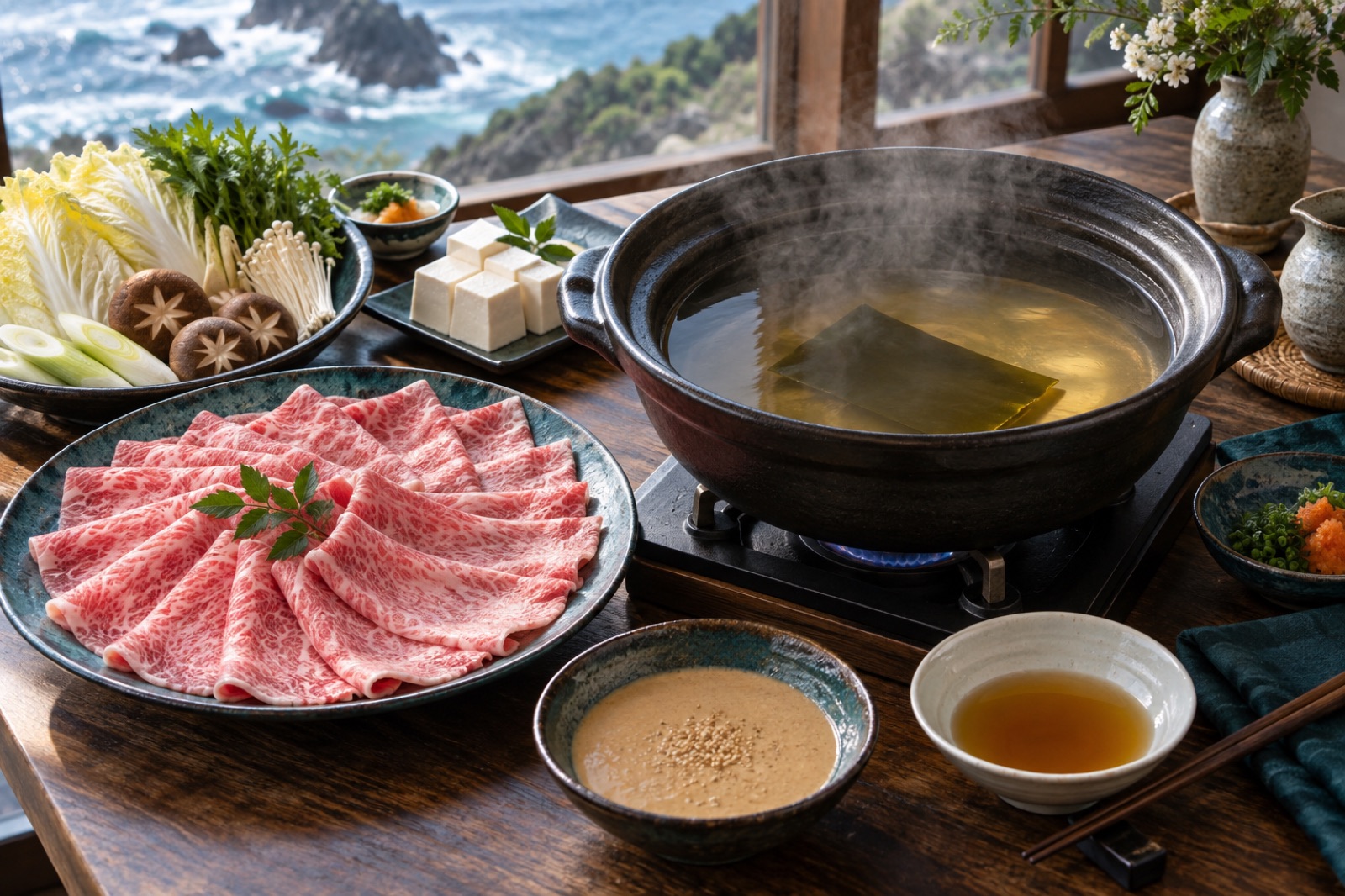
Of all the ways to honour a kombu dashi, shabu-shabu may be the most elegant — and the most social. The name is onomatopoeia: shabu-shabu, the sound of a paper-thin slice of beef or fish swished through simmering broth. You set a pot of properly made kombu dashi in the middle of the table, surround it with plates of paper-thin proteins and vegetables, and let every guest cook their own dinner, slice by slice, in thirty seconds at a time. The broth begins subtle and ends deeply flavoured by everything it has cooked. This is the complete method: the dashi recipe, the shopping list, the dipping sauces and the small rituals that make the ritual feel like a dinner party, not a cooking demonstration.
Many Japanese hot pots — sukiyaki being the aggressive older sibling — season the broth with soy and sugar. Shabu-shabu is deliberately austere: pure kombu dashi, nothing else, the idea being that every ingredient passing through it seasons the pot in its own fashion, so by the end of the meal the broth has become uniquely yours. This austerity is a great argument for mastering kombu dashi. If you can make a good dashi, you have done the hard work of this recipe already. If you cannot yet, shabu-shabu is the most forgiving place to learn — mistakes still produce a useful broth. For the background on why kombu's glutamates make a water-only broth taste of more than water, the deep dive into kombu and umami explains the chemistry.
For a pot serving four, you need 2 litres of dashi.
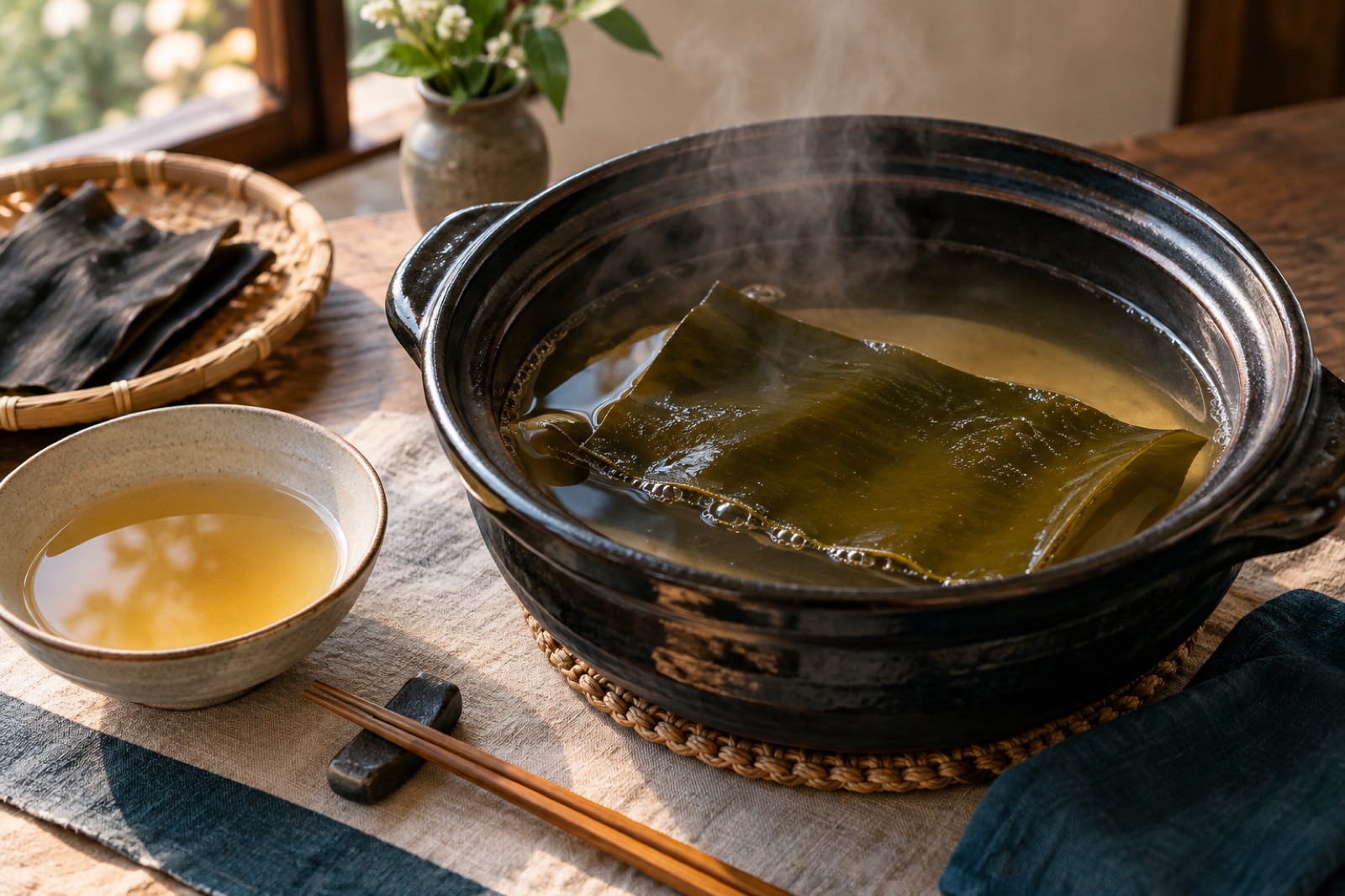
Set the kombu in the cold water and let it stand at least thirty minutes, or up to overnight in the fridge. (The long, cold soak extracts sweetness gently and is my strong preference.) Then bring to just below a simmer — you want small bubbles clinging to the underside of the water, never a rolling boil — and hold there for eight to ten minutes. The water will smell of the shore. Remove the kombu and reserve it (see below for its second career). Dashi made and strained this way keeps three days in the fridge, so you can absolutely make it ahead on a cold morning and have a dinner party broth ready for the evening.
Use ma-kombu or rishiri-kombu if your source offers grades — the choice makes a real difference in a broth-only hot pot. Rausu kombu is the gold standard but expensive; there's a full comparison of grades and cuts in the wakame, kombu and nori difference guide if you want to shop well. Whatever you buy, look for leaves that are pliable, dark green-black and not overly white-powdered (some white bloom — mannitol crystals — is fine; an inch of it means the leaf sat in storage too long or was old when dried).
Shabu-shabu is defined by its prep list, and each element has a role. Arrange everything on plates around the pot, give each guest a small bowl of dipping sauce, a pair of chopsticks and a slotted spoon or fork.
The broth cooks; these sauces flavour. Set them out in small bowls and refill shamelessly.
A portable butane burner (or a heavy-duty induction plate) with a wide, shallow donabe or a large wide pot should sit in the centre. The broth should be at a confident, gentle simmer — active enough to cook but never boiling.
Each guest takes one or two slices of protein at a time and swishes them in the broth until just done — beef is thirty seconds, fish similar, tofu just needs warming through. Lift proteins from the broth, dip, eat, repeat. Vegetables belong in the pot in handfuls, fished out when the cabbage goes translucent. It is not a race; shabu-shabu is at its best unhurried, with conversation doing the pacing.
By the middle of the meal the broth has taken on the proteins' richness. Never top it with soy or salt. It needs nothing. Just let it concentrate.
When the protein is done and everyone's appetite is honest but not desperate, drain the broth of any scraps and add the udon. Simmer two minutes, ladle into bowls with a splash of ponzu, and serve. The noodles carry two courses' worth of accumulated flavour. This is the moment most guests remember.
Every good kombu hot pot leaves behind a spent sheet of dashi kombu. Do not bin it. Rinse it briefly, slice it into matchsticks and braise with sugar, soy and mirin for ten minutes — you have the backbone of kombu tsukudani, the salty-sweet condiment that keeps in the fridge for weeks. Alternatively, stir it into your next pot of rice, mince it into furikake, or — if you have made very broth-heavy hanami — slice it and pickle it in vinegar for a chewy, vinegared snack. And if you ever want to understand how the same sheet got a second, fuller extraction, the niban dashi article walks through the second pour.
Absolutely. Use a kombu-and-shiitake dashi, pile in mushrooms and tofu as your proteins, and double the vegetables. The soup will be lighter but still deeply satisfying — and arguably clearer in its demonstration of kombu's power.
Shabu-shabu is a cooking broth you dip into; sukiyaki is a seasoned one you simmer everything together in. Shabu-shabu is subtler, more social, sukiyaki richer and faster. Start with shabu-shabu — it teaches you the broth.
Most likely, the kombu never soaked long enough before heating, or the heating was done too fast. Try a four-hour cold soak next time, then the gentle ten-minute warming below a simmer. Rushing a dashi always shows.
Within the meal, absolutely — the shime noodles depend on its accumulated flavour. Between meals, the broth's flavour is best eaten fresh; it's a thinly-brewed stock, and thinly-brewed stocks don't freeze well. Cook what you need, enjoy it fully, and compost the kombu.
Yes — paper-thin slices (think 1–2 mm) cook through fully in under a minute at a true simmer. The danger is undercooking thicker slices; if you're slicing the meat yourself, err on the thin side.
A deep, technique-first guide to kombu dashi: glutamate science, exact temperatures, ichiban and niban infusions, and how to fix every common mistake.
Sofia Andersson ·
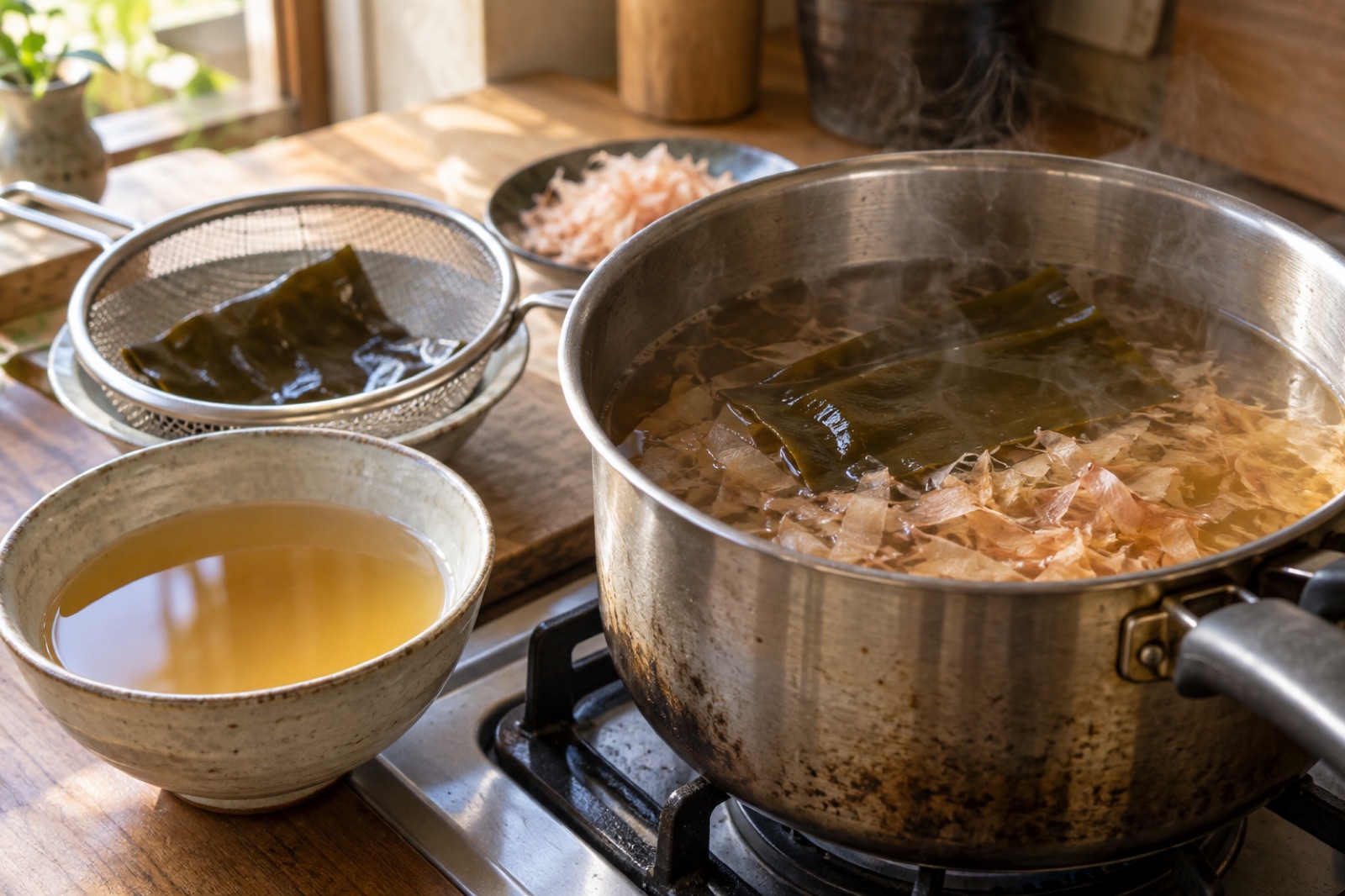
Niban dashi is the second extraction from spent kombu and katsuobushi — milder, deeper, and made for miso soup and simmered dishes. How to brew and use it.
Sofia Andersson ·
Tsukudani turns the kombu left in your dashi pot into a glossy, sweet-savoury relish for rice. Recipes, ratios, storage and why nothing leaves the kitchen.
Sofia Andersson ·