Kitchen9 min read
Seaweed Vinegar: Steeping Kelp for Dressings and Pickles
How to infuse vinegar with kombu, dulse and nori — ratios, steeping times, pairing choices, and where seaweed vinegar earns its place at the stove.
Sofia Andersson ·
A kelp mignonette recipe for oysters — kelp-infused vinegar, shallot and pepper — with variations, oyster sourcing notes and make-ahead tips.
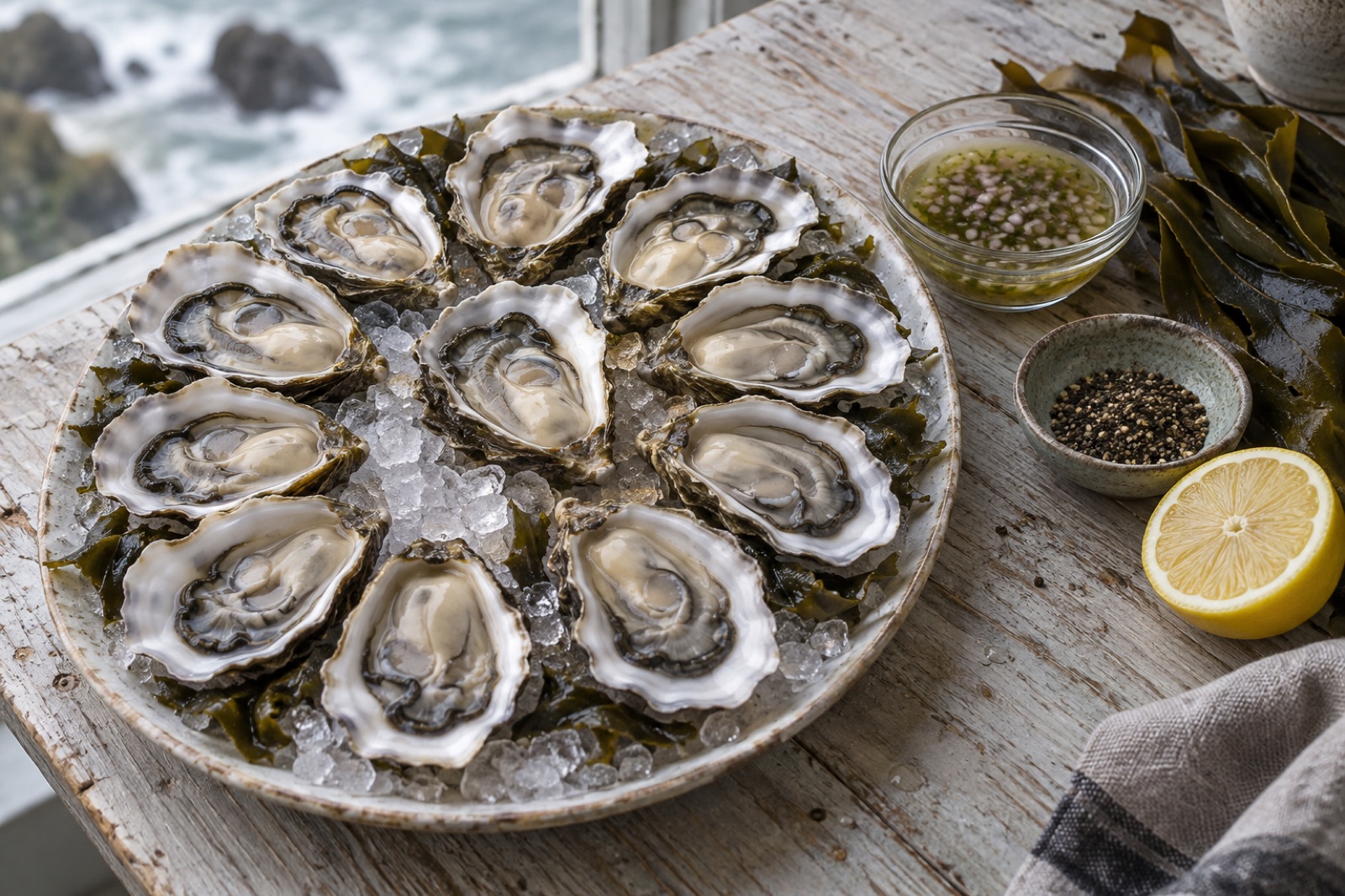
The mignonette is a near-perfect condiment as it stands: minced shallot macerated in red wine vinegar with cracked black pepper, spooned over raw oysters so the acid lifts the brine. It has survived a century and a half of oyster bars essentially unchanged. The temptation to tinker is strong and mostly wrong — except for one substitution that feels less like tinkering and more like completing a sentence: making the vinegar with kelp.
Kelp's natural glutamates and mineral brininess are made for oysters. An oyster and a kelp blade live in the same water chemistry; serving them together is less fusion than reunion. This recipe explains the pairing, then gives you the base mignonette, three variations, sourcing notes for both the seaweed and the oysters, and the make-ahead timing for a dinner where all you'd rather be doing is shucking.
Raw oysters are already one of the ocean's most umami-rich foods; the case for adding kelp isn't to make them "more savoury" so much as to give the vinegar more to do. The short science: kelp's dried blades carry concentrated free glutamates — the chemistry behind the science of seaweed umami — and steeping them in vinegar draws that savouriness into an acid that would otherwise read as straight sourness.
The result on the palate is subtler than it sounds. Nobody will eat your oyster and name kelp. They will eat it and say the mignonette tastes rounder than the one they had last week, and struggle to explain why. That's what you want: umami works best in condiments when it stays anonymous.
A second argument is aesthetic honesty. If your oysters come from a working coast — and nearly all commercially grown oysters do — then a condiment made from that same coast's seaweed is a more truthful plate than imported flavour. Which brings us to sourcing, below.
This assumes you already have kelp vinegar on hand, or are willing to make it a few hours ahead. If not, our guide to making seaweed vinegar takes ten minutes of hands-on time and an afternoon of patience. The short version: a thumb of dried kombu or sugar kelp, torn, steeped in 250 ml of good vinegar until it smells like a clean dock at low tide.
Makes enough for 2–3 dozen oysters.
Swap a third of the vinegar for fresh lemon juice, and add a teaspoon of finely grated zest. Use champagne vinegar. This is the classic California-leaning mignonette and holds up to a briny Atlantic oyster beautifully.
Add one small red chilli (deseeded, minced to the size of the shallot) and a single drop — one — of toasted sesame oil. Built for cucumber in the oysters' vicinity, and oysters your guests claim not to like.
Freeze a batch of the mignonette in a shallow tin, scrape with a fork every 30 minutes until crystalised, and spoon the ice over oysters for a summer-terrace serve. Less a mignonette than a statement, but a good one.
Dried kombu or sugar kelp is the most forgiving choice for the vinegar — low bitterness, robust umami, and widely available from the producers covered in our guide to buying seaweed sustainably. Avoid hijiki for this use (its stronger marine character fights the oysters; see our guide to edible seaweeds for the full cast). Fresh or blanched sugar kelp — available increasingly through coastal seafood suppliers — is the upgrade if you can get it: mince a strip the size of a credit card very finely, blanch it for 60 seconds first.
Farmed oysters are one of the least environmentally burdensome animal proteins you can buy: they grow on clean seawater, need no feed, and filter their environment as they go. Buy from a fishmonger or direct-grower who can name the bay or farm, and buy within 48 hours of shucking. A good oyster is closed or snaps shut when tapped; a dead oyster stays gape-mouthed and goes in the bin, not on the plate.
A condiment's-worth of kelp is not an iodine concern for most people — the volume per oyster is tiny — but if you're pregnant, managing a thyroid condition, or steeping a lot of kelp into a lot of vinegar you'll use daily, our seaweed nutrition guide has the plain-language details.
Red wine vinegar is the classic; champagne vinegar produces a softer mignonette that suits delicate oysters; cider vinegar is a good budget option. Avoid balsamic — the sweetness fights the pairing entirely.
Yes — a tablespoon of kelp flakes steeped in 150 ml of warm vinegar for 20 minutes and then strained is a solid shortcut. The long infusion will always taste deeper, but this is dinner, not doctrine.
They should smell like clean seawater, be tightly closed or snap shut when tapped, and feel heavy with liquor. Buy within 48 hours of eating, keep them cold and curved-side down, and discard any that gape and don't close.
The sauce itself is completely shellfish-free. Serve it beside grilled fish, on crispy fried potatoes, or on tomatoes and burrata — it's excellent anywhere you'd use a sharp dressing.
Shallot is the backbone. In a true pinch, half a very small red onion, rinsed in ice water and pressed dry, will carry it — but the classic profile does depend on the shallot's gentler bite. Spring onion whites, minced, are an acceptable middle ground.
How to infuse vinegar with kombu, dulse and nori — ratios, steeping times, pairing choices, and where seaweed vinegar earns its place at the stove.
Sofia Andersson ·
Fresh kelp is easier than it looks. How to clean, blanch, cut and store fresh kelp — plus the trick that turns it emerald green and tender.
Sofia Andersson ·
Kelp relish turns blanched sugar kelp into a sharp, crunchy pickle-condiment. Recipe, blanching ratios, storage and the ten foods it transforms.
Sofia Andersson ·