Atlas8 min read
The Izu Peninsula: Japan's Warm Kelp Coast Within Reach of Tokyo
Three hours from Tokyo, the Izu Peninsula offers kelp beds, coral outposts, cave dives and hammerhead waters where the Kuroshio brushes the coast.
Tom Okafor ·
Explore Shikoku's Pacific coast, where the warm Kuroshio Current grazes the southern limit of Japan's kelp — and where the word 'isoyake' was born.
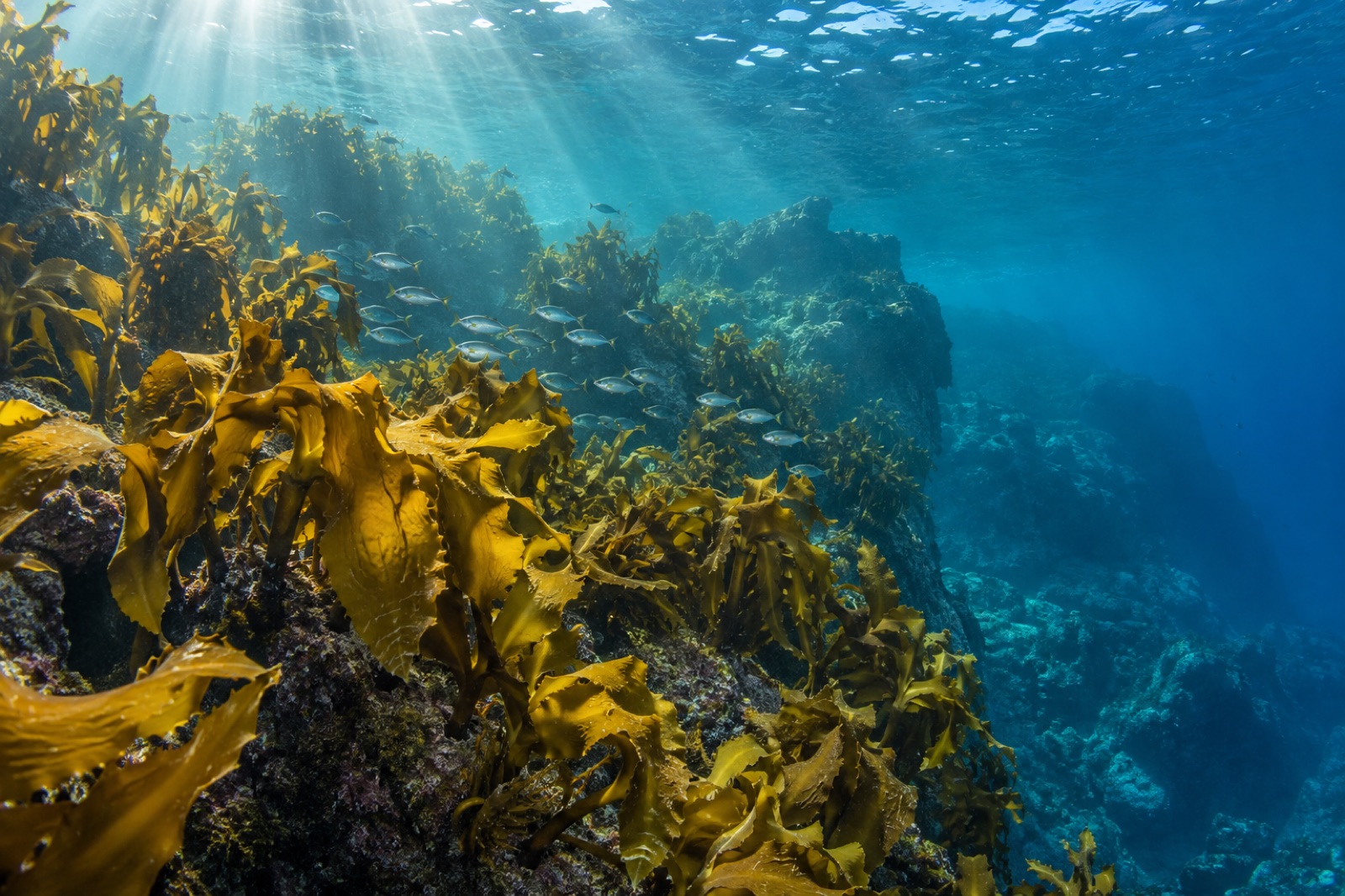
Shikoku is where Japan's kelp forests reach their warm-water limit. The smallest of the country's four main islands faces the open Pacific along a deeply embayed shore washed by the Kuroshio, the great warm current that carries subtropical water from the Philippines past Taiwan and up Japan's southern flank. On the mountainous, wave-worn coast of what the locals call Tosa — Kochi Prefecture — kelp beds of Ecklonia and Eisenia grow within sight of coral-leaning fish communities, living on a thermal knife edge that coastal people have watched slip, year by warm year, into what Japan named first and best: isoyake, the burning-away of the shore forest.
This guide covers the geography, ecology, culture and vulnerabilities of Shikoku's Pacific-facing kelp coast — and why it is one of the most instructive places on Earth to watch a warming ocean remake a reef.
Shikoku's Pacific shoreline runs from the Muroto Peninsula in the east to Cape Ashizuri — the island's southernmost point — and then hooks northwest into the rias of Uwajima. Nearly all of it faces Tosa Bay, a broad, deep, open bite out of the island that connects directly to the Kuroshio.
Two features define the coast:
The result is a patchwork: steep, clear, warm coves where tropical damselfish hover, sitting minutes away from cooler reefs where canopy-forming kelp still holds on. Few places let you read a coast's oceanography so directly with your own eyes. For background on the current systems that set this scene, see our explainer on boundary currents and how upwelling feeds kelp forests.
The giant canopy kelps of northern Japan — kombu and its relatives — cannot grow this far south; summer water is simply too warm. Shikoku belongs instead to members of the Lessoniaceae family:
Between and beneath them run dense beds of Sargassum species — the bushy brown seaweeds that increasingly replace kelp when conditions deteriorate — and, in the shallowest water, rich turfs grazed by herbivorous fish like the sawtail Prionurus. The kelp beds of Shikoku are lower and more compact than a Hokkaido kombu forest, but they are extraordinarily productive: nursery grounds for abalone (awabi), spiny lobster (ise-ebi) and the coastal fish that Tosa's fishers have depended on for centuries.
If Tosa Bay is famous among marine scientists for one thing, it is isoyake — literally "shore burning," the Japanese term for the collapse of coastal seaweed beds into grazed, pale rock. The phenomenon was named here decades ago, when fishers and prefectural researchers began documenting seaweed beds failing across southwest Japan, with sea urchins and herbivorous fish holding the reefs bare.
The mechanism is a warming-water trap. As the Kuroshio runs anomalously close and warm — something that has happened repeatedly since the 1990s, and that marine heatwaves now amplify — three things go wrong for kelp at once:
What makes Shikoku's isoyake instructive is that it was documented so early and so honestly. Kochi's fisheries cooperatives did not wait to act: urchin-clearing dives, kelp-bed replanting on sunken stone-and-block substrates, and managed abalone and lobster fisheries have been running here for years. Results are mixed — the ocean keeps warming — but the coast is a living textbook of what restoration can and cannot yet do at scale, a question our own Restoration Toolkit review takes up in detail.
Seaweed on Shikoku is food, income and identity. Kochi prefecture is famous for tosakanori, a lacy red seaweed cultivated commercially in the bay — one of Japan's most successful seaweed aquaculture products and a staple of local sashimi platters. Wild arame is still harvested by shore communities, and the winter kombu trade flows south from Hokkaido into kitchens here even though kombu itself cannot grow in these waters, a tidy reminder that Japan's seaweed culture spans climate zones the way wine culture spans latitudes; our encyclopedia profiles many of these species.
The coast's fishers operate within a storied management system: Japan's cooperative gyogyo structure gives local communities formal rights over nearshore grounds, which is one reason restoration trials could be attempted here at all. Elders remember kelp beds that fishers under forty have never seen. That shifting-baseline memory loss is documented across the archipelago, from here to the Sanriku Coast of northern Honshu, where colder water has so far been kinder.
For a nearby comparison on the same current, the Izu Peninsula shows what happens where the Kuroshio's edge meets a slightly cooler coast, and Taiwan's northeast coast lies just upstream on the same current system.
Shikoku's kelp faces every signature stressor of the modern coast at once: warming, nutrient-poor surface water, herbivore range shifts, typhoon intensification, and coastal engineering that hardens shorelines. The 2011 Kuroshio large meander kept warm water pinned close to Tosa Bay for years — the kind of event climate scientists expect more often in a warming system.
The hope is equally concrete. This coast has the most experienced isoyake-fighting community anywhere: cooperatives that clear urchins as routine maintenance, prefectural labs that track the Kuroshio like weather forecasters, and hatchery knowledge honed on abalone and tosakanori. If kelp restoration at scale has a chance anywhere on a warm-edge coast, it is here, among people who named the problem before the rest of the world noticed it existed.
Yes. The clearest, most kelp-rich snorkelling is around Cape Muroto and points along the Ashizuri coast, best from late autumn to spring when runoff is low and the Kuroshio often meanders offshore. Operators run out of Muroto and Tosashimizu; water temperatures range roughly 16–26 °C, so bring a 5 mm wetsuit outside high summer.
Isoyake ("shore burning") is the long-term loss or severe thinning of coastal seaweed beds, leaving reefs grazed bear by sea urchins and herbivorous fish. It describes both the kelp loss and the stable barren state that follows, and it is the central challenge for southwestern Japan's temperate reefs — analogous to the urchin barrens documented on the Pacific coast of North America.
No. Kombu species need cold water and are harvested in Hokkaido. Shikoku's kelps are warm-temperate Ecklonia and Eisenia species. Kombu eaten in Kochi arrives by an old trade route from the north — one of the oldest long-distance seaweed supply chains in the world.
The current brings warm, clear, nutrient-poor water: excellent for people and tropical fish, hard on kelp, which needs cool, nutrient-rich flow. But where the Kuroshio is pushed around capes like Muroto and Ashizuri, it sheds cool eddies and small upwellings that feed the surviving beds — the same physics behind upwelling coastlines worldwide.
Partially. Cleared and replanted reefs can hold kelp for years, especially in cooler pockets, but warm years keep rolling the frontier back. The coast's cooperatives treat urchin removal and reef construction as ongoing stewardship rather than a one-time fix — a model restoration programs elsewhere increasingly adopt.
Three hours from Tokyo, the Izu Peninsula offers kelp beds, coral outposts, cave dives and hammerhead waters where the Kuroshio brushes the coast.
Tom Okafor ·
Where the warm Kuroshio meets the southern limit of the kelp world — Sargassum forests, agar harvesters, the Longdong diving coast and Keelung's protected reefs.
Dr. Mara Ellison ·
A coastal atlas guide to Japan's Noto Peninsula: satoumi stewardship, ama divers, wakame culture and a coast remade by the 2024 earthquake.
Dr. Theo Nakamura ·