Atlas8 min read
Langebaan Lagoon and the West Coast: South Africa's Quiet Kelp
Langebaan Lagoon runs warm and shallow while the Atlantic outside stays cold and kelp-lined. A guide to South Africa's surprising West Coast shores.
Dr. Lena Fischer ·
St Helena Bay is where the Benguela upwelling cell is born — kelp fringe, rock lobster, seabird islands, and the dynamics of a bay that feeds an entire region.
Ask an oceanographer where the South Atlantic's great wall of life begins and the answer is likely to be a bay most dive tourists skip. St Helena Bay, about 150 kilometres north of Cape Town on the arid West Coast, is one of the most productive ambits of oceanography in the Southern Hemisphere: the place where the Benguela Current, reinforced by wind shear off Cape Columbine, spins a permanent cell of upwelling into being. Everything downstream — the fish shoals, the seabird islands, the kelp and the rock lobster it feeds — is powered by that cell. This guide introduces the bay's kelp fringe, its fisheries and its odd, wind-driven pulse.
The Benguela system runs, broadly, on the pattern we describe in the upwelling explainer: wind pushes surface water offshore along a coast, and cold, nutrient-rich deep water rises to take its place. At St Helena Bay two things add nuance. The first is Cape Columbine itself, the headland at the bay's southern corner: currents skirt the granite cape with enough shear that a vortex of cold, rich water — the Columbine upwelling cell — forms north of it and stays. The second is the bay's geometry: a broad, shallow bowl that traps the upwelled water for days at a time, long enough for plankton to bloom.
The result is a paradox of beauty: the water is green, almost turbid with life, and the air above often carried thick sea mist that rolls in at dawn — the famous West Coast fog. Visiting when the fog lifts, flashing turquoise light over a body of water that is more factory than postcard, is one of the great seascape sights of the region.
Kelp in St Helena Bay is patchier than on the open Cape Peninsula because the rock is patchier. The bay itself is dominantly sandy, and the kelp — sea bamboo, Ecklonia maxima — clings in scattered bands to the few reefs and rocky ledges at the bay's southern corners, and more continuously north toward Lambert's Bay and south toward Cape Columbine. The open-coast forests around Columbine and north are the real thing: sheltered from the prevailing summer southeast swell, dense, big-bodied, and carrying all the forest fauna the kelp coast is famous for — hottentot, galjoen, seals working the kelp edge, and the kelp gulls whose populations rise in proportion to fishing activity. The Cape Peninsula guide shows what the same kelp does on the open Atlantic coast; the forests around St Helena Bay are the northern, more mist-bound version of that architecture.
One ecological quirk worth noting: the upwelled nutrient pulse does not always stay locked to the kelp. Diatoms and dinoflagellate blooms respond faster than kelp can, and the bay is correspondingly known — often, and sometimes disastrously — for its harmful algal blooms. The pattern is described in the red tides article; the short version for fishers and visitors is that St Helena Bay is a place where an apparition of red water and a mass shellfish die-off remain possible any summer. Monitoring continues.
The upwelled productivity moves through the food web in two compelling outward waves.
The first wave is the seabird island belt. From Lambert's Bay's Bird Island — one of the mainland colonies of the Cape gannet — the upwelling coast makes a necklace of island colonies reaching over the horizon onto the Namibian border. The gannets work the shoal edge, plunging into the Benguela fish shoals; African penguins nest in bays up the coast; and the whole visible chain of the West Coast's wildlife abundance is laid on the bay's plankton.
The second wave is the West Coast rock lobster, Jasus lalandii — one of South Africa's oldest commercial fisheries and, almost equally long, one of its most troubling. The lobster grew fat historically on the abundant kelp forest detritus and mussel beds fed by the upwelling; the combination of fishing pressure and poaching then occupied the remainder of the twentieth century. Today the stock remains under strict management and is a case study in how even a strong upwelling engine cannot outproduce persistent overextraction. The kelp forests of South Africa guide covers the broader ecological frame.
St Helena Bay is a working place. Fishing harbours at St Helena Bay and at nearby harbours of the coast define the settlements' rhythms; fishmeal factories and lobster processing plants are still part of the smell and the sound of the harbour, and the whole coast follows a calendar set less by tourism and more by fishing seasons, fog and the swell window. For visitors with the time, this is one of its attractions: the chance to stand on a pier among the chums scales and hull sludge of a working harbour while seabirds work the water that powers the whole scene fifty metres from the fish factory door.
Mixed. The bay itself is often plankton-thick and turbid; the exposed coast north and south of the bay offers strong kelp diving when conditions align. Neither is beginner territory. The Cape Peninsula area houses the easier, better-serviced kelp dives.
A persistent eddy of cold, nutrient-rich deep water that forms just south of Cape Columbine's headland as the Benguela Current passes, and which is held in place by local geometry and wind shear. It is the seed of the region's entire marine productivity.
Not in the sense of a healthy, secure stock — oceanographic productivity has outpaced stock collapse is close to the historical truth, and the fishery is managed under strict limits while rebuilding. Eat lobster only through licensed restaurants; unlicensed sales are a problem for the stock and the coast's legitimate economy.
Winter for mist and wildlife; summer for warmth and the upwelling pulse. Either way, bring a jacket — fog arrives unheralded.
Yes. There is a mainland gannet viewing point at Lambert's Bay's harbour island, and the gannet colony is highly visible there — arguably the most accessible Cape gannet experience in southern Africa.
Langebaan Lagoon runs warm and shallow while the Atlantic outside stays cold and kelp-lined. A guide to South Africa's surprising West Coast shores.
Dr. Lena Fischer ·
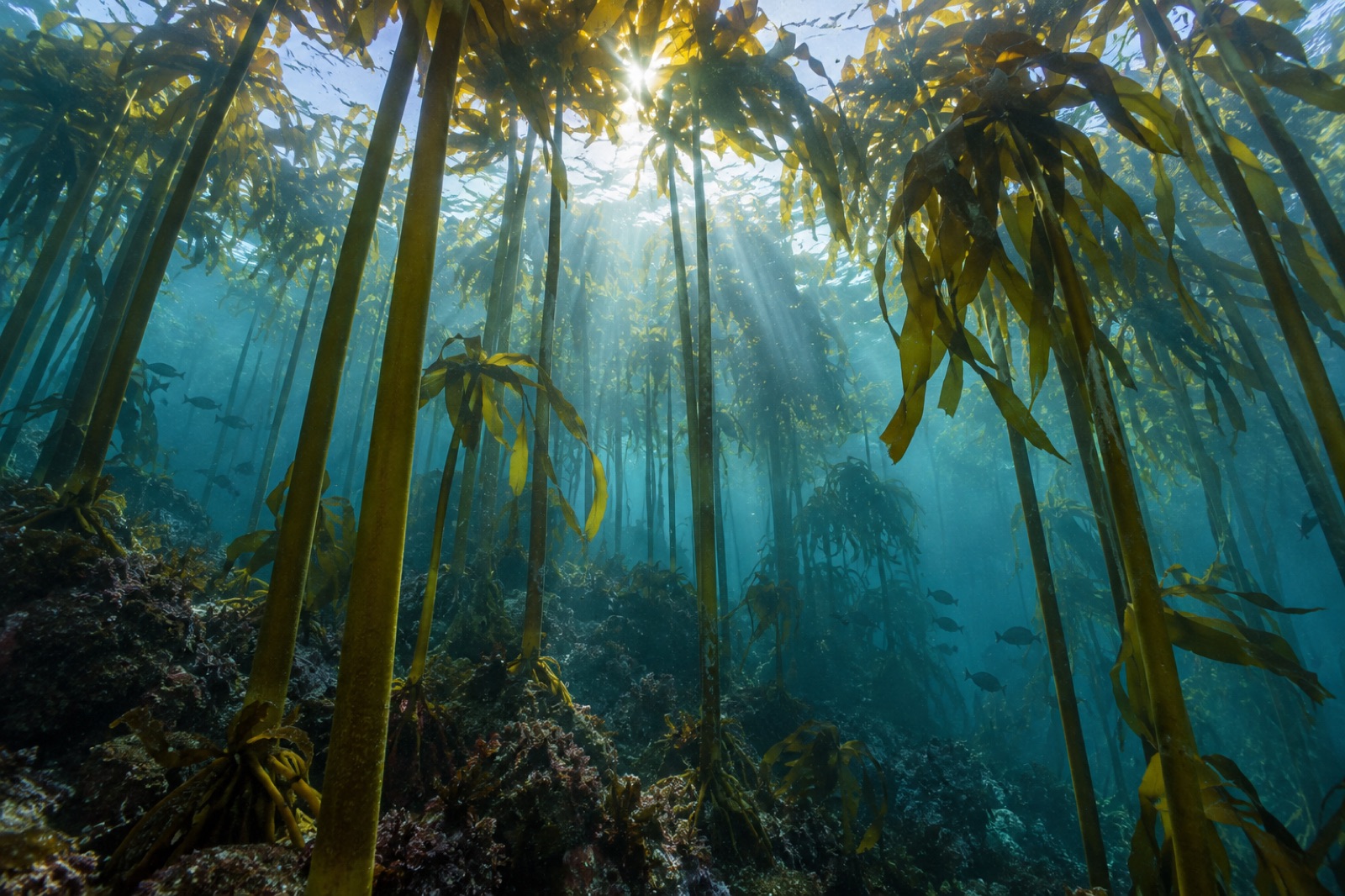
Sea bamboo is the towering hollow-stemmed kelp of South Africa's cold west coast. Biology, range, ecology and harvest of Ecklonia maxima, the Cape's forest builder.
Dr. Theo Nakamura ·
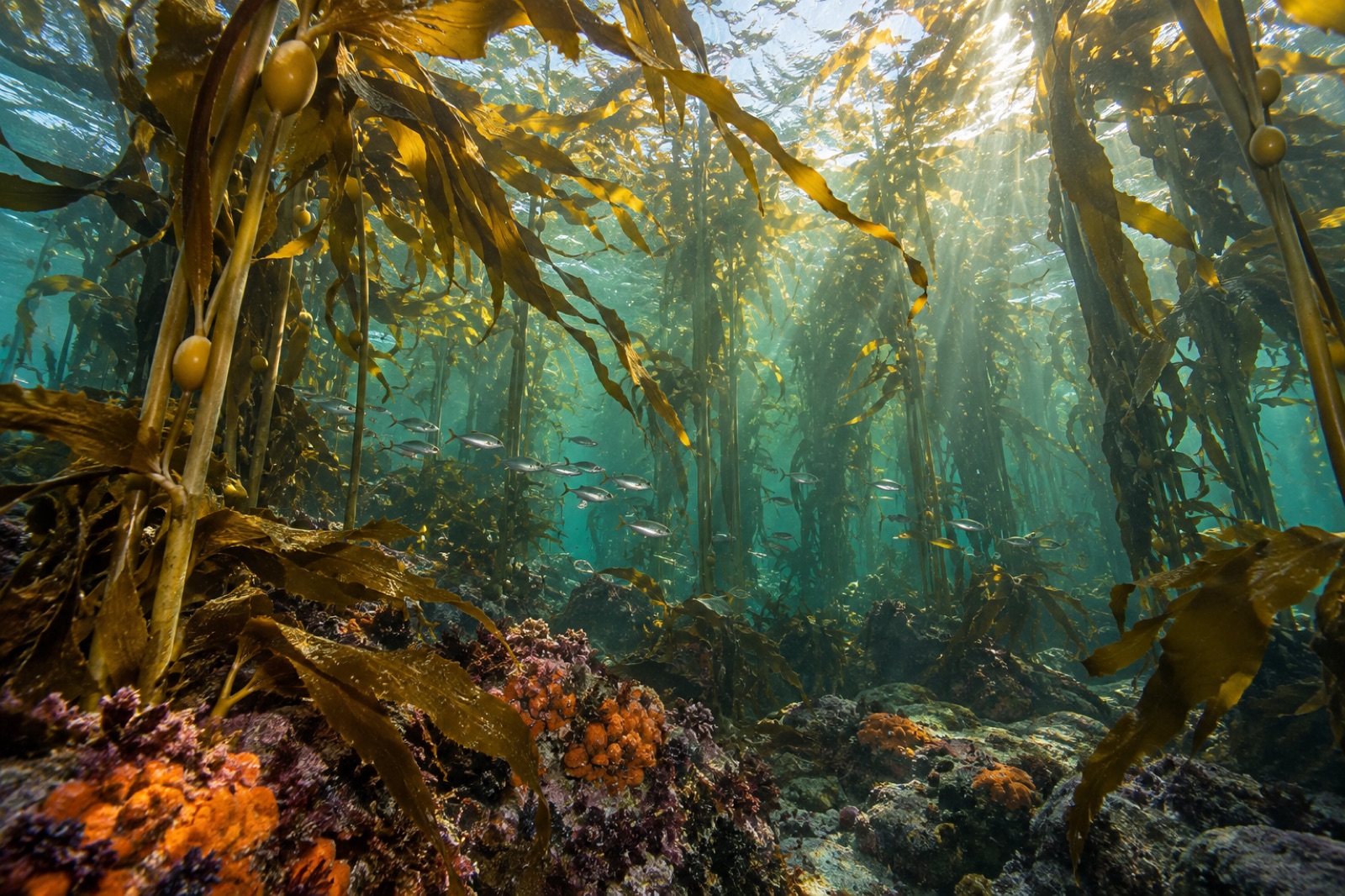
At the Cape of Good Hope, cold Atlantic upwelling and False Bay warmth build towering kelp. A practical dive guide to Cape Point's sites, seasons and permits.
Tom Okafor ·