Farming10 min read
The Seaweed Farm Year: A Season-by-Season Calendar
Seaweed farming runs on an 18-month loop, from sorus collection to harvest to gear refit. A season-by-season planner for temperate kelp farms in both hemispheres.
Naomi Reyes ·
How to crew a kelp farm across the season: the roles you need, the skills that matter, how pay structures work, and how to keep good people returning.
A kelp farm is a labour puzzle disguised as a boat operation. For months, one competent person can run a couple of hectares. Then, for a few intense windows — seed deployment in autumn, harvest in spring — you suddenly need a boat, a working deck, and people pulling heavy wet lines all day in cold water. Get the crewing wrong and the crop sits in the water past its peak; get it right and a small core team carries you through the year, with seasonal hands swelling the numbers exactly when the work spikes.
This article maps the kelp labour year, the roles that actually exist on a small-to-medium farm, where seasonal people come from, how pay is usually structured, and what makes good crew come back.
Everything flows from the crop calendar (we map it month by month in the seaweed farm calendar). In a typical northern-temperate operation — sugar kelp or similar winter-grown species — the labour curve looks like this:
Southern-hemisphere and tropical farms run their own calendars, but the pattern holds everywhere: two surges, two plateaus. Crewing is about staffing the surges without paying for idle hands in the plateaus.
On a half-hectare to five-hectare farm, roles overlap heavily and job titles are generous. Still, the functions are distinct:
Skipper / boat lead. Holds the workboat licence, reads the weather, decides go/no-go, and carries legal responsibility on the water. On small farms this is often the owner. See workboats for seaweed farms for the vessel side of the equation.
Deck lead. The person who runs the hauling rhythm: line on the roller, calls the pace, keeps knives and fingers separate. Deck leads make harvest fast; farms that lack one work 30% slower and hurt more people.
Deckhands / harvest hands. The surge workforce. No aquaculture background needed if the work is broken into learnable stations — hauling, cutting, landing, hosing, recording — but they must be safe on a moving deck.
Hatchery technician. Seasonal but skilled: managing sorus collection, spore release, gametophyte cultures and seeded-line quality (covered in detail in seaweed seed stock). Small farms often buy seed instead of employing this role in-house.
Processing and QC hands. If you blanch, dry or mill on site, you need people who can run food-safe or spec-safe handling — see food-grade handling at the farm gate. QC overlaps with the deck lead during harvest: someone must cull fouled or damaged fronds before they reach a bag.
The integrator. On farms of three-plus staff, someone must own the whiteboard: weather windows, crew roster, buyer dates, gear state. Usually the owner again. Unseen role, enormous value.
The best seasonal crews are rarely recruited from job boards. Recurring sources, in rough order of reliability:
The common failure is hiring warm bodies the week harvest starts. The fix is a "first-tide training day" two to four weeks before: boat brief, knife safety, station rotation, and an honest conversation about pay, weather delays and what a hard day actually feels like.
Strip away the nice-to-haves and three things matter:
Beyond those, value people who can keep records (growth logs, biomass estimates), people who can splice rope, and anyone with food-handling training if you sell into food markets.
Wage levels vary enormously by country and port, so structure matters more than headline numbers:
Whatever the structure, two practices separate well-run farms: pay promptly, and make the pay transparent at hiring. Agriculture's habit of "we'll see how the season goes" does not work on the ocean, where your crew can see the forecast and the buyer's truck schedule.
People considering this work as a career can find current openings — including at fictional Tidewright — on the careers page; the roles there show how professional ocean work is structured at scale.
Seasonal labour economics is really retention economics. A returning crew costs you almost no training and works visibly faster by week two. The farms that keep their people share habits, not perks:
As a working rule, a tight crew of four — skipper, deck lead, two hands — can harvest a well-laid hectare of longline kelp in roughly five to ten working days, depending on line density, yield per metre, and how far the landing point is. First-year farms should budget the high end; a returning crew with good deck rhythm runs at the low end.
In the maintenance plateau, mostly yes. During deployment and harvest, no — hauling lines alone on a moving deck is how injuries happen. Plan for at least two people during every surge window, even on a half-hectare plot (we sketch the smallest realistic setup in starting a half-hectare kelp farm).
Not for deck work, if you structure the job into stations and run a training day ahead of the season. What you cannot train in one day is sea sense — so the skipper and deck lead must carry that. Hatchery and QC roles do benefit from prior aquaculture or food-industry experience.
Eight to twelve weeks before your expected harvest window. That gives time to confirm fishing-crew availability as their seasons confirm, hold a training day, and build a waitlist — every farm loses one or two recruits before the season starts. Recruiting on the first warm week of spring is recruiting too late.
Under-crewing the first harvest. The optimistic arithmetic of "two of us can handle it" collides with weather days, gear snags and the crop's finite quality window. A delayed harvest of degraded kelp costs more than the extra wages ever would — hire one more hand than the spreadsheet says.
Seaweed farming runs on an 18-month loop, from sorus collection to harvest to gear refit. A season-by-season planner for temperate kelp farms in both hemispheres.
Naomi Reyes ·
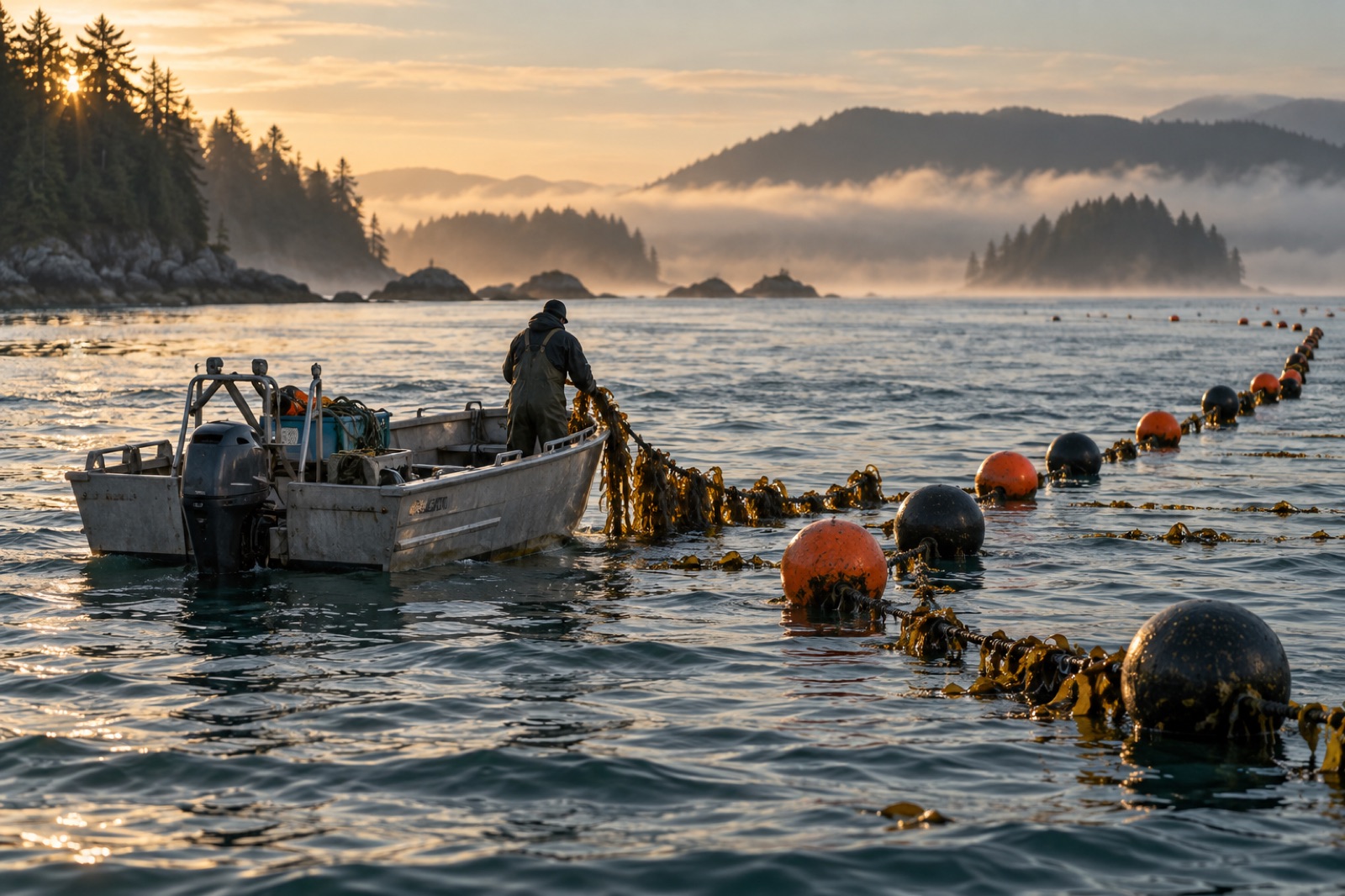
From 5-metre skiffs to crane barges: how to choose, equip and use a workboat for a kelp farm — propulsion, deck layout, lifting gear and the mistakes that cost seasons.
Naomi Reyes ·
An honest look at small seaweed farm economics: start-up and operating costs, realistic yields per line, kelp prices, and the levers that decide profit or loss.
Naomi Reyes ·