Kitchen9 min read
Miso Soup with Wakame: The Fifteen-Minute Classic Done Right
How to make genuinely good miso soup at home: dashi fundamentals, when to add wakame, the one boiling rule, and why the miso goes in off the heat.
Sofia Andersson ·
A weeknight wakame egg-drop soup that tastes like a clear dashi broth: silky egg ribbons, tender seaweed, fifteen minutes from pantry to bowl.
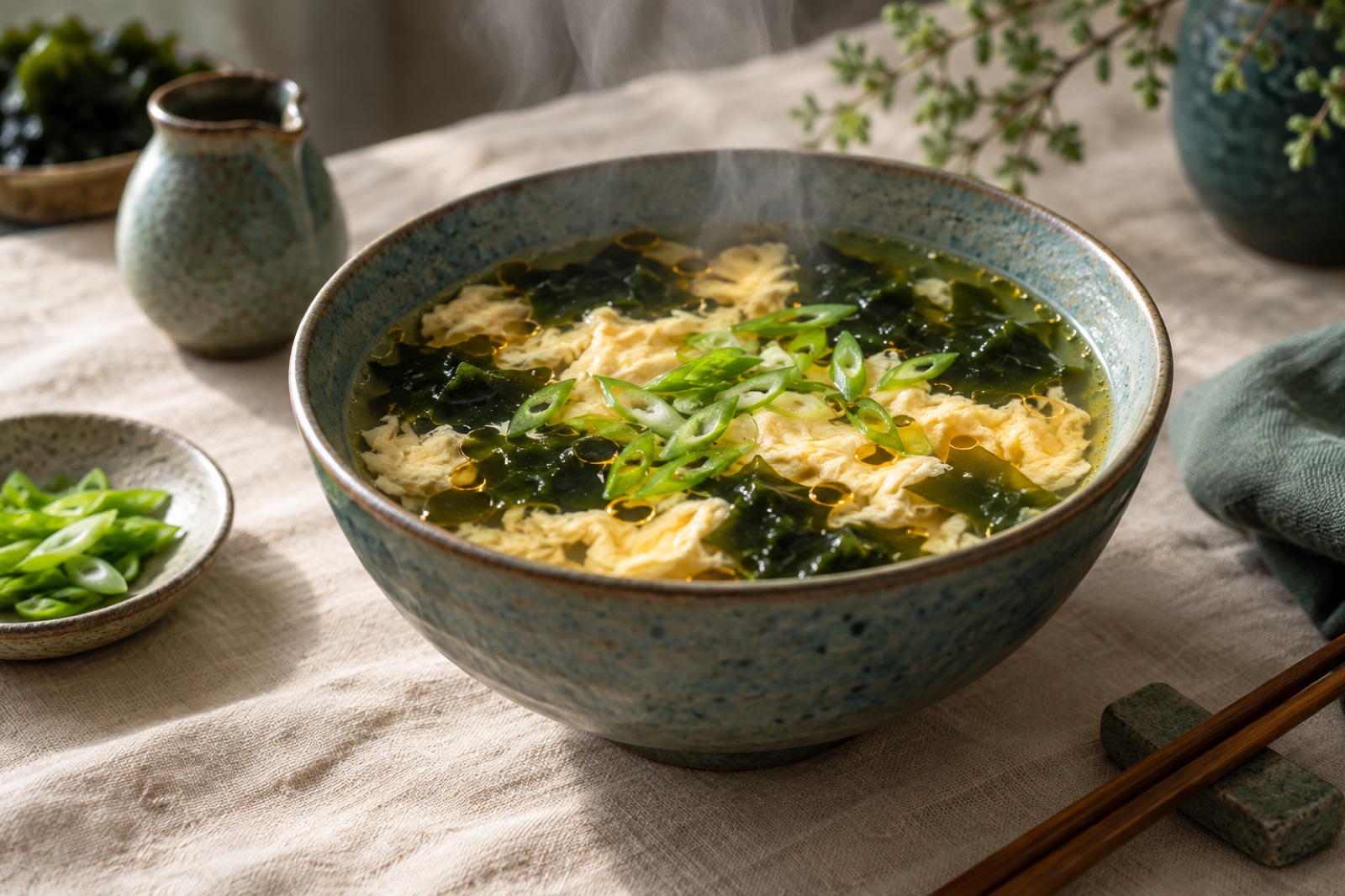
There are evenings when dinner needs to happen in the time it takes to set out two bowls and find spoons. This is the soup for those evenings. Wakame egg-drop soup is a clear, savoury broth — somewhere between a Japanese tamago-toji (egg-drop soup) and the Chinese restaurant classic — with ribbons of softly set egg and fronds of dark-green wakame drifting through it like the surface canopy of a kelp forest. It takes one pan, one bowl to whisk eggs in, and about fifteen minutes, most of which is waiting for water to behave. It tastes like you tried.
The trick is not a trick at all: a fast kombu steep, good control of the egg stream, and a light hand with salt. Everything else is garnish.
Egg-drop soup is a texture dish. The broth can be almost anything — chicken stock, dashi, plain water with seasoning — but the appeal is the suspended, just-set egg. Wakame earns its place because it does three things at once: it thickens the perceived body of the broth with its faint natural gelatininess, it brings a mineral depth that makes a water-based soup taste like stock, and its silky leaf texture echoes the ribbons of egg instead of fighting them. Softer seaweeds fight less. This is why you want wakame or a similarly tender green seaweed here rather than a leathery kombu strip.
You do not need to build a full kombu dashi for this soup, but knowing how dashi works will sharpen your instincts about the broth.
A note on the wakame: dried cut wakame expands roughly tenfold, so two tablespoons of dry shreds becomes two generous cups in the bowl. If you only have wakame flakes, use half the amount; they are denser by volume. For a primer on soak times and expansion ratios across seaweed types, see our guide to rehydrating seaweed.
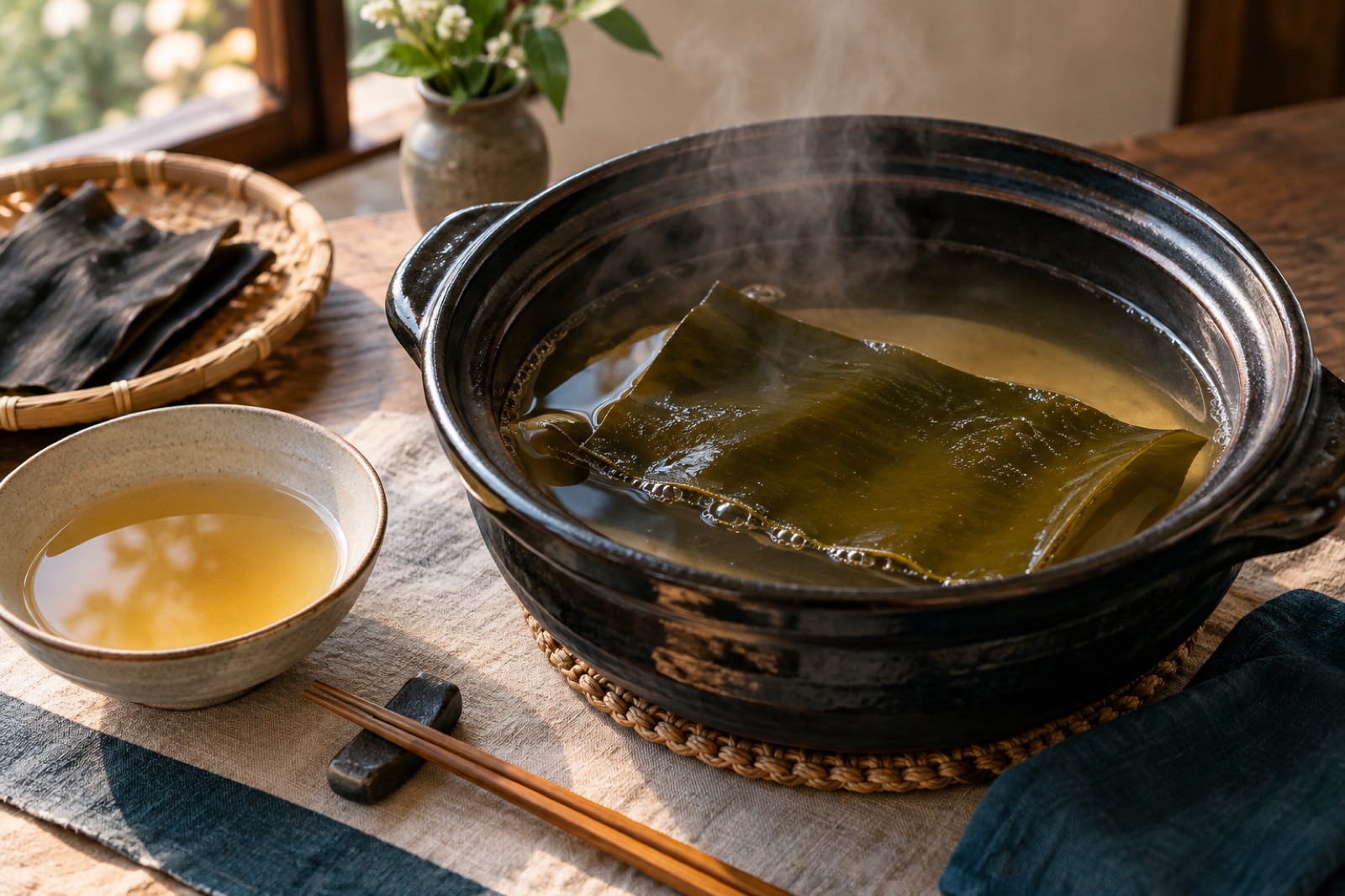
Put the water and kombu in a saucepan and set it over medium heat. Let it come slowly towards a bare simmer — you want small bubbles around the edge of the pan, nothing more. The moment it threatens to boil, lift the kombu out with tongs. Five to eight minutes is usually enough. Do not boil the kombu: hard boiling drags out bitterness and a sliminess that flattens the clean flavour you are after.
Shortcuts exist honestly here. If you have dashi or stock already made, skip this step entirely. If you have neither and no kombu, dissolve half a teaspoon of dashi powder or a teaspoon of miso into the hot water later — see miso soup with wakame for the boundaries of that decision.
While the kombu steeps, cover the dried wakame with cold water in a separate bowl. It will unfurl within five minutes — watch it; it is one of the better small shows in the kitchen. Drain and gently squeeze out the water.
You can add dried wakame directly to the simmering broth instead, but soaking first gives you control over the final texture and keeps the broth clearer.
Add the soy sauce and the teaspoon of salt to the hot broth and taste. It should taste slightly underseasoned — the egg will read as bland on its own, and the soup needs to carry it. Add the rehydrated wakame and the ginger matchsticks if using, and hold the broth at a gentle, rolling-not-boiling simmer.
Whisk the eggs in a bowl until completely uniform — no visible strands of white. Now the one skill this soup asks of you: with the broth barely moving, stir it once in a slow circle with chopsticks or a fork to set it turning gently, then pour the egg in a thin, steady thread from a height of about 15 cm, moving your hand in a slow spiral. The moving broth catches the egg and draws it into ribbons instead of a single set blanket.
Then — this matters — do nothing. Count to twenty. Let the ribbons set before you touch the pot again. Stir immediately and you get egg-drop fog: a cloudy broth full of grainy fragments. Wait, and you get silk.
Kill the heat. Add the sesame oil, taste one last time, and correct with soy or salt. Ladle into warm bowls, scatter the spring onion over the top, and finish with white pepper and a drop or two of rice vinegar if you like brightness at the edges. Serve immediately — egg ribbons are at their best in the first ten minutes.
Two small pieces of chemistry run this soup. First, egg protein begins to set at around 62–65 °C, well below simmering. That is why a barely-simmering broth gives you wide, tender ribbons while a raging boil shreds them to threads. Second, wakame's glutamates — the compounds that make seaweed such a profound seasoning — are water-soluble, so every minute in the hot broth the leaves season the liquid they float in. The soup gets deeper and more savoury as it stands, which is why it rewards tasting right at the end.
Seaweed is also one of the most mineral-dense foods per calorie in any pantry — iodine in particular, which is both its gift and its caution. If you eat seaweed daily, our seaweed nutrition guide lays out sensible serving ranges, and the two-tablespoon portion here sits comfortably inside them for most adults.
If this soup opens a door for you, a seaweed pantry starter kit — kombu, cut wakame, nori, dulse flakes — will get you through a month of weeknight bowls without a single special trip.
Yes. Use light dashi, unsalted chicken stock, or plain water seasoned with half a teaspoon of dashi powder. Kombu simply gives the cleanest result from pantry ingredients alone.
The broth was either boiling too hard or you stirred too soon after pouring. Keep the pot at a bare simmer, pour slowly, and leave the egg untouched for a full twenty seconds.
Absolutely. Fresh or blanched salted wakame needs no soaking — rinse off any salt, slice if the pieces are large, and add it for the final two minutes of simmering only, or it turns olive-drab.
Two tablespoons of dried wakame provides moderate iodine — considerably less than kombu. Most adults can eat it regularly, but anyone with a thyroid condition should follow their clinician's guidance. Our guide to iodine and seaweed has the detail.
Gently, on the stove, just to steaming. The ribbons toughen a little by day two and the wakame softens further, but the flavour holds. Do not re-boil.
Filed under
How to make genuinely good miso soup at home: dashi fundamentals, when to add wakame, the one boiling rule, and why the miso goes in off the heat.
Sofia Andersson ·
A deep, technique-first guide to kombu dashi: glutamate science, exact temperatures, ichiban and niban infusions, and how to fix every common mistake.
Sofia Andersson ·
Dried seaweed expands five to ten times and each species wants a different soak. Times, water ratios and the mistakes that turn wakame slimy — one guide.
Sofia Andersson ·