Encyclopedia9 min read
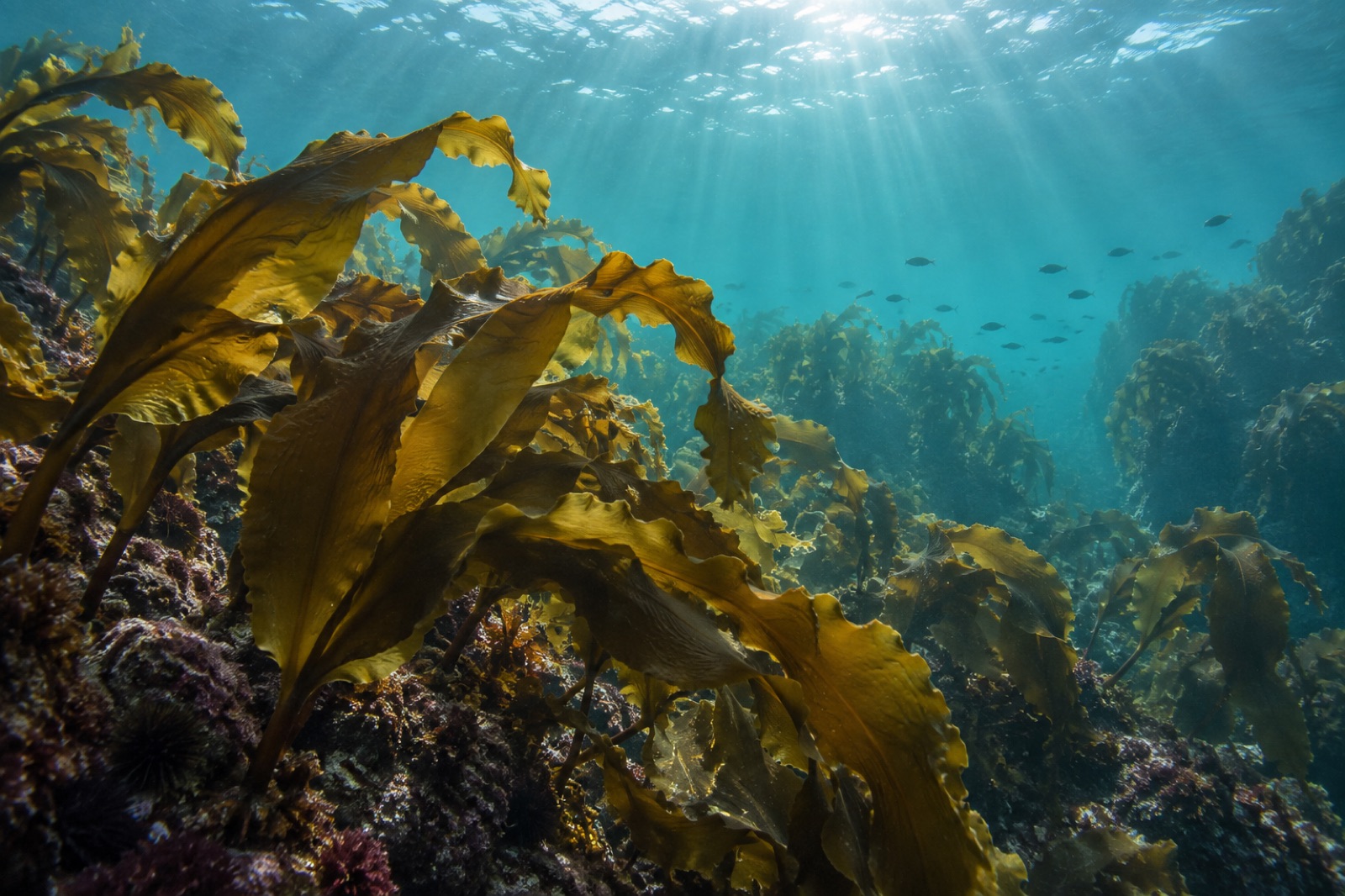
Kombu (Saccharina japonica): Species Profile
Kombu is the kelp behind dashi and the backbone of the world's seaweed farms. Learn its biology, life cycle, Hokkaido roots and future in a warming sea.
Dr. Theo Nakamura ·
Kombu farming is a century-old Japanese craft: forced cultivation, floating rafts, staggered harvests and sun-drying discipline, explained for growers.
Kombu — Saccharina japonica and its close relatives — is probably the most economically important seaweed on Earth, and the template for industrial kelp farming everywhere. Japan has cultivated it in Hokkaido for more than a century; China, learning from Japanese methods after the Second World War, now grows it on a scale that dwarfs every other marine crop. If you want to farm kelp well — for food, for restoration, or for new markets in the West — the kombu tradition is the deepest body of practical knowledge there is. This guide distils what that tradition teaches, and what it takes to grow kombu outside Japan.
For the species itself — its wild range, life cycle and why it tastes the way it does — start with our kombu species profile.
Kombu occupies the premium end of the kelp market. Where sugar kelp or Alaria go into salads, seasonings and feed ingredients, top-grade kombu is a luxury good: single blades graded by width, thickness, sheen and colour can sell for extraordinary prices to dashi makers in Kyoto and Osaka. That market position shaped the whole farming system:
Western growers entering kombu should decide early whether they're chasing the premium fresh/dried blade market or bulk biomass — the gear and labour budgets are completely different.
Kombu is a biennial in the wild: spores settle in autumn, sporophytes over-winter, grow through the first summer, and only fully mature in their second year. Japanese aquaculture compresses this into two systems:
Spores are seeded onto collector strings in autumn, and the culture develops slowly through its first year. This patient method produces the thick, broad, deeply flavoured blades that command top prices — most premium Hokkaido kombu is grown-out with extended cultivation of this kind.
The great post-war innovation was summer spore collection ("yōhō" forced cultivation): hatcheries collect spores from mature 2-year blades and keep gametophyte cultures chilled and dim through autumn, delaying development so that juvenile sporophytes are seeded onto lines in late autumn at an artificially young-but-developed stage. The crop then races through a single winter–spring–summer and is harvested the next July–September — one year instead of two.
The trade-off is familiar to every farmer: one-year culture doubles turnover and cuts exposure to storm and disease risk, but the blades are generally thinner and graded lower than two-year crops. China's enormous kombu industry runs almost entirely on forced cultivation; Japan's premium sector leans toward longer cultivation. The underlying hatchery mechanics are the same ones described in our guide to seaweed seed stock.
Kombu is a cold-water species. Its comfort zone runs roughly 0–15 °C, with growth faltering as temperature climbs toward 18–20 °C — Hokkaido's cold Oyashio current is the engine of the Japanese industry. Choose sites the way kombu farmers always have:
If your site's summer peak exceeds ~18 °C for weeks at a time, kombu is the wrong crop; look at warm-tolerant species instead.
Kombu invented the gear that most kelp farming still uses:
Structural design — rope specs, anchor sizing, spacing — is covered in longline design; kombu's contribution is the obsessive attention to line depth as a season-long dial.
The finest part of the kombu tradition is its harvest discipline. Rather than stripping whole lines at once:
Blades are cut by hand or with simple blade tools from small boats, sorted wet, and laid out to sun-dry the same day. Premium kombu is turned on pebble beaches or drying frames so air moves under the blade; machine drying exists but the best grades still see the sun. The universal processing options — drying, blanching, freezing, milling — are compared in post-harvest processing.
Kombu has naturalised in parts of Europe (it arrived in Brittany in the 1970s and is now firmed into the local industry) and interest is rising in New England, the Pacific Northwest and southern Australia. Practical guidance for new-region growers:
Yes — "kombu" is simply the Japanese name, and dashi kombu is Saccharina japonica and its close relatives, harvested and sun-dried. Several species are sold as kombu in Japan, graded by origin and quality.
In modern forced cultivation, seeded lines go out in late autumn and are harvested the following July–September — about eight to ten months on the water. Traditional extended cultivation carries blades through a second year for premium grades.
Kombu is non-native to both coasts of North America and to most of Europe (though established in Brittany). Regulations vary: some regions license contained cultivation, others forbid it. Always confirm with your aquaculture authority before sourcing seed.
They're different Saccharina species with similar needs. Kombu grows wider and thicker and supports a premium culinary market; sugar kelp is thinner, faster, and more forgiving for new farmers. See our sugar kelp farming guide for the species-by-species detail.
Kombu evolved in cold sub-Arctic current systems; its reproduction and tissue integrity both break down above roughly 18–20 °C. Warming seas have already shifted Japanese production north — one reason cold-site cultivation knowledge is becoming globally valuable.
Kombu is the kelp behind dashi and the backbone of the world's seaweed farms. Learn its biology, life cycle, Hokkaido roots and future in a warming sea.
Dr. Theo Nakamura ·
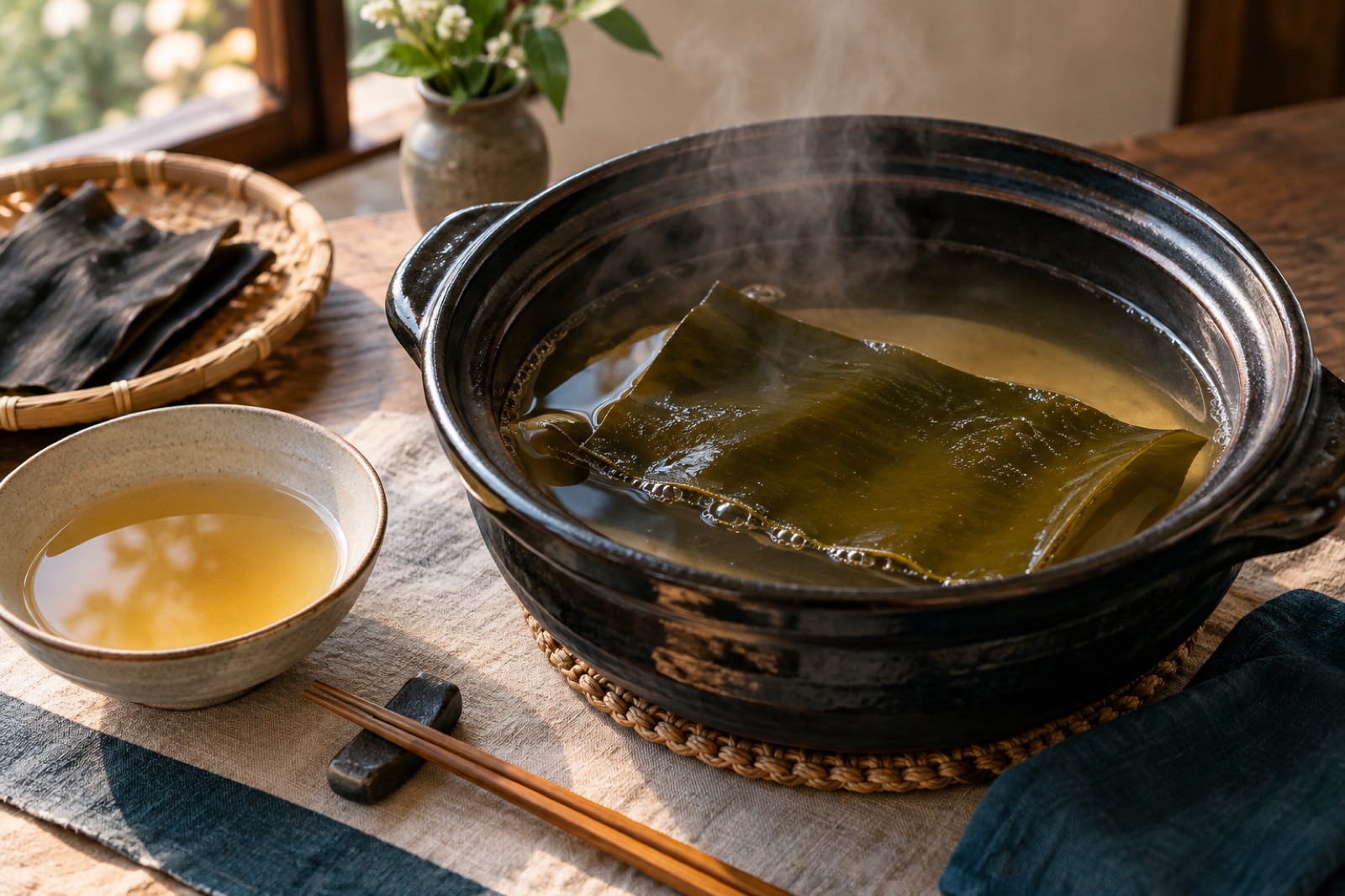
A deep, technique-first guide to kombu dashi: glutamate science, exact temperatures, ichiban and niban infusions, and how to fix every common mistake.
Sofia Andersson ·
Kelp farming begins in a hatchery, not the ocean. How seaweed seed stock is made: life cycles, sorus selection, spore seeding, nursery growth and genetic matching.
Dr. Elias Brandt ·