Farming9 min read
Harvest Timing: When Kelp Biomass and Quality Peak
When should you harvest kelp? How the biomass-versus-quality trade-off works, species-by-species seasons, and the sampling routine that catches the peak.
Naomi Reyes ·
A kelp harvest is won or lost in logistics: weather windows, crew and crane slots, landing hygiene and the critical first six hours. An operations manual for seaweed farms.
Ask a kelp farmer what their crop is worth and the honest ones answer "whatever survives the sixth hour". A tonne of healthy blades leaves the water and begins a clock: sugars and proteins start migrating, epiphytes keep photosynthesising on your product, temperature creeps upward in the pile, and the quality grade that two months of husbandry built starts silently decaying. The grow-out, the seeding, even the harvest-timing decision itself are all hostage to a week of logistics. This is the operations guide: how to choose a weather window, choreograph people and machines, land the product, and manage the first six hours from water to stabilisation.
The harvest window opens when the crop peaks in biomass and quality and closes when blades start to senesce and epiphyte loading rises. Those dates are physiology, as the harvest-timing article explains — but the day you actually pull the lines is logistics:
Nothing about kelp is heavy until it is; fresh wet biomass is roughly 85–90% water and a full longline can weigh several tonnes. The practical crew plan:
Whatever form the product takes next — fresh food, blanched, frozen, dried — is decided by the first contact with land. The non-negotiables of a working landing, aligned with food-grade handling:
Hours zero to six of wet harvest are about arresting change. A working timeline for a fresh-food or chill-chain batch:
| Elapsed | Action |
|---|---|
| 0–1 h | Cut, bin, shade; crush-ice or chill blanket on; batch records started |
| 1–3 h | Transport to the receiving facility under cover; temperature logged at receiving |
| 3–5 h | Rinse in clean chilled seawater or per buyer spec (never standing fresh water for food kelp unless specified); foreign-matter pick-through |
| 5–6 h | Stabilisation decision executed: into the blancher, the freezer, the dryer or the brine — not onto tomorrow's list |
If stabilisation cannot occur within your specified window — often 6–12 hours depending on product and customer — the honest options are deliberate chilling to buy time, downgrading the batch to a dried or biostimulant stream, or disposal, recorded and costed. The timeline is what keeps a bad tide from becoming a bad week.
The best-run kelp farms treat harvest as a two-to-six-week campaign, not a day. The implication:
For food-grade product without chilling, hours at most — many buyers specify stabilisation within 6–12 hours of landing. Well-chilled kelp gains a day or two for most processing streams, but every hour costs grade; treat chilling as buying time, not storing value.
Cutting blades at sea into bins is faster and lighter; bringing lines home whole preserves control and keeps gear reusable but needs heavy-lift logistics. Most small farms split the difference: cut at sea, retrieve lines whole, strip residual material ashore.
Under-capacity at the landing — not enough bins, ice, vehicles or cool-room space when the weather window delivers a full day. Staging 20% more receiving capacity than the plan demands is the cheapest form of crop insurance.
The cold-chain urgency relaxes and the cleanliness rules stay. Dried product still wants shade and airflow within hours; biostimulant feedstock tolerates rougher handling but not contamination. The grade decisions happen at landing for every stream.
When should you harvest kelp? How the biomass-versus-quality trade-off works, species-by-species seasons, and the sampling routine that catches the peak.
Naomi Reyes ·
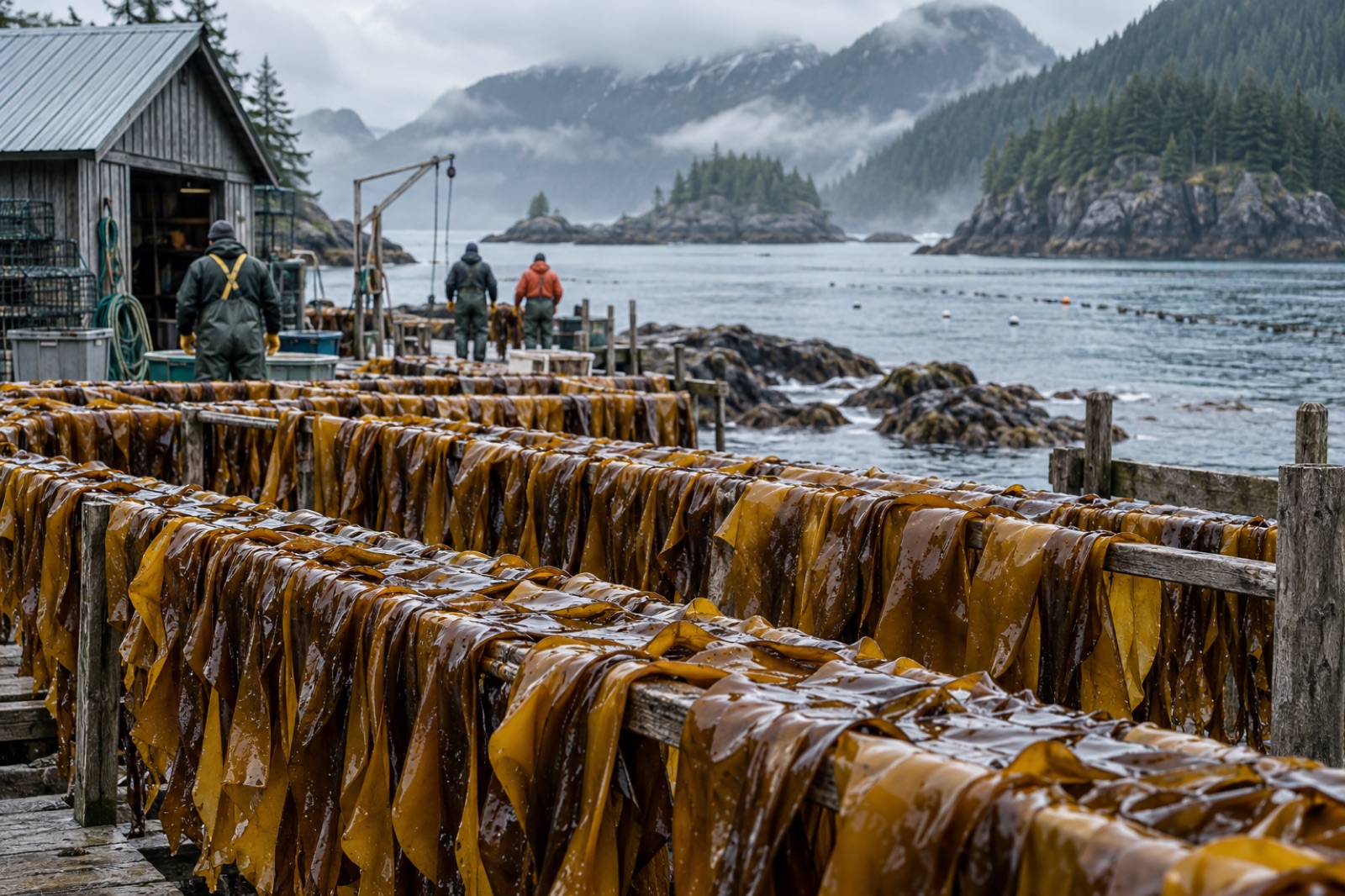
What to do with freshly harvested kelp: a practical comparison of drying, blanching, freezing, fermenting and milling — shelf life, quality, cost and best-fit markets.
Naomi Reyes ·
Growing food-grade kelp means treating the ocean site, the harvest boat and the drying shed as one hygiene chain. A practical guide to food safety for seaweed farmers.
Naomi Reyes ·