The Marine Nitrogen Cycle: The Engine Behind Every Kelp Forest
How nitrogen moves through coastal ecosystems — nitrate, ammonium, microbes and upwelling — and why the nitrogen cycle decides where kelp forests thrive.
Dr. Theo Nakamura ·
The Tidewright Journal
Encyclopedia entries, coastal atlas guides, science explainers, farming know-how and recipes — written by Tidewright’s scientists, engineers, chefs and field crews, and open to everyone.
How nitrogen moves through coastal ecosystems — nitrate, ammonium, microbes and upwelling — and why the nitrogen cycle decides where kelp forests thrive.
Dr. Theo Nakamura ·

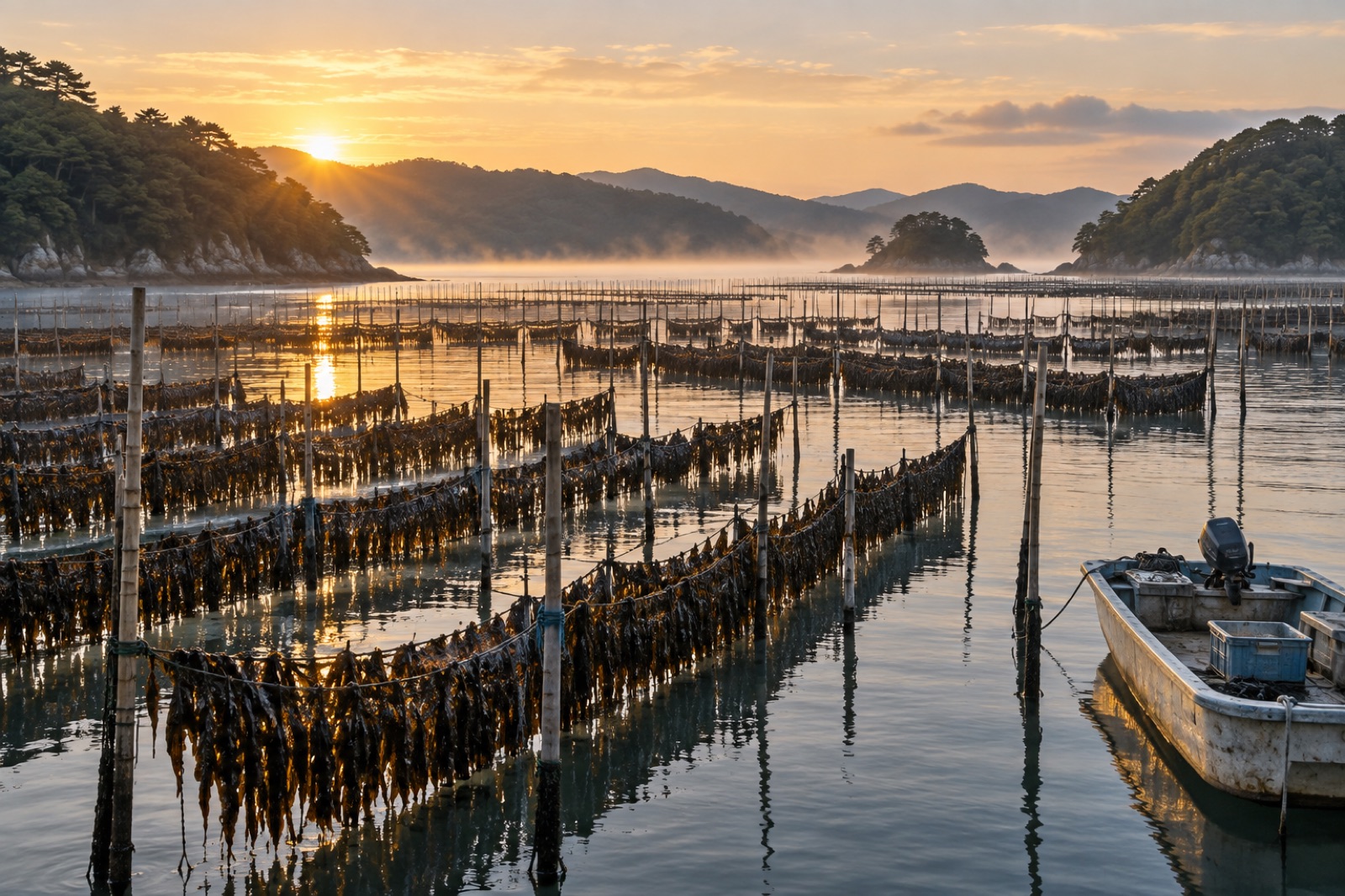
From oyster-shell hatcheries to graded sheets at auction: the full nori production system — conchocelis biology, net seasons, freezing and processing.
Naomi Reyes ·
How to toast nori over flame to revive aroma and crunch: the yaki-nori technique, gas-electric-electric hob workarounds, safety, and when to leave the sheet raw.
Sofia Andersson ·
The pinto abalone is the small, iridescent grazer of the northeast Pacific — endangered since the 1990s and the focus of a careful hatchery recovery effort.
Dr. Theo Nakamura ·
Northern anchovy (Engraulis mordax): the filter-feeding forage fish behind seabirds, salmon and sea lions all along the Pacific kelp coast.
Dr. Theo Nakamura ·
Northern fur seals spend most of their lives far offshore, then crowd onto island beaches to breed. Range, deep diving, the fur trade's shadow and recovery.
Dr. Mara Ellison ·
Sandstone headlands, dolerite islands and big North Sea tides — England's northeast coast grows fine kelp forests beneath some of its oldest castles.
Tom Okafor ·
A guide to Nova Scotia's kelp beds of the North Atlantic — the species, the urchin wars, the invaders, the warming, and where to see kelp today.
Dr. Mara Ellison ·
How to design a nursery grow-out tank for kelp seedstock: flow patterns, turnover rates, lighting, aeration, materials, and scaling from bench tank to production.
Naomi Reyes ·
Rāpoka, the New Zealand sea lion, is one of the world's rarest sea lions — a subantarctic breeder slowly recolonising the mainland coast. Its biology and comeback story.
Dr. Mara Ellison ·
Rising CO₂ acidifies seawater — but it also fertilises algae. What ocean acidification really does to kelp growth, urchins and whole reef food webs.
Dr. Theo Nakamura ·
Ocean alkalinity enhancement removes CO2 by shifting seawater chemistry. Here is the drawdown chain, dose-by-dose: how much carbon, how fast, and where.
Dr. Lena Fischer ·
Ocean alkalinity enhancement removes carbon without planting anything. How is that measured? The chemistry, models and sensors behind OAE's proof problem.
Priya Raman ·
The biological carbon pump moves billions of tonnes of carbon from the sunlit surface into the deep ocean every year. Here's how the living conveyor works.
Priya Raman ·
No single body governs ocean carbon removal. From the London Protocol to national permits, here is the patchwork of rules taking shape — and the gaps.
Priya Raman ·
Why the sea turns green, turquoise or milky — and how ocean-colour satellites read chlorophyll from orbit to map blooms, currents and ocean life.
Dr. Mara Ellison ·
A full career guide to ocean science communication — writing, film, campaigns and interpretation — with pay realities, entry routes and a twelve-month plan.
Tom Okafor ·
How carbon registries issue, serialise, track and retire blue carbon credits — and what buyers should check before trusting a listing.
Priya Raman ·
A field guide to remote sensing and geospatial careers in ocean science: the daily work, a portfolio that gets interviews, and where the jobs hide.
Priya Raman ·
The ocean is losing oxygen — measurably and globally. How warming and nutrient stress squeeze marine life's air supply, and what that does to kelp forests.
Dr. Lena Fischer ·
Ocean engineering spans naval architecture, robotics, coastal and offshore work. A guide to the disciplines, degrees, tools and sectors hiring now.
Naomi Reyes ·

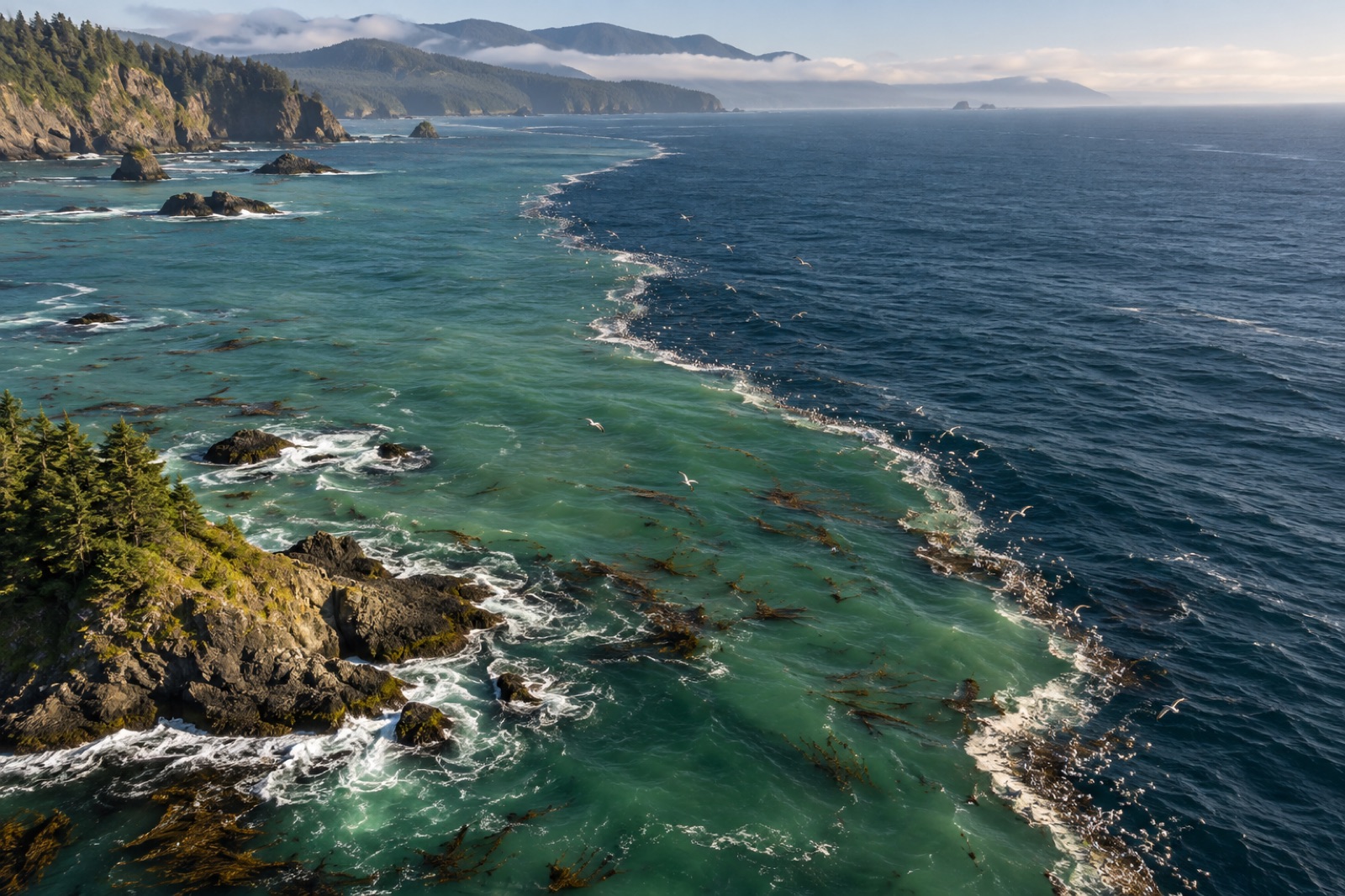
Ocean fronts — the sharp boundaries where different water masses collide — concentrate plankton, baitfish and predators into living lines. Here's why they matter.
Dr. Lena Fischer ·
Ocean gliders ride buoyancy, not propellers, for months at sea. How these slow torpedo-shaped robots survey storms, currents and kelp coasts on sips of power.
Dr. Mara Ellison ·
Five vast gyres turn like slow wheels in every ocean basin, shaping currents, climate and where plastic gathers. Here's how ocean gyres actually work.
Dr. Lena Fischer ·