Measuring Ocean pH: From Lab Spectrometry to Wandering Sensors
How oceanographers measure seawater pH and alkalinity, why it's harder than it looks, the sensor zoo from Argo floats to moorings, and what the numbers mean.
Dr. Lena Fischer ·
The Tidewright Journal
Encyclopedia entries, coastal atlas guides, science explainers, farming know-how and recipes — written by Tidewright’s scientists, engineers, chefs and field crews, and open to everyone.
How oceanographers measure seawater pH and alkalinity, why it's harder than it looks, the sensor zoo from Argo floats to moorings, and what the numbers mean.
Dr. Lena Fischer ·
How to mechanise kelp seeding on a farm: binder machines, spool carriages, spray systems and drum seeders compared, with throughput, costs and buying advice.
Naomi Reyes ·

Between hand knives and full automation lies the mechanisation ladder: pot haulers, powered reels and smart deck layouts. How mid-size kelp farms mechanise, rung by rung.
Naomi Reyes ·
Mesoscale eddies — the ocean's weather systems — shuttle nutrients and larvae across continental shelves. How they form, how they're seen, why kelp cares.
Dr. Lena Fischer ·
Most of the ocean's carbon never gets bitten by anything. Meet the microbial loop — the invisible recycling circuit that turns leaks and corpses back into food.
Dr. Mara Ellison ·
Tiny plastic fragments have reached every ocean habitat, kelp forests included. What the evidence shows about microplastics on reefs — and the honest gaps.
Dr. Mara Ellison ·
What do microplastic monitoring programs actually measure on kelp coasts — and what do the results say? Sources, exposure pathways and the honest state of the data.
Dr. Mara Ellison ·

Miso plus seaweed is the fastest glaze in the coastal kitchen: ratios for kombu-miso and nori-miso glazes, broiling technique, and what to glaze them on.
Sofia Andersson ·
Cut wakame is the default for miso soup, but kombu, nori, sea lettuce and other seaweeds all have roles. Ratios, timing rules and what to skip.
Sofia Andersson ·
The ocean's mixed layer — its wind-stirred surface engine — sets how much light plankton see and when deep nutrients return. How mixed layer depth works and why it matters.
Dr. Lena Fischer ·

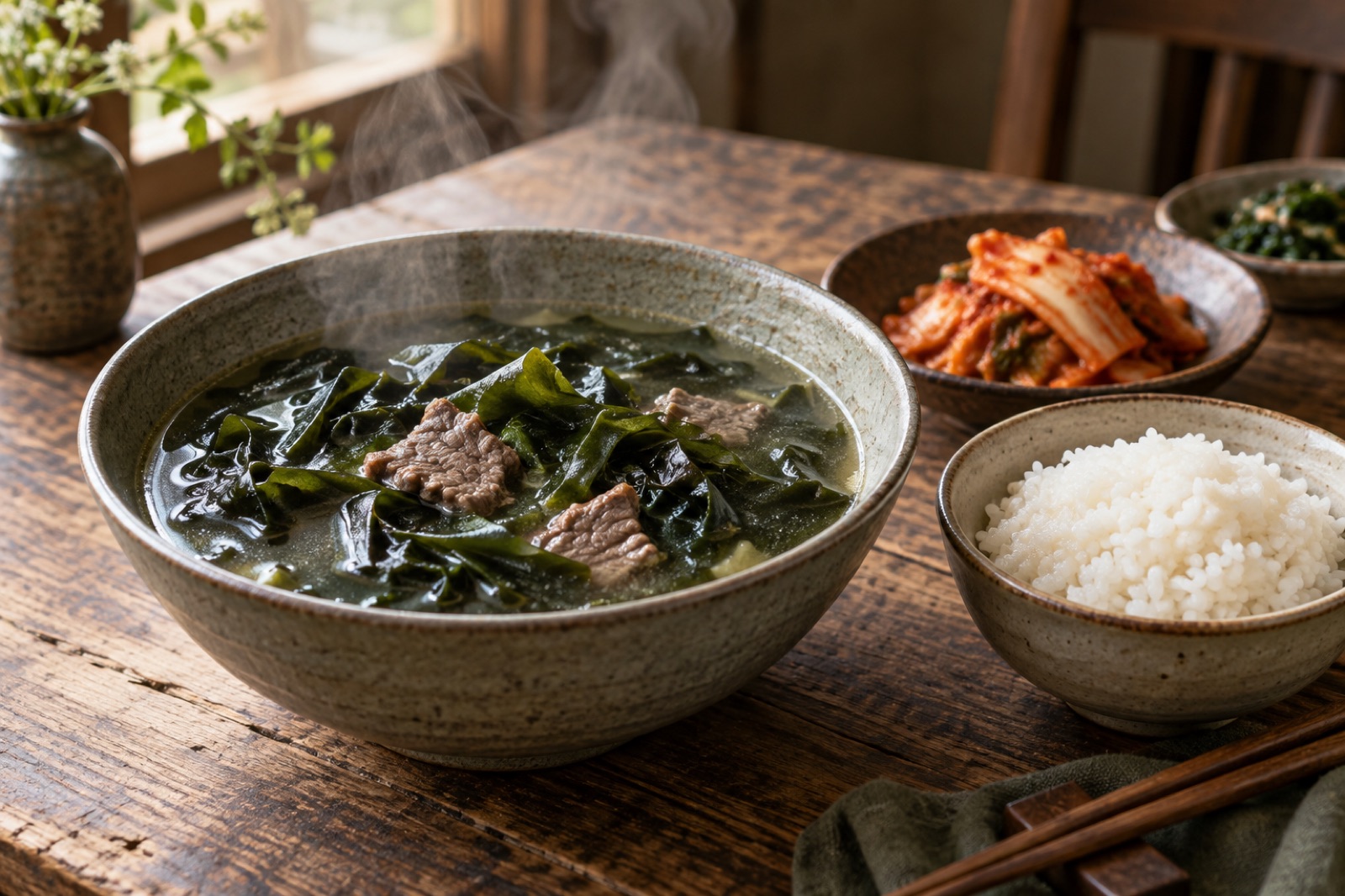
How to make miyeokguk, the Korean seaweed soup eaten to honour mothers and birthdays — with the culture, technique and common mistakes explained.
Sofia Andersson ·
The monkeyface prickleback is a long, algae-eating fish of Pacific rockpools — not an eel at all. Biology, the diet switch, and why poke-polers prize it.
Tom Okafor ·
A region guide to Montague Island — Australia's fur seal snorkel capital, little penguin colonies, kelp-fringed granite and how to visit Barunguba from Narooma.
Tom Okafor ·
Why do moon jellies suddenly fill a kelp bay in their thousands? The science of jellyfish blooms — what triggers them, what they mean, when to worry.
Dr. Mara Ellison ·

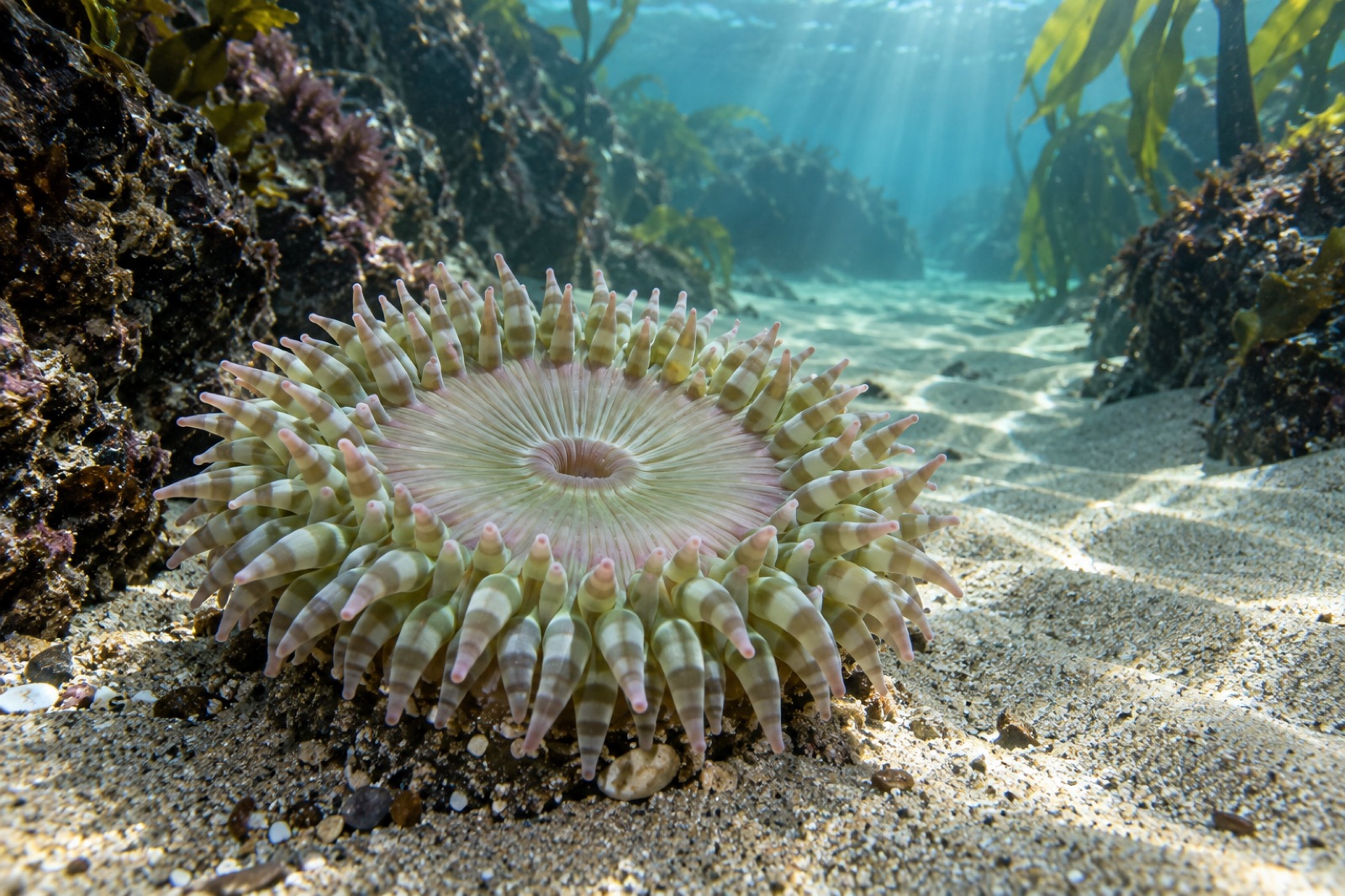
Moonglow anemone (Anthopleura artemisia) species profile: the gravel-coated anemone that buries its column in sediment beneath rocks, and how to find it.
Dr. Mara Ellison ·

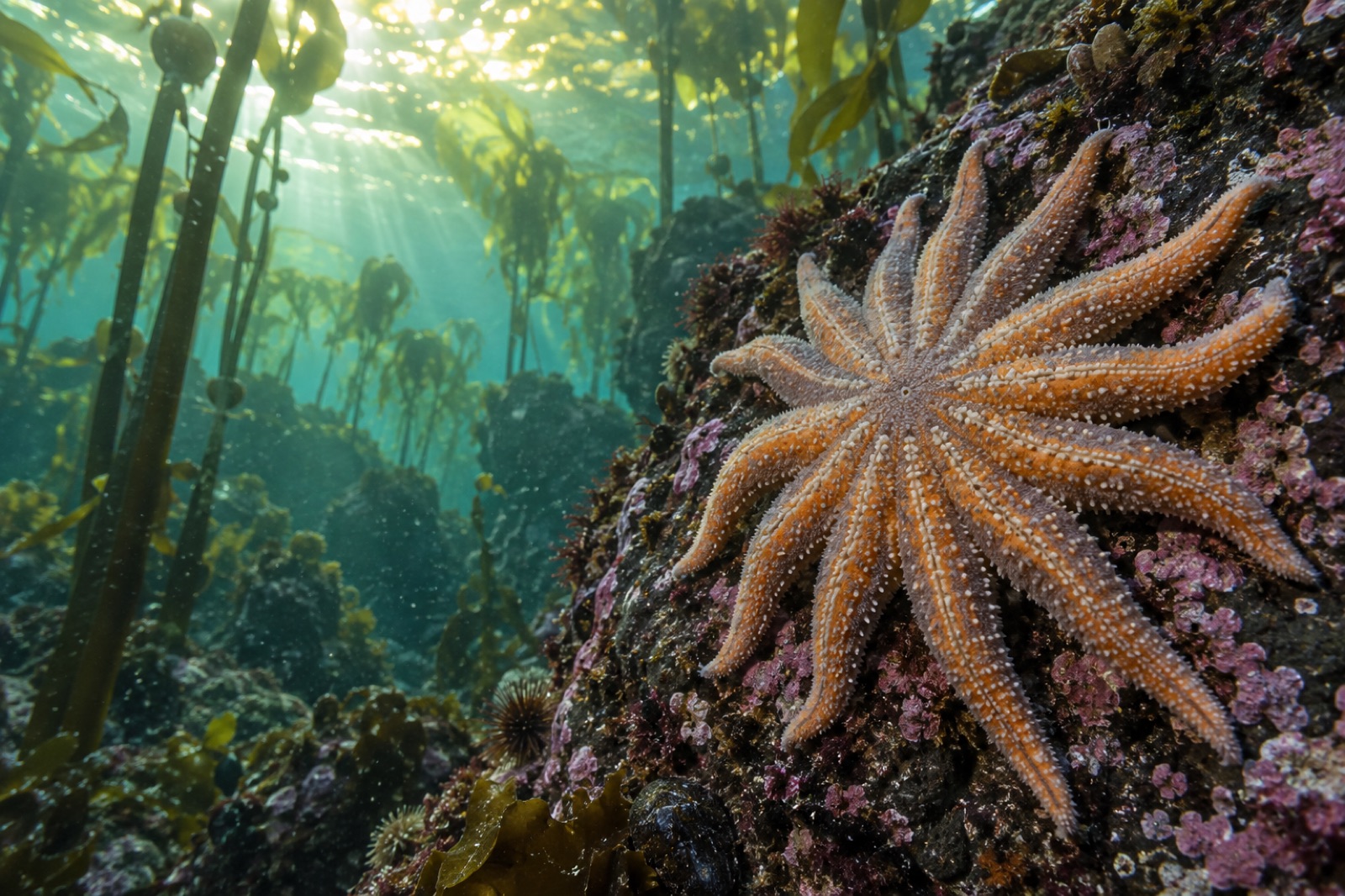
With up to sixteen arms and a taste for other sea stars, the morning sun star is the kelp forest's fastest hunter — and a weathervane of sea star wasting.
Dr. Mara Ellison ·
The mossy chiton is a surf-swept grazer in eight overlapping plates, its girdle bristling like a tiny hedgehog. Meet Mopalia muscosa of the rocky shore.
Dr. Mara Ellison ·
A single marine reserve protects what lives inside it. A network of reserves, sized and spaced for drifting larvae, can protect a whole coastline. Here's the science.
Dr. Mara Ellison ·
Monitoring, reporting and verification is where blue carbon's real money goes. A line-item tour of MRV budgets — and the design choices that shrink them.
Priya Raman ·
Kelp seedstock is not a commodity: provenance, local adaptation, permitting and biosecurity decide what you may and should plant. A geneticist's guide to native seed.
Dr. Elias Brandt ·
'Nature positive' is everywhere and defined almost nowhere. Here's what the term actually means, what a credible claim requires, and the red flags of nature greenwash.
Dr. Mara Ellison ·

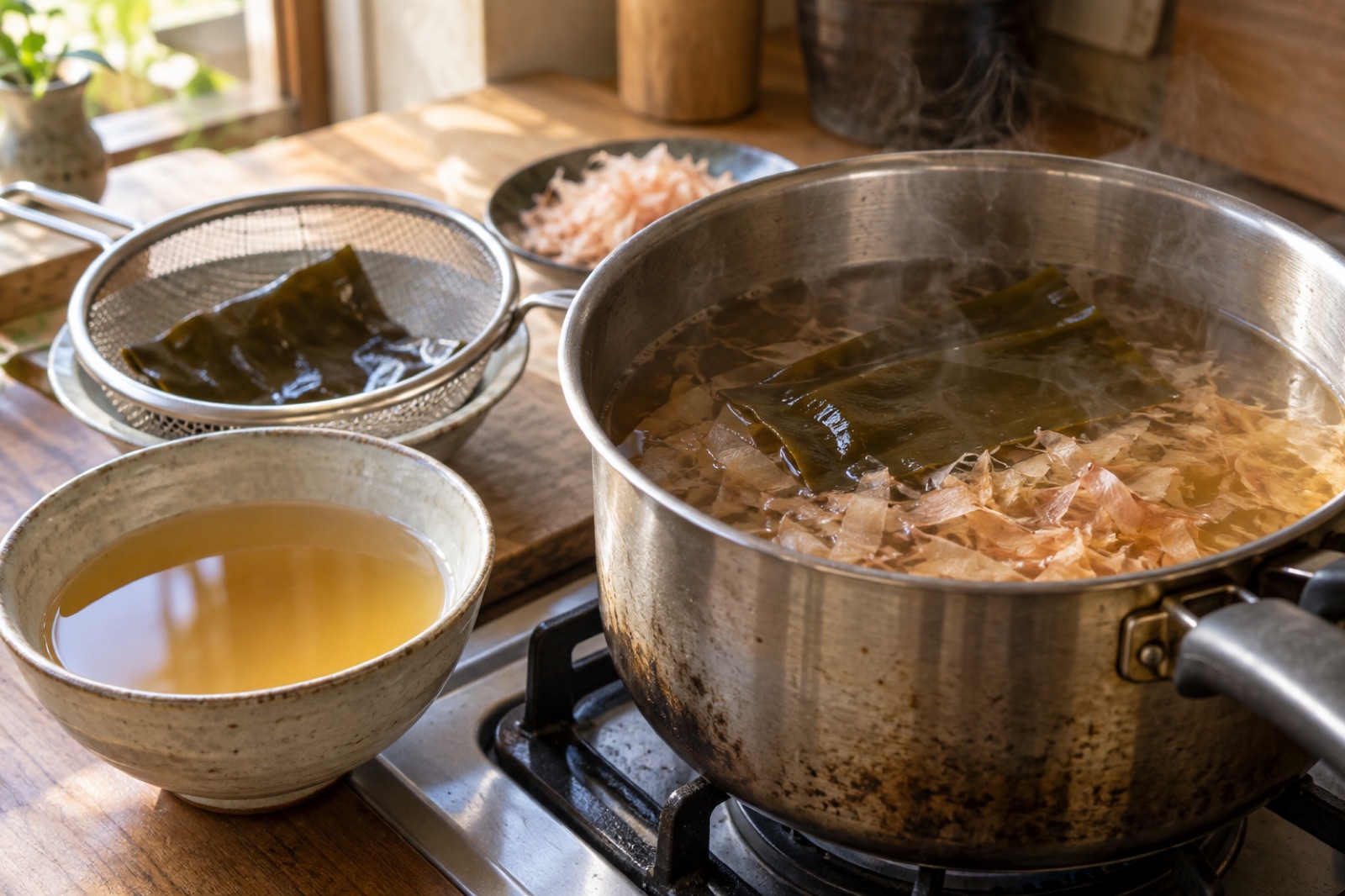
Niban dashi is the second extraction from spent kombu and katsuobushi — milder, deeper, and made for miso soup and simmered dishes. How to brew and use it.
Sofia Andersson ·

Kelp forests transform after dark. A night diving guide: lights and light discipline, night planning, the nocturnal shift change, and calming the mind in the dark.
Tom Okafor ·
A Tidewright field note from the Holdfast hatchery: the red-lit night shift, quiet alarms, and what 3 a.m. teaches you about kelp seed quality.
Jack Callum ·