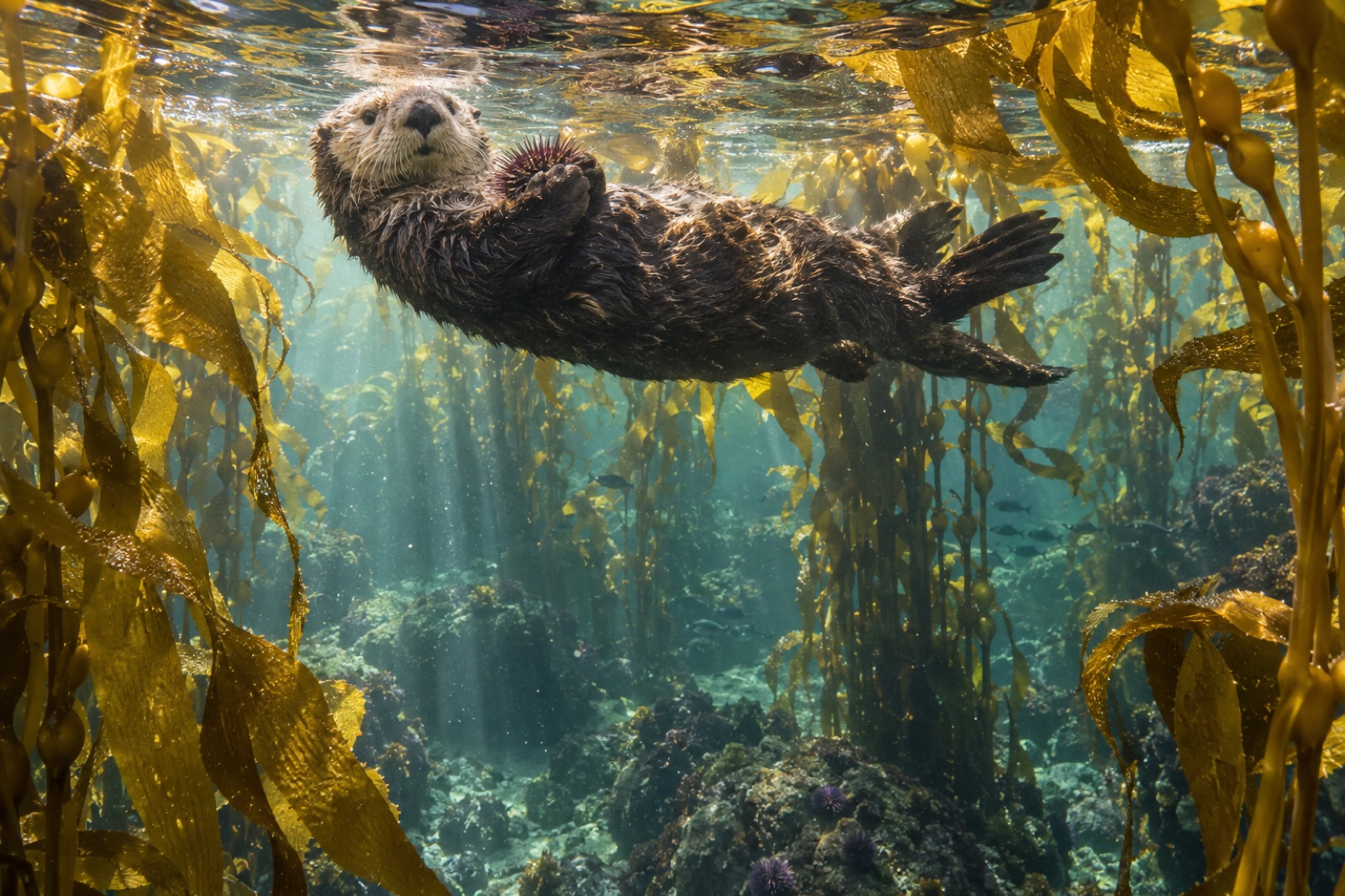
The New Zealand sea lion — Phocarctos hookeri, known in te reo Māori as rāpoka — holds a title no animal should want: it is one of the rarest sea lion species on Earth, with a world population thought to number only around ten thousand. Yet this is also one of the most hopeful marine mammal stories in the Southern Hemisphere, because rāpoka are doing something sea lions are not supposed to do: they are coming back to the mainland, pupping on surf beaches an hour's drive from Dunedin, and learning to live alongside a human-populated coast for the first time in nearly two centuries.
This profile covers identification, range, the biology of a champion deep-diving pinniped, the conservation rollercoaster of the subantarctic colonies, and the mainland recolonisation that makes rāpoka a species to watch — in every sense.
Quick facts
|
|
| Scientific name |
Phocarctos hookeri |
| Māori name |
Rāpoka (also whakahao in some traditions) |
| Family |
Otariidae — the eared seals |
| Male size |
Up to ~3.5 m and 400–450 kg; massive neck and shoulders |
| Female size |
~1.6–2.0 m; roughly 110–160 kg |
| Colour |
Males near-black with a dark mane; females silver-grey to cream |
| Range |
Subantarctic Auckland Islands and Campbell Island; recolonising NZ mainland coasts to Banks Peninsula |
| Diet |
Octopus, squid, hoki, red cod, rays, small sharks — a generalist benthic hunter |
| Status |
One of the world's rarest sea lions; population ~10,000–12,000 |
Identification
Rāpoka are unmistakable once you have seen one hauled out beside a New Zealand fur seal. Adult males are enormous, near-black animals with a heavy mane of dark hair over the neck and shoulders — a lion in wetsuit form. Females and young animals are much lighter: silver-grey above, cream below, with the blunt muzzle and long pale whiskers typical of sea lions. Compared to the sleeker, dog-faced New Zealand fur seal (kekeno), rāpoka look heavier-set through the chest, blunter in the face, and calmer — they have a slow, deliberate way of moving up a beach that kekeno, all bounce and attitude, lack.
Like all otariids they have small external ear flaps, rotate their hind flippers forward to walk, and swim with their powerful foreflippers. Underwater they are surprisingly graceful for a quarter-tonne animal; the males in particular can drop from surf to seafloor like slow-motion anchors, which is exactly what their feeding style demands.
Range: a subantarctic heartland and a mainland frontier
The great majority of the world's rāpoka — most of the breeding population — are born on the Auckland Islands, 465 kilometres south of mainland New Zealand, with a smaller colony on Campbell Island. These are the windswept subantarctic islands covered in our guide to New Zealand's subantarctic island kelp wilderness: beaches of black sand and southern bull kelp, rimed by megaherb meadows and circling albatross.
But rāpoka were not always so southern. Subfossil and archaeological evidence shows they once bred all around mainland New Zealand, before human settlement and sealing drove them from the main islands. Since the 1990s the mainland coast has been recolonised from the south, pup by determined pup: the Catlins, the Otago Peninsula (where a now-famous female called Mum began breeding in the 1990s), and increasingly the beaches north toward Banks Peninsula. Individual animals range much farther — haul-outs are regular through the Chatham Islands and around Stewart Island / Rakiura, and single wandering animals have turned up astonishingly far afield.
The world's deepest-diving sea lion
Here is the biological superlative that sets rāpoka apart: instrumented females from the Auckland Islands have recorded dives approaching 600 metres — among the deepest dives ever measured in any sea lion or fur seal, deeper than many beaked whales' everyday dives and rivalling the upper range of elephant seals. Rāpoka mothers leave their pups ashore and commute to the seafloor itself, hunting octopus, bottom-dwelling fish and rays along the shelf edge in near-total darkness.
That deep-benthic foraging style shapes everything about their ecology:
- Foraging trips are long and punishing. Auckland Islands mothers alternate extended sea trips with nursing visits, an energetically expensive cycle that leaves little margin when food is scarce.
- They overlap with trawl fisheries. Bottom-feeding over trawled ground puts rāpoka in the path of the southern squid fishery, historically their greatest human-caused mortality source.
- Pups stay dependent for a long time. Young rāpoka may nurse into their second year, meaning a bad season for mothers echoes for years.
Twentieth century: disease, fishery and a refound population
The rāpoka story of the past decades is a lesson in how many pressures can stack on one slow-breeding species.
The species' lowest ebb came early: sealing removed rāpoka from the mainland entirely, and hunting continued in the subantarctic into the twentieth century. The total population fell so low that the species was essentially refound as a breeder in the Auckland Islands only in the mid-twentieth century. Then, in the summer of 1998, the Auckland Islands colony suffered an epidemic — later linked to a bacterial infection (Klebsiella pneumoniae) — that killed more than half of that year's pups in a matter of weeks, one of the starkest single-event mortality episodes recorded in any pinniped. The colony has carried the genetic and numerical scar since, and a second smaller epidemic in the early 2000s reinforced how vulnerable a concentrated breeding population is to disease. Smaller but persistent pressures have come from a hookworm that damages blubber and body condition in pups, and from ongoing bycatch in subantarctic trawl fisheries — now substantially reduced by seal-exclusion devices and changed fishery practice, but not eliminated.
The result is a population that has declined at its subantarctic core while expanding at its mainland edge — a genuinely two-sided trajectory.
Recolonisation: sea lions on surf beaches
The mainland comeback is the rarest thing in conservation: a large, conspicuous carnivore returning, voluntarily, to a densely used coast. Female rāpoka born on the mainland now breed there themselves; pups are born on open beaches at the Catlins and Otago, sometimes within sight of roads — and, in a few celebrated cases, on the road itself. Individual sea lions have slept on golf courses, crossed bicycle paths, and given birth beside car parks, and management of the species there is partly a story about human behaviour: speed limits near beach crossings, dogs well controlled, distance kept. (Didactic and fictional-project notes aside, our own field crew at Tidewright treat mainland rāpoka beaches as no-access survey zones in pupping season.)
The kelp connection is direct. Rāpoka hunt the reef-edge communities that southern bull kelp forests support — octopus in the boulder fields beneath the kelp line, dogfish in the channels, red cod moving through the kelp fringe described in our kelp forest food web explainer. A mainland coast with intact bull kelp, healthy reefs and room for haul-outs is precisely the habitat the recolonising animals are choosing.
Watching rāpoka without ruining their day
Because rāpoka haul out on open surf beaches, encounters are common — and the rules are simple. Keep at least ten metres away, and far more around pups or during breeding season; keep dogs leashed and at distance; never block an animal's path to the sea; and read its posture — a sea lion that is watching you, raised and swaying, is a sea lion you are too near. They are large, fast animals with a real bite, and mothers with hidden pups can appear from dunes or scrub in seconds. Our guide to wildlife ethics in kelp country applies doubled: this is a rare animal, on a crowded coast, doing something extraordinary. Give it the room to keep doing it.
Key takeaways
- Rāpoka, the New Zealand sea lion, is one of the world's rarest sea lions, with a population of roughly ten to twelve thousand animals.
- Most breed on the remote subantarctic Auckland Islands, but the species is naturally recolonising mainland New Zealand's south coast, pup by pup.
- Instrumented females have dived close to 600 metres — among the deepest dives recorded in any eared seal.
- A 1998 bacterial epidemic killed over half the Auckland Islands pups in a single season; fishery bycatch and disease remain the main pressures.
- Males are near-black and maned, females silver-cream; both are blunter-faced and heavier-set than the sleek kekeno fur seal.
- Bull kelp forests and their reef communities are core rāpoka foraging habitat — a healthy kelp coast is a rāpoka coast.
- Give hauled-out animals at least ten metres, control dogs, and remember that this species is choosing our beaches again for the first time in centuries.
FAQ
Are New Zealand sea lions dangerous?
They can be. Large wild carnivores deserve respect: males exceed 400 kilograms, and even females are powerful and surprisingly fast on land. Keep well back, never corner an animal or block its route to the sea, and be especially cautious near pups, which mothers defend fiercely.
Why are there sea lions on mainland New Zealand beaches now?
Rāpoka once bred around the whole of mainland New Zealand before sealing removed them. Since the 1990s, females colonising from the subantarctic have re-established breeding on the Catlins and Otago coast — an ongoing natural recolonisation, one pupping season at a time.
What happened in the 1998 Auckland Islands epidemic?
More than half of that year's pups died within weeks. Investigation linked the mortality to a bacterial infection by Klebsiella pneumoniae. Because most of the species breeds on just a few subantarctic islands, a single epidemic can strike a large share of an entire generation — the central vulnerability of the species.
What do New Zealand sea lions eat?
They are generalist seafloor hunters: octopus, squid, hoki, red cod, rays, small sharks and other bottom-dwelling prey. That benthic, deep-diving style — unusual among sea lions — explains both their record-setting dives and their historic conflict with bottom trawl fisheries.
How can I tell a rāpoka from a fur seal (kekeno)?
Rāpoka are bigger, heavier in the chest, and blunter in the face; adult males are near-black and maned. Kekeno are smaller and sleeker with darker grey-brown fur, a pointed snout and a bouncier bearing. On a Southland beach, the calm, heavyset animal is likely the rare one.